
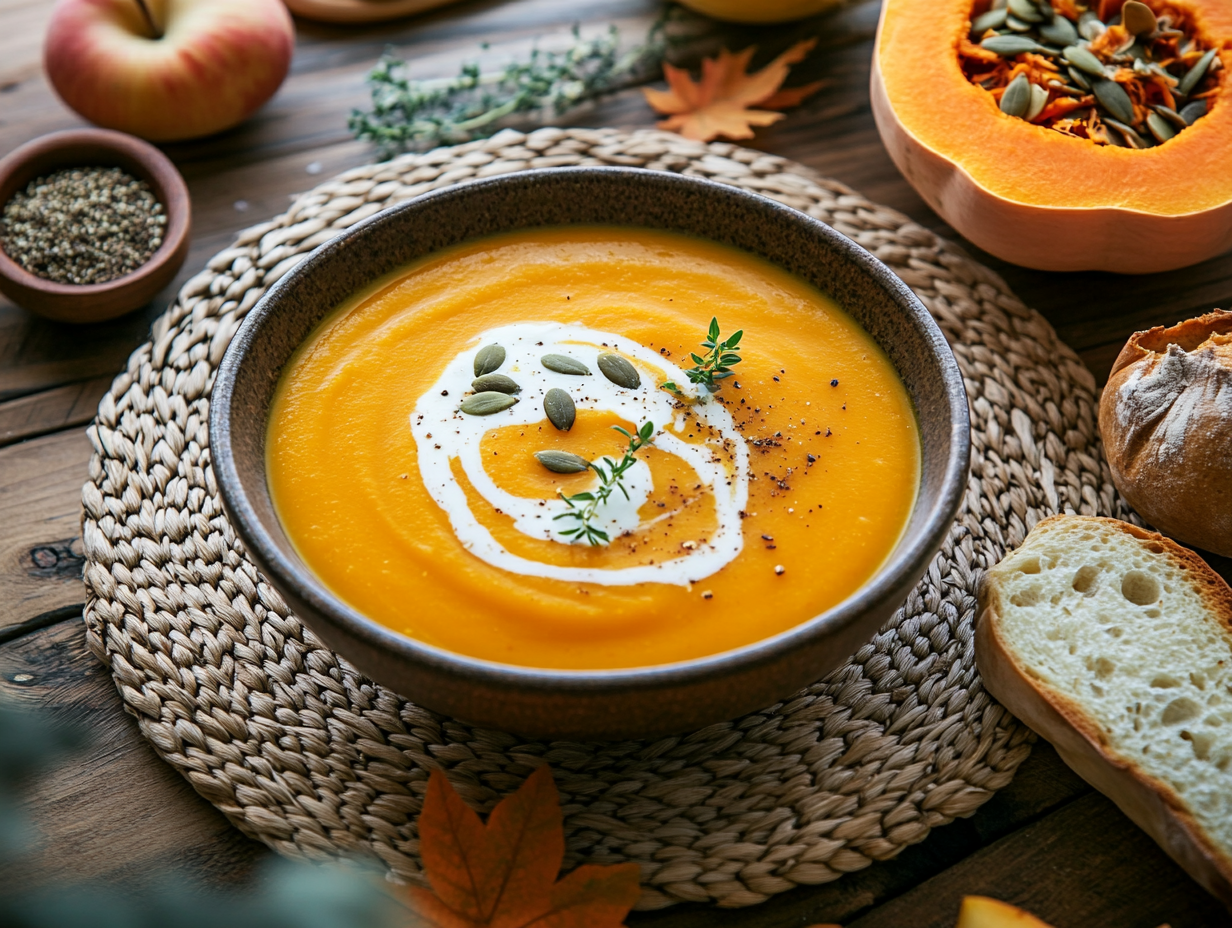
This is a blended butternut squash and apple soup seasoned with cinnamon, nutmeg, and ginger, finished with a splash of maple syrup. It takes just over an hour start to finish, makes four servings, and keeps well in the fridge for several days — which is the real reason to make it.
The technique that matters
Roasting the squash before it goes into the pot is the step worth protecting. It drives off moisture and caramelizes the natural sugars in a way that simmering in broth simply cannot replicate — skip it and the soup tastes flat and a little watery. The second technique is sautéing the onion, garlic, and spices in olive oil before adding any liquid. Thirty seconds of heat blooms the ground spices and pulls their flavor into the oil, so it distributes evenly through the whole batch rather than sitting on top. Both steps add maybe ten minutes total and make a measurable difference in the finished soup.
Troubleshooting
- Soup is too thin after blending: Return it to the pot over medium heat and simmer uncovered for 8–10 minutes, stirring occasionally. Blending breaks down the fiber and can make the texture seem looser than expected; a short reduction fixes it without adding anything.
- Soup tastes flat or one-dimensional: Add salt in small increments first — undersalting is the most common reason a squash soup tastes dull. If salt alone doesn’t do it, a small squeeze of fresh lemon juice will sharpen the flavors without changing the profile.
- Soup is too sweet: Stir in a teaspoon of apple cider vinegar and taste. If the apple variety you used was sweeter than Granny Smith, the maple syrup can push the whole thing over the edge — the vinegar pulls it back into balance quickly.
- Blender creates a watery layer on top after storing: This is normal separation. Stir or re-blend briefly before reheating. It does not affect flavor and the texture returns fully once warmed through.
- Roasted squash is browning unevenly: Your pieces are probably different sizes. Aim for uniform 1-inch cubes and make sure they are in a single layer with space between them — crowded pieces steam instead of roast and will not color properly.

Butternut Squash and Apple Soup

Equipment
- Large baking sheet
- High-speed blender or immersion blender
- Large soup pot
- Chef's knife
- Cutting board
Ingredients
For the Soup Base:
- 1 large butternut squash peeled, seeded, and cubed (about 4 cups)
- 2 tablespoons extra virgin olive oil plus more for roasting
- 1 large yellow onion diced
- 2 cloves garlic minced
- 2 medium Granny Smith apples peeled, cored, and chopped
- ½ teaspoon ground cinnamon
- ¼ teaspoon ground nutmeg preferably freshly grated
- ¼ teaspoon ground ginger
- 4 cups vegetable broth preferably low-sodium
- 1 tablespoon maple syrup pure, to taste
- 1 pinch sea salt to taste
- 1 pinch freshly ground black pepper to taste
For Optional Garnishes:
- 1 tablespoon toasted pumpkin seeds (pepitas)
- 1 cup a swirl of coconut cream
- 1 piece fresh thyme leaves
Instructions
- Preheat the oven to 400°F (200°C). Spread cubed butternut squash evenly onto a baking sheet, drizzle with olive oil, and season with a pinch of salt. Roast for 30–35 minutes or until edges are caramelized and tender when pierced with a fork.
- In a large soup pot, heat 2 tablespoons of olive oil over medium heat. Add the diced onion and sauté for 5–6 minutes until translucent and slightly golden.
- Add minced garlic, chopped apples, cinnamon, nutmeg, and ginger. Stir continuously for 2–3 minutes until fragrant and the apples begin to soften.
- Transfer the roasted squash into the pot. Pour in the vegetable broth and bring the mixture to a simmer. Cover and cook for 10–12 minutes for all ingredients to meld and soften thoroughly.
- Turn off the heat. Using an immersion blender (or high-speed blender in batches), blend the soup until completely smooth and creamy. Return to pot if using a blender.
- Stir in maple syrup, then season to taste with sea salt and freshly ground black pepper. Reheat gently if needed.
Notes
- For extra depth, roast the apples with the squash before adding to the soup.
- A squeeze of lemon juice at the end can add a bright finish, balancing sweetness.
- If short on time, use frozen cubed butternut squash—just roast it a few minutes longer to develop flavor.
Nutrition
Your questions, answered
Can I freeze this soup?
Yes, it freezes well for up to three months. Portion it into airtight containers once fully cooled, leave about an inch of headspace for expansion, and thaw overnight in the fridge before reheating on the stovetop.
Can I use a different apple variety?
You can, but stay with a tart apple. Granny Smith holds its acidity under heat better than sweeter varieties like Fuji or Honeycrisp, which can make the finished soup taste cloying. If Granny Smith isn’t available, Pink Lady is a reasonable second choice.
Do I have to use an immersion blender, or will a regular blender work?
A regular standing blender works fine and often produces a smoother result. Blend in batches, fill the blender no more than halfway, and hold a folded towel firmly over the lid — hot liquid expands and can force the lid off.
How long does it keep in the fridge?
Four to five days in a sealed container. The flavor actually improves by day two as the spices settle into the broth, which makes this a good candidate for cooking on Sunday and eating through midweek.
Can I add protein to make it more filling?
Yes — red lentils work well here. Add a quarter cup of rinsed red lentils directly to the pot with the broth and simmer until they dissolve completely before blending. They thicken the soup and add protein without changing the flavor noticeably. Skip the garnish of toasted pepitas if you go this route — not worth the extra dish when the soup is already substantial.
My squash is taking much longer to roast than expected — what’s wrong?
The oven is most likely not fully preheated, or the squash went in wet. Dry the cubed squash thoroughly with a clean towel before tossing in oil, and give the oven a full 15 minutes to reach temperature. Wet squash steams on the pan and can add 15–20 minutes to roasting time.
What to cook next
- Golden Curried Parsnip Soup
- Autumn Comfort Curry Bowl
- Moroccan Lentil Apricot Tagine
- Vegan Pumpkin Pie Smoothie