
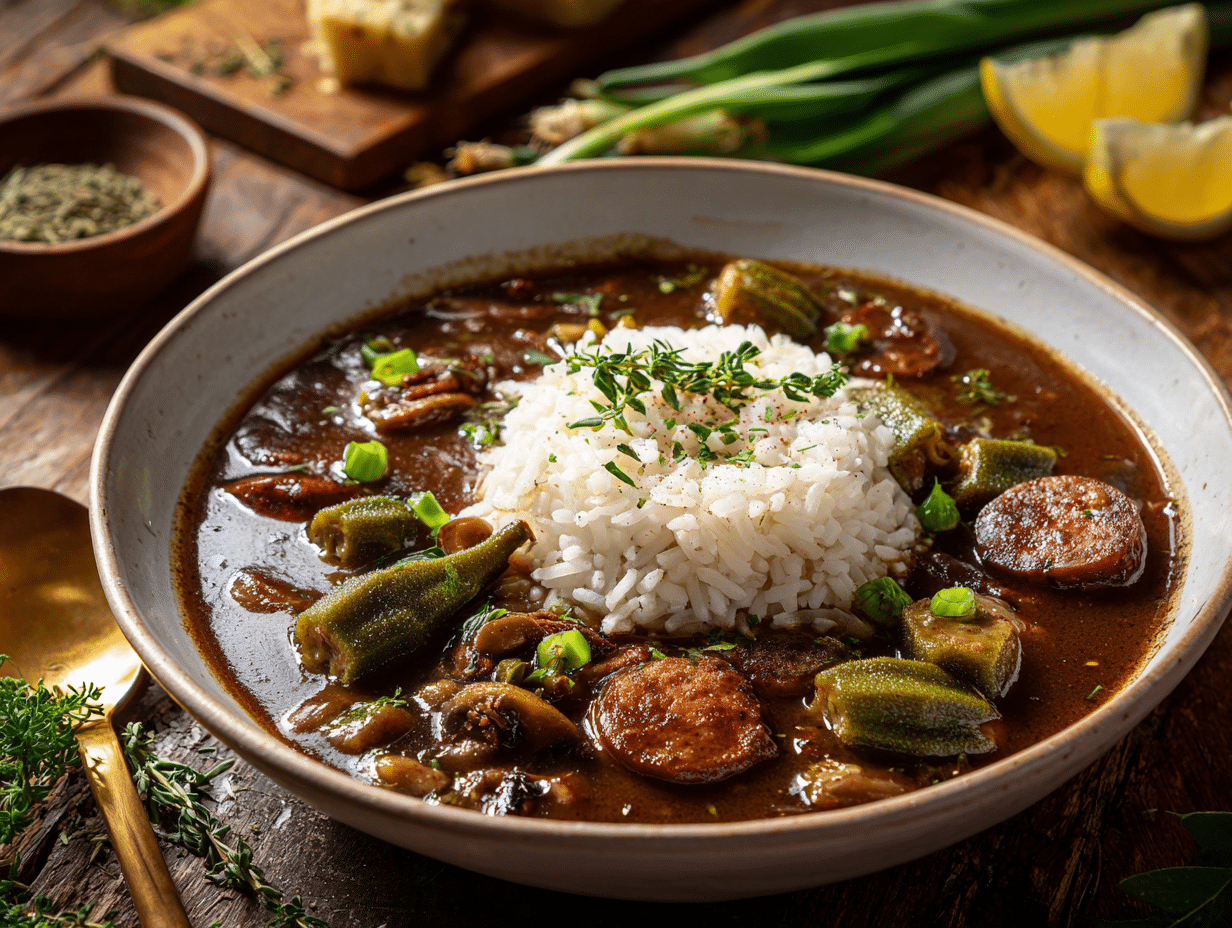
The Soul of Louisiana: Understanding Vegan Okra Gumbo
Gumbo stands as one of Louisiana’s most iconic dishes, a culinary ambassador that tells the story of cultures converging in a single pot. This deeply complex stew represents the intersection of West African, French, Spanish, Native American, and Caribbean influences that define Creole and Cajun cooking. The vegan version I’ve crafted maintains the integrity of this cultural tapestry while embracing plant-based ingredients.
A Brief History of Gumbo
The word “gumbo” itself reveals the dish’s multicultural roots. It derives from ki ngombo, the West African term for okra in various Bantu languages. Enslaved Africans brought okra to Louisiana in the 18th century, along with their traditional cooking methods. The vegetable’s natural thickening properties made it invaluable in creating hearty stews that could feed many with limited resources.
French colonists contributed the roux—that magical marriage of fat and flour that forms the backbone of so many Louisiana dishes. Spanish settlers added their sofrito technique, which evolved into the “holy trinity” of onion, celery, and bell pepper that defines Creole cooking. The Choctaw people introduced filé powder (ground sassafras leaves), offering another thickening method and a distinctive earthy flavor.
The Art of the Roux
At the heart of any authentic gumbo lies the roux. This isn’t just a thickening agent—it’s the foundation of flavor, requiring patience and constant attention. Traditional gumbo roux is cooked until it reaches a deep chocolate brown, developing complex, nutty notes that permeate the entire dish. The darker the roux, the less thickening power it has, but the more flavor it contributes. In my vegan version, using a high-quality neutral oil instead of animal fat maintains the traditional technique while keeping it plant-based.
Making roux is almost meditative—a 30-45 minute commitment to stirring, watching, and preventing any hint of burning. One moment of inattention can result in bitter, blackened flour that ruins the entire pot. This patience is what separates true gumbo from quick imitations.
Okra: The Original Thickener
Before roux became standard, okra was gumbo’s primary thickener. This African vegetable releases mucilage when cooked, creating the silky, slightly viscous texture that defines the dish. The key to managing okra’s texture is high heat and minimal stirring during the initial sear, which reduces the mucilage while developing caramelized flavors.
Fresh okra selection is crucial—look for bright green pods that snap crisply when bent. Smaller pods tend to be more tender with less developed seeds. The traditional technique of searing okra separately before adding it to the pot allows better control over texture and prevents the gumbo from becoming overly thick or “slimy.”
The Holy Trinity and Beyond
The aromatic base of onion, celery, and bell pepper—known as the “holy trinity”—is to Louisiana cooking what mirepoix is to French cuisine. This combination provides a sweet, vegetal foundation that harmonizes with the deep flavors of the roux. The proportions matter: typically 2:1:1 of onion to celery to bell pepper, though personal preference can guide adjustments.
In this vegan version, mushrooms join the trinity to provide umami depth traditionally supplied by seafood or meat. Cremini mushrooms offer earthiness without overwhelming the dish, while their texture holds up well during the long simmer.
Seasoning Traditions
Louisiana seasoning is about layers, not heat. While cayenne pepper provides the characteristic warmth, it’s the combination of smoked paprika, black pepper, thyme, and bay leaves that creates gumbo’s complex flavor profile. The addition of fire-roasted tomatoes—more common in Creole gumbo than Cajun—adds acidity and sweetness that balances the rich roux.
Filé powder deserves special mention. This Choctaw contribution must always be added off heat, as cooking can make it stringy and unpleasant. It provides both thickening and a subtle, root beer-like flavor that’s uniquely Louisiana.
Vegan Adaptations with Integrity
Creating an authentic-tasting vegan gumbo requires thoughtful substitutions. Vegan andouille sausages have come remarkably far in recent years, offering the smoke and spice essential to the dish. The key is browning them well to develop deeper flavors through caramelization.
Umami—that savory depth traditionally from seafood or meat stock—comes from multiple sources: mushrooms, tamari or vegan Worcestershire sauce, fire-roasted tomatoes, and quality vegetable stock. Building layers of flavor at each step ensures the final dish has the complexity expected from gumbo.
The Cultural Significance
Gumbo is more than food—it’s a social institution. Traditionally made for gatherings, it’s a dish that brings people together. The long cooking time encourages conversation and community. In Louisiana, gumbo parties are common, where large pots simmer while friends and family gather.
This communal aspect makes gumbo particularly suited to inclusive, plant-based cooking. A vegan gumbo welcomes everyone to the table, maintaining tradition while embracing modern dietary choices.
Serving Traditions
Gumbo is traditionally served over rice, which serves both practical and cultural purposes. The rice stretches the dish to feed more people and provides a neutral base that absorbs the flavorful broth. Long-grain white rice is standard—its individual grains stay separate rather than clumping.
The presentation matters: rice is mounded in the bowl first, then gumbo is ladled around and over it. This allows diners to control their ratio of rice to gumbo with each spoonful. Hot sauce bottles on the table let each person adjust heat to preference—a crucial element of Louisiana hospitality.
Regional Variations
Understanding gumbo means recognizing its variations. Creole gumbo, from New Orleans and southeastern Louisiana, often includes tomatoes and seafood. Cajun gumbo, from southwestern Louisiana, typically omits tomatoes and features game meats. Both styles can include okra, though not always.
This vegan version draws primarily from Creole tradition, embracing tomatoes and the lighter roux color sometimes found in New Orleans kitchens. The okra and filé provide double thickening, a technique called “gumbo filé et gombo” that creates the most luxurious texture.
Making It Your Own
While tradition guides gumbo-making, personal taste shapes each pot. Some cooks add corn in summer, others include sweet potatoes in fall. The beauty of gumbo lies in its adaptability—it’s a template that welcomes creativity while respecting its roots.
For this vegan version, consider seasonal additions: field peas in summer, butternut squash in fall, or collard greens in winter. The key is maintaining balance—no single ingredient should dominate this symphony of flavors.
The Philosophy of Slow Cooking
Gumbo teaches patience. In our instant-gratification culture, spending two hours on dinner might seem excessive. But gumbo rewards this investment with depth of flavor impossible to achieve quickly. The ritual of making gumbo—the careful roux stirring, the aromatic building, the slow simmer—provides a meditative break from busy life.
This unhurried approach connects us to generations of Louisiana cooks who understood that some things can’t be rushed. Good gumbo, like good company, takes time to develop properly.
A Living Tradition
This vegan okra gumbo represents evolution, not revolution. It honors the techniques and flavor profiles that make gumbo beloved while adapting to contemporary dietary choices. By maintaining the essential elements—proper roux, the holy trinity, okra, careful seasoning, and patient simmering—this plant-based version carries forward a living tradition.
Each pot of gumbo tells a story: of cultures meeting, of making do with what’s available, of feeding people with love and intention. This vegan version simply adds another chapter to that ongoing narrative, proving that tradition and innovation can simmer together beautifully in the same pot.

Vegan Okra Gumbo (Louisiana-Style)

Equipment
- Heavy-bottomed Dutch oven (5–6 qt)
- Cast-iron or stainless skillet (10–12 in) for okra/sausage
- Flat-edged wooden spoon or roux paddle
- Whisk
- Chef’s knife
- Cutting board
- Ladle
- Measuring cups and spoons
- Infrared thermometer (optional, for roux monitoring)
Ingredients
For the Roux Base:
- ½ cup neutral high-heat oil (grapeseed, peanut, or refined avocado) choose an oil with a high smoke point for a dark roux
- ½ cup all-purpose flour unbleached preferred for fuller flavor
For the Aromatics & Vegetables:
- 2 cups yellow onion, diced about 1 large onion; fresh, firm, and sweet-smelling
- 1 cup green bell pepper, diced about 1 large; classic Creole trinity component
- 1 cup celery, diced about 3 ribs, including tender leaves if available
- 4 cloves garlic, minced freshly minced for best aroma
- 8 oz cremini mushrooms, sliced for deep, savory umami in a vegan format
For the Spices & Seasoning:
- 2 tsp smoked paprika adds a smoky backbone without meat
- 1 tsp dried oregano Mediterranean oregano for brightness
- ½ tsp cayenne pepper use 1/4 tsp for mild heat
- 1 tsp freshly ground black pepper coarsely ground preferred
- 2 tsp kosher salt, plus more to taste start here and adjust after simmering
For the Liquids & Herbs:
- 1 can fire-roasted diced tomatoes (14.5 oz), with juices Muir Glen or similar for rich flavor
- 6 cups low-sodium vegetable stock homemade or a clean-label brand; low-sodium for control
- 1 tbsp tamari or vegan Worcestershire for depth; try The Wizard’s or Annie’s vegan Worcestershire
- 2 pieces bay leaves preferably Turkish bay for subtle sweetness
- 4 sprigs fresh thyme tie with kitchen twine for easy removal
For the Okra & Proteins:
- 1 ½ lb fresh okra, trimmed and sliced 1/2-inch thick choose small, tender pods; avoid limp or bruised
- 1 tbsp neutral oil (for searing okra) grapeseed or avocado oil resists scorching
- 12 oz vegan andouille sausage, sliced 1/2-inch thick Field Roast, Beyond, or local artisan brand
To Finish & Garnish:
- 2 tsp filé powder (ground sassafras leaves) start with 1 tsp; add more to taste, off heat only
- 1 tbsp apple cider vinegar or lemon juice balances and brightens at the end
- ¼ cup flat-leaf parsley, finely chopped fresh and vibrant green for garnish
- ¼ cup scallions, thinly sliced green parts only for color and freshness
- 6 cups cooked long-grain white rice, for serving day-old rice reheats beautifully and stays fluffy
- ¼ tsp liquid smoke (optional) use only if your vegan sausage isn’t smoky
- 1 tbsp hot sauce to taste; Crystal or Tabasco for the table
Instructions
- Make the Dark Roux (about 35 minutes): In a heavy Dutch oven over medium-low heat (aim for a gentle sizzle around 150–160°C / 300–320°F if using an infrared thermometer), whisk together 1/2 cup oil and 1/2 cup flour. Stir continuously with a flat-edged wooden spoon, scraping the bottom and corners to prevent scorching. The roux will pass through blond and peanut-butter stages before turning a deep chocolate-brown and smelling nutty and toasty. If it smokes aggressively, lower the heat—burnt roux is bitter and must be restarted.
- Build the Trinity (8 minutes): Add diced onion, bell pepper, and celery directly into the hot roux. Cook over medium heat (about 175–190°C / 350–375°F at the pan surface) until softened and glossy, 6–7 minutes. Stir in minced garlic and cook 1 minute more until fragrant without browning.
- Bloom Spices (1 minute): Sprinkle in smoked paprika, dried oregano, cayenne, black pepper, and kosher salt. Stir constantly for 30–60 seconds to bloom their aromas in the fat.
- Add Tomatoes (2 minutes): Stir in the fire-roasted tomatoes with their juices and cook 2 minutes to marry flavors and cook off any tinny notes.
- Liquids and Herbs (about 10 minutes to come to simmer): Pour in vegetable stock, add tamari (or vegan Worcestershire), bay leaves, and thyme sprigs. Raise heat to medium-high to bring to a boil, then immediately reduce to maintain a gentle simmer at 85–95°C / 185–203°F.
- Simmer and Develop Body (30 minutes total): Partially cover and simmer gently, stirring every 5–10 minutes. Skim any excess oil that rises and adjust salt if needed. Parallel step: While the pot simmers, proceed with searing the okra and browning the vegan sausage in a separate skillet (Steps 7–8). At the 15-minute mark of this simmer, you will add them to the pot and continue simmering the remaining 15 minutes.
- Sear the Okra (8–10 minutes, done during Step 6): Heat 1 tbsp oil in a large skillet over medium-high heat (about 200°C / 390°F surface temp). Add sliced okra in a single layer; season with a pinch of salt and cook, undisturbed, 2–3 minutes to get light char. Toss and continue until the mucilage reduces and the pods are lightly caramelized, 6–7 minutes more. A teaspoon of the stock or a splash of vinegar can help deglaze and tame stickiness—let it cook off.
- Brown the Vegan Andouille (4–5 minutes, during Step 6): In the same skillet, add sliced vegan sausage and cook over medium-high heat until edges are well browned for deeper, smoky flavor. If using, add 1/4 tsp liquid smoke and toss to coat.
- Combine and Finish Simmering (remaining 15 minutes of Step 6): At the halfway point of the 30-minute simmer, stir in the seared okra, browned vegan sausage, and sliced mushrooms. Continue to simmer the final 15 minutes until the gumbo is glossy, slightly thickened, and the vegetables are tender but not mushy.
- Final Seasoning and Filé (2 minutes off heat): Remove the pot from heat. Fish out the bay leaves and thyme stems. Stir in 1–2 tsp filé powder off heat only (heat can make filé stringy). Add apple cider vinegar or lemon juice to brighten. Taste and adjust salt, pepper, and heat to your preference.
- Serve: Spoon fluffy long-grain rice into warm bowls. Ladle the gumbo over the rice, garnish with parsley and scallions, and offer hot sauce at the table. You’re looking for a sheen on the surface, a deep mahogany color, and a layered aroma of smoke, herbs, and sweet peppers.
Notes
Michelle’s Tips:
- Roux Control: Stir continuously and regulate heat; if you see black specks or smell acrid notes, it’s burnt—start over. A flat-edged spoon prevents flour from catching in corners.
- Okra Texture: High heat, wide skillet, and minimal stirring encourage char and reduce mucilage. A quick deglaze with a teaspoon of stock helps, too.
- Umami Boosters (vegan): A splash of tamari, a few chopped dried shiitakes, or a teaspoon of white miso whisked into warm stock can add depth.
- Spice Balance: For milder heat, halve the cayenne and lean on black pepper and smoked paprika.
- Gluten-Free Roux: Use superfine white rice flour or a 1:1 gluten-free blend; it browns faster—watch closely.
- Oil Choice: Avoid extra-virgin olive oil for the roux—its low smoke point can turn bitter.
- For a silkier finish, let the gumbo rest 5–10 minutes before serving so flavors settle and the body sets slightly.
- Always add filé off heat to avoid stringiness.
- If reheating leftovers, warm gently below a simmer and add a pinch more filé or a splash of stock to refresh texture.
Serving Suggestions:
- Plating: Mound rice slightly off-center in a warm, shallow bowl. Ladle gumbo around and partially over the rice so the grains peek through.
- Garnish: A sprinkle of parsley and scallions for fresh green contrast; a few rounds of okra on top for visual cue.
- Sides & Sips: Serve with skillet cornbread or a simple tomato-cucumber salad. Pair with a crisp lager, iced tea with lemon, or a chilled dry Riesling.
- Perfect Doneness: Look for a deep mahogany hue, a light, velvety body that coats the spoon, and vegetables that are tender yet distinct.
Culinary Context:
Gumbo is a beloved symbol of Louisiana’s culinary crossroads, with West African, Indigenous, and French influences. Okra—nkruma in Akan—has thickening power that predates roux in regional stews, while filé (ground sassafras leaves) is a Choctaw contribution added off heat for fragrance and body. This vegan version keeps that heritage intact through technique: a patient dark roux, the trinity, and careful layering of smoke and herbs.Optional Advanced Instructions:
- Make-Ahead: The roux can be made up to 5 days ahead. Cool completely and refrigerate; bring to room temperature before adding aromatics.
- Parallel Workflow: Prep all vegetables while the roux starts. During the 30-minute simmer, sear okra and brown vegan sausage to keep total cook time to 88 minutes.
- Beginner Alternative: Use a reverse roux: roast flour dry on a sheet pan at 175°C / 350°F for 45–60 minutes, stirring occasionally, until deeply browned; whisk into hot oil in the pot to form a near-instant dark roux with less risk of burning.
Timing:
- Prep Time: 25 minutes
- Cook Time: 88 minutes
- Total Time: 113 minutes
Course & Cuisine:
- Course: Dinner
- Origin/Cuisine: Louisiana Creole (Southern US)