
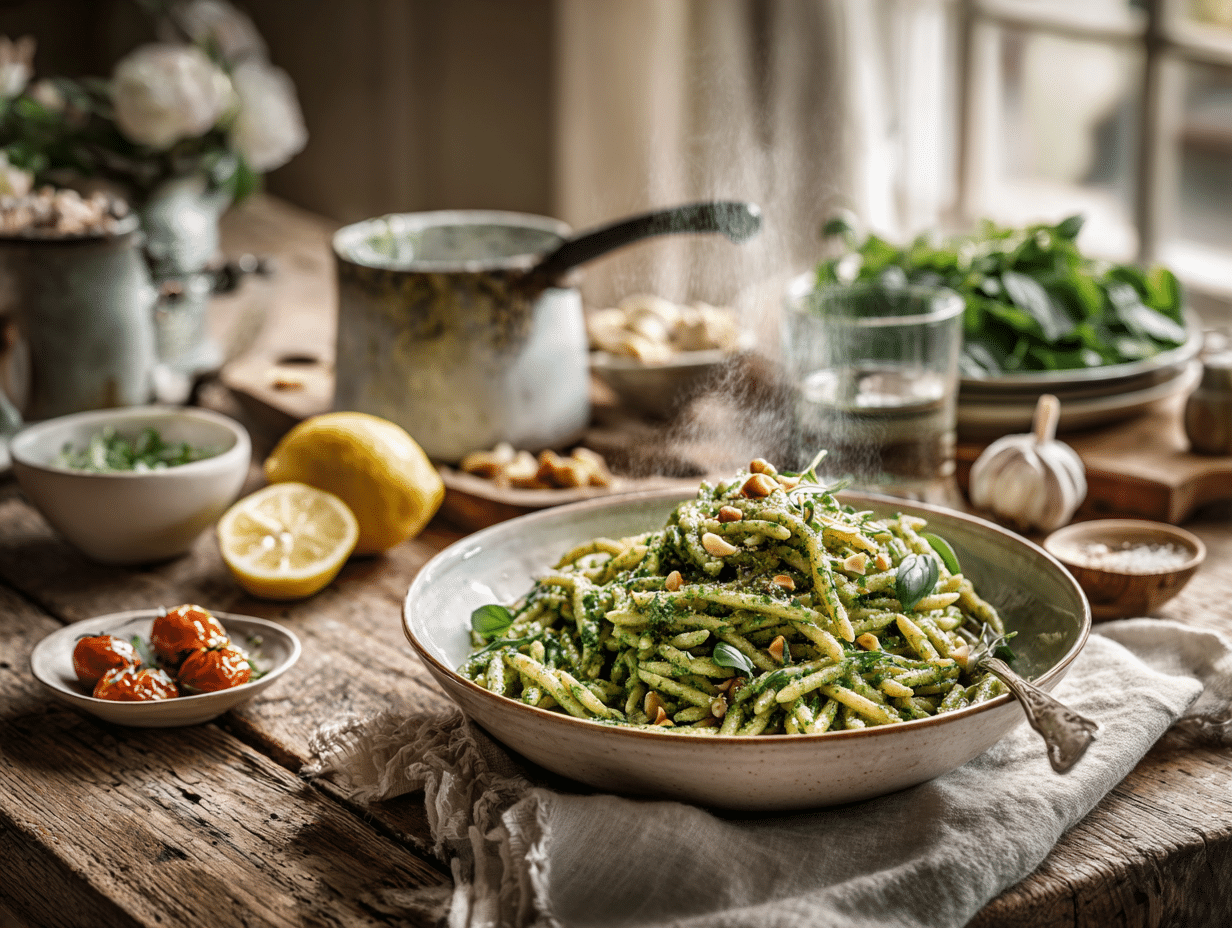
The Story Behind Macadamia Nut Pesto Pasta
In the sun-drenched hills of Liguria, where terraced gardens tumble toward the Mediterranean, pesto alla genovese has reigned as the region’s emerald crown jewel for centuries. This ancient sauce—a harmonious marriage of sweet basil, pine nuts, garlic, Parmigiano-Reggiano, and golden olive oil—tells the story of a cuisine built on simplicity and reverence for ingredients. Yet great culinary traditions invite reinterpretation, and in this modern twist, the buttery richness of Pacific macadamia nuts transforms the classic into something both familiar and thrillingly new.
A Cross-Cultural Culinary Journey
The macadamia nut, indigenous to the rainforests of Australia, found its second home in Hawaii during the late 19th century. These creamy, subtly sweet nuts became synonymous with Pacific cuisine, prized for their luxurious texture and delicate flavor. When substituted for traditional pine nuts in pesto, macadamias create an unexpectedly silky sauce with a rounder, more mellow character that beautifully complements basil’s peppery notes.
This fusion represents more than mere substitution—it’s a dialogue between culinary cultures. Where pine nuts bring a resinous sharpness to traditional pesto, macadamias offer a gentler canvas that allows other flavors to shine. The result is a sauce that maintains pesto’s essential character while introducing a creamy richness that makes dairy entirely unnecessary.
The Art of Plant-Based Adaptation
Creating a vegan pesto that rivals its traditional counterpart requires understanding what each ingredient brings to the table. In classic pesto, Parmigiano-Reggiano provides not just saltiness but umami depth and a subtle nuttiness that rounds out the sauce. Nutritional yeast—that golden powder beloved by plant-based cooks—steps in admirably, offering similar savory notes with its own distinctive character.
The choice between nutritional yeast and vegan Parmesan speaks to personal preference and desired outcome. Nutritional yeast brings a unique, almost cheesy funk that some find addictive, while quality vegan Parmesan alternatives offer a sharper, more familiar profile. Either way, the macadamias’ natural creaminess ensures the sauce achieves that crucial balance between body and brightness.
Technique: The Foundation of Flavor
The seemingly simple act of making pesto conceals layers of technique that separate good from transcendent. Toasting the macadamias—whether in a low oven or dry skillet—awakens dormant oils and develops complex flavors that raw nuts simply cannot provide. That gentle crackling sound as they warm tells you transformation is underway.
Perhaps no detail matters more than properly dried basil. Water is pesto’s enemy, diluting flavor and preventing proper emulsification. A salad spinner becomes an essential tool, ensuring each leaf contributes maximum flavor without unwanted moisture. Some chefs even go so far as to blanch and shock their basil, preserving that brilliant green color that oxidation threatens to steal.
The traditional method of using a mortar and pestle—laborious though it may be—still produces the finest texture. The crushing action releases oils differently than blade cutting, creating a sauce with more character and better integration. For those choosing convenience, a food processor works admirably, though restraint is key. Over-processing leads to a homogeneous paste; the goal is a sauce with texture and personality.
The Pasta Partnership
While pesto pairs beautifully with many shapes, certain pastas seem designed for this sauce. Trofie, those twisted Ligurian natives, catch pesto in their curves. Fusilli’s spirals perform similar magic. Even simple linguine, when properly dressed, becomes a canvas for pesto’s complex flavors.
The marriage of pasta and pesto happens in those crucial final moments—what Italians call the mantecatura. This vigorous tossing with reserved pasta water creates the emulsion that transforms separate elements into a unified dish. The starchy water acts as liaison, helping the oil-based sauce cling to every strand or curve. Temperature matters here: too hot and the basil’s brightness fades; too cool and the sauce won’t properly coat.
Seasonal Variations and Creative License
While this recipe celebrates summer’s basil bounty, the framework invites seasonal adaptation. Spring might see pea shoots or wild garlic joining the basil. Autumn could introduce a handful of arugula for peppery depth. Winter might call for sun-dried tomatoes, adding concentrated sweetness to balance the herbs.
The optional blistered cherry tomatoes represent this spirit of adaptation. Their concentrated sweetness and slight char provide textural contrast and flavor complexity, turning a simple pasta into a more complete meal. Similarly, finishing touches—a scatter of fresh herbs, extra nuts for crunch, a final whisper of lemon zest—elevate the dish from everyday to extraordinary.
Cultural Significance and Modern Relevance
In our increasingly plant-forward culinary landscape, recipes like this macadamia nut pesto pasta represent more than dietary accommodation—they showcase how traditional techniques and modern preferences can create something genuinely exciting. This isn’t about replacing or improving upon tradition but rather expanding our definition of what classic cooking can be.
The beauty lies in accessibility. Quality macadamias are increasingly available worldwide. Nutritional yeast has moved from health food stores to mainstream markets. Fresh basil grows readily in summer gardens or even windowsill pots. This democratization of ingredients means home cooks everywhere can create restaurant-quality dishes that honor tradition while embracing innovation.
The Philosophy of Simplicity
At its heart, this dish embodies the Italian philosophy of letting ingredients shine. No complicated techniques mask inferior products. No heavy sauces obscure natural flavors. Instead, each element—the nutty sweetness of macadamias, the aromatic punch of basil, the bright acidity of lemon, the fruity depth of good olive oil—contributes to a harmonious whole.
This restraint requires confidence. It takes courage to present a dish where nothing hides, where quality and technique stand naked on the plate. Yet when executed properly, such simplicity achieves what elaborate preparations cannot: a direct connection between ingredient, cook, and diner.
Looking Forward
As our food culture continues evolving, recipes like this macadamia nut pesto pasta point toward a future where tradition and innovation dance together rather than clash. They demonstrate that plant-based cooking need not be about sacrifice or substitution but can instead offer its own rewards—dishes that stand proudly on their own merits rather than as pale imitations of originals.
Whether served at a casual weeknight dinner or presented at a gathering of food-loving friends, this pasta tells a story. It speaks of summer markets and careful technique, of respect for tradition and openness to change. Most importantly, it delivers what all great dishes must: satisfaction that lingers long after the last bite, and memories that call us back to the kitchen to create it again.

Macadamia Nut Pesto Pasta

Equipment
- Large pot (at least 5 quarts)
- Food processor or mortar and pestle
- Rimmed baking sheet (or skillet for dry toasting)
- Colander
- Tongs
- Microplane zester
- Measuring cups and spoons
- Chef’s knife and cutting board
- Salad spinner or clean kitchen towels
- Heatproof measuring cup or ladle (to reserve pasta water)
Ingredients
For the Pasta & Tomatoes:
- 4 quarts water for boiling pasta
- 2 tablespoons Kosher salt for well-seasoned pasta water
- 12 ounces dried pasta trofie, fusilli, or linguine preferred
- 1 tablespoon extra-virgin olive oil for blistering tomatoes (optional)
- 1 pint cherry tomatoes, halved optional; choose firm, ripe tomatoes for best flavor
- ¼ teaspoon red pepper flakes optional, for gentle heat
For the Macadamia Pesto:
- 1 cup raw, unsalted macadamia nuts high-quality, fresh nuts for best flavor; toast lightly
- 2 cloves garlic medium cloves; adjust to taste
- 1 teaspoon lemon zest preferably organic, finely zested
- 2 tablespoons fresh lemon juice freshly squeezed for brightness
- 3 cups fresh basil leaves, packed dry thoroughly; Genovese variety preferred
- 3 tablespoons nutritional yeast for savory depth (use OR vegan Parmesan, not both)
- ⅓ cup vegan Parmesan, finely grated optional alternative to nutritional yeast; choose a high-quality brand
- ½ teaspoon fine sea salt for the pesto base; adjust to taste
- ½ teaspoon freshly ground black pepper coarsely ground for aroma
- ½ cup extra-virgin olive oil fruity, peppery oil for best emulsion
To Finish:
- 1 cup reserved pasta cooking water you may not use it all
- 1 tablespoon vegan butter optional, for extra gloss and body
- ½ cup small basil leaves for garnish
- 2 tablespoons macadamia nuts, coarsely chopped for garnish
- ½ teaspoon additional lemon zest for finishing brightness
- 1 teaspoon extra-virgin olive oil optional drizzle for serving
Instructions
- Toast the Macadamias: Preheat the oven to 325°F (163°C). Spread 1 cup macadamias on a rimmed baking sheet and toast for 8 minutes, until just pale-golden and fragrant—listen for a gentle crackle and look for lightly deepened edges. Cool 5 minutes. Alternative: Dry-toast in a skillet over medium heat for 5–6 minutes, shaking often.
- Prep the Aromatics and Basil: Rinse and thoroughly dry 3 cups packed basil (a salad spinner is ideal). Peel 2 garlic cloves. Finely zest and juice 1 lemon (you’ll need 1 teaspoon zest and 2 tablespoons juice). Halve the cherry tomatoes if using. Chef’s cue: Ultra-dry basil yields a brighter green pesto with better emulsion.
- Boil the Pasta: Bring 4 quarts water to a rolling boil (212°F/100°C). Add 2 tablespoons kosher salt, then 12 ounces pasta. Cook until al dente, about 10 minutes (check a minute early). Reserve 1 cup starchy water, then drain.
- Optional: Blister the Tomatoes: While the pasta cooks, heat 1 tablespoon olive oil in a skillet over medium-high. Add tomatoes cut-side down with a pinch of salt and 1/4 teaspoon red pepper flakes. Cook 2–3 minutes until skins blister and tomatoes just slump; set aside.
- Make the Pesto: In a food processor, combine toasted macadamias, garlic, lemon zest, and 1/2 teaspoon sea salt. Pulse 10–12 times to a coarse crumble—you should smell warm, nutty aroma. Add basil and 3 tablespoons nutritional yeast or 1/3 cup finely grated vegan Parmesan. With the machine running, stream in 1/2 cup olive oil and 2 tablespoons lemon juice until creamy yet spoonable, 30–45 seconds. Scrape bowl; season with 1/2 teaspoon black pepper and adjust salt or lemon to taste. No processor? Use a mortar and pestle: crush garlic and salt first, then nuts, then basil; pound in oil slowly for a silkier texture.
- Emulsify with the Pasta: Return drained pasta to the warm pot over low heat (or off heat if your pot runs hot). Add about 1/2 cup pesto and 1/4 cup reserved water. Toss vigorously 60–90 seconds until glossy and evenly coated, adding more pesto and splashes of water until the sauce clings in a thin, satiny layer. Keep heat gentle—pesto should never sizzle. Swirl in 1 tablespoon vegan butter if using. Fold in blistered tomatoes and/or a handful of baby arugula if desired. Total time on heat here: about 2 minutes.
- Plate: Twirl pasta into warm bowls using tongs, then garnish with small basil leaves, 2 tablespoons chopped macadamias, a whisper of extra lemon zest, a few cracks of black pepper, and a light olive oil drizzle. Serve immediately while aromatic oils are most expressive.
Notes
Michelle’s Tips:
- Greener Pesto: Briefly blanch basil for 10 seconds in boiling water, then ice-bath and dry well; this slows oxidation for an even brighter green.
- Nut Options: Substitute raw cashews or almonds; for nut-free, use hulled sunflower seeds.
- Cheesy Depth: Nutritional yeast adds umami; for a sharper, grating-cheese vibe, use a quality vegan Parmesan—use one or the other, not both.
- Gluten-Free: Pair the pesto with your favorite gluten-free pasta; chickpea or brown rice varieties work beautifully.
- Texture Control: For a silkier sauce, add oil in a thin stream while processing; for a rustic pesto, pulse minimally and finish by hand with a spatula.
- Season Boldly: Properly salted pasta water is crucial—the noodles should taste pleasantly seasoned before saucing.
- Make it a Meal: Add sautéed zucchini ribbons, roasted asparagus tips, or seared oyster mushrooms.
- Pesto yield is about 1 to 1 1/4 cups; you may have a little extra—perfect for drizzling over grilled vegetables or spreading on toasted sourdough.
- Store pesto refrigerated for up to 3 days with a thin layer of olive oil on top to limit oxidation, or freeze for up to 2 months.
Serving Suggestions:
For a restaurant finish, twirl nests of pasta into each bowl, letting a little sauce pool around the edges. Scatter tiny basil leaves and chopped macadamias for crunch, then finish with microplaned lemon zest for a citrusy top note. The ideal bowl is a luminous emerald with a glossy sheen and wafts of basil, lemon, and warm nuttiness. Pair with a crisp, chilled glass of Sauvignon Blanc or sparkling water with lemon; add a peppery arugula salad on the side.Culinary Context:
Pesto’s roots trace to Liguria, Italy—traditionally made with basil, pine nuts, and Parmigiano. Swapping in macadamias introduces a coastal-Pacific influence and a naturally creamy, dairy-free richness without sacrificing authenticity’s spirit: fresh herbs pounded with nuts, garlic, and oil. I fell for this combination after a market demo in late summer—the macadamias’ buttery profile amplified basil’s floral notes in a way that felt both classic and new.Optional Advanced Instructions:
- Make-Ahead: Toast nuts up to 5 days in advance. Pesto keeps 2–3 days refrigerated under a thin oil seal, or freeze in ice cube trays for easy weeknight portions.
- Mortar-and-Pestle Method: For maximum aroma, pound garlic and salt to a paste, then nuts, then basil; drizzle oil slowly while pounding to form a glossy emulsion.
- Beginner Shortcut: Pulse everything in a processor, then adjust with extra oil and a splash more lemon until the spoon leaves a faint trail.
Timing:
- Prep Time: 20 minutes (0 hours 20 minutes)
- Cook Time: 23 minutes (0 hours 23 minutes)
- Total Time: 8 minutes to toast nuts at 325°F/163°C + 10 minutes to boil pasta + 3 minutes to blister tomatoes (optional but included) + 2 minutes to emulsify sauce with pasta.
Course & Cuisine:
- Course: Dinner
- Cuisine: Italian (Ligurian inspiration) with a Pacific twist from macadamias