
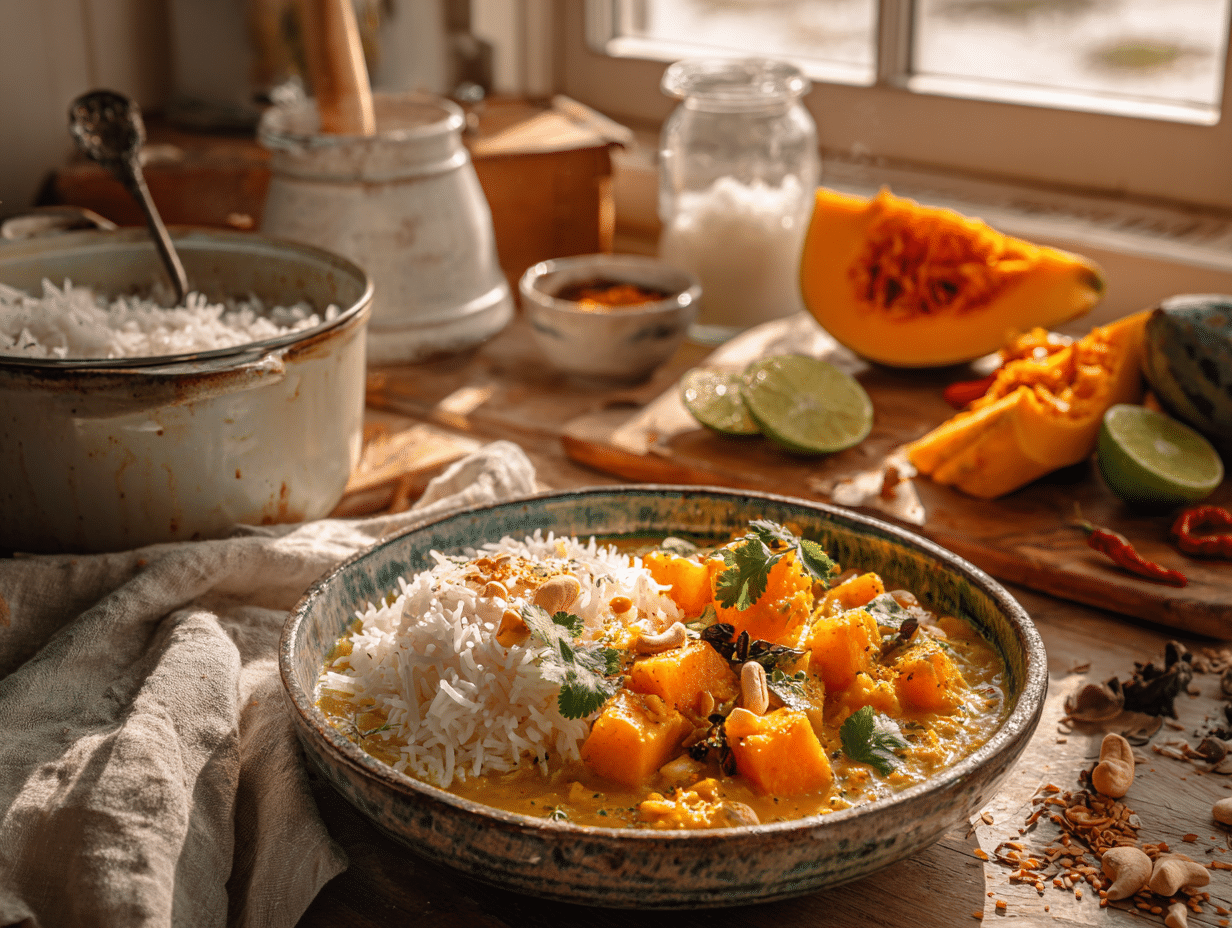
This is a red lentil and pumpkin curry served over coconut jasmine rice — one pot of curry, one pot of rice, about 45 minutes start to finish. The lentils break down into a thick, creamy sauce that makes the whole bowl feel substantial enough to satisfy people who think plant-based food leaves them hungry.
The technique that matters
Tempering the spices in hot oil at the very start is the step that separates a flat curry from one with real depth. Heat your oil until it shimmers, then add the mustard seeds and wait — actually wait — until they pop before adding anything else. That popping tells you the oil is hot enough to open up the seeds and release their flavor. If you rush it and add the onion too soon, the spices steam instead of bloom and you lose most of what makes this dish interesting. The same logic applies to the ground spices added later: give them 60 full seconds in the oil before the liquid goes in, stirring constantly so they don’t scorch. That brief, dry-heat contact is what builds the base flavor the coconut milk and lentils will absorb.
About the ingredients
- Curry leaves: Listed as optional, but worth tracking down at an Indian or South Asian grocery store if you can. They’re inexpensive, freeze well, and add a flavor that dried herbs can’t replicate. Skip the dried version — it’s essentially flavorless.
- Pandan leaf: Also optional, used in the coconut rice. If you find it fresh or frozen at a Southeast Asian market, add one knotted leaf to the rice pot and remove before serving. It adds a subtle, almost nutty fragrance. If you can’t find it, the rice is still good without it.
- Butternut squash vs. pumpkin: Butternut squash is the more reliable choice in most US grocery stores. Sugar pumpkin or kabocha work well too. Avoid carving pumpkins — they’re watery and bland.
- Full-fat coconut milk: Use full-fat, not light. Light coconut milk produces a thin sauce that doesn’t coat the lentils properly.
- Toasted cashews: Skip the garnish — not worth the extra dish. The curry is complete without them, and most of the texture comes from the pumpkin chunks anyway.
What can go wrong
- Curry sticks and scorches on the bottom: Red lentils thicken fast as they cook. Once they’ve softened, turn the heat to low and stir every few minutes. If it’s catching, add a splash of water — up to a quarter cup — and scrape the bottom with a wooden spoon.
- Pumpkin turns to mush: Cut the pumpkin into pieces no smaller than 1-inch cubes and add it after the lentils have had a few minutes head start. Smaller pieces or adding everything at once usually means the squash disintegrates into the sauce before the lentils are done.
- Coconut rice is gluey: This happens when the rice is stirred after the coconut milk goes in, or when the lid is lifted repeatedly during cooking. Add the coconut milk and water, bring to a simmer, then leave it alone with the lid on until the liquid is absorbed.
- Dish tastes flat despite following the recipe: Taste after adding the lime juice. If it still seems dull, it almost always needs more salt, not more spice. Add salt in small increments and taste between each addition.
- Mustard seeds never pop: The oil isn’t hot enough. Give it another 30 seconds over medium-high heat before adding the seeds. If you’re using a wide, thin-bottomed pan, it may take longer to reach the right temperature than a heavier pot would.

Lentil and Pumpkin Curry with Coconut Rice

Equipment
- Chef's knife
- Cutting board
- 4- to 5-quart heavy pot or Dutch oven with lid
- Medium saucepan with tight-fitting lid (for rice)
- Fine mesh strainer
- Wooden spoon or silicone spatula
- Measuring cups and spoons
- Ladle
- Small skillet (optional, for toasting garnishes)
Ingredients
For the Coconut Rice:
- 1 ½ cups jasmine rice, rinsed until water runs clear choose fragrant Thai jasmine; rinse to remove excess starch
- 1 cup full-fat coconut milk (canned) look for Aroy-D or Chaokoh for a smooth, stable emulsion
- 1 ¼ cups water
- ½ tsp fine sea salt
- 1 tsp organic cane sugar optional; enhances aroma and gentle sweetness
- 1 piece knotted pandan leaf or bay leaf optional but elevates fragrance
For the Pumpkin & Lentil Curry:
- 2 tbsp virgin coconut oil or use a neutral oil if preferred
- 1 tsp black mustard seeds adds a nutty, peppery pop
- 1 tsp cumin seeds toasted in oil for earthy warmth
- 12 pieces fresh curry leaves optional; use 10–12 leaves; frozen leaves work well
- 1 medium yellow onion, finely diced (about 1 cup) choose fresh, firm onions for sweetness
- 1 tbsp fresh ginger, minced peeled; microplane for a finer paste
- 4 cloves garlic, minced freshly minced for best aroma
- 2 small red chilies, thinly sliced or use 1/2 tsp red pepper flakes for convenience
- 2 tsp ground coriander
- 1 tsp ground turmeric adds color and earthiness
- 1 tsp garam masala add toward the end for bright aromatics
- ½ tsp ground cinnamon optional; complements pumpkin's sweetness
- 2 tbsp double-concentrated tomato paste carmelize briefly for umami depth
- 1 cup red lentils, rinsed well split red lentils (masoor dal) for a silky texture
- 3 cups peeled sugar pumpkin or butternut squash, 1-inch dice choose firm, sweet squash; avoid stringy or watery varieties
- 1 can full-fat coconut milk (13.5 fl oz) shake can well before opening
- 2 ½ cups low-sodium vegetable broth homemade if possible; keeps flavors clean
- 1 tsp fine sea salt, plus more to taste
- 1 tsp pure maple syrup or coconut sugar balances acidity and heat
- ½ medium fresh lime, juiced add to taste for brightness
- ½ cup cilantro leaves and tender stems, chopped reserve some for garnish
To Finish & Serve:
- 2 tbsp roasted cashews, roughly chopped for crunch; toast lightly if unroasted
- 2 tbsp toasted unsweetened coconut flakes adds aroma and texture
- 1 medium lime, cut into wedges for serving
- ¼ cup cilantro leaves, for garnish
- 2 whole scallions, thinly sliced optional
Instructions
- Rinse and Soak Rice (optional): Place the jasmine rice in a fine-mesh strainer and rinse under cold water, swishing with your fingers, until the water runs mostly clear (about 45–60 seconds). Optional: soak the rice in cool water for 10 minutes to promote long, separate grains; drain thoroughly.
- Start the Coconut Rice: In a medium saucepan, combine rice, 1 cup coconut milk, 1 1/4 cups water, salt, sugar, and the pandan or bay leaf. Bring to a gentle simmer over medium heat; once you see steady surface bubbles (about 190–200°F / 88–93°C), reduce to low, cover, and cook 12–15 minutes. Turn off heat and let steam, covered, for 10 minutes. Fluff with a fork and keep warm.
- Prep the Curry Aromatics: While the rice cooks, finely dice the onion, mince the ginger and garlic, slice the chilies, and peel/cube the pumpkin (1-inch dice). Rinse the red lentils under cold water until the water runs clear to remove excess starch.
- Bloom Whole Spices: Heat a 4- to 5-quart pot over medium heat, add coconut oil. When shimmering, add mustard seeds. As they begin to pop and dance, stir in cumin seeds and curry leaves (if using). Toast 30–45 seconds until fragrant; avoid burning.
- Build the Base: Add diced onion with a pinch of salt. Sauté 5–7 minutes until translucent with golden edges for sweetness. Stir in ginger, garlic, and chilies; cook 45–60 seconds until aromatic. Add ground coriander, turmeric, garam masala, and cinnamon; stir 30 seconds. Push aromatics to the side, add tomato paste, and fry 60–90 seconds to caramelize, then mix through. If the pot looks dry, splash in a tablespoon of broth to prevent scorching.
- Add Lentils and Pumpkin; Simmer: Stir in rinsed lentils and pumpkin to coat in spices. Pour in 1 can coconut milk and 2 1/2 cups broth; bring to a gentle boil, then reduce to a lively simmer (around 190–200°F / 88–93°C). Partially cover and cook 18–22 minutes, stirring every 5 minutes, until the pumpkin is tender and the lentils are creamy. If it thickens too quickly, add a splash of hot water or broth.
- Balance and Finish: Season with 1 tsp salt (or to taste), maple syrup, and lime juice. Stir in chopped cilantro off heat to preserve color. Taste and adjust: more salt for savoriness, lime for brightness, or chili for heat. The curry should be glossy and spoonable, not stodgy; loosen with water if needed.
- Toast Garnishes (optional but recommended): In a small dry skillet over medium heat, toast cashews and coconut flakes 2–3 minutes, tossing, until golden and aromatic.
Notes
Michelle’s Tips:
- Deeper Pumpkin Flavor: Roast the pumpkin cubes at 425°F (220°C) for 20–25 minutes with a drizzle of oil and pinch of salt before adding to the curry.
- Ultra-Silky Texture: Partially mash a few pumpkin cubes and lentils with the back of a ladle in the last minutes of cooking.
- Spice Control: Swap fresh chilies for 1/4–1/2 tsp red pepper flakes, added with the ground spices, for consistent heat.
- Coconut Milk Choice: Use full-fat for body; if using light coconut milk, simmer a few minutes longer to reduce.
- Nut-Free: Replace cashews with toasted pumpkin seeds (pepitas) or crispy fried shallots.
- Instant Pot: Sauté aromatics on Sauté, then pressure cook curry for 5 minutes; natural release 10 minutes. Cook rice separately or pot-in-pot.
- Leftovers keep 4 days refrigerated; the curry thickens as it rests—loosen with hot water or broth when reheating over low heat (aim for a gentle simmer around 190°F / 88°C).
- The curry freezes well up to 2 months; thaw overnight.
- For best rice texture, cook fresh or re-steam with a sprinkle of water.
- Season in Layers: Salt the onions lightly, then adjust at the end after adding lime.
- If using canned pumpkin puree instead of cubes, stir in 1/2 cup at the end for body, not as a full substitute for the diced pumpkin.
Nutrition
FAQ
Can I make this ahead of time?
Yes — the curry actually tastes better the next day. Store it separately from the rice in airtight containers in the fridge for up to 4 days. Reheat the curry on the stovetop with a splash of water to loosen it, since it thickens considerably when cold.
Can I use canned pumpkin instead of fresh?
Not for this recipe. Canned pumpkin puree will dissolve completely into the sauce rather than holding its shape as chunks. Stick with fresh pumpkin or butternut squash cut into cubes.
Is this dish spicy?
At the default amount of chili, it has mild-to-medium heat — noticeable warmth but nothing sharp. If you’re cooking for people who are sensitive to spice, halve the chili or leave it out entirely and let people add chili flakes at the table.
Can I use a different lentil if I don’t have red lentils?
Red lentils are important here because they break down and thicken the sauce. Green or brown lentils will stay whole and give you a chunkier, brothier result — edible, but a different dish. Yellow split peas are the closest substitute and will behave similarly.
Can I freeze the leftovers?
The curry freezes well for up to 3 months. Freeze it without the rice, which tends to become grainy after thawing. Cook a fresh batch of coconut rice when you’re ready to serve.
My family doesn’t usually like curry — will they eat this?
The coconut milk and pumpkin make this version noticeably milder and sweeter than many restaurant curries, which tends to win over people who find heavily spiced food off-putting. Serving it over a generous portion of coconut rice also softens the overall intensity of the spices.
If you liked this one
- Mediterranean Lentil Power Bowl
- Moroccan Lentil Apricot Tagine
- Vegan Indonesian Rice Bowl
- Golden Curried Parsnip Soup