
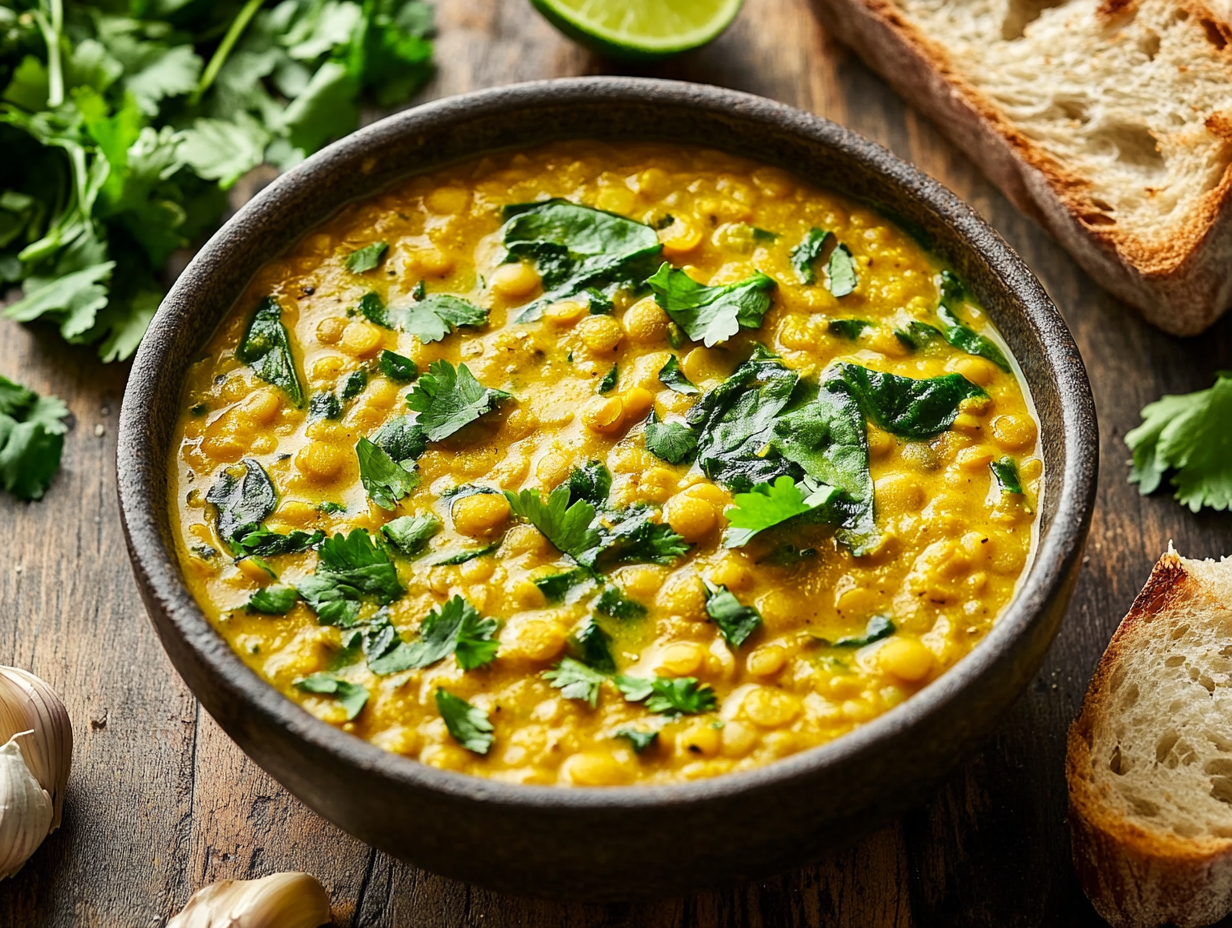
This is a red lentil curry built on a coconut milk base with fire-roasted tomatoes, fresh spinach, and a South Indian-leaning spice blend. It comes together in about 40 minutes from pantry staples, and a single bowl over rice delivers a genuinely filling, protein-complete meal without any fuss.
The short version of why this works
Two things make this curry worth cooking. First, blooming the spices — curry powder, turmeric, and cumin — directly in hot oil before anything else goes in. Thirty seconds of heat transforms them from dusty to fragrant and drives flavor into every bite of lentil. Second, red lentils dissolve as they cook, which means you get a thick, creamy texture without blending anything. That breakdown also lets the spiced coconut milk absorb evenly throughout rather than sitting on top. Skip either step and you get a flat, watery result. Do both and the dish takes care of itself.
About the ingredients
- Curry powder: A Madras-style blend works best here — it typically includes fenugreek and mustard seed alongside the standard cumin and coriander, which adds more depth than a generic mild blend. Check the spice aisle label before buying.
- Full-fat coconut milk: Do not substitute lite coconut milk. The fat content is what gives the curry body. Shake the can before opening — if it sloshes like water, it may be a thin batch; a second can on hand is useful insurance.
- Fire-roasted canned tomatoes: These have more acidity and a subtle smokiness that regular diced tomatoes lack. If you can only find regular diced, add a small pinch of smoked paprika to compensate.
- Fresh ginger: Ground ginger is not a straight swap — it lacks the brightness of fresh. Frozen grated ginger cubes (sold in most grocery freezer sections) work just as well and keep for months.
- Spinach: Baby spinach wilts in under two minutes. Mature spinach or chard needs an extra three to four minutes and slightly more liquid. Kale needs five or more.
Troubleshooting
- Curry tastes flat or one-dimensional: The spices likely weren’t bloomed long enough, or the onions were undercooked. Onions should be fully soft and starting to turn golden before spices go in — pale, crunchy onions produce a raw, sharp base that no amount of simmering will fix.
- Lentils are still firm after the listed cook time: Old lentils take significantly longer to soften. If yours are more than a year past purchase, add up to 10 extra minutes and a splash more broth. Hard water can also slow lentil cooking — a squeeze of lemon added after cooking (not during) helps.
- Curry is too thin: Simmer uncovered for an additional five to eight minutes, stirring occasionally. Red lentils thicken considerably as they cool, so pull it off heat slightly looser than you want the final texture.
- Curry is too thick or scorching on the bottom: Add broth or water two tablespoons at a time and reduce heat. Coconut milk curries catch quickly on high heat — medium-low is the right setting once the lentils are in.
- Bitter or harsh aftertaste: This usually means the turmeric or curry powder was overcooked during blooming. Thirty to forty-five seconds in hot oil is enough — if the spices start to smoke, pull the pan off heat immediately and add the onions to stop cooking.
Storage and reheating
Refrigerate leftovers in a sealed container for up to five days — the flavor actually improves by day two as the spices settle. To freeze, cool completely first, then store in portions for up to three months; thaw overnight in the fridge rather than on the counter. Reheat on the stovetop over medium-low with a splash of water or broth stirred in, since the lentils absorb liquid as they sit and will be noticeably thicker than when first cooked. Microwave reheating works fine — cover loosely and stir halfway through. Skip the garnish if you’re reheating a work lunch; it’s not worth the extra prep for a container meal.

Coconut Curry Lentils

Equipment
- Large saucepan or Dutch oven
- Wooden spoon
- Chef's knife
- Cutting board
Ingredients
- 1 tablespoon coconut oil or neutral oil like avocado oil
- 1 medium yellow onion finely diced
- 3 cloves garlic minced
- 1 tablespoon fresh ginger grated
- 1 tablespoon curry powder preferably Madras-style for more heat
- 1 teaspoon ground turmeric
- 1 teaspoon ground cumin
- 1 cup red lentils rinsed well and drained
- 1 can diced tomatoes (14 oz) preferably fire-roasted, undrained
- 1 can full-fat coconut milk (13.5 oz) shaken well
- 1.5 cups vegetable broth low-sodium preferred
- 1 teaspoon sea salt to taste
- ¼ teaspoon ground black pepper freshly cracked preferred
- 1 cup fresh spinach roughly chopped
Instructions
- Heat the coconut oil in a large saucepan or Dutch oven over medium heat. Once melted, add the diced onion. Sauté for 5–6 minutes, or until it turns soft and translucent, stirring occasionally to prevent browning too quickly.
- Add the minced garlic and grated ginger. Cook for another 1–2 minutes, or until fragrant. You’ll know it’s ready when the aroma becomes sweet and pungent.
- Stir in the curry powder, turmeric, and cumin. Toast the spices for 1 minute to bloom their flavor, stirring constantly to prevent burning.
- Add the rinsed red lentils, diced tomatoes (with juice), coconut milk, and vegetable broth. Stir well to combine and bring the mixture to a simmer.
- Lower the heat to medium-low, cover partially with a lid, and simmer for 25–30 minutes. Stir occasionally to prevent sticking. The lentils should be tender and the curry thickened to a stew-like consistency.
- Season with sea salt and black pepper. Add the chopped spinach and stir just until wilted, about 2–3 minutes more.
- Remove from heat. Let sit uncovered for 5 minutes before serving to allow the flavors to meld and thicken slightly.
Notes
- Substitute kale for spinach if you want a heartier green that holds its structure.
- For extra richness and aroma, add a splash of lime juice or finish with fresh cilantro before serving.
- If cooking with dry spices often, consider toasting them in batches and storing them to save time and deepen flavor.
Nutrition
Frequently asked questions
Are red lentils a good source of protein?
Yes — one cooked cup delivers roughly 18 grams of protein. Paired with rice, which supplies the amino acids lentils are lower in, this meal provides a complete protein profile without any animal products.
Do I need to soak red lentils before cooking?
No. Red lentils cook quickly without soaking — typically 20 to 25 minutes in simmering liquid. Rinsing them under cold water until the water runs clear is enough; it removes surface starch that can make the curry gummy.
Can I make this higher in protein without changing the flavor much?
Stir in a drained can of chickpeas along with the lentils. They hold their shape while the lentils dissolve around them, adding texture and roughly 15 grams of additional protein per can across the whole batch.
Is this recipe gluten-free?
Yes, as written. Just confirm your curry powder and vegetable broth are certified gluten-free, since some brands add fillers or are processed on shared equipment.
What’s the best way to serve this to make it a full meal?
Basmati or brown rice is the most practical base — brown rice adds extra fiber and a few more grams of protein per serving. Whole-grain flatbread on the side also works well and makes the meal more portable if you’re packing it for lunch.
If you liked this one
- Mediterranean Lentil Power Bowl
- Moroccan Lentil Apricot Tagine
- Smoky Spanish Chickpea Stew
- Crispy Indian Chickpea Waffles