
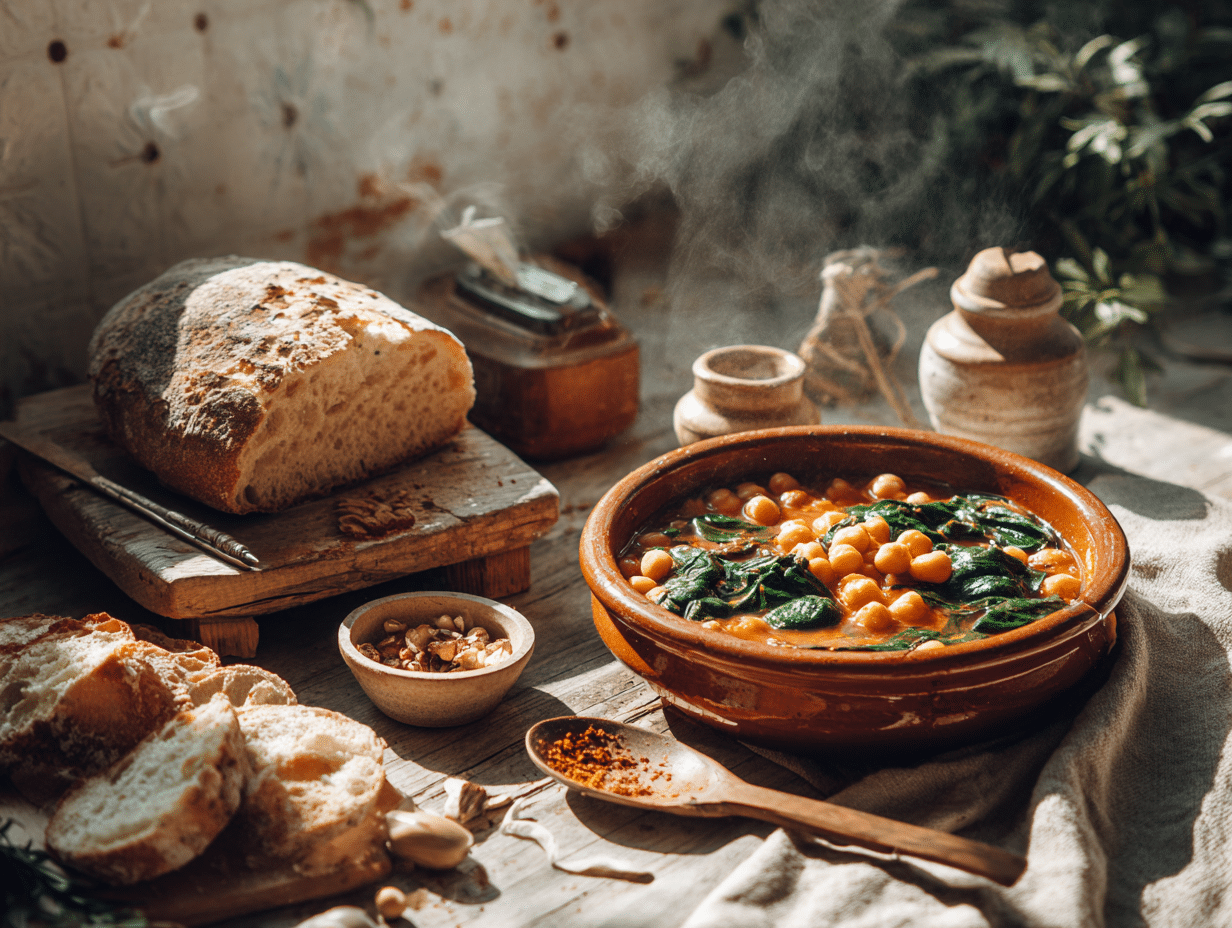
This is a Spanish chickpea and spinach stew — Espinacas con Garbanzos — built around smoked paprika, a quick pan-fried bread-and-almond paste, and canned chickpeas. It takes about 40 minutes, makes a generous pot, and gets noticeably better after a day in the fridge, which makes it one of the more practical things you can cook on a Sunday.
What makes this version work
Two things actually move the needle here. First, the picada — the paste of fried bread, toasted almonds, garlic, and sherry vinegar that gets stirred in near the end. It thickens the stew without flour and adds a nutty, slightly acidic backbone that flat-out doesn’t happen if you skip it or rush the toasting. Second, resting time. The stew is good fresh, but after a few hours the chickpeas absorb the smoky broth and the texture tightens into something much more satisfying. If you’re making this for the week, cook it the night before and don’t worry about reheating gently — a medium flame is fine.
What can go wrong
- Bitter, acrid paprika: Smoked paprika burns fast in hot oil. If your pan is too hot when you add it, the whole batch turns bitter. Add it off the heat or reduce to low first, then stir for 30 seconds before adding liquid.
- Watery stew that won’t thicken: This usually means the picada bread wasn’t fried long enough to dry out, so it dissolved instead of binding. The bread should be genuinely golden and crisp before it goes into the mortar or blender.
- Mushy spinach on day two: If you’re storing leftovers, consider stirring fresh spinach into each portion as you reheat rather than cooking all of it into the pot upfront. Pre-cooked spinach turns grey and loses texture overnight.
- Flat, one-note flavor: Sherry vinegar is doing real work in the picada — don’t substitute plain white vinegar. Red wine vinegar is the closest acceptable swap. Apple cider vinegar will technically work but pulls the flavor in a different direction.
- Chickpeas falling apart: Canned chickpeas are already fully cooked. Aggressive stirring or a hard boil after they go in will break them down. Keep the simmer gentle once the chickpeas are in the pot.
About the ingredients
- Smoked paprika (pimentón): Sweet smoked is standard here. Hot smoked works if you want heat, but don’t use unsmoked sweet paprika — the smoke is the point, not just the color.
- Sherry vinegar: Sold at most grocery stores near the specialty vinegars. Worth buying a bottle; it keeps for years and is genuinely different from other wine vinegars.
- Almonds in the picada: Blanched are easiest to work with, but skin-on raw almonds toasted in a dry pan are fine. Skip the garnish of extra whole almonds on top — not worth the extra dish.
- Spinach: Fresh baby spinach wilts quickly and works well. Frozen spinach (thawed and squeezed dry) is a solid swap and actually holds up better in stored leftovers.
- Vegetable broth: A low-sodium broth gives you more control over the final salt level, especially since the stew reduces as it simmers.

Spanish Chickpea and Spinach Stew (Espinacas con Garbanzos)

Equipment
- Baking sheet
- Mortar and pestle or food processor
- Large skillet or sauté pan (12-inch)
- Wooden spoon
- Chef's knife
- Cutting board
- Measuring cups and spoons
- Ladle
Ingredients
For the Aromatic Paste (picada-style):
- 2 oz day-old rustic bread, torn into 1-inch pieces about 1 heaping cup; dry texture toasts best
- 0.25 cup blanched almonds raw; Spanish Marcona preferred if available
- 2 cloves garlic, peeled for the paste
- 2 tbsp Spanish extra-virgin olive oil for emulsifying the paste
- 1 tbsp sherry vinegar preferably Reserva; adds bright acidity to the paste
- 0.125 tsp fine sea salt a pinch helps grind the paste
For the Stew:
- 2 tbsp Spanish extra-virgin olive oil for sautéing
- 1 small yellow onion, finely diced about 1 cup
- 2 cloves garlic, minced for the stew base
- 1 tsp ground cumin freshly ground if possible
- 1.5 tsp sweet smoked paprika (pimentón dulce) essential for classic Spanish flavor
- 0.25 tsp hot smoked paprika (pimentón picante) optional, for gentle heat
- 1 cup crushed tomatoes canned, preferably fire-roasted for depth
- 1 piece bay leaf dried
- 2 cans chickpeas 15 oz each, drained and rinsed
- 1 cup low-sodium vegetable broth add more as needed to adjust consistency
- 0.75 tsp fine sea salt divided, to taste
- 0.5 tsp freshly ground black pepper to taste
- 8 oz baby spinach roughly chop if leaves are large
- 2 tsp sherry vinegar to finish; start with 1 tsp and add more to taste
- 1 tbsp Spanish extra-virgin olive oil for finishing drizzle
- 2 tbsp flat-leaf parsley, finely chopped for garnish
- 1 medium lemon, cut into wedges for serving
Instructions
- Toast the Bread and Almonds: Preheat the oven to 375°F (190°C). Spread the torn bread and almonds on a baking sheet and toast for 8–10 minutes, shaking once, until the bread is golden at the edges and the almonds are lightly bronzed and fragrant. Alternative: toast both together in a dry skillet over medium heat for 4–5 minutes, stirring often.
- Make the Aromatic Paste (picada-style): In a mortar and pestle, pound the almonds with a pinch of salt to a coarse sand. Add the toasted bread and 2 cloves garlic; continue pounding to a thick, cohesive crumb. Drizzle in 2 tbsp olive oil and 1 tbsp sherry vinegar, working it into a spoonable paste. Sensory cue: the paste should smell nutty-garlicky and hold together when pressed. If you don’t have a mortar and pestle, pulse everything in a food processor, then stream in the oil and vinegar; texture will be slightly smoother but still delicious.
- Sweat the Onion: Warm 2 tbsp olive oil in a large skillet over medium heat. Add the diced onion with a pinch of salt and cook 6–8 minutes, stirring occasionally, until translucent with lightly golden edges. Add the minced garlic and cook 30–60 seconds until fragrant—avoid browning.
- Bloom the Spices: Stir in the cumin, sweet paprika, and optional hot paprika. Cook 30 seconds until the spices smell smoky-sweet and the oil turns deep brick-red. Keep the heat moderate to prevent scorching.
- Build the Tomato Base: Add the crushed tomatoes and bay leaf. Simmer 3–4 minutes, stirring, until the tomatoes thicken slightly and the raw edge mellows. Visual cue: the sauce will look glossy and leave a clean trail when a spoon is dragged through it.
- Add Chickpeas, Broth, and the Paste: Stir in the chickpeas and vegetable broth. Spoon in the aromatic paste and whisk or mash it into the liquid so it dissolves evenly. Bring to a gentle simmer and cook 8–10 minutes over medium-low, stirring occasionally, until the stew is lightly thickened and coats the back of a spoon. Season with about 1/2 tsp salt and several grinds of pepper, adjusting to taste.
- Wilt the Spinach: Add the spinach in batches, folding gently as it wilts, 2–3 minutes. Keep the color vibrant green; avoid overcooking.
- Balance and Rest: Remove the bay leaf. Splash in 1–2 tsp sherry vinegar to brighten, to taste, and drizzle with 1 tbsp olive oil. Turn off the heat and let the stew rest 5 minutes so the flavors marry and the texture settles into a silky spoon-coating consistency.
- Serve: Ladle into warm bowls. Finish with chopped parsley and a squeeze of lemon at the table. Ideal consistency: spoonable but not soupy—add a splash more broth if it gets too thick.
Notes
Mary’s Tips:
- Smoky Depth: Use fresh, high-quality pimentón (smoked paprika). Stale paprika loses aroma quickly; replace annually.
- Gluten-Free: Swap the bread with a gluten-free rustic loaf or increase almonds to 1/3 cup and add 1 tbsp ground flaxseed to help thicken.
- From-Scratch Chickpeas: Cook 1 cup dried chickpeas (soaked overnight) until tender with a bay leaf; the cooking liquid makes an exceptional broth for this stew.
- Faster Caramelization: Add a pinch of baking soda to onions to speed softening, but watch closely to avoid browning too fast.
- Texture Control: For a creamier body, lightly mash a ladleful of chickpeas against the pan walls before adding spinach.
- Heat Level: Use hot smoked paprika judiciously—start with a small pinch and build up.
Serving Suggestions:
- Plate in warm shallow bowls, finishing with a glossy olive-oil swirl and a confetti of parsley. A lemon wedge on the rim adds a sunny accent and brightness at first bite.
- Pairings: Serve with toasted country bread rubbed with garlic, or alongside roasted peppers and marinated olives. Drink with a dry Spanish sherry (fino) or a chilled sparkling water with lemon.
- Visual Cues of Perfection: Vibrant green spinach, brick-red broth, and a gentle sheen of oil on the surface; aroma is smoky, garlicky, and lightly tangy.
Culinary Context:
A beloved staple in Seville’s taverns, this dish bridges Moorish and Spanish culinary traditions—where nuts, bread, and spices thicken and perfume simple vegetable stews. I fell for it during a late-afternoon tapeo, where a small clay cazuela of garbanzos and spinach was impossibly silky and bright—a masterclass in balance that I’ve chased ever since.Optional Advanced Instructions:
- Make-Ahead: The aromatic paste can be prepared up to 2 days ahead and refrigerated; bring to room temperature before using.
- Parallel Cooking: Start the onion base while the bread and almonds toast—this keeps total cook time to about 35 minutes.
- Beginner Alternative: If a mortar and pestle feels tricky, use a food processor; stop before it's completely smooth to keep some rustic texture.
- Holding & Reheating: The stew thickens as it sits; loosen with a splash of warm vegetable broth when reheating over low heat.
Timing:
Prep Time: 20 minutes. Cook Time: 35 minutes. Total Time: 55 minutes. Times align with the steps above, with some overlap if toasting and sautéing proceed in parallel.Course & Cuisine:
Course: Dinner or Lunch. Cuisine: Spanish (Andalusian), Mediterranean.Nutrition
Common questions
Can I use dried chickpeas instead of canned?
Yes, and the texture will be firmer and more consistent. Cook them fully before starting the stew — dried chickpeas need to be soaked overnight and simmered for 60 to 90 minutes until tender, then drained and used exactly as you would canned.
How long does this stew keep in the fridge?
It keeps well for up to 5 days in an airtight container. The flavor improves on days two and three as the chickpeas absorb the broth, making it a strong candidate for batch cooking.
Can I freeze it?
Yes, it freezes well for up to 3 months. Freeze it without the spinach if possible, or use frozen spinach in the original recipe so the texture after thawing is consistent.
I don’t have a mortar and pestle — can I still make the picada?
A small food processor or blender works fine. Pulse rather than blend continuously so you get a rough paste rather than a smooth purée — a little texture in the picada is better than a completely smooth one.
What do I serve this with to make it a full meal?
Crusty bread is the most practical option and doubles as a way to use up a loaf before it goes stale. Cooked white rice or warmed flatbread also work if you want something more substantial.
More plant-based recipes to try
- Vegan Paella Valenciana
- Moroccan Lentil Apricot Tagine
- Mediterranean Lentil Power Bowl
- French Vegan Cassoulet