
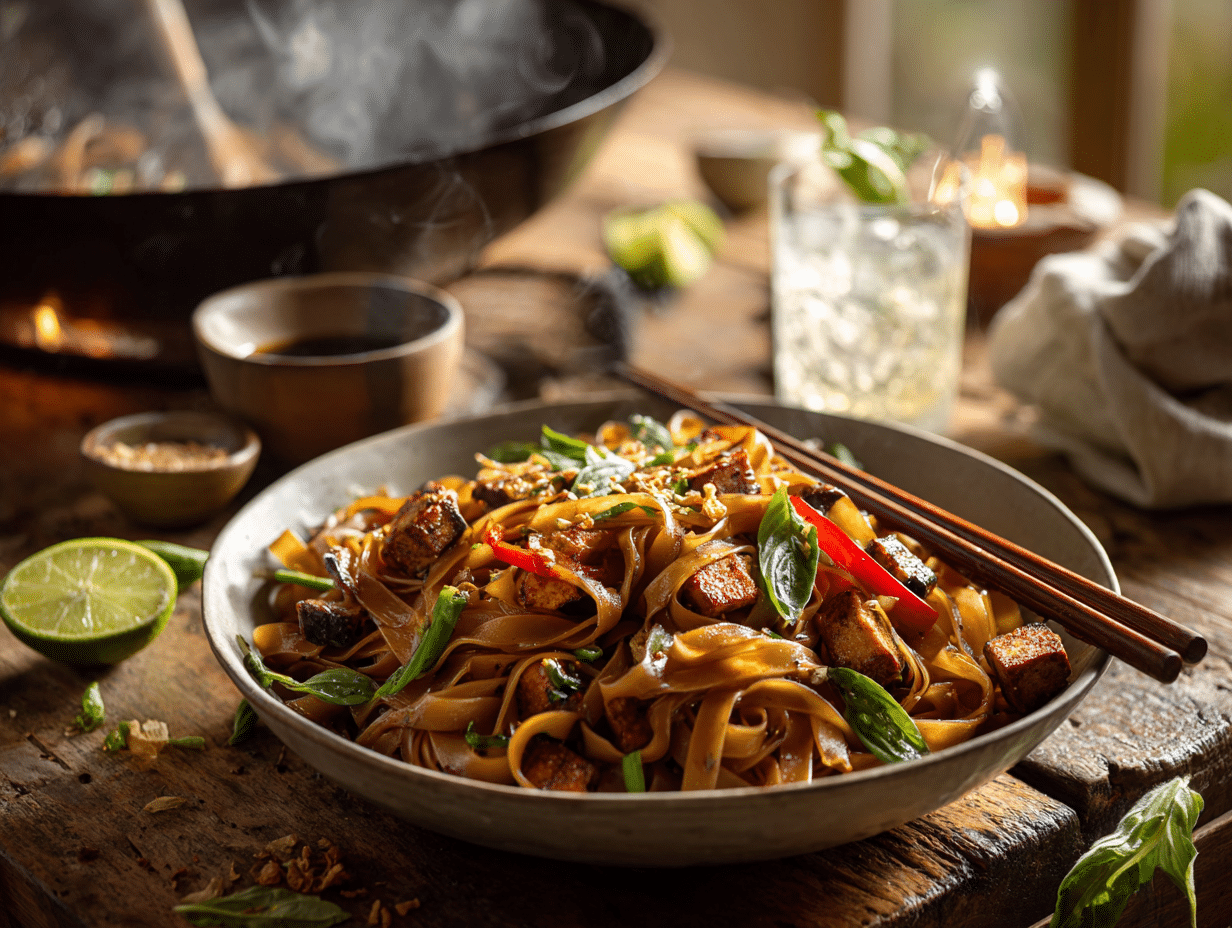
Pad Kee Mao is a Thai stir-fry built on wide rice noodles, lots of fresh basil, and a sauce that hits salty, sweet, and spicy all at once. This vegan version uses tofu and a fish-sauce-free sauce blend that delivers real depth without any hard-to-find ingredients. It comes together in about 20 minutes once your prep is done, which makes it a genuine weeknight option.
Why this recipe works
Two things matter here. First, the tofu gets pressed and seared in a dry-ish pan before anything else touches the wok — this builds a crust that holds up when the noodles and sauce go in, instead of turning into soft crumbles. Second, the sauce is mixed and ready before the heat goes on. Stir-fry moves fast, and if you’re measuring soy sauce while the garlic is burning, the whole dish suffers. Get the sauce in a bowl first, and the actual cooking is straightforward.
Ingredient notes
- Wide rice noodles (sen yai): Fresh ones are ideal but dried work fine — soak them in room-temperature water for 30 minutes rather than boiling, so they finish cooking in the wok without going mushy.
- Holy basil vs. Thai basil: Holy basil is harder to find outside Asian grocery stores. Thai basil is a reasonable substitute. Regular Italian basil wilts faster and tastes milder, but it still works if that’s what you have — just add it off the heat.
- Vegan oyster sauce (mushroom sauce): Sold at most Asian grocery stores and increasingly at mainstream supermarkets. If you can’t find it, use an extra teaspoon of dark soy sauce plus a small pinch of sugar.
- Dark soy sauce: Thicker and less salty than regular soy sauce — it adds color and a slight sweetness. Light soy sauce alone won’t give you the same result, but a 2:1 mix of regular soy sauce and a tiny bit of molasses gets close.
- Fresh Thai chiles: Serrano or red Fresno chiles are easy substitutes. For less heat, remove the seeds. Dried chile flakes work in a pinch — start with half a teaspoon and taste.
Leftovers and meal prep
Leftovers keep in the fridge for up to 3 days in an airtight container. Rice noodles firm up and clump as they cool, so reheat in a skillet over medium-high with a splash of water — about 2 minutes, tossing frequently — rather than microwaving, which makes them gummy. This dish doesn’t freeze well; the noodles turn grainy after thawing. If you want to prep ahead, make the sauce and press the tofu the night before, then cook fresh when you’re ready to eat.
If something goes sideways
- Noodles are sticking together in the wok: Add a tablespoon of water and keep tossing over high heat. This loosens them without making the sauce watery, as long as you work quickly.
- Sauce tastes flat: It usually needs more acid or salt. Add a small squeeze of lime juice first — that often fixes it. If it still tastes dull, add a few more drops of soy sauce, not more sugar.
- Everything is steaming instead of searing: The pan isn’t hot enough, or it’s overcrowded. Let the pan heat for a full 2 minutes before adding oil, and cook in two batches if your wok is smaller than 12 inches.
- Tofu is sticking to the pan: Don’t move it too soon. Let it sit undisturbed for 2–3 minutes until it releases on its own — pulling at it early is what causes sticking. Skip the garnish of extra sliced chiles on top if you’re short on fresh ones — not worth opening a second chile just for looks.
- Dish is too spicy to eat: Serve with plain steamed rice on the side to balance the heat. A spoonful of coconut milk stirred in also tones it down without wrecking the flavor.

Vegan Thai Drunken Noodles (Pad Kee Mao)

Equipment
- 14-inch carbon steel wok (or large heavy skillet)
- Large heatproof mixing bowl
- Kettle or pot for heating water
- Colander or spider strainer
- Mortar and pestle or mini food processor
- Chef's knife
- Cutting board
- Tongs or wok spatula
- Paper towels
Ingredients
For the Noodles:
- 8 oz wide dry rice noodles (about 3/8-inch) choose Thai brands (e.g., Erawan/elephant brand) for best texture
- 8 cups very hot water, for soaking noodles 195–205°F (90–96°C), enough to fully submerge
For the Sauce:
- 3 tbsp light soy sauce or tamari (low-sodium preferred) tamari for gluten-free; look for clean, well-brewed brands
- 1 tbsp dark soy sauce for color and light molasses depth; Koon Chun or Pearl River Bridge
- 1 tbsp vegan oyster (mushroom) sauce adds rich umami; look for Lee Kum Kee Vegetarian or similar
- 1 tsp vegan fish sauce (optional) enhances savory depth; coconut aminos + seaweed brine also work
- 2 tsp coconut sugar or light brown sugar balances heat and saltiness without cloying
- 1 tbsp unsweetened rice vinegar or rice wine for brightness; mirin not recommended here
- ¼ cup water loosens the sauce so it coats noodles evenly
For the Tofu:
- 14 oz extra-firm tofu, pressed organic if possible; drain well for better sear
- 1 tbsp cornstarch light coating for crisp edges
- ½ tsp kosher salt to season tofu before searing
- 1 ½ tbsp neutral oil (avocado, rice bran, or canola), for searing tofu high smoke point oils are best
For the Stir-Fry & Aromatics:
- 1 tbsp neutral oil, for stir-fry add more as needed if wok is very large
- 4 cloves garlic, smashed and minced freshly smashed for maximum aroma
- 2-4 pieces Thai bird’s eye chiles, thinly sliced adjust to heat preference; use 1 for mild, 4+ for fiery
- 1 small shallot, thinly sliced red onion slivers work in a pinch
- 1 medium red bell pepper, cut into 1/2-inch strips choose a sweet, crisp pepper for color and crunch
- 1 cup cremini mushrooms, sliced wipe clean; avoid washing to keep them dry for searing
- 1 cup snow peas, trimmed sub green beans or baby corn if preferred
To Finish:
- 1 ½ cups Thai holy basil leaves (bai kra phrao) or Thai basil holy basil is traditional and peppery; Thai basil is a fine sub
- 2 whole scallions, cut into 1/2-inch pieces both white and green parts
- ¼ tsp ground white pepper classic Thai finishing spice
- 1 medium lime, cut into wedges for serving; optional squeeze brightens the finish
- 1 tbsp crispy fried shallots (optional) store-bought or homemade for crunch
Instructions
- Soak the Noodles: Place the wide rice noodles in a large heatproof bowl. Cover with very hot water at 195–205°F (90–96°C) and soak 20–25 minutes, stirring once or twice, until pliable and just shy of fully tender. Drain well and toss with a few drops of oil to prevent sticking. Tip: If using fresh wide rice noodles, separate strands by warming briefly under hot tap water and skip the soak.
- Press and Prep the Tofu: Wrap the tofu in paper towels and gently press with a weight for 10 minutes. Cut into 3/4-inch cubes, season with 1/2 tsp kosher salt, and dust evenly with 1 tbsp cornstarch until no dry patches remain—this promotes crisp, golden edges.
- Make the Sauce: In a small bowl, whisk together light soy (or tamari), dark soy, vegan oyster (mushroom) sauce, vegan fish sauce (if using), coconut sugar, rice vinegar (or rice wine), and water until the sugar dissolves. The sauce should taste salty-sweet with a gentle tang; it will mellow once it hits the noodles.
- Prep the Aromatics: Smash the garlic and Thai chiles into a rough paste using a mortar and pestle—15 to 20 seconds until juicy and fragrant. If you don’t have a mortar, finely mince them together or pulse in a mini processor (the texture will be slightly different but still delicious).
- Sear the Tofu: Heat 1 1/2 tbsp neutral oil in a wok over medium-high heat until shimmering, about 375–400°F (190–205°C). Add tofu in a single layer and cook 3–4 minutes per side until deeply golden with crisp corners (6–8 minutes total). Transfer to a plate. Wipe out any scorched bits if needed.
- Fire Up the Wok: Return the wok to high heat until it’s just beginning to smoke—around 480–500°F (250–260°C). Add 1 tbsp neutral oil, then the sliced shallot. Stir-fry 30 seconds until glossy and lightly translucent. Add the garlic–chile paste and toss 20–30 seconds until intensely fragrant—avoid browning the garlic (golden edges, not dark brown).
- Char the Veg: Add mushrooms, bell pepper, and snow peas. Stir-fry 1 1/2–2 minutes, letting vegetables kiss the hot metal for a hint of char. You should hear a lively sizzle; if not, increase heat or work in two small batches to preserve high temperature.
- Noodles + Sauce: Add the drained noodles and the sauce. Toss vigorously with tongs or a wok spatula for 1–2 minutes until the sauce thickens to a glossy sheen and clings to the noodles. If the wok looks dry, splash in 1–2 tbsp water. Return the tofu and fold gently to coat without breaking.
- Finish with Basil: Turn off the heat. Add Thai holy basil and scallions; toss 10–15 seconds to just wilt. Finish with ground white pepper. Taste and adjust—more soy for salt, a pinch of sugar for balance, or an extra sliced chile for heat.
- Serve: Plate immediately while steaming hot. Garnish with crispy fried shallots and lime wedges on the side. The perfect bowl should be glossy, basil-perfumed, with bright red peppers and emerald flecks of basil against bronzed noodles.
Notes
Michelle’s Tips:
- Holy Basil vs. Thai Basil: Holy basil (bai kra phrao) is more peppery and traditional; Thai basil is sweeter and more anise-forward. Use what you can find fresh.
- Heat Control: True wok hei comes from high heat and dry ingredients. Pat veggies dry, preheat the wok until smoking, and avoid overcrowding. Cook in batches if needed.
- Protein Swaps: Tempeh or seitan work well. For tempeh, steam 10 minutes first (212°F/100°C) to mellow bitterness, then sear.
- Gluten-Free: Use tamari and a gluten-free mushroom “oyster” sauce. Skip dark soy (contains wheat) and add 1/2 tsp extra sugar for color balance.
- Faster Caramelization: A tiny pinch of sugar on the shallots accelerates browning without making the dish sweet.
- Fresh Noodles: If using fresh wide rice noodles, separate gently with warm water and a drizzle of oil; add directly in Step 8.
- No Wok? A 12-inch cast-iron or heavy stainless skillet works. Preheat thoroughly and stir-fry in smaller batches.
Serving Suggestions:
- Plating: Twirl noodles into a high mound with tongs for height. Tuck crisp tofu along the sides and crown with a few fresh basil tips.
- Garnish: Crispy fried shallots, a sprinkle of white pepper, and a squeeze of lime brighten and lift the flavors.
- Pairings: Serve with chilled jasmine tea, sparkling lime soda, or a crisp, vegan-friendly lager. A cool cucumber salad adds refreshing contrast.
- Perfect Doneness Cues: Noodles should be supple and glossy, not mushy; basil just wilted; aromatics fragrant but not bitter or scorched.
Culinary Context:
Pad Kee Mao is beloved Thai street food. Despite its name, it’s not always cooked with alcohol—the “drunken” moniker nods to its bold flavors and its reputation as the perfect remedy after a late night. The soul of the dish is high heat, garlic-chile punch, and a heady basil finish.Optional Advanced Instructions:
- Make-Ahead: Mix the sauce up to 3 days in advance; store chilled. Press and cube tofu a day ahead; keep covered in the fridge.
- Parallel Prep: Start soaking noodles while pressing tofu and whisking the sauce to keep total time tight.
- Beginner Alternative: If high-heat stir-frying feels daunting, cook in two smaller batches over medium-high heat to maintain sizzling temperatures without smoke.
Nutrition
Your questions, answered
Can I use regular spaghetti or another pasta if I don’t have rice noodles?
Rice noodles are worth seeking out, but flat rice noodles from the dried pasta aisle of most grocery stores work well. Regular wheat pasta changes the texture noticeably and absorbs the sauce differently, so the dish will taste less like Pad Kee Mao — it’ll still be good, just different.
My tofu always falls apart in stir-fries. What am I doing wrong?
Extra-firm tofu needs to be well-pressed — at least 20 minutes under something heavy — before it goes in the pan. If it’s still breaking up, your pan likely isn’t hot enough; a properly hot pan sears the outside quickly and helps the pieces hold their shape.
Is there a lower-sodium option for the sauce?
Use reduced-sodium soy sauce in place of regular, and cut the vegan oyster sauce by half, adding a little more water to keep the volume. The flavor will be slightly lighter but still works.
Can I swap the tofu for something else?
Tempeh is the best substitute — press it, cube it, and sear it the same way. Canned chickpeas (drained and dried well) also hold up in the wok and add a different texture that works with the sauce.
I only have one type of soy sauce. Does it matter which one I use?
Use whatever you have, but know that light soy sauce alone makes the dish paler and saltier, while dark soy sauce alone can make it quite bitter. If you only have one, regular all-purpose soy sauce is the safest single option — just taste and adjust before serving.
Can I make this less spicy without losing the flavor?
Yes — reduce the chiles by half and remove all the seeds. The garlic, basil, and sauce still carry plenty of flavor on their own, so the dish won’t taste bland, just milder.