
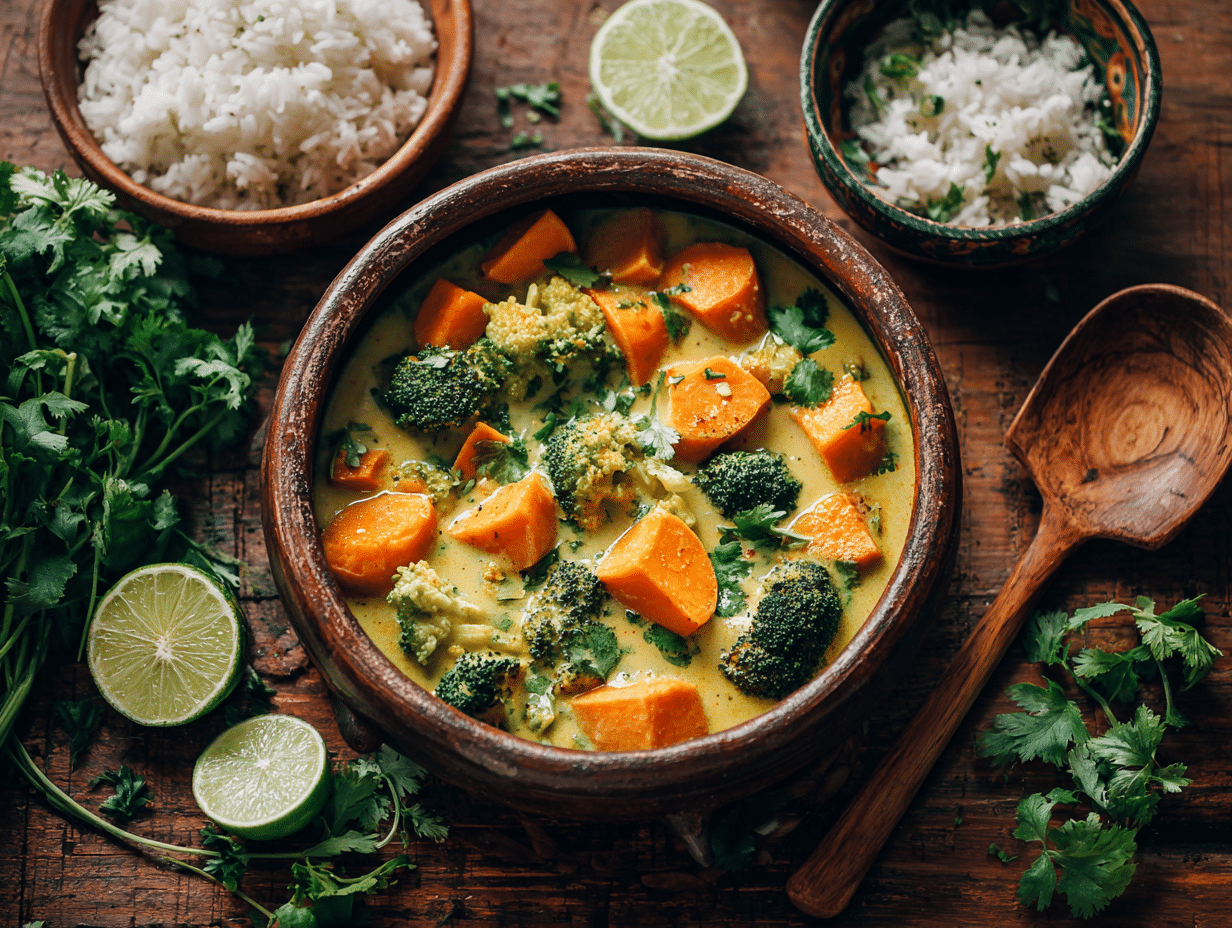
This is a one-pot coconut curry built around sweet potatoes, carrots, and broccoli in a red curry and coconut milk sauce. It comes together in about 45 minutes, and the real reason to make it is that it reheats better than almost any other weeknight dinner — the sauce thickens overnight and the flavors sharpen up considerably.
About the ingredients
- Red curry paste: Brands vary a lot in heat and saltiness. Maesri runs hotter and saltier than Mae Ploy or Thai Kitchen. Start with less than the recipe calls for if you’re using a brand you haven’t tried before.
- Coconut milk: Full-fat only. Light coconut milk produces a thin sauce that won’t coat the vegetables properly.
- Tamari vs. soy sauce: Either works. Tamari is gluten-free; standard soy sauce is not. Check your curry paste label too if gluten is a concern — some contain wheat.
- Unrefined coconut oil: This has a mild coconut flavor that works well here. Refined coconut oil is neutral and also fine. A neutral vegetable oil works in a pinch.
- Tofu or chickpeas: If you want to make this a complete meal with more staying power, add one can of drained chickpeas with the sweet potatoes, or press and cube firm tofu and stir it in with the broccoli so it warms through without falling apart.
What makes this version work
The step that matters most is blooming the curry paste and turmeric in the oil before any liquid goes in. Thirty to sixty seconds of direct heat activates the fat-soluble compounds in the spices — you’ll smell the difference immediately. Skipping this and adding the paste straight into the broth produces a flatter, less cohesive sauce. The second thing that matters is staging the vegetables: sweet potatoes and carrots need 15 or so minutes to soften through, while broccoli only needs 5. Add them at the same time and you’ll get mushy broccoli and still-firm sweet potato, which is the wrong trade-off on both counts.
What can go wrong
- Sauce is too thin at serving time: The curry needs a steady simmer — not a low warm — to reduce properly. If it’s still watery after the vegetables are cooked, remove the lid and let it bubble for an extra 5 minutes before adding the lime juice and maple syrup.
- Curry tastes flat or one-dimensional: This almost always means the final seasoning pass was skipped. Taste after adding the lime juice, maple syrup, and tamari. The balance between those three is what pulls the sauce together — adjust one at a time.
- Sweet potatoes are still firm when the broccoli is done: They were cut too large. For this recipe, aim for roughly 3/4-inch cubes. Larger pieces need significantly more time and will hold up the whole pot.
- Broccoli turns army-green and soft: It went in too early or the heat was too high. Add it in the last 5 minutes and keep the simmer moderate. Skip the garnish — not worth the extra dish — but do serve immediately once the broccoli is in.
- Curry paste splatters and burns during blooming: The pan was too hot or too dry. Medium heat is enough, and the paste should sizzle gently, not aggressively. Have the coconut milk measured and ready to pour in quickly after the blooming step.
Keeping and reheating
Leftovers keep well in an airtight container in the fridge for up to 4 days. The sauce thickens considerably when cold, which is normal — add a splash of water or vegetable broth when reheating on the stovetop over medium-low heat, stirring occasionally until warmed through. This curry also freezes well for up to 3 months; freeze it without any rice or noodles and thaw overnight in the fridge before reheating. If you added tofu, note that it takes on a slightly chewier texture after freezing, which some people prefer and others don’t — chickpeas hold up better through a freeze-thaw cycle if that matters to you.

Vegan Easy Coconut Curry

Equipment
- Large saucepan or Dutch oven
- Wooden spoon or heat-resistant spatula
- Chef's knife
- Cutting board
Ingredients
- 1 tablespoon coconut oil Use unrefined for a more coconut-forward flavor
- 1 large yellow onion Diced finely
- 3 cloves garlic Minced
- 1 tablespoon fresh ginger Grated
- 2 tablespoons red curry paste Use vegan-certified Thai red curry paste
- 1 teaspoon ground turmeric
- 1 can full-fat coconut milk 13.5 oz can, shaken well
- 1 cup vegetable broth Low-sodium recommended
- 2 cups sweet potatoes Peeled and cubed into 1/2-inch pieces
- 1 cup carrots Sliced into thin rounds
- 2 cups broccoli florets Fresh or frozen
- 1 tablespoon soy sauce or tamari Use tamari for gluten-free option
- 1 teaspoon maple syrup
- ¼ teaspoon salt Adjust to taste
- 1 tablespoon lime juice Freshly squeezed, added at the end
Instructions
- Heat the coconut oil in a large saucepan or Dutch oven over medium heat (about 350°F / 175°C). Sauté the onions for 4–5 minutes until soft and golden.
- Add garlic and ginger, stirring constantly for 1 minute until fragrant.
- Mix in red curry paste and turmeric. Cook for 2 minutes to bloom the spices, stirring frequently.
- Pour in the coconut milk and vegetable broth, stirring to combine into a smooth, fragrant broth.
- Add the sweet potatoes and carrots. Bring to a gentle simmer, cover partially, and cook for 12–14 minutes until fork-tender.
- Stir in broccoli florets, soy sauce, maple syrup, and salt. Simmer uncovered for another 6–8 minutes until broccoli is tender but bright green.
- Turn off the heat. Add lime juice and stir. Taste and adjust seasoning as needed. Let sit for 2 minutes to meld flavors before serving.
Notes
- For added protein, toss in cubed tofu or chickpeas during the last 10 minutes of simmering.
- Swap sweet potato with pumpkin or butternut squash depending on seasonal availability.
- To make this extra creamy, blend half the curry with an immersion blender before serving.
Nutrition
Your questions, answered
Can I use light coconut milk to cut calories?
It will work but the sauce will be noticeably thinner and less satisfying. If you want to reduce richness, use one can of full-fat coconut milk and add extra vegetable broth instead of swapping in a light version.
How do I make this more filling as a main meal?
Add one 15-oz can of drained chickpeas or 8 oz of pressed, cubed firm tofu — both add substantial protein without changing the cook time much. Serving over brown rice or quinoa instead of white rice also adds protein and fiber and makes the meal more sustaining.
My curry paste is very spicy. Can I tone it down?
Yes — use less paste and compensate with a little extra turmeric for color and earthiness. A slightly larger pour of coconut milk also dilutes heat without thinning the sauce too much, especially if you let it reduce for a few extra minutes.
Can I make this ahead for meal prep?
Yes, and it actually improves after a night in the fridge as the flavors develop. Cook it fully, cool it quickly, and refrigerate in portions — it reheats in about 5 minutes on the stovetop with a small splash of water or broth to loosen the sauce.
What to cook next
- Vegan Japanese Katsu Curry
- Vegan Malaysian Laksa Soup
- Crispy Tofu Broccoli Stir-Fry
- Smoky Spanish Chickpea Stew