
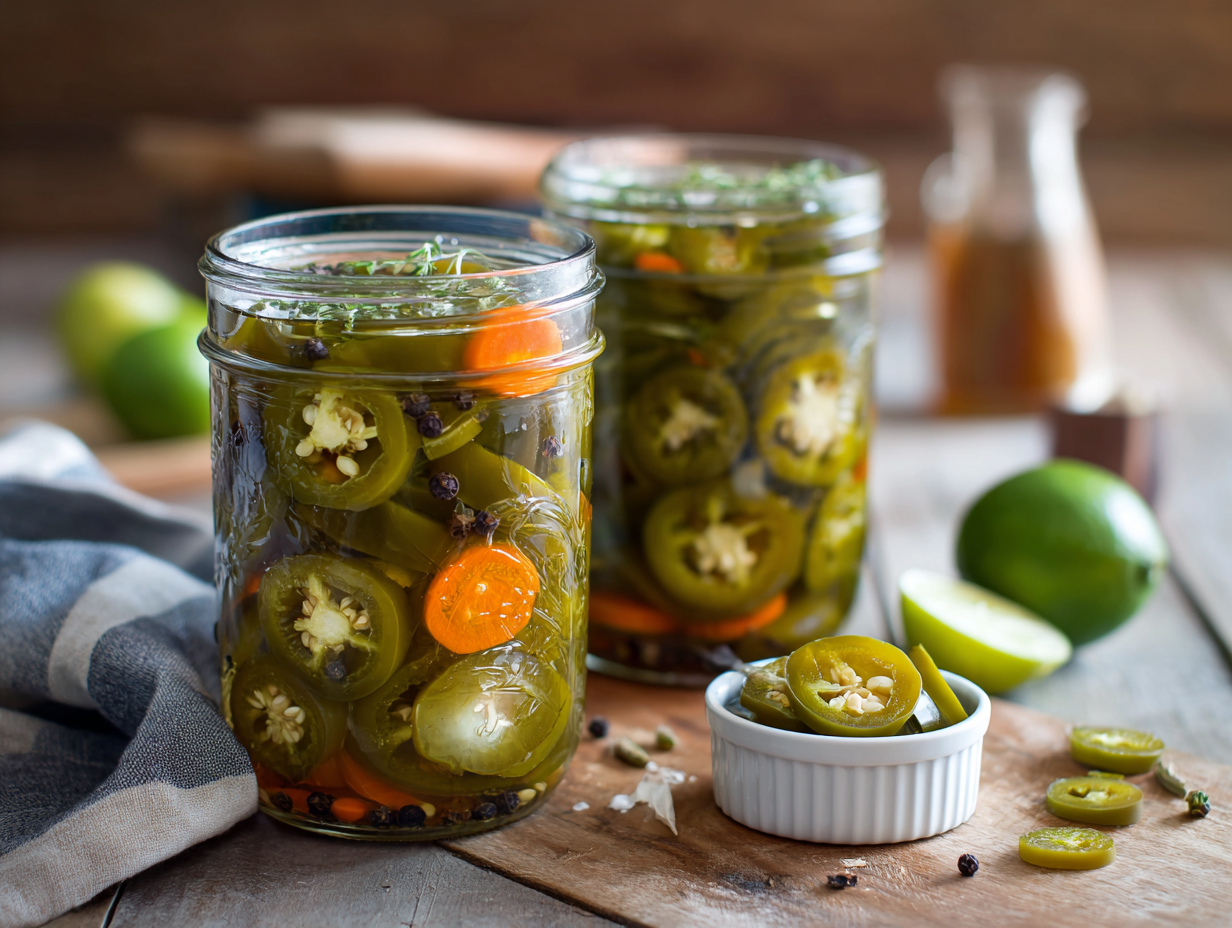
These are quick-pickled jalapeños with garlic, citrus zest, and a vinegar brine — ready to eat in about 30 minutes and genuinely better than anything from a can. The citrus keeps the heat bright rather than flat, and the garlic rounds out the sharpness without taking over. Make a jar on Sunday and you’ll reach for it all week.
The technique that matters
Slice thickness is the one thing that changes everything here. Cut the jalapeños too thick and the brine doesn’t penetrate quickly; too thin and they turn soft within a day. Aim for uniform rounds about ¼ inch thick — a consistent cut also means every piece pickles at the same rate, so you don’t end up with some rings still raw-tasting while others go limp. The second thing worth getting right is brine temperature: pour it over the slices while it’s still hot. Hot brine softens the cell walls just enough to let the citrus and garlic flavors move in fast, which is what makes these taste ready in under an hour instead of overnight.
Smart swaps
- White wine vinegar or rice vinegar can replace plain white vinegar if that’s what you have — both work, though rice vinegar produces a slightly milder result.
- Lime zest is the most common swap for lemon zest here, and it’s a good one — it leans into the pepper’s natural flavor rather than contrasting it.
- Serrano peppers are a straightforward substitute if jalapeños aren’t available; they’re hotter, so use fewer or mix with mild peppers to balance.
- Agave or maple syrup can replace any sugar called for in equal amounts — skip the garnish of fresh herbs on the finished jar, not worth the extra dish.
Storage and reheating
Store the finished jar in the fridge with a tight lid. They’re good from about 30 minutes after making and stay crisp and well-flavored for up to 3 weeks. After that the texture starts to soften noticeably, though they’re still safe to eat for up to 6 weeks total. Don’t freeze these — the cell structure of the peppers collapses and you’ll get mush. The brine itself keeps indefinitely in the fridge and is worth saving after the peppers are gone: use it in a vinaigrette, stir a spoonful into guacamole, or add it to a marinade for tofu.
Troubleshooting
- Brine is cloudy: This is normal if you used unfiltered vinegar or if garlic released starch into the liquid. It doesn’t affect flavor or safety — give the jar a gentle swirl before serving.
- Peppers turned out too soft right away: The brine was probably too hot for too long, or the slices were too thin. Next batch, pour the brine immediately after removing from heat and don’t let it sit on the stove cooling with the peppers already in the jar.
- Heat level is much milder than expected: Jalapeños vary a lot by season and source. If you want more heat, leave the seeds in for the next batch, or add a small dried chile de árbol to the jar.
- Garlic turned blue or green: Totally harmless — it’s a reaction between the garlic’s sulfur compounds and the acid. The flavor is unchanged; it just looks odd.
- Citrus flavor is barely noticeable: Zest loses punch quickly once it’s cut. Use freshly zested citrus right before making the brine, and add a small strip of peel directly to the jar for a stronger result.

Citrus-Garlic Quick Pickled Jalapeños (Vegan)

Equipment
- Small saucepan (2-quart)
- 2 pint-size glass jars with lids
- Chef's knife
- Cutting board
- Measuring cups and spoons
- Heatproof funnel (optional)
- Tongs
- Clean towel
- Disposable gloves (recommended for slicing chiles)
Ingredients
For the Produce:
- 1 lb fresh jalapeños, thinly sliced into 1/8-inch rings choose firm, glossy peppers for best crunch (about 12–14 medium jalapeños)
- 1 small white onion, thinly sliced optional but balances heat beautifully
- 1 medium carrot, thinly sliced into coins optional for taquería-style color and sweetness
- 4 cloves garlic, thinly sliced fresh, not pre-minced, for clean aroma
For the Brine & Aromatics:
- 1 cup distilled white vinegar (5% acidity) gives a classic, clean tang
- 1 cup water filtered, if possible, for clarity and flavor
- 2 tablespoons organic cane sugar just enough to round the acidity; do not omit entirely
- 2 teaspoons kosher salt Diamond Crystal preferred. If using Morton, use 1 1/2 teaspoons
- 2 tablespoons fresh lime juice optional for citrus lift; strain to remove pulp
- 1 teaspoon whole black peppercorns
- 1 teaspoon Mexican oregano, lightly crumbled prefer Mexican oregano for its citrusy, floral profile
- ½ teaspoon cumin seeds adds gentle warmth; toastiness develops in the hot brine
- 2 pieces bay leaves dried; remove before sealing for a cleaner flavor
Instructions
- Mise en place & Jar Prep (about 5 minutes): Wash 2 pint-size jars and lids in hot, soapy water. Rinse well and set on a clean towel. To help prevent thermal shock when you pour in hot brine, pre-warm jars by rinsing with very hot tap water.
- Slice the Vegetables (10–12 minutes): Wearing gloves, slice jalapeños into 1/8-inch rings. Thinly slice the onion and carrot into coins. Slice the garlic. Sensory cue: jalapeños should feel firm and look glossy; discard any soft spots.
- Pack the Jars (2–3 minutes): Divide jalapeños, onion, carrot, and garlic between the jars, leaving about 1/2 inch of headspace at the top. Lightly tap the jars on the counter to settle the vegetables.
- Make the Brine (5–7 minutes): In a small saucepan, combine vinegar, water, sugar, salt, lime juice (optional), peppercorns, oregano, cumin seeds, and bay leaves. Bring to a rolling boil over medium-high heat until the liquid reaches 212°F (100°C). Stir to dissolve sugar and salt; the brine should smell bright and slightly floral.
- Fill the Jars (2–3 minutes): Using a heatproof funnel if you have one, carefully pour the hot brine over the vegetables until fully submerged, still leaving 1/2 inch headspace. Use a clean utensil to gently nudge out any trapped air bubbles. Remove and discard the bay leaves.
- Cool, Cap, and Cure: Let jars stand uncovered for about 10 minutes, then wipe rims, apply lids, and cool at room temperature until just warm to the touch (about 30 minutes). Refrigerate. Quick flavor in 2 hours; peak flavor and texture after 24 hours. Jalapeños will shift from bright emerald to a glossy olive-green—this is perfect.If you don’t have a funnel, pour slowly and closer to the jar to avoid splashing. A food-safe ladle also works well.
Notes
Mary’s Tips:
- Heat Control: For milder pickles, remove some seeds and membranes; for extra heat, leave them intact.
- Crunch Insurance: Work quickly once the brine boils and avoid cooking the vegetables; you want the brine hot, not the jalapeños. Optional: Add a pinch (about 1/8 teaspoon per pint) of food-grade calcium chloride to maintain crispness.
- Salt Matters: Brands vary in crystal size. Diamond Crystal kosher salt is fluffier; if using Morton kosher salt, reduce to 1 1/2 teaspoons.
- Flavor Swaps: Try half white vinegar and half apple cider vinegar for a fruitier profile. Add a strip of lime zest for perfume (remove before chilling).
- Escabeche-Style: For a softer, taquería-style texture, briefly blanch the sliced jalapeños and carrots in boiling water for 30 seconds, drain, then proceed with the hot brine.
- Gloves On: Capsaicin lingers—wear gloves when slicing and avoid touching your face.
- Storage: Keep refrigerated and use clean utensils to remove jalapeños. Best within 1 month. Do not alter the vinegar-to-water ratio for safety when refrigerating. For shelf-stable canning, follow a tested recipe and proper water-bath processing guidelines.
Serving Suggestions:
- Plating: Spoon jalapeño rings into a small white ramekin with a little brine for shine. Scatter a few rings across tacos or grain bowls, finishing with a spritz of lime and a leaf or two of cilantro.
- Pairings: Elevate burritos, nachos, avocado toast, vegan burgers, crispy tofu bowls, or charred street corn. A chilled lager or agua fresca complements their bright acidity.
- Perfect-Done Cues: Rings should be vividly olive-green, glossy, and still snappy when bitten; the brine should smell citrusy, peppery, and clean.
Culinary Context:
These pickles nod to jalapeños en vinagre, a staple at Mexican taquerías where the briny heat cuts through rich fillings and smoky salsas. I fell in love with their balance—fiery yet refreshing—on a late-night taco crawl in Mexico City. This vegan version honors that tradition while adding a citrus-forward twist for extra lift.Optional Advanced Instructions:
- Make-Ahead: The brine can be prepared up to 1 week in advance and kept refrigerated; reheat to a boil (212°F / 100°C) before using.
- Spice Toast: For deeper aroma, warm the cumin seeds and peppercorns in the dry saucepan over medium heat for 30–60 seconds until fragrant, then add liquids. Watch closely to prevent scorching.
- Beginner Alternative: If slicing very thin is challenging, aim for consistent 1/4-inch rings; they’ll still pickle beautifully—brine coverage is more important than exact thickness.
Timing:
- Prep Time: 20 minutes (0 hours 20 minutes) — slicing and packing jars.
- Cook Time: 10 minutes (0 hours 10 minutes) — bringing brine to a boil and pouring.
- Total Active Time: 30 minutes (0 hours 30 minutes).
- Curing Time: Minimum 2 hours for quick pickle; best after 24 hours (not included in total).
Course & Cuisine:
Course: Dinner (Condiment).Cuisine: Mexican (taquería-style inspiration).
Nutrition
Your questions, answered
Do I need to sterilize the jar?
For refrigerator pickles meant to be eaten within a few weeks, a clean jar washed in hot soapy water is sufficient — you don’t need to go through a full canning sterilization process. Full water-bath canning sterilization is only necessary if you’re shelf-storing the jars at room temperature, which this recipe isn’t designed for.
Can I use pickled jalapeños straight from the jar in cooked dishes?
Yes, and they work well — stir them into tacos, grain bowls, or on top of a tostada without any extra prep. Keep in mind that cooking them will mellow the heat and soften the texture, so add them at the end of cooking if you want them to hold their shape.
Can I reuse the brine for a second batch of peppers?
You can use it once more for a second batch, but the flavor will be noticeably weaker and the acidity lower, so the second batch won’t keep as long — eat those within a week. After two uses, retire the brine to salad dressings or marinades rather than pickling again.
More plant-based recipes to try
- Smoky BBQ Jackfruit Tacos
- Crispy Bean Corn Tostadas
- Southwestern Quinoa Salad
- Vegan Breakfast Burrito Bowl