
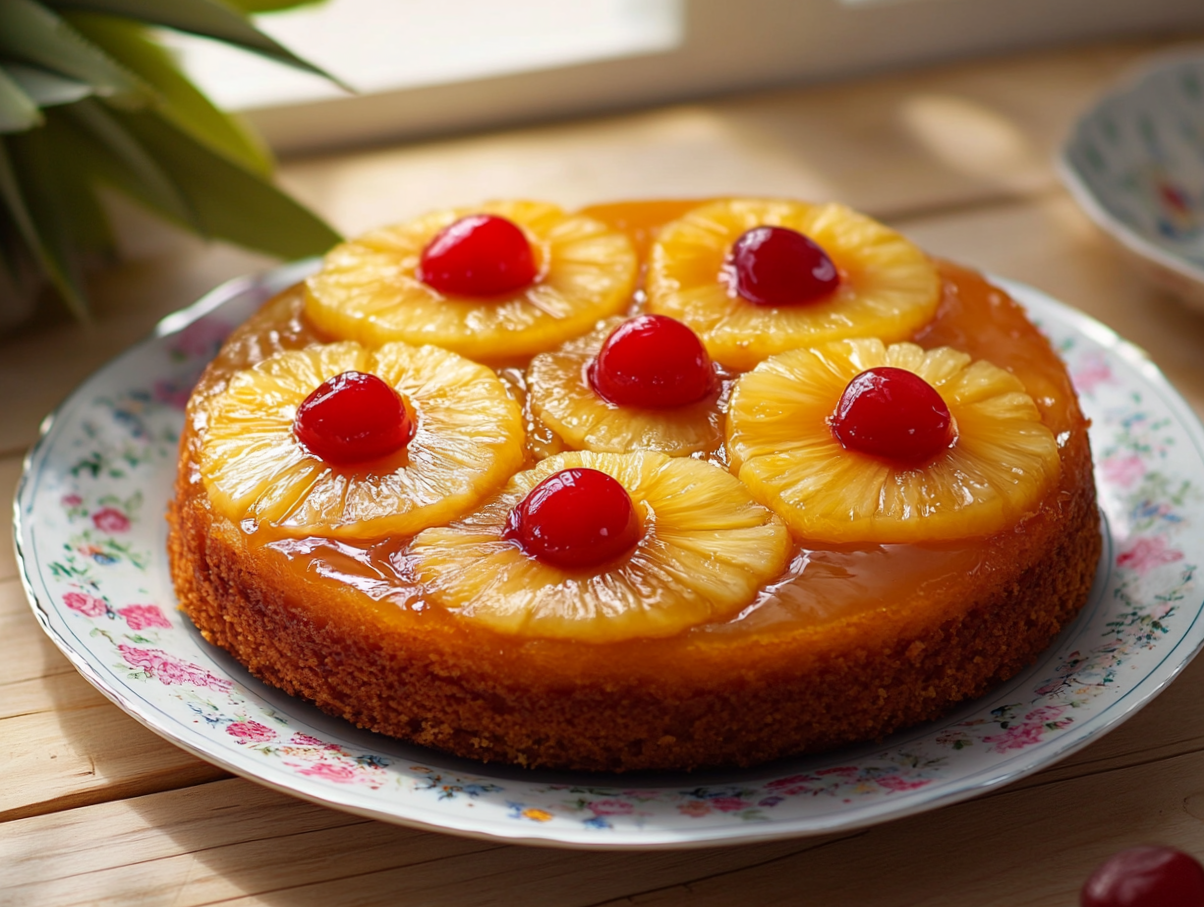
Pineapple Upside-Down Cake is a dessert that transcends eras, bringing a slice of nostalgia to every bite. The version we present here—a Vegan Pineapple Upside-Down Cake—is a reinterpretation of a mid-century American classic, filled with tropical whimsy and buttery sweetness, now made entirely free from animal products. In this background narrative, we’ll explore the origins of the original Pineapple Upside-Down Cake, delve into why it has stood the test of time, and see how modern dietary preferences have given it new life through plant-based adaptations.
A Sweet Slice of American History
The Pineapple Upside-Down Cake rose to prominence in the mid-20th century, but its story begins a little earlier. Cakes baked “upside down” go back centuries; early versions date to the Middle Ages, when people used cast iron skillets over open fires and laid fruit at the bottom with batter poured over. Once flipped, the result was a rustic, caramelized cake with fruit on top—a practical method born out of limited kitchen tools.
The modern iteration, however, owes a great deal to the pineapple canning boom of the early 1900s. In 1901, James Dole famously established the Hawaiian Pineapple Company—what we now know as Dole—and with it came the widespread availability of canned pineapple. By the 1920s and 1930s, canned pineapple rings were a staple in American kitchens, adding a touch of the exotic to everyday recipes. In 1925, Dole even held a recipe contest specifically for pineapple-based dishes and received over 60,000 submissions—many of which were Pineapple Upside-Down Cakes. From then on, the cake earned its place as a symbol of comfort, warmth, and delightful kitsch in American homes, particularly through the 1950s and 1960s.
Nostalgia Reimagined: A Vegan Twist
This vegan version of the Pineapple Upside-Down Cake stays true to the retro spirit while embracing the ethical and dietary values of today’s eaters. What’s most striking is how beautifully this classic adapts to a plant-based framework.
Instead of dairy butter, we use a high-quality vegan butter to achieve that signature caramel glaze coming from melted brown sugar. The classic decorative touch of canned pineapple rings and maraschino cherries remains untouched—after all, it’s part of the aesthetic and charm of the cake. But instead of eggs and dairy milk for the cake base, we introduce a homemade vegan buttermilk alternative: non-dairy milk (such as almond or oat) soured slightly with apple cider vinegar. This combination reacts with the leavening agents (baking powder and baking soda) to help create the fluffy, moist crumb that classic recipes promise.
Additionally, substituting neutral oils like grapeseed or avocado oil gives the cake an even, soft texture without overpowering the vanilla and tropical fruit flavors. And let’s not forget the touch of pure vanilla extract to elevate the taste and aroma.
Bringing in a modern chef’s creativity, optional variations include adding a touch of sea salt to the caramel layer—enhancing the complexity of the sweetness—or incorporating a splash of dark rum into the batter or glaze for a grown-up Caribbean flair.
Why Upside-Down?
The upside-down technique is more than just clever baking theatrics; it has practical implications. When the cake bakes, the pineapple and cherry topping essentially caramelize in place, creating a sticky, glossy “crown” for the cake. The fruit remains juicy and flavorful, lending its sweet tanginess to each bite. Then, flipping the cake after baking ensures this caramel-fruit topping becomes the star presentation—a stunning, sunburst centerpiece of golden pineapple and ruby-red cherries.
It’s no wonder that in every generation, this cake has been associated with hospitality. It’s warm, cheerful, and visually show-stopping without the need for complicated decoration techniques.
A Cake for All Occasions
There’s a playful joy in turning any cake upside down and revealing something extraordinary. This vegan version captures that same sense of childlike wonder and celebratory spirit. Whether you’re serving it at a holiday gathering, summer barbecue, birthday celebration, or just a rainy afternoon tea, Vegan Pineapple Upside-Down Cake manages to straddle rustic charm and vibrant elegance.
And even better—it can satisfy a wide range of dietary needs. With no eggs or dairy, it becomes egg allergy- and lactose intolerance-friendly. It’s also easy to make gluten-free with a 1:1 gluten-free flour substitution, making it one of the most inclusive desserts around.
Dessert with a Conscience
Choosing a vegan version of a beloved dessert also aligns with more sustainable and compassionate food practices. With growing awareness of climate impact, animal welfare, and health benefits, more and more people are exploring plant-based options. This particular recipe showcases how those choices don’t have to mean giving up the joy and comfort of traditional recipes. In fact, it opens the door to new interpretations and flavor enhancements that feel just as indulgent—and maybe even more satisfying, knowing they’re crafted with both taste and intention.
Vegan Pineapple Upside-Down Cake is more than just a dessert—it’s a bridge between eras and ethics, between comfort and innovation. It’s a testament to how time-honored recipes can evolve to meet the moment, embracing new ingredients without sacrificing nostalgia or deliciousness. So while this cake might have its roots buried deep in 1950s Americana, its appeal is refreshingly evergreen.
And when you slice into that golden round, revealing juicy pineapple, sticky caramel, and moist vanilla cake? Well, you’re not just serving a treat. You’re serving a piece of history—updated for the present and ready for the future.

Vegan Pineapple Upside-Down Cake

Equipment
- 9-inch round cake pan
- Mixing bowls
- Whisk
- Spatula
- Oven
Ingredients
For the Topping:
- ⅓ cup vegan butter unsalted, such as Miyoko’s or Earth Balance
- ½ cup light brown sugar packed
- 6 slices pineapple rings from a can, in juice, not syrup
- 6 pieces maraschino cherries preferably with no artificial dyes
For the Cake:
- 1 ½ cups all-purpose flour sifted for better volume
- ¾ cup organic granulated sugar
- ¼ cup neutral oil such as grapeseed or avocado oil
- 1 cup unsweetened non-dairy milk almond or oat milk work well
- 1 tablespoon apple cider vinegar
- 1 teaspoon vanilla extract
- 1 teaspoon baking powder
- ½ teaspoon baking soda
- ¼ teaspoon sea salt
Instructions
- Preheat the oven to 350°F (175°C). Lightly grease the sides of a 9-inch round cake pan.
- Make the topping in a small saucepan over low heat, melt the vegan butter. Once melted, stir in the brown sugar until well combined. Pour this mixture evenly into the bottom of the prepared pan. Arrange the pineapple rings over the sugar mixture and place a cherry in the center of each ring.
- Whisk together the non-dairy milk and apple cider vinegar in a mixing bowl. Let sit for 5 minutes to curdle—this is your vegan 'buttermilk.'
- In a large bowl, mix together the flour, sugar, baking powder, baking soda, and salt.
- To the buttermilk mixture, add the oil and vanilla. Pour the wet ingredients into the dry and stir just until combined. Avoid over-mixing to ensure a tender crumb.
- Pour the batter evenly over the pineapple topping in the cake pan. Use a spatula to smooth the top.
- Bake for 45 minutes, or until a toothpick inserted into the center comes out clean. Let the cake rest in the pan for 10–15 minutes after baking.
- Invert the cake—run a knife along the edge of the pan to loosen the cake, then place a serving plate over the top and flip to invert. Let sit upside-down for a few minutes before lifting the pan gently.
Notes
- For a caramel twist, add a pinch of sea salt to the brown sugar topping.
- You can also jazz the cake up with a splash of rum in the batter or topping for a Caribbean flair.