
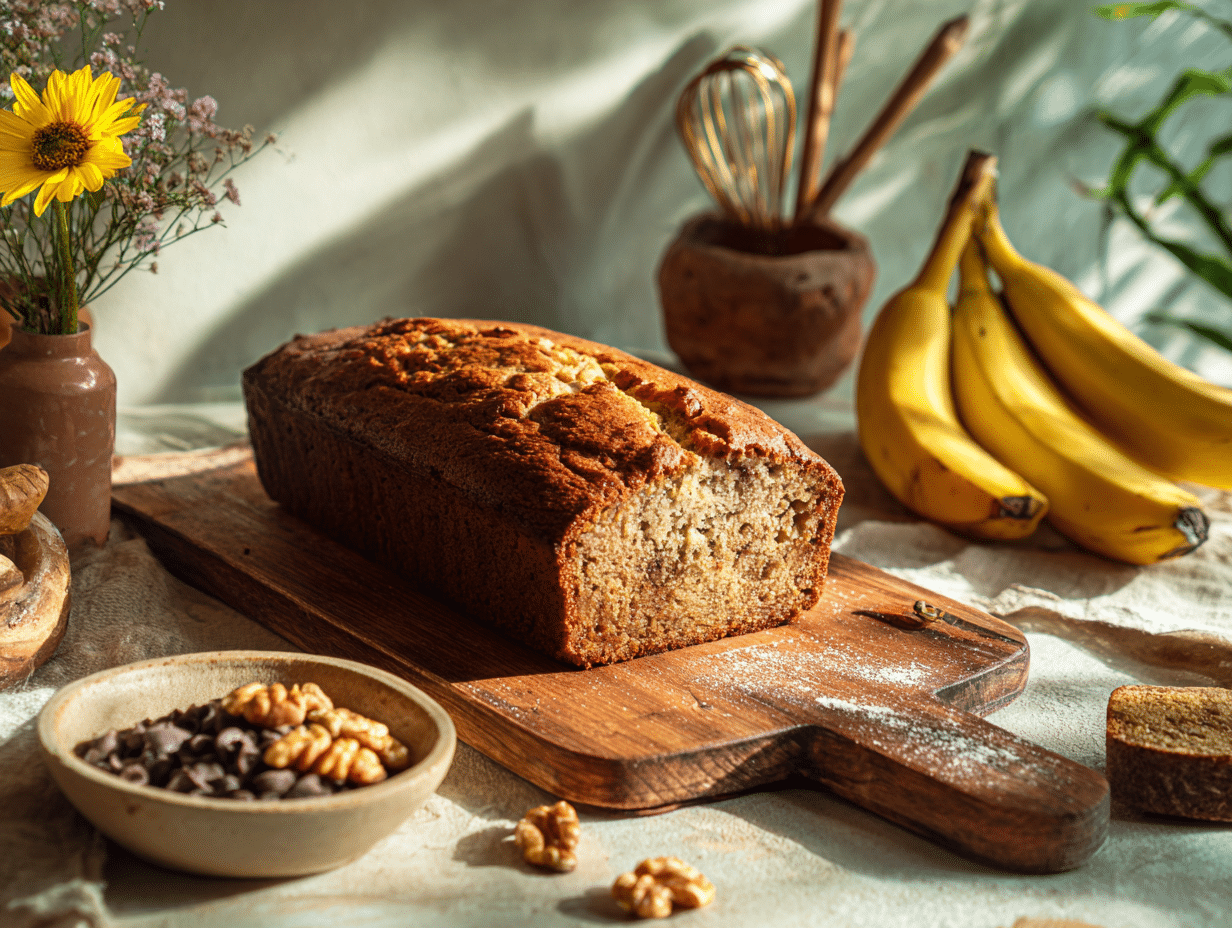
This is a one-bowl vegan banana bread — no eggs, no dairy, no complicated swaps. The bananas do most of the structural work themselves, so the ingredient list stays short and the result is a moist, lightly spiced loaf that holds together well. The honest reason to make it: it uses up overripe bananas before they go to waste, and it comes together faster than most baked goods.
The technique that matters
Two things actually move the needle here. First, how thoroughly you mash the bananas. Lumpy mash means uneven sweetness and wet pockets in the finished loaf — use a fork and keep going until the texture is closer to a thick purée. Second, how you mix the batter once the flour goes in. Overmixing develops gluten and produces a tough, rubbery crumb. Stir only until the dry streaks disappear, then stop. A few small lumps are fine. Both steps take under two minutes and happen in the same bowl, so there is no reason to rush past them.
What can go wrong
- Sunken center: Usually means the oven was too hot or the loaf was pulled too early. Resist opening the oven door before the 50-minute mark. If the top is browning fast but the center is still raw, tent loosely with foil and keep baking.
- Gummy bottom: Happens when the loaf pan traps steam. Let the loaf cool in the pan for 10 minutes, then transfer it to a wire rack. Leaving it in the pan to cool completely makes the bottom sweat and go dense.
- Flat, barely risen loaf: Baking soda loses potency once it contacts liquid — get the batter into the pan and into the oven within a few minutes of mixing. Also check that your baking soda is not expired; test it by dropping a pinch into hot water and watching for bubbles.
- Dry, crumbly texture: Bananas that were not ripe enough. A banana that is still mostly yellow will not release enough natural sugar or moisture. If yours are not ready, you can speed-ripen unpeeled bananas in a 300°F oven for 15–20 minutes until the skins turn black.
- Sticks to the pan: Skipping the grease step or using a pan with worn non-stick coating. Line the bottom with a strip of parchment and grease the sides — skip the garnish of raw sugar on top, not worth the extra sticky cleanup.
Keeping and reheating
Once fully cooled, wrap the loaf tightly in plastic wrap or store slices in an airtight container at room temperature for up to 3 days. Refrigerating it extends shelf life to about 5 days but dries the crumb slightly — if you go that route, a 15-second microwave warm-up on each slice brings the moisture back. For longer storage, freeze individual slices in a zip-lock bag with the air pressed out; they keep well for up to 2 months. Thaw slices at room temperature for about 30 minutes, or toast them straight from frozen in a toaster on a low setting.

Vegan Banana Bread

Equipment
- Mixing bowls
- Whisk
- 9x5 Inch Loaf Pan
- Spatula
- Oven
Ingredients
Dry Ingredients
- 1 ¾ cups all-purpose flour organic if possible
- 1 teaspoon baking soda
- ½ teaspoon sea salt fine grain
- 1 teaspoon ground cinnamon Ceylon cinnamon preferred
Wet Ingredients
- 3 ripe bananas mashed (~1 1/2 cups)
- ½ cup organic cane sugar or coconut sugar
- ¼ cup unsweetened plant-based milk such as almond or oat milk
- ⅓ cup light oil e.g., sunflower or avocado oil
- 1 teaspoon pure vanilla extract
Optional add-ins
- ½ cup walnuts or pecans chopped
- ½ cup vegan chocolate chips optional for a sweeter version
Instructions
- Preheat oven to 350°F (175°C). Lightly grease or line a 9x5-inch loaf pan with parchment paper.
- In a large bowl, whisk together the flour, baking soda, salt, and cinnamon.
- In a separate bowl, mash the ripe bananas until creamy. Add sugar, plant milk, oil, and vanilla extract. Whisk until smooth.
- Pour the wet ingredients into the dry ingredients. Fold together gently using a spatula—do not overmix. The batter should be thick and just combined.
- Gently fold in optional add-ins like nuts or chocolate chips.
- Pour the batter into the prepared pan. Smooth the top and tap the pan on the counter to remove any air bubbles.
- Bake for 55–60 minutes, or until a toothpick inserted into the center comes out clean or with just a few moist crumbs.
- Cool in the pan for 10 minutes before transferring to a wire rack to cool completely.
Notes
- If your bananas aren't ripe enough, roast them in the oven at 300°F (150°C) for 15 minutes to deepen flavor.
- For a gluten-free version, substitute with a 1:1 gluten-free flour blend.
- Using almond milk will yield a slightly nuttier flavor, while oat milk gives more body.
Nutrition
FAQ
Can I use frozen bananas?
Yes — thawed frozen bananas work well and are often riper than fresh ones. Drain off the liquid that collects after thawing before mashing, otherwise the batter gets too wet.
What plant-based milk works best?
Oat milk and soy milk both give a slightly richer result because of their higher fat and protein content. Almond milk works fine but produces a marginally lighter crumb.
Can I make this gluten-free?
A 1:1 gluten-free flour blend substitutes directly with no other changes needed. Avoid single-flour swaps like almond flour or coconut flour — they change the liquid ratios significantly and the loaf will not set properly.
How do I know when the loaf is actually done?
Insert a toothpick into the center — it should come out with at most a few moist crumbs, not wet batter. The top should also spring back lightly when pressed; if it leaves an indent, give it another 5 minutes.
Can I reduce the sugar?
You can cut it by up to 25% without affecting the structure. Going lower than that risks a loaf that does not brown properly and tastes flat, since the bananas alone do not provide enough sweetness once baked.
What to cook next
- Vegan Australian Bush Bread
- Tropical Coconut Mango Oats
- Vegan Sticky Toffee Pudding
- Vegan Pumpkin Pie Smoothie