
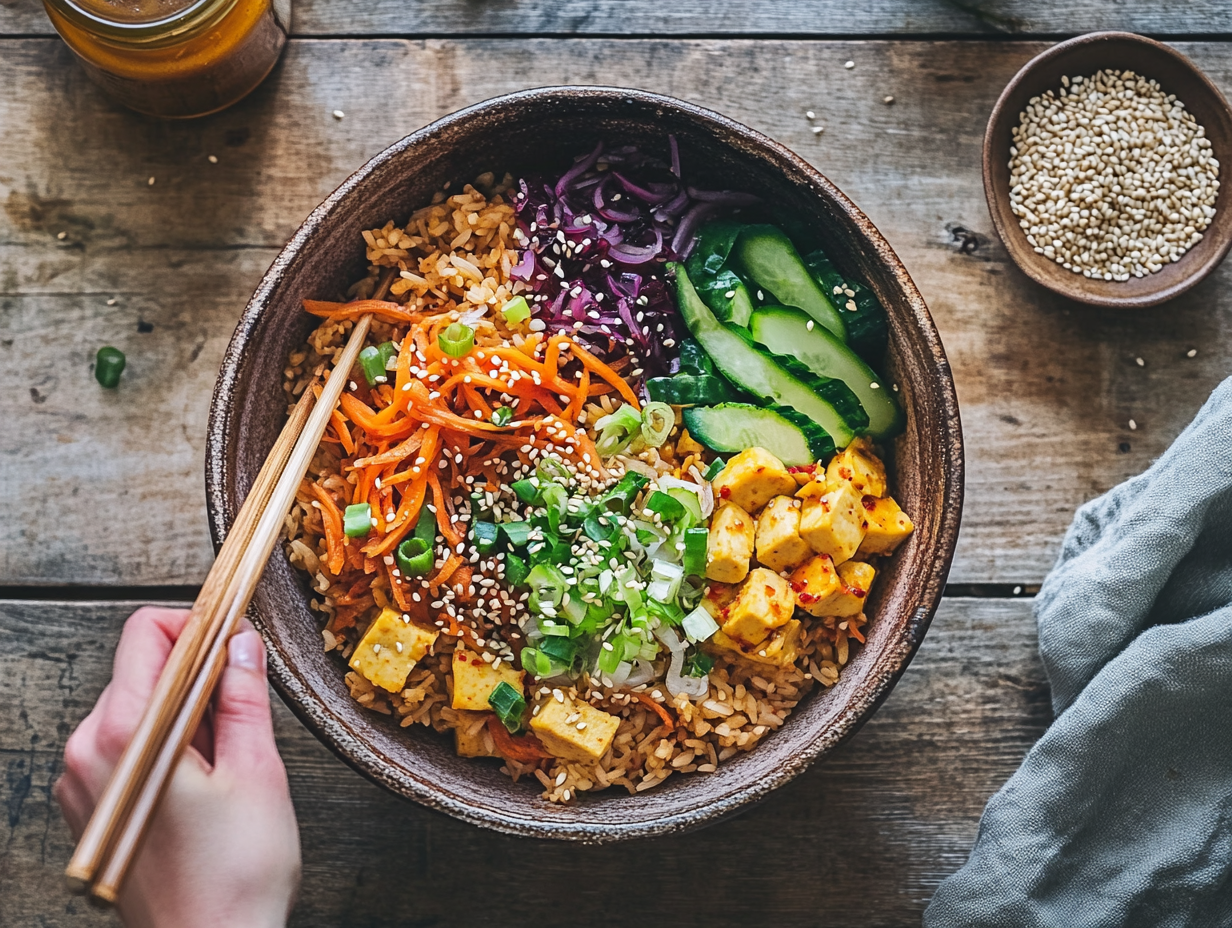
Vegan Kimchi Fried Rice is a deliciously bold and comforting fusion of Korean tradition and modern plant-based cuisine. This dish brings together the rich flavors of fermented kimchi, the heartiness of rice, and the subtle smokiness of tofu to create a satisfying and flavorful meal that’s both nourishing and exciting on the palate. To truly appreciate this recipe, it helps to understand not only the culinary elements that compose it, but also the cultural and nutritional context that drives its popularity—especially in vegan communities around the world.
The Origins of Kimchi Fried Rice
Kimchi fried rice (known as Kimchi Bokkeumbap in Korean) is a much-loved comfort food in Korean households. The dish emerged as a ingenious solution to make use of leftover rice and aged kimchi—the kind that has become too sour or strong for eating raw but still packs a punch when cooked. In times of economic hardship or resourcefulness, kimchi fried rice exemplifies the Korean ethos of “anju” (adaptive and thrifty cooking), ensuring that no ingredients go to waste.
Traditionally, the core ingredients include white rice, chopped kimchi, and some type of protein—commonly pork or egg—cooked together in a hot pan until the flavors meld into a tangy, spicy, and savory medley. It’s accessible, quick to prepare, and infinitely customizable, which is why it remains a staple in Korean kitchens.
However, this vegan version swaps out the animal-based ingredients for tofu and plant-based variations of kimchi, making it a perfect example of how traditional dishes can be artfully adapted to suit modern dietary preferences without compromising on taste.
???? Reimagining Tradition: The Vegan Twist
One of the reasons Vegan Kimchi Fried Rice stands out is its conscious balance of authenticity and innovation. At its heart is vegan kimchi, which typically omits fish sauce and fermented shrimp—two ingredients traditionally used in kimchi to develop its signature umami profile. Instead, vegan-friendly versions often utilize ingredients like tamari (a wheat-free soy sauce), miso paste, kelp powder, or even shiitake mushrooms to replicate that depth in a plant-based format.
In this recipe, the bold kick of the kimchi is amplified by gochujang—a fermented Korean chili paste known for its unique blend of heat, sweetness, and umami. Gochujang is one of the defining elements of Korean cooking, contributing not just spice, but also body and richness to any dish it graces.
To provide structure and satisfy that protein craving which traditional meat might fulfill, crumbled firm tofu is incorporated into the base. Pressing and lightly browning it in sesame oil gives the tofu a satisfying texture while also imparting nutty, roasted undertones that enhance the earthy depth of the dish.
???? A Symphony of Texture and Flavor
The real magic of this dish lies in how the different textures and flavors interact: the soft but toothsome cubes of tofu contrast with the crunchiness of just-cooked carrots; chewy jasmine rice picks up all those spicy, feral notes of kimchi and gochujang; and the scallions, added at the very end, bring a bright, peppery bite that lifts the whole plate. The final sprinkling of toasted sesame seeds delivers a warm, nutty crunch that makes each bite even more rewarding.
Let’s not overlook the use of day-old rice, which is no accident. Freshly cooked rice tends to be too moist and sticky for stir-frying, often resulting in a mushy texture. Day-old rice, on the other hand, is firmer, drier, and perfectly suited for absorbing the bold flavors of kimchi and sauce without falling apart. This adds a chewy, robust body to the dish—an essential part of the fried rice experience.
???? Nutritional and Practical Appeal
From a nutritional standpoint, Vegan Kimchi Fried Rice checks many boxes. It’s high in fiber, thanks to the vegetables and whole grains, and it delivers adequate plant-based protein through tofu. Additionally, fermented kimchi is a source of probiotics, which support gut health and digestion. The spicy, fermented elements also do wonders to stimulate appetites and satisfy cravings for hearty, warming food.
Another practical appeal of this meal is how quickly it comes together. The entire process, from prepping the ingredients to spooning it steaming-hot into bowls, takes under 40 minutes. That puts it firmly in the weeknight dinner category. And because it uses ingredients commonly found in your refrigerator—especially if you cook Asian cuisine regularly—it’s a great way to clear out leftovers while still producing something fresh and exciting.
???? Global Influence with Local Integrity
The Vegan Kimchi Fried Rice is a dish that beautifully exemplifies how food can be a bridge between cultures. Even though it draws deeply from Korean culinary traditions, its use of tofu, maple syrup, and a global pantry of flavors makes it a modern, multicultural experience. It’s a dish that retains the soul of its origins while being completely inclusive—perfect for vegans, vegetarians, and anyone looking to reduce their meat consumption without sacrificing bold flavor.
The global rise of Korean food culture—fueled by phenomena like K-pop, K-dramas, and global street food trends—has increased awareness of Korea’s vibrant culinary diversity. Dishes like kimchi fried rice, bulgogi, and bibimbap are now household names far beyond the Korean peninsula. Vegan adaptations make these dishes accessible to a wider audience, expanding their reach and continuing their evolution.
???? A Dish with Personality
Perhaps the most endearing aspect of Vegan Kimchi Fried Rice is that it’s more than a meal—it’s a mood. It’s hearty yet fiery, comforting yet invigorating. Whether enjoyed in a cozy bowl on a rainy evening, served in a sizzling pan at a dinner party, or prepped for weekday lunches, it brings bold energy to the table.
As the recipe creator writes, it’s inspired by the flavors and memories of late-night eats in Seoul, but brought to life through a plant-based lens. This is not just food—it’s a cultural remix, a nostalgic memory, and a bold declaration of flavor, all rolled into one simple, satisfying dish.
So the next time you find yourself with some tired rice and an almost-forgotten jar of kimchi in the back of the fridge, give them new life with this vibrant vegan fried rice. Your belly—and your soul—will thank you.

Vegan Kimchi Fried Rice

Equipment
- Wok or large skillet
- Chef’s knife
- Cutting board
- Spatula or wooden spoon
Ingredients
- 2 tablespoons toasted sesame oil adds deep, nutty flavor
- 1 cup yellow onion finely chopped
- 1 cup carrot julienned or grated
- 1 block firm tofu pressed, crumbled by hand
- 1 ½ cups vegan kimchi fermented and spicy; chopped, liquid reserved
- 4 cups cooked jasmine rice day-old rice preferred for dryness
- 2 tablespoons tamari or low-sodium soy sauce
- 1 tablespoon gochujang Korean red chili paste; adjust for heat level
- 2 teaspoons maple syrup balances acidity and heat
- ½ cup scallions sliced thin, green tops for garnish
- 1 tablespoon toasted sesame seeds for garnish
Instructions
- Heat the sesame oil in a wok or large skillet over medium-high heat (approx. 375°F / 190°C) until shimmering.
- Add the chopped onion and carrot. Sauté for 3–4 minutes until the onions are translucent and the carrots have softened slightly.
- Crumble the tofu directly into the pan and cook for 5 minutes, stirring occasionally to allow some browning for texture and flavor.
- Stir in the chopped kimchi and 2 tablespoons of reserved kimchi brine. Fry for about 2 minutes until fragrant.
- Add the day-old jasmine rice and break apart any clumps. Stir-fry for 5–6 minutes until well combined and evenly heated through.
- Drizzle in the tamari, gochujang, and maple syrup. Stir well to coat all the rice and tofu with the sauce. Cook for 1 minute more.
- Turn off the heat and fold in sliced scallion whites. Let it rest for 1 minute before plating. Garnish with scallion greens and sesame seeds.
Notes
- If using fresh rice, spread it out on a baking sheet and let it sit for 30 minutes to dry out a bit—it’ll fry better.
- Swap gochujang for sriracha if needed, though it lacks the same fermented complexity.
- Add sautéed shiitake mushrooms or edamame for additional umami or protein.
- If you enjoy crunch, toss in some chopped roasted seaweed as a topping.