
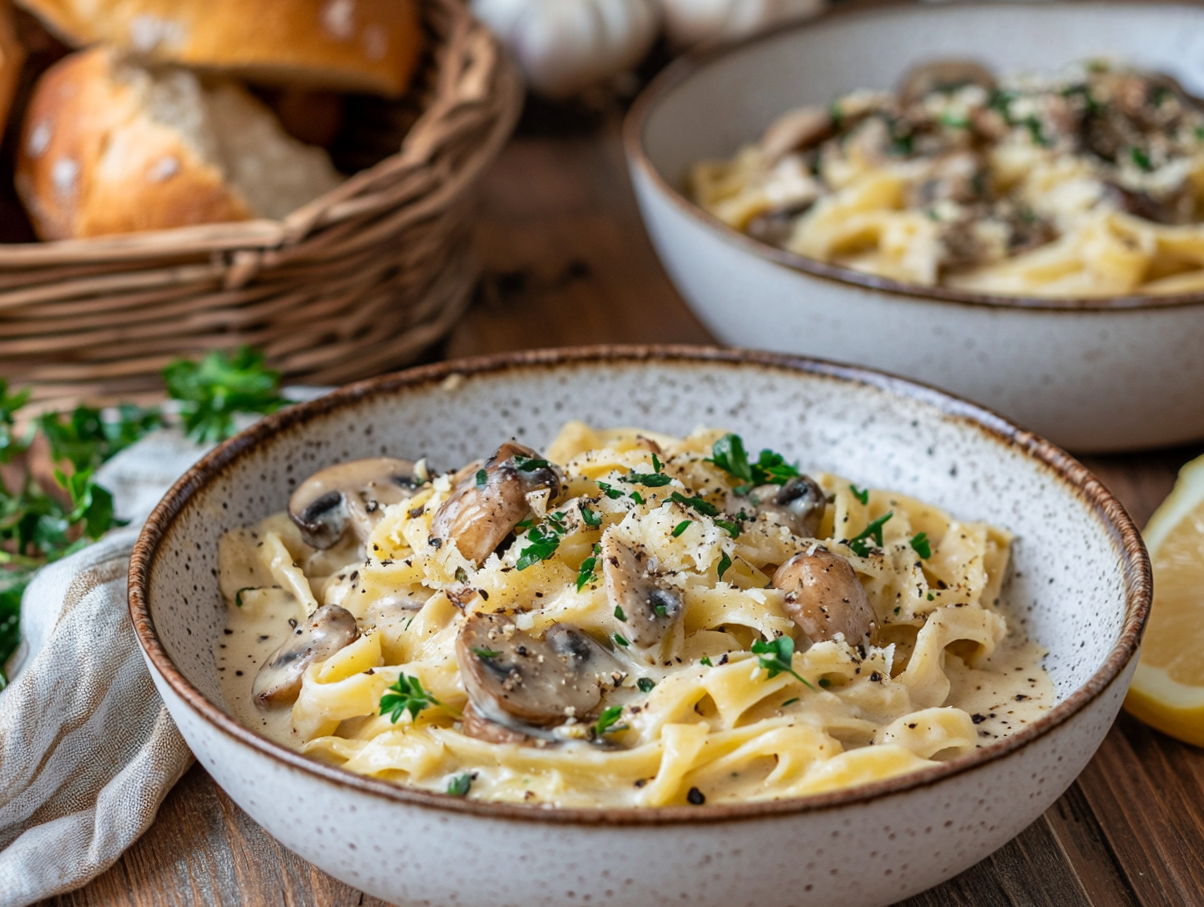
This pasta uses a blended sauce made from roasted garlic and soaked raw cashews — no dairy, no specialty vegan products, just two ingredients that happen to produce a genuinely creamy, savory result. It comes together in about 40 minutes and uses one blender and one pan. If you’ve been skeptical about plant-based pasta sauces, this is a reasonable place to start.
Why this recipe works
Two things drive this recipe. First, roasting the garlic low and slow until the cloves are soft and golden removes the sharp, raw bite and replaces it with a mellow sweetness — that flavor does most of the heavy lifting in the sauce. Second, soaking the cashews before blending is what gives the sauce its smooth, even texture. Under-soaked cashews leave the sauce gritty no matter how long you run the blender. Get those two steps right and the rest is straightforward.
Mistakes to avoid
- Using roasted or salted cashews. Only raw cashews blend into a neutral, creamy base. Roasted cashews have a toasted flavor that clashes with the garlic, and salted ones throw off the seasoning completely.
- Skipping the pasta water. The sauce thickens quickly once it hits the hot pasta. Keep a cup of starchy pasta cooking water nearby and add it a splash at a time to loosen the sauce without thinning the flavor.
- Crowding the mushrooms. If you pile cremini mushrooms into the pan all at once, they steam instead of brown. Cook them in a single layer and resist stirring for the first two minutes — that’s how you get the golden color that adds real savory depth.
- Adding spinach too early. Baby spinach wilts in under a minute. Stir it in right at the end, off the heat or on very low, so it softens without turning gray and watery.
- Blending a cold sauce. If your blended cashew mixture has been sitting and cooled down, warm it briefly in the pan before tossing with the pasta. A cold sauce seizes up and coats unevenly.
Smart swaps
- Nutritional yeast is sold at most grocery stores near the health food or bulk section — look for it in a yellow canister or bag. There’s no direct swap that gives the same savory, cheesy quality, so it’s worth buying. Skip the garnish of extra nooch on top — not worth the extra dish.
- Plant milk: Oat milk gives the creamiest result. Avoid sweetened or flavored varieties, which will make the sauce taste off.
- Mushrooms: Cremini are ideal, but sliced shiitake or a mix of whatever’s on sale works well. Avoid canned mushrooms — they won’t brown properly.
- Pasta shape: Fettuccine and linguine hold the sauce well, but any long or medium pasta works. Avoid very small shapes like orzo, which get lost in the thick sauce.
Keeping and reheating
Store leftovers in an airtight container in the fridge for up to 3 days. The sauce will thicken considerably as it sits — that’s normal. Reheat in a skillet over medium-low heat with a few tablespoons of water or plain oat milk stirred in, just until loose and hot. The microwave works too; add a splash of water, cover loosely, and stir halfway through. The cashew sauce doesn’t freeze well on its own or combined with pasta — the texture turns grainy after thawing, so make only what you’ll eat within a few days.

Creamy Vegan Pasta with Roasted Garlic & Cashew Sauce

Equipment
- High-speed blender
- Large skillet
- Large pot
- Colander
- Baking sheet
- Parchment paper
Ingredients
- 12 oz fettuccine or linguine use gluten-free pasta if desired
- 1 head garlic top trimmed for roasting
- 1 tbsp olive oil for roasting garlic
- 1 cup raw cashews preferably soaked for at least 2 hours or boiled 10 minutes if short on time
- 1.5 cups unsweetened plant milk such as oat or almond milk
- 1 tbsp nutritional yeast for umami depth
- 1 tbsp lemon juice freshly squeezed
- 1 tsp sea salt to taste
- 0.25 tsp freshly ground black pepper
- 8 oz cremini mushrooms cleaned and sliced
- 2 cups baby spinach loosely packed
- 1 tbsp olive oil for sautéing
Instructions
- Preheat oven to 400°F (200°C). Slice the top off the head of garlic to expose the cloves. Drizzle with 1 tablespoon olive oil, wrap in parchment then foil, and roast for 30 minutes until soft and golden. Allow to cool slightly, then squeeze the cloves out.
- Bring a large pot of salted water to a boil. Cook the pasta according to package instructions until al dente. Drain and set aside, reserving 1/2 cup of pasta water.
- In a high-speed blender, combine soaked cashews, roasted garlic cloves, plant milk, nutritional yeast, lemon juice, sea salt, and black pepper. Blend on high until completely smooth and creamy. Add a bit of hot pasta water if the sauce is too thick.
- Heat 1 tablespoon of olive oil in a large skillet over medium heat. Sauté sliced mushrooms for 6-8 minutes until deeply browned and fragrant. Stir in baby spinach and cook just until wilted, about 1-2 minutes.
- Lower the heat and add cooked pasta to the skillet. Pour the creamy cashew sauce over and toss gently to coat. Heat for another 2–3 minutes, adding small splashes of pasta water to loosen the sauce if needed.
Notes
- To save time, roast the garlic and soak cashews the night before.
- For a nut-free version, substitute silken tofu for cashews and reduce the plant milk to 1 cup.
- Add a pinch of smoked paprika or chili flakes for a comforting heat.
Nutrition
Frequently asked questions
Can I use a regular blender instead of a high-speed blender?
Yes, but soak the cashews for the full time — or even a bit longer — and blend in two or three batches rather than all at once. A standard blender can produce a smooth sauce as long as the cashews are fully softened; the main risk is overloading the jar, which leaves chunks at the bottom unblended.
What if I forgot to soak the cashews ahead of time?
Cover the cashews with boiling water and let them sit for 20 to 30 minutes — this is a reliable shortcut. The texture won’t be quite as silky as an overnight soak, but it’s close enough for this sauce.
Is nutritional yeast the same as active dry yeast used in baking?
No — they are completely different products and not interchangeable. Nutritional yeast is deactivated, has a savory, slightly cheesy flavor, and is used as a seasoning; active dry yeast is a leavening agent and would taste terrible here.
How do I know when the garlic is done roasting?
The cloves should be very soft when pressed with a fork and golden brown at the edges — not pale, and not dark or bitter-smelling. If the outer cloves are browning faster than the inner ones, loosely tent the foil back over them for the last few minutes.