
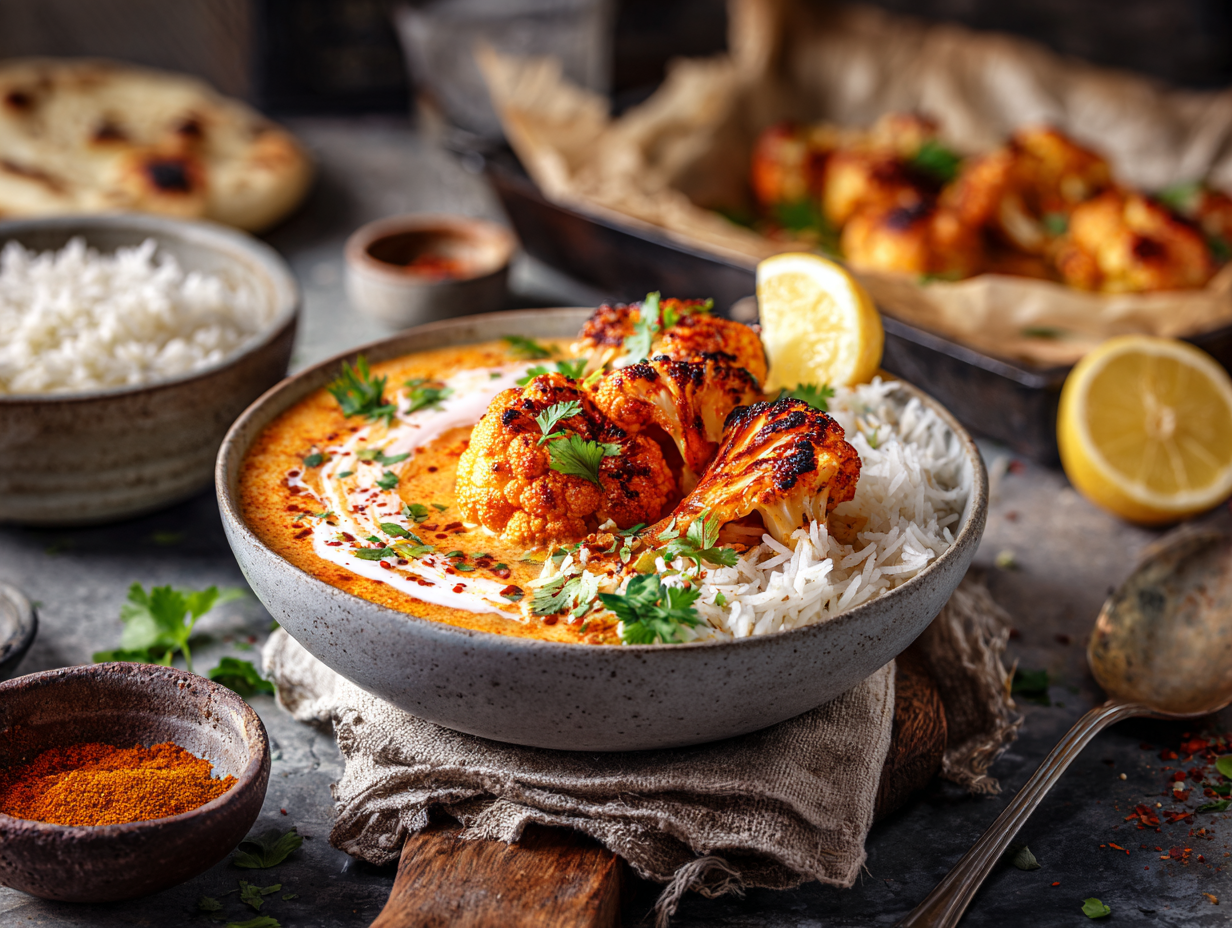
This is a roasted cauliflower curry with a creamy tomato-coconut sauce built on garam masala, Kashmiri chili, and kasuri methi. It takes about an hour start to finish, and it reheats better than almost any other plant-based dinner you can make — the sauce thickens and the spices deepen overnight. Make a big batch on Sunday and you’re set for several weeknight meals.
Before you start
Two things actually move the needle here. First, dry your cauliflower florets thoroughly before tossing them in the marinade — any surface moisture will steam the cauliflower in the oven instead of roasting it, and you’ll lose the caramelized edges that give this dish its character. Pat them with a clean kitchen towel or let them air-dry for 10 minutes after washing. Second, bloom your ground spices in the oil before adding the onions or tomatoes. Ground spices need direct contact with hot fat for 30–60 seconds to release their full flavor; adding them to a wet pan just stews them. You’ll smell the difference immediately — that’s your cue to move on to the next step.
Smart swaps
- Kashmiri chili powder: This is worth tracking down at an Indian grocery or online — it’s mild and gives the sauce its deep red color without serious heat. In a pinch, use 2 parts sweet paprika to 1 part cayenne as a substitute, but the color won’t be as vivid.
- Kasuri methi (dried fenugreek leaves): Don’t skip this. It’s the ingredient most responsible for that restaurant-style finish. Find it at any South Asian grocery store; a small bag lasts months. There’s no good substitute.
- Full-fat coconut milk: Use full-fat, not light. Light coconut milk makes a thin, watery sauce that won’t cling to the cauliflower. Shake the can well before opening.
- Vegan yogurt for the marinade: Unsweetened coconut or soy yogurt both work. Avoid anything with added vanilla or fruit flavoring.
Make-ahead notes
The sauce and the roasted cauliflower can be stored separately or together. Combined, the dish keeps in an airtight container in the fridge for up to 5 days — the flavor genuinely improves by day two. For longer storage, freeze the sauce alone (without the cauliflower) for up to 3 months; cauliflower turns soft and grainy after freezing, so roast a fresh batch when you’re ready to serve. Reheat the sauce in a saucepan over medium-low heat, adding a splash of water if it’s thickened too much, then add freshly roasted cauliflower. If you’re reheating the combined dish, a covered skillet over low heat works better than a microwave — it keeps the cauliflower from getting rubbery.
If something goes sideways
- Sauce tastes flat or one-dimensional: You likely didn’t bloom the spices long enough, or the onions weren’t cooked down fully. Stir in an extra pinch of kasuri methi at the end and let the sauce simmer uncovered for 5 more minutes — that usually pulls it together.
- Cauliflower is soggy, not charred: The florets were too wet, the pan was overcrowded, or the oven wasn’t fully preheated. Spread them out with more space between pieces and run the broiler for 3–4 minutes at the end to recover some texture. Skip the garnish — not worth the extra dish — and focus on getting that surface right.
- Sauce is too thick and pasty: Add warm water or unsalted vegetable broth, a few tablespoons at a time, stirring over low heat until you reach the consistency you want.
- Sauce is too thin and watery: Simmer uncovered on medium heat for 5–10 minutes. The coconut milk needs time to reduce. Don’t add flour or starch — just patience.
- Too spicy for your crowd: Stir in 2–3 tablespoons of plain unsweetened coconut yogurt directly into the finished sauce. It cools the heat without changing the flavor profile.

Cauliflower Tikka Masala (Vegan)

Equipment
- rimmed baking sheet
- Parchment paper or silicone mat
- Large mixing bowl
- Chef's knife
- Cutting board
- Measuring cups and spoons
- Microplane or grater
- 12-inch sauté pan or saucepan
- Spatula or wooden spoon
- Immersion blender or countertop blender (optional)
Ingredients
For the Roasted Cauliflower Tikka:
- ½ cup unsweetened coconut yogurt choose a thick, tangy dairy-free yogurt for best cling; coconut or cashew-based work well
- 2 tbsp fresh lemon juice from 1 medium lemon; freshly squeezed for bright acidity
- 1 tbsp neutral oil avocado or grapeseed; adds light richness to the marinade
- 4 cloves garlic, minced about 1 1/2 tbsp; mince finely for even distribution
- 1 tbsp fresh ginger, finely grated use a microplane for a juicy paste
- 2 tsp garam masala choose a fresh, aromatic blend; look for warm, floral notes
- 1 tsp ground coriander adds citrusy depth to the marinade
- 1 tsp ground cumin toasty, savory base note
- 1 tsp Kashmiri chili powder for vibrant color with moderate heat; sub 3/4 tsp sweet paprika + 1/4 tsp cayenne
- ¾ tsp kosher salt Diamond Crystal; use 1/2 tsp if using Morton
- 1 head cauliflower, cut into large florets about 2 lb; keep florets ~2 inches for meaty texture
- 1 tbsp neutral oil for drizzling before roasting to encourage char
For the Tikka Masala Sauce:
- 1 tbsp coconut oil or neutral oil coconut oil adds gentle sweetness; neutral oil keeps flavors clean
- 1 large yellow onion, finely diced about 1 1/2 cups; dice small for a silky sauce
- ½ tsp kosher salt to sweat the onions
- 4 cloves garlic, minced freshly minced for bright aroma
- 1 tbsp fresh ginger, finely grated balances the tomatoes and spice
- 2 tsp ground cumin bloom in fat to unlock aroma
- 2 tsp sweet paprika for color and gentle warmth
- 1 tsp ground turmeric earthy and golden
- 1 tsp garam masala added mid-cook to preserve volatile aromatics
- ¼ tsp ground cardamom optional, for floral lift
- ⅛ tsp ground cinnamon optional, for warmth
- 1 tbsp tomato paste cook until brick-red for umami depth
- 14.5 oz crushed tomatoes fire-roasted recommended for subtle smokiness
- ½ cup water or low-sodium vegetable broth adjust to control sauce thickness
- 1 cup full-fat coconut milk shake can well; yields a rich, glossy sauce
- 2 tsp maple syrup balances acidity; sub 1 tsp organic cane sugar
- 1 tsp kasuri methi (dried fenugreek leaves), crushed rub between palms to release aroma; classic tikka note
- ¾ tsp kosher salt to season the sauce; adjust if broth is salty
- 1 tbsp vegan butter optional for sheen and roundness
For Finishing & Serving:
- 1 tsp fresh lemon juice brightens the finish
- 2 tbsp fresh cilantro, chopped leaves and tender stems for freshness
- 3 cups cooked basmati rice steamy and fluffy; or serve with warm vegan naan
- 4 wedges lemon for squeezing at the table
Instructions
- Marinate the Cauliflower (10 minutes hands-on, 10 minutes rest): In a large bowl, whisk together coconut yogurt, lemon juice, 1 tbsp neutral oil, garlic, ginger, garam masala, coriander, cumin, Kashmiri chili, and 3/4 tsp kosher salt until smooth and rosy. Add cauliflower florets and toss to thoroughly coat, massaging marinade into the crevices. Let rest 10 minutes to absorb flavor.
- Preheat and Prepare the Pan: While the cauliflower rests, set the oven to 220°C / 425°F. Line a rimmed baking sheet with parchment. Drizzle the sheet with the remaining 1 tbsp neutral oil and spread it lightly so the florets sizzle on contact.
- Roast for Char (25–28 minutes): Arrange florets in a single layer, leaving space between pieces. Roast 14 minutes, then flip; continue 10–11 minutes more until edges are well-browned and slightly crisp. For extra char, switch to broil (High, about 260°C / 500°F) for 2–3 minutes, watching closely.Visual Cue: Speckled deep brown with a faint smoky aroma.
- Start the Sauce—Sweat the Onions (7–9 minutes): In a 12-inch sauté pan over medium heat, warm 1 tbsp oil. Add diced onion and 1/2 tsp kosher salt; cook, stirring occasionally, until translucent with golden edges and sweet aroma.
- Add Aromatics and Bloom Spices (3 minutes): Stir in garlic and ginger; cook 60 seconds until fragrant. Sprinkle in cumin, paprika, turmeric, garam masala, cardamom, and cinnamon. Stir 30–45 seconds to bloom—spices should smell toasty, not burnt.Tip: If the pan looks dry, add 1–2 tsp oil.
- Build the Tomato Base (7 minutes): Add tomato paste; cook 2 minutes, stirring, until brick-red and caramelized. Pour in crushed tomatoes; simmer 5 minutes to reduce raw acidity, stirring occasionally.
- Creamy Finish and Season (10–12 minutes): Stir in water/broth and coconut milk; bring to a gentle simmer. Add maple syrup, crushed kasuri methi, and 3/4 tsp kosher salt. Simmer 10–12 minutes, partially covered, until the sauce is glossy and lightly thickened.Optional: Blend with an immersion blender for ultra-smooth texture (or carefully blend in batches; vent the lid to avoid steam buildup).
- Coat the Cauliflower (3–5 minutes): Fold the roasted florets into the sauce, simmering 3–5 minutes so the sauce clings and flavors marry. Swirl in vegan butter for sheen, then finish with 1 tsp lemon juice.
- Garnish and Serve: Scatter cilantro over the top. Serve hot with fluffy basmati or warm vegan naan and lemon wedges.Note: The sauce cooks while the cauliflower roasts; total active cook time follows the longer track, about 35 minutes.
Notes
Michelle’s Tips:
- Char = Flavor: Don’t overcrowd the pan; space between florets ensures caramelization rather than steaming.
- Spice Control: For milder heat, reduce Kashmiri chili to 1/2 tsp and keep paprika at 2 tsp. For more heat, add 1/4–1/2 tsp cayenne when blooming spices.
- Yogurt Options: Coconut yogurt gives richness; almond or cashew yogurt yields a lighter profile. Avoid highly sweetened yogurts.
- Tomato Balance: If your tomatoes are very tart, add an extra 1/2–1 tsp maple syrup.
- Allergy-Friendly Swaps: Coconut-free? Use unsweetened cashew cream (3/4 cup cashew cream + 3/4 cup water) in place of coconut milk.
- No Broiler? Preheat a cast-iron skillet in the oven and finish the florets in it for 3–4 minutes for added char.
- Smoky Note: A tiny pinch of smoked paprika can suggest tandoor smokiness without overwhelming the dish.
Serving Suggestions:
Spoon a generous bed of basmati rice into warm bowls, then ladle the tikka masala over so the sauce pools at the edges. Garnish with a flick of coconut milk, a sprinkle of cilantro, and a dusting of Kashmiri chili for drama. Aim for a contrast of colors—burnished bronze florets against a sunset-orange sauce—plus a bright citrus aroma from a final lemon squeeze. Pair with crisp cucumber salad or charred asparagus, and pour a chilled riesling or mango lassi-style mocktail.Culinary Context:
Tikka masala, often associated with the UK’s South Asian diaspora, marries Punjabi spice profiles with British comfort sensibilities. Here, cauliflower stands in for paneer or chicken, absorbing marinade and developing irresistible roasted edges—proof that plant-based cooking can be just as lush and satisfying.Optional Advanced Instructions:
- Make-Ahead Sauce: Prepare the sauce through the simmer step up to 3 days ahead; rewarm gently and finish with roasted cauliflower.
- Par-Roast Florets: Roast 15 minutes, cool, and refrigerate up to 24 hours; finish roasting and broiling just before serving.
- Batch and Freeze: Sauce freezes beautifully for 2 months; thaw overnight and reheat with a splash of water. Roast fresh cauliflower for best texture.
- Beginner Alternative: Skip blending; simply simmer a few extra minutes for a rustic texture.
Nutrition
FAQ
Can I use frozen cauliflower instead of fresh?
Technically yes, but the results are noticeably worse. Frozen cauliflower holds too much water and won’t develop the roasted edges that make this dish work — you’ll end up with soft, pale florets. If fresh cauliflower isn’t available, thaw frozen florets completely, press them dry with a towel, and expect a softer texture.
Can I make this in one pot instead of roasting the cauliflower separately?
You can, but the cauliflower will be soft and the dish will taste more like a standard vegetable curry than tikka masala. The separate roasting step is what creates the slightly chewy, charred texture that makes this worth making.
What’s the best thing to serve this with for a weeknight meal?
Plain basmati rice is the most practical option — it cooks in the time it takes to make the sauce. Warm store-bought naan works too if you want something faster.
Can I double the recipe?
Yes, and it’s a good idea. The sauce scales easily — just use a larger pot. For the cauliflower, roast in two separate pans rather than piling everything onto one; crowding the pan is the main thing that ruins the texture.
My sauce looks orange, not the deep red I see in photos. What went wrong?
The color comes almost entirely from Kashmiri chili powder. If you used regular chili powder, paprika, or cayenne instead, the sauce will be orange or pale. Use Kashmiri chili powder next time — it’s mild and available at Indian grocery stores.
How do I know when the onions are cooked enough before adding the spices?
They should be soft, translucent, and starting to turn golden at the edges — not just softened and white. This usually takes 10–12 minutes over medium heat. Undercooked onions leave a sharp, raw taste in the finished sauce that no amount of spice will cover.
What to cook next
- Crispy Indian Chickpea Waffles
- Vegan Japanese Katsu Curry
- Moroccan Lentil Apricot Tagine
- Golden Curried Parsnip Soup