
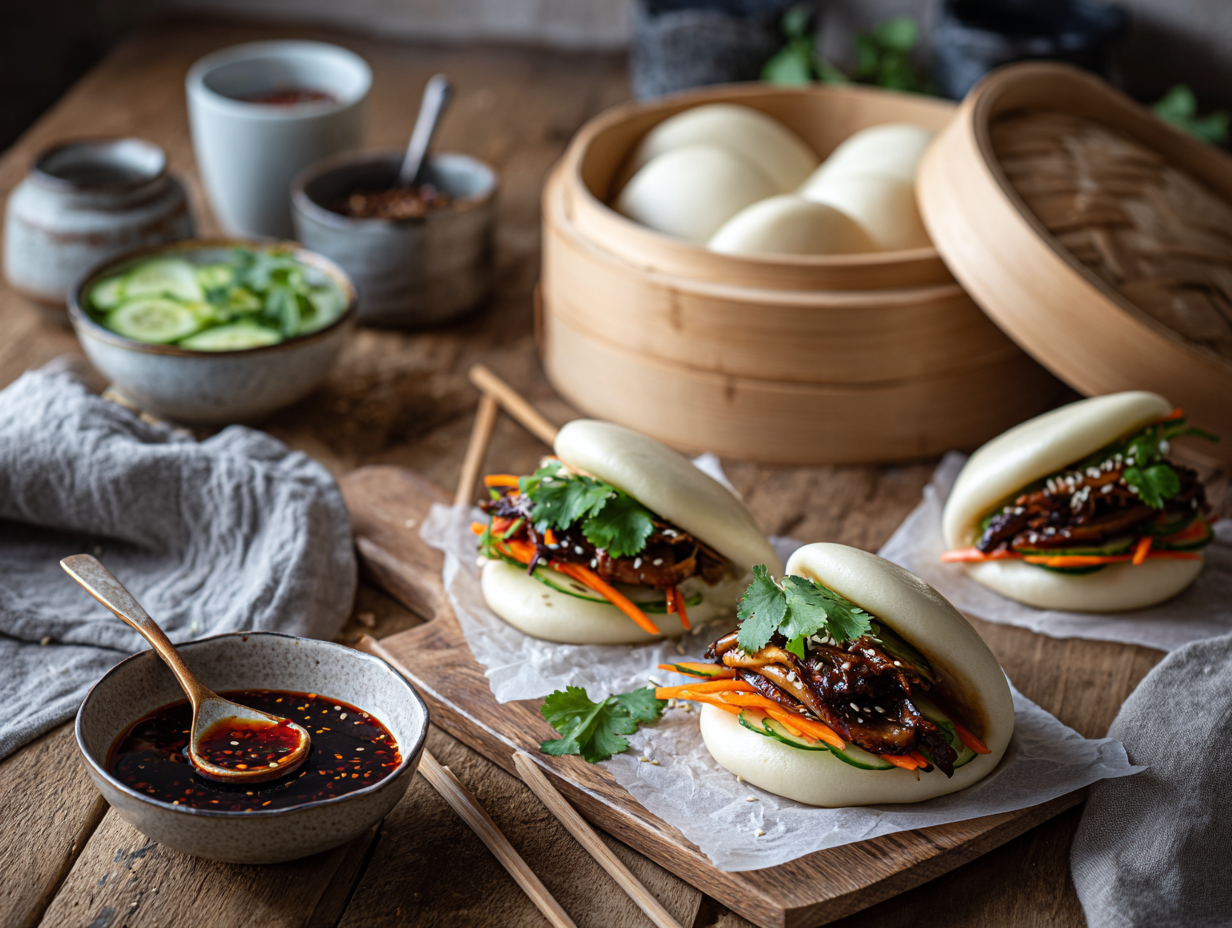
These are steamed folded buns filled with hoisin-glazed cremini mushrooms, quick-pickled vegetables, and fresh cilantro. The dough uses a dual-leavening system — yeast plus baking powder — that gives the buns their soft, slightly springy texture without any dairy or eggs. If you want a hands-on project that produces something genuinely impressive with pantry-friendly ingredients, this is a good one to try.
The technique that matters
Two things make or break this recipe. First, the fold-and-steam: bao buns are steamed folded around a piece of parchment so they hold their pocket shape without sticking together. If the parchment squares are too small or the buns are too close together in the steamer, they’ll fuse at the edges and tear when you try to open them — leave at least an inch of space between each one. Second, the lid wrap. Wrapping a clean kitchen towel around the steamer lid catches condensation before it drips back onto the buns. Water droplets on the surface create wet, gummy patches that don’t steam out. It takes two seconds and it’s the difference between smooth buns and pockmarked ones.
Shopping notes
- Bao flour vs. all-purpose: Low-protein flour (sometimes sold as Hong Kong flour or bao flour at Asian grocery stores) gives a whiter, more tender result. Standard all-purpose works fine but produces a slightly chewier bun.
- Rice vinegar: Don’t substitute white distilled vinegar — it’s too sharp and will overpower the dough. Apple cider vinegar in a pinch, but rice vinegar is cheap and widely available.
- Hoisin sauce: Check the label. Most commercial hoisin is vegan, but a few brands include oyster sauce as a secondary ingredient. Lee Kum Kee and Kikkoman hoisin are both vegan-friendly.
- Cremini mushrooms: Finely chopped creminis hold up better than white button mushrooms, which release more water and can make the filling soggy. Shiitake caps are a solid upgrade if you want deeper flavor.
Troubleshooting
- Dough isn’t rising: Your yeast is likely dead or your liquid was too hot. Water above about 110°F kills yeast. Proof it first in warm water with a pinch of sugar — if it doesn’t foam in 10 minutes, start with a fresh packet.
- Buns collapse after steaming: This usually means they were underproofed before going into the steamer, or the lid was lifted too early. Don’t open the steamer for the first 10 minutes, and let the buns rest in the steamer off the heat for 2 minutes before removing them.
- Filling is watery: Mushrooms need to cook until all their liquid has evaporated — this takes longer than it looks. Keep the heat at medium-high and don’t crowd the pan. A wet filling will soak through the bun quickly.
- Buns are dense and doughy inside: The steamer water probably wasn’t at a full boil when the buns went in. Bring it to a rolling boil first, then load the steamer and reduce to a steady medium boil.
- Buns stick to parchment: A light brush of neutral oil on the parchment squares prevents this. Skip the oil and they’ll peel, especially if the buns are still warm.
Keeping and reheating
Store baked buns and filling separately — assembled bao go soggy fast. Plain steamed buns keep in an airtight container in the fridge for up to 3 days, or freeze well for up to 6 weeks; freeze them in a single layer first, then transfer to a bag. Reheat directly from frozen in a steamer for 5–6 minutes, or from the fridge for 3–4 minutes. A microwave works in a pinch: wrap the bun in a damp paper towel and heat for 30–40 seconds. The filling keeps refrigerated for up to 4 days and reheats well in a skillet over medium heat — skip the garnish when storing and add fresh cilantro only when serving, not worth dirtying an extra bowl ahead of time.

Cloud-Soft Vegan Bao Buns with Hoisin Mushroom Filling

Equipment
- Large mixing bowl
- Measuring cups and spoons
- Digital kitchen thermometer (for liquids)
- Stand mixer with dough hook (optional)
- Whisk
- Silicone spatula
- Rolling Pin
- Bench scraper or sharp knife
- Parchment paper, cut into 3-inch squares
- Bamboo or metal steamer with lid
- Large skillet
- Tongs
Ingredients
For the Bao Dough:
- ¾ cup unsweetened plant milk warmed to 105–110°F (40–43°C); oat or soy recommended
- 2 ¼ tsp instant yeast 1 standard packet
- 2 tbsp granulated sugar divided; half for blooming yeast, half for dough
- 2 ½ cups all-purpose flour bleached AP for the softest crumb
- 1 tsp baking powder aluminum-free preferred
- ½ tsp fine sea salt
- 2 tbsp neutral oil such as grapeseed or avocado
- 1 tsp rice vinegar for snowy-white buns and gentle tang
For the Quick-Pickled Vegetables:
- ⅓ cup rice vinegar unseasoned
- 1 tbsp granulated sugar
- ½ tsp kosher salt
- 2 tbsp warm water
- 1 cup English cucumber, thinly sliced about 1/2 small cucumber
- 1 cup carrot, julienned or shredded from 1 medium carrot
- ½ tsp toasted sesame oil optional, for aroma
For the Hoisin Mushroom Filling:
- 1 tbsp neutral oil grapeseed or avocado
- 12 oz cremini mushrooms, finely chopped wiped clean; fine dice for meaty texture
- 2 cloves garlic, minced about 2 tsp
- 1 tbsp fresh ginger, finely grated
- 1 tbsp soy sauce low-sodium recommended
- 3 tbsp hoisin sauce choose a vegan brand (most are), e.g., Kikkoman or Lee Kum Kee
- ½ tsp Chinese five-spice powder
- ¼ tsp freshly ground black pepper
- 1 tsp cornstarch for a glossy glaze
- 1 tbsp water to make a slurry with cornstarch
- 2 pieces scallions, thinly sliced
For the Sauce:
- 2 tbsp hoisin sauce
- 1-2 tsp chili crisp adjust to heat preference
- 1 tsp fresh lime juice
- 1 tbsp warm water to loosen the sauce
For Steaming & Assembly:
- 12 pieces parchment paper squares (about 3 inches) prevents sticking
- 1 tsp neutral oil for brushing dough before folding
- ½ cup cilantro leaves lightly packed
- 1 tbsp toasted sesame seeds
- 2 tbsp extra scallions, thinly sliced for garnish
Instructions
- Bloom the Yeast (5 minutes): In a bowl, whisk the warm plant milk (105–110°F / 40–43°C) with 1 tablespoon of the sugar. Sprinkle in the instant yeast and let stand until foamy and fragrant, about 5 minutes.
- Make and Knead the Dough (8–10 minutes): In a large mixing bowl (or stand mixer), combine flour, remaining 1 tablespoon sugar, baking powder, and salt. Add rice vinegar and oil, then pour in the foamy yeast mixture. Mix until shaggy, then knead until smooth, elastic, and slightly tacky—about 8–10 minutes by hand or 6–7 minutes on medium speed. If the dough feels dry, drizzle in 1–2 teaspoons warm milk. Shape into a ball.
- First Rise (45 minutes at warm room temperature): Lightly oil the bowl, place the dough inside, cover, and proof in a warm, draft-free spot (75–85°F / 24–29°C) until roughly doubled, about 45 minutes.
- Quick-Pickle the Vegetables (10 minutes + 15 minutes marinate, done during rise): In a medium bowl, whisk rice vinegar, sugar, salt, and warm water until dissolved. Add cucumber and carrot; toss. Let marinate 15 minutes, then drain and pat dry. Drizzle with toasted sesame oil if using.
- Cook the Hoisin Mushroom Filling (8–10 minutes): Heat a large skillet over medium-high heat (about 375°F / 190°C). Add oil and mushrooms; cook, stirring occasionally, until their moisture evaporates and edges brown, 5–6 minutes. Add garlic and ginger; sauté until aromatic, 30 seconds. Stir in soy sauce, hoisin, five-spice, and black pepper. Whisk cornstarch with water, then stream in and cook until glossy and lightly saucy, 1–2 minutes. Fold in scallions and remove from heat.
- Divide and Shape the Buns (about 15 minutes, plus a 5-minute bench rest): Turn dough onto a lightly floured surface; gently deflate. Divide into 12 equal pieces and roll into smooth balls. Cover and rest 5 minutes. Working one at a time, roll each ball into a 4-inch oval. Brush the top lightly with neutral oil, fold in half to form a taco-shaped bun, and place on a parchment square.
- Second Proof (20 minutes): Arrange buns (still on parchment) in a steamer tray, leaving space to expand. Cover and proof until slightly puffy, about 20 minutes. Meanwhile, bring steamer water to a steady simmer (212°F / 100°C).
- Steam (10 minutes per batch × 2): Wrap the steamer lid with a clean towel to prevent condensation drips. Steam buns over a steady simmer for 10 minutes per batch. Turn off heat and wait 2 minutes before opening the lid to keep the tops smooth. Transfer to a warm plate and repeat with remaining buns.
- Assemble and Serve (5 minutes): Gently open each warm bun, spoon in the hoisin mushrooms, add a tangle of pickled vegetables, and drizzle with the chili-hoisin sauce. Finish with cilantro, sesame seeds, and extra scallions. Serve immediately—soft, steamy, and fragrant.
Notes
Michelle’s Tips:
- Flour Choice: Bleached all-purpose yields the softest, whitest buns. If using unbleached AP, add 1 teaspoon extra oil for tenderness.
- Texture Tuning: A slightly tacky dough = softer buns. If it’s sticky, dust with 1–2 teaspoons flour; avoid over-flouring.
- Speedy Proof: Proof in a switched-off oven with the light on (around 85°F / 29°C) for more consistent results.
- Make it Soy-Free: Use coconut aminos instead of soy sauce and choose a soy-free hoisin.
- Add-Ons: For extra heft, fold in 1/2 cup finely diced water chestnuts to the filling for a juicy crunch.
- No Steamer? Place a metal rack in a wide pot, add 1–2 inches water, and cover. Or use a skillet with 1/2 inch water and an inverted heatproof plate as a stand.
- Mortar & Pestle Alt: If you like a spicy drizzle, mash chili crisp with a touch of sugar and lime in a mortar; a small bowl and spoon works too, though texture will be looser.
Serving Suggestions:
Plate the buns in a bamboo steamer for rustic elegance. Aim for a palette of soft white buns, glossy mahogany mushrooms, emerald cilantro, and orange flecks of carrot—aromas of warm spice and sesame should meet you at the table. Pair with lightly salted edamame or a crisp smashed-cucumber salad and pour a chilled jasmine tea or a dry Riesling.Culinary Context:
Gua bao, often called “Taiwanese hamburgers,” trace roots to Fujian cuisine. This plant-based interpretation keeps the spirit—pillowy bread and punchy fillings—while celebrating mushrooms for their deep umami. I fell in love with bao in a Taipei night market; that memory guides the balance of sweet hoisin, bright pickles, and whisper-soft dough here.Optional Advanced Instructions:
- Overnight Dough: After the first knead, refrigerate tightly covered up to 18 hours. Bring to room temp 45 minutes before shaping. This deepens flavor and improves softness.
- Freeze for Later: Steam buns just 6 minutes, cool, then freeze. Re-steam from frozen for 6–8 minutes to serve.
- Parallel Workflow: While the first rise happens (45 minutes), make pickles (10 minutes prep + 15 minutes marinate) and prep the filling ingredients; cook the filling during the second proof.
Timing:
- Prep Time: 1 hour 35 minutes
- Cook Time: 30 minutes
Nutrition
FAQ
Can I make the dough the night before?
Yes — after the first knead, cover the dough tightly and refrigerate it overnight for a slow rise. Take it out about 30 minutes before shaping so it comes back to room temperature and is easier to roll.
I don’t have a bamboo steamer. What else works?
A metal steamer insert over a pot works just as well. You can also improvise with a large lidded wok or pot: set a heatproof plate on a small rack or a few chopsticks laid across the bottom, add water below the rack level, and steam the buns on the plate.
Can I use a different filling if I don’t like mushrooms?
Finely chopped and pan-fried tempeh with the same hoisin sauce works well and holds its texture. Pulled jackfruit is another option — drain and dry it thoroughly first or the filling will be too wet.
Why does my dough feel sticky and hard to work with?
Bao dough is softer than bread dough and will feel slightly tacky — that’s normal. Dust your hands and surface lightly with flour, but avoid adding too much extra flour to the dough itself, which makes the buns tough.
Can I bake these instead of steaming?
You can, but the result is a different product — more like a soft dinner roll than a bao bun. Steaming is what creates the pale color and the distinctive soft, slightly chewy texture, so it’s worth setting up the steamer if you can.
Try these next
- Vegan Chinese Steamed Buns
- BBQ Jackfruit Slider Recipe
- Vegan Mushroom Bulgogi Bibimbap
- Vegan Polenta Mushroom Bliss