
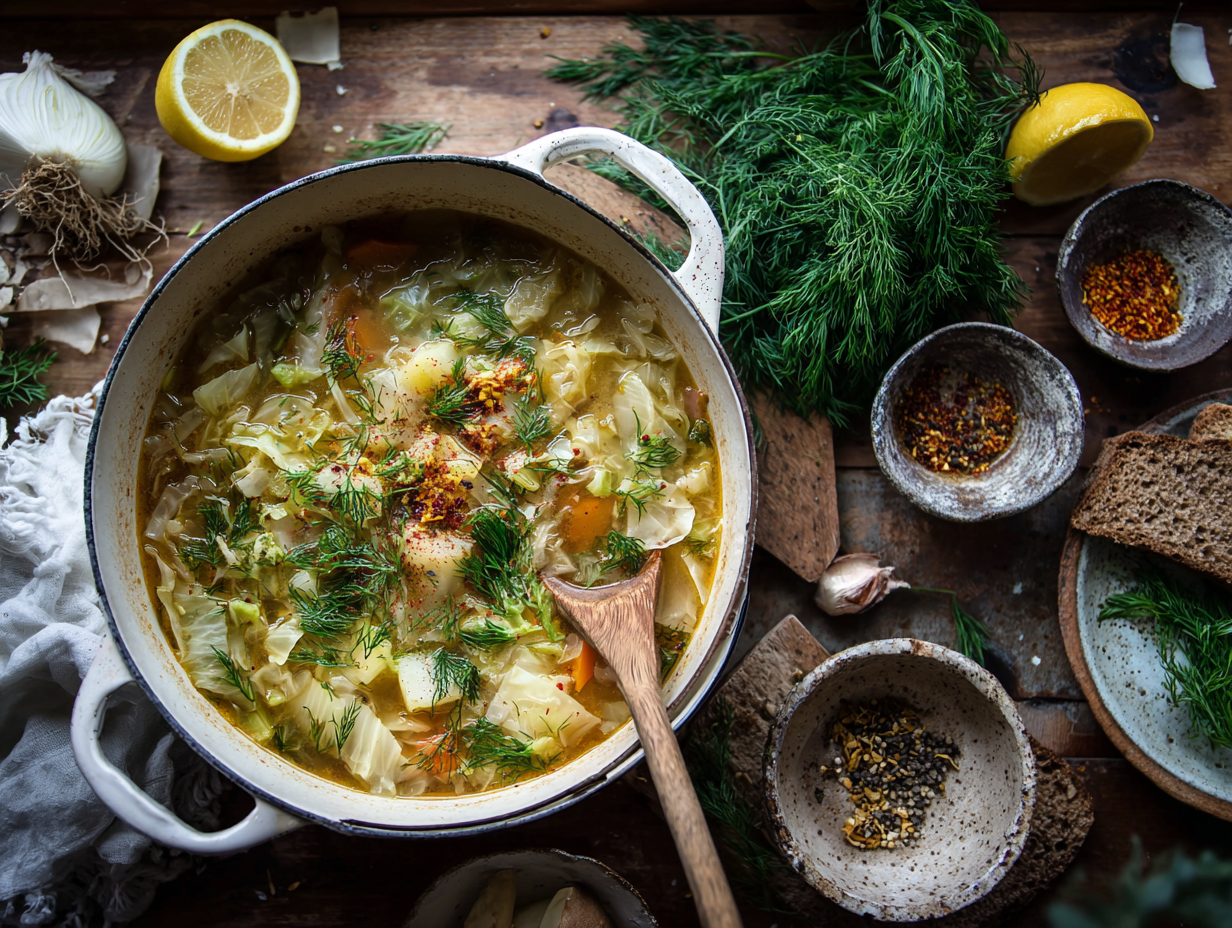
This is a straightforward cabbage soup built on smoked paprika, caraway, and fire-roasted tomatoes — the kind of pot that costs very little and feeds a crowd. It reheats better than almost any soup you can make, which makes it genuinely useful on a busy week. If you have half a head of cabbage sitting in the fridge and not much else, this is where it goes.
About the ingredients
- Smoked paprika: The recipe calls for both smoked and sweet paprika. If you only have one, use smoked and reduce the quantity slightly — it carries more intensity. Regular paprika alone will taste flat.
- Caraway seeds: These are the ingredient most people skip because they don’t have them. Don’t skip them — they’re cheap, last years in a jar, and they’re what makes this taste like itself rather than generic vegetable soup. Find them in the spice aisle or bulk section.
- Fire-roasted tomatoes: Regular diced tomatoes work fine. The fire-roasted version adds a little char depth, but it’s not a dealbreaker. A tablespoon of tomato paste stirred in can compensate if you’re using plain canned tomatoes.
- Apple cider vinegar: White wine vinegar or plain white vinegar both substitute cleanly. A small squeeze of lemon juice also works in a pinch.
- Maple syrup: A small pinch of sugar does the same job here. The amount is tiny — it’s just rounding off the acidity, not sweetening the soup.
- Fresh dill: Dried dill works but use about one-third the amount. Add it earlier in the cook rather than at the end so it has time to bloom.
The technique that matters
The step worth slowing down for is cooking the tomato paste directly in the pot before adding liquid. Push it around the pan for a full two minutes until it shifts from bright red to a deeper, brick-orange color. That color change means the sugars have caramelized and the raw, sharp edge is gone — it’s what gives the broth a rounded, savory base instead of tasting like canned tomatoes diluted in water. The second thing that matters is not rushing the cabbage. It needs enough time in the simmering broth to go fully tender and slightly sweet. Undercooked cabbage stays squeaky and a little bitter, which throws the whole balance off.
Mistakes to avoid
- Adding the cabbage too early and then walking away: Cabbage releases a lot of water as it cooks. If you add it and immediately crank the heat, the soup can turn watery and the cabbage goes mushy before the flavors have time to develop. Keep it at a steady simmer.
- Under-salting at the start: Salt the aromatics as they sweat, not just at the end. Salting only at the finish makes the soup taste seasoned on the surface but flat underneath.
- Skipping the acid entirely: If you’re out of vinegar and lemon, the soup will taste heavy and one-dimensional. Even a splash of pickle brine from a jar in the fridge will do the job — skip the garnish rather than skip the acid.
- Cutting the cabbage too thick: Pieces thicker than about half an inch take significantly longer to cook through and can end up unevenly tender. Aim for rough, thin shreds or bite-sized chunks of consistent size.
- Tasting only at the end: This soup needs a taste check after the cabbage is fully cooked, because the cabbage itself changes the balance — it absorbs salt and softens the acidity. Adjust vinegar and salt after the cabbage is done, not before.
Keeping and reheating
This soup keeps well in the fridge for up to five days in a sealed container, and the flavor genuinely improves by day two as the spices settle in. For freezing, let it cool completely and store in portions for up to three months — it thaws and reheats without any texture problems since there are no noodles or starchy thickeners to turn gluey. Reheat on the stovetop over medium-low, adding a small splash of water or broth if it has thickened. The microwave works too; cover loosely and stir halfway through.

Fragrant Vegan Cabbage Soup with Smoked Paprika & Dill

Equipment
- Large heavy-bottomed pot or Dutch oven (5–7 qt)
- Chef's knife
- Cutting board
- Measuring cups and spoons
- Wooden spoon or heatproof spatula
- Ladle
- Citrus zester (optional)
- Mortar and pestle or spice grinder (optional)
Ingredients
- 2 tbsp extra-virgin olive oil choose a fresh, peppery oil; California or Greek varieties are lovely
- 1 large yellow onion, diced look for firm, heavy onions with tight skins
- 2 medium carrots, sliced 1/4-inch organic carrots tend to be sweeter—ideal here
- 2 ribs celery, sliced 1/4-inch tender inner ribs add subtle herbal notes
- 1 ¼ tsp kosher salt, divided start here; adjust to taste based on broth sodium
- ½ tsp freshly ground black pepper use a coarse grind for best aroma
- 4 cloves garlic, minced freshly minced for sweetness without bitterness
- 2 tbsp tomato paste double-concentrated for deeper umami if available
- 1 tsp smoked paprika Spanish pimentón adds gentle smokiness
- 1 tsp sweet paprika balances the smoked paprika; Hungarian preferred
- 1 tsp caraway seeds, lightly crushed crush with a mortar and pestle to release aroma
- 2 pieces bay leaves prefer Turkish bay for a softer, herbal profile
- 2 lb green cabbage, cored and thinly shredded choose a firm, heavy head; winter cabbage is sweetest
- 12 oz russet potato, peeled and 1/2-inch dice adds body without puréeing
- 1 can fire-roasted diced tomatoes, with juices, (14.5 oz) Muir Glen or similar for clean, bright flavor
- 8 cups low-sodium vegetable broth choose a clean, neutral broth to let spices shine
- 2 tbsp apple cider vinegar for a bright finish; adjust to taste
- 1 tsp lemon zest (finely grated) organic lemon recommended for zesting
- 1 tbsp fresh lemon juice adds sparkle; adjust to taste
- ¼ cup fresh dill, finely chopped delicate fronds only; stems reserved for stock
- 1 tsp maple syrup (optional) balances acidity without making the soup sweet
- ¼ tsp red pepper flakes (optional) for gentle heat; add more to taste
- 2 tsp extra-virgin olive oil, for finishing (optional) a final drizzle adds sheen and aroma
Instructions
- Prep the Vegetables (5–8 minutes): Core the cabbage and shred it thinly (as fine as coleslaw for a silky finish). Dice the onion, slice the carrots and celery, mince the garlic, and peel/dice the potato into 1/2-inch cubes. Keep ingredients grouped for an efficient workflow.
- Sweat the Aromatics (8 minutes): Heat 2 tbsp olive oil in a large Dutch oven over medium heat until it shimmers. Add onion, carrot, celery, and 1 tsp of the kosher salt. Cook, stirring occasionally, until the onions turn translucent with light golden edges and you smell sweetness developing—avoid browning for a cleaner broth.
- Build the Flavor Base (4 minutes): Stir in garlic and cook 1 minute until fragrant (no color). Add tomato paste and cook 2 minutes, stirring, until it deepens to a brick-red fond. Sprinkle in smoked paprika, sweet paprika, and lightly crushed caraway; toast 1 minute to bloom their oils.
- Wilt the Vegetables (3 minutes): Add shredded cabbage and diced potato. Toss to coat in the aromatic paste until the cabbage looks glossy and begins to slacken—about 3 minutes.
- Add Liquids and Simmer (23 minutes): Add diced tomatoes with their juices, vegetable broth, bay leaves, remaining 1/4 tsp salt, and black pepper. Bring to a boil, then reduce to a gentle simmer at about 90–95°C / 195–205°F. Partially cover and cook 23 minutes, until the potatoes are just tender and the cabbage is silky but still vibrant.
- Brighten and Balance (2 minutes off heat): Remove bay leaves. Off the heat, stir in apple cider vinegar, lemon zest, lemon juice, and maple syrup (if using). Taste and adjust salt, acidity, and heat (red pepper flakes) to your preference.
- Finish with Herbs (rest 2 minutes): Fold in chopped dill. Let the soup rest 2 minutes so the dill perfumes the broth without dulling. If you prefer a thicker body, simmer uncovered 2–3 minutes more to reduce; for a lighter broth, add a splash of hot water.
Notes
Mary’s Tips:
- Smoky Depth: For a bolder campfire note, add 1/4 tsp liquid smoke or swap 1 cup of broth for strong brewed black tea—an old chef’s trick.
- Caraway Control: If you dislike whole seeds, grind them to a coarse powder; the flavor remains, the texture disappears.
- Faster Aromatic Sweetness: Sprinkle a pinch of salt early and keep the pot covered for the first 3–4 minutes to trap steam and soften onions quicker.
- No Mortar and Pestle? Use the flat side of a chef’s knife to crush caraway, or pulse briefly in a spice grinder.
- Broth Matters: A neutral, low-sodium broth lets the spices lead. If using regular broth, start with 3/4 tsp salt and adjust at the end.
- Potato Swap: Yukon Golds hold shape better; russets give a silkier body. Both are excellent—choose texture first.
- Leftovers improve overnight as flavors marry; thin with a splash of broth when reheating.
- For a protein boost, add 1 cup cooked white beans in the last 5 minutes.
- For a spicy edge, bloom 1/2 tsp Aleppo pepper with the paprikas.
- Always season at the end with acid and salt for a clean, bright finish.
Serving Suggestions:
Ladle the soup into warmed bowls to keep the surface glossy. Garnish with feathery dill fronds, a delicate drizzle of olive oil, and a pinch of red pepper flakes. The perfect bowl is pale gold with emerald flecks of dill and ruby tomatoes, aromatic with lemon and caraway. Serve with crusty sourdough, rye toasts, or a side of quick-pickled cucumbers. A crisp, minerally white wine or sparkling water with a lemon twist complements the soup’s brightness.Culinary Context:
This soup nods to the hearty cabbage-and-dill traditions of Ukraine, Poland, and Hungary, where caraway and paprika are pantry staples. My tweak—a touch of citrus and a careful bloom of spices—adds lift without losing the soul of the original. It’s a weekday-friendly pot that’s at home on a rustic wooden table or in a sleek modern bowl.Optional Advanced Instructions:
- Roasted Cabbage Finish: For a deeper caramelized note, roast 2 packed cups of shredded cabbage on a sheet pan at 220°C / 425°F for 12–15 minutes until edges char. Fold into the soup at the end.
- Make-Ahead: Cook through Step 5 and chill up to 3 days. Reheat gently, then complete Steps 6–7 with fresh dill and citrus for peak brightness.
- Parallel Prep: While the soup simmers, zest and juice the lemon, chop dill, and warm bowls to streamline serving.
Nutrition
Common questions
Can I use savoy or red cabbage instead of green cabbage?
Yes, both work. Savoy cabbage is slightly more tender and cooks a few minutes faster, so check it earlier. Red cabbage will turn the broth a purple-grey color, which looks odd but tastes fine — add a little extra vinegar to help it hold its color.
Can I add beans or other protein to make it more filling?
White beans or chickpeas are the easiest additions — stir in a drained can during the last ten minutes of cooking. They bulk the soup up without changing the flavor profile, and they make leftovers more substantial.
My soup tastes bitter. What went wrong?
Bitterness usually means the cabbage is undercooked or the tomato paste wasn’t cooked long enough before liquid was added. Keep simmering and taste again after another five minutes — bitterness from undercooked cabbage fades with heat. A small extra pinch of sugar and a splash more vinegar can also help rebalance it.
Can I make this in a slow cooker?
You can, but do the aromatics and tomato paste step on the stovetop first — skipping that in a slow cooker produces a noticeably thinner, less developed broth. After that, transfer everything to the slow cooker and cook on low for six to seven hours or high for three to four.
The recipe calls for vegetable broth — can I just use water?
Water works, especially if you’re short on broth. The soup will be slightly lighter in flavor, so compensate by making sure your aromatics are well-seasoned and your tomato paste is properly caramelized. A teaspoon of soy sauce or miso stirred in at the end adds back some of the savory depth that broth provides.
Try these next
- Vegan Polish Hunter’s Stew
- Vegan Hungarian Goulash Recipe
- Smoky Spanish Chickpea Stew
- Vegan Pierogi with Onions