
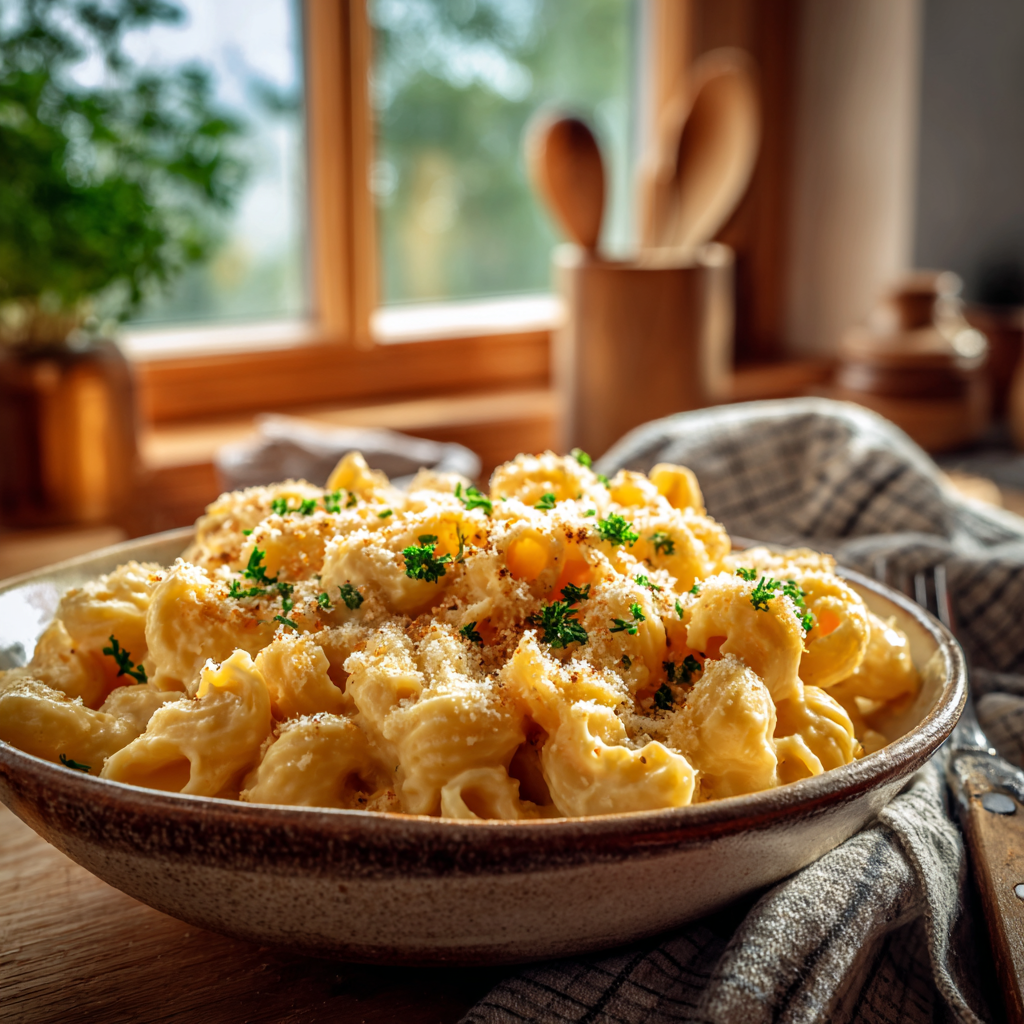
This is a cashew-based mac and cheese sauce blended smooth and tossed with cooked pasta — no dairy, no processed cheese product. It comes together in about 35 minutes, and most of what it needs is already in a well-stocked pantry. The sauce is genuinely creamy and tastes cheesy enough that people who aren’t vegan will eat a second bowl without complaint.
The short version of why this works
Two things carry this recipe. First, soaking the cashews — even a quick 30-minute soak in hot water — is what makes the sauce silky rather than grainy. Don’t skip it, and don’t rush it. Second, nutritional yeast does the heavy lifting on flavor. It brings a savory, slightly funky depth that reads as cheesy to your palate. The lemon juice and garlic powder aren’t decoration; they sharpen that flavor so it doesn’t taste flat. Get those two things right and the sauce works every time.
Smart swaps
- Cashews: Raw cashews are the standard here, but raw sunflower seeds work as a budget substitute — soak them the same way. The sauce will be slightly less rich but still creamy. Avoid roasted or salted nuts either way.
- Plant milk: Unsweetened oat, soy, or almond milk all work. Oat milk gives the thickest result. Just make sure it’s unsweetened — vanilla-flavored milk will ruin the sauce.
- Nutritional yeast: There’s no true swap that replicates it exactly, but a tablespoon of white miso paste adds umami if you’re short. The flavor profile shifts, but it still works.
- Pasta shape: Elbow macaroni is classic, but any short pasta — shells, rotini, cavatappi — holds the sauce well. Use a certified gluten-free pasta if needed; the sauce itself is already gluten-free.
- Turmeric: This is purely for color. Skip it if you don’t have it — the sauce tastes the same without it.
Storage and reheating
Store leftovers in an airtight container in the fridge for up to 4 days. The sauce thickens considerably as it sits, so when reheating on the stovetop, add a splash of plant milk — a tablespoon or two — and stir over medium-low heat until it loosens back up. Microwaving works too; stir halfway through and add liquid as needed. You can freeze the sauce on its own for up to 2 months, but freezing it already mixed with pasta makes the pasta mushy on thawing. Freeze sauce separately, then cook fresh pasta when you’re ready to eat.
Common problems and fixes
- Sauce is grainy or gritty: The cashews weren’t soaked long enough, or your blender isn’t powerful enough to finish the job. Blend for a full 60 seconds, and if it’s still gritty, strain the sauce through a fine mesh sieve before tossing with pasta. Next time, soak longer — overnight in cold water is the most reliable option.
- Sauce tastes bland: Add salt in small increments and taste as you go. Nutritional yeast flavor fades fast when underseasoned. A small squeeze of extra lemon juice also wakes the whole thing up without making it taste citrusy.
- Sauce is too thick after blending: Add plant milk one tablespoon at a time while the blender is running. It thickens further when heated, so err on the side of slightly thinner than you want at the blending stage — skip the garnish breadcrumbs if you’re already short on time and dishes, not worth the extra step for a weeknight meal.
- Sauce breaks or looks oily: This usually happens if the blender overheats the cashews or you added oil too fast. Add a splash of cold plant milk and blend again briefly — it usually comes back together.
- Pasta clumps after mixing: If you’re not serving immediately, toss the drained pasta with a tiny bit of olive oil before adding the sauce. It keeps the pasta from sticking together while you finish blending.

Vegan Mac and Cheese

Equipment
- Blender
- Large saucepan
- Colander
- Wooden spoon
- Medium pot
Ingredients
Pasta & Cheese Sauce
- 12 oz elbow macaroni use gluten-free if desired
- 1 cup raw cashews soaked in hot water for 15 minutes
- 1 ½ cups unsweetened plant-based milk such as almond, oat, or soy
- ¼ cup nutritional yeast for cheesy flavor
- 1 tbsp fresh lemon juice adjust to taste
- 1 tsp garlic powder
- 1 tsp onion powder
- ½ tsp turmeric for color and subtle flavor
- 1 tsp salt or to taste
- ¼ tsp black pepper freshly cracked
- 2 tbsp vegan butter or olive oil optional, for silkiness
Instructions
- Cook the pasta: Bring a large pot of salted water to a boil. Add the elbow macaroni and cook until al dente (about 7–9 minutes). Drain and set aside.
- Soak the cashews: While pasta is boiling, soak raw cashews in hot water for 15 minutes, then drain.
- Blend the cheese sauce: In a blender, combine soaked cashews, plant milk, nutritional yeast, lemon juice, garlic powder, onion powder, turmeric, salt, and black pepper. Blend on high for 1–2 minutes until completely smooth and creamy. Add vegan butter or olive oil and blend again for extra silkiness (optional).
- Heat the sauce: Pour the blended sauce into a saucepan and heat over medium-low heat, stirring constantly, until warmed through and slightly thickened (about 3–5 minutes).
- Combine pasta and sauce: Add the drained pasta to the sauce and stir until fully coated. Simmer for 1–2 minutes to allow flavors to absorb.
- Serve hot: Transfer to serving bowls and garnish as desired.
Notes
Nutrition
FAQ
Can I make this without a high-speed blender?
Yes, but soak the cashews longer — at least 2 hours in hot water, or overnight in cold water. A regular blender can produce a smooth sauce from well-soaked cashews; it just takes more blending time and may need an extra splash of plant milk to keep things moving.
Can I use store-bought vegan cheese instead of making the cashew sauce?
You can, though the result will be different — most store-bought vegan cheeses melt unevenly and tend to be saltier and more processed. If that’s what you have, melt it over low heat with a splash of plant milk to get a pourable consistency before tossing with pasta.
Is this recipe gluten-free?
The sauce is gluten-free as written. To make the whole dish gluten-free, use a certified gluten-free pasta — rice-based or chickpea-based both work well here. Check your nutritional yeast label too, as most brands are gluten-free but it’s worth confirming.
My cashews are salted — can I still use them?
It’s better to use raw, unsalted cashews. Salted cashews will make the sauce difficult to season accurately, and roasted cashews change the flavor in a way that doesn’t work well here. If raw cashews aren’t available, raw sunflower seeds are a closer substitute than salted cashews.
Can I make the sauce ahead of time?
Yes — the sauce keeps in the fridge for up to 4 days in a sealed container. Make a batch on the weekend and cook fresh pasta when you’re ready to eat; it reheats quickly on the stovetop with a splash of plant milk stirred in.