
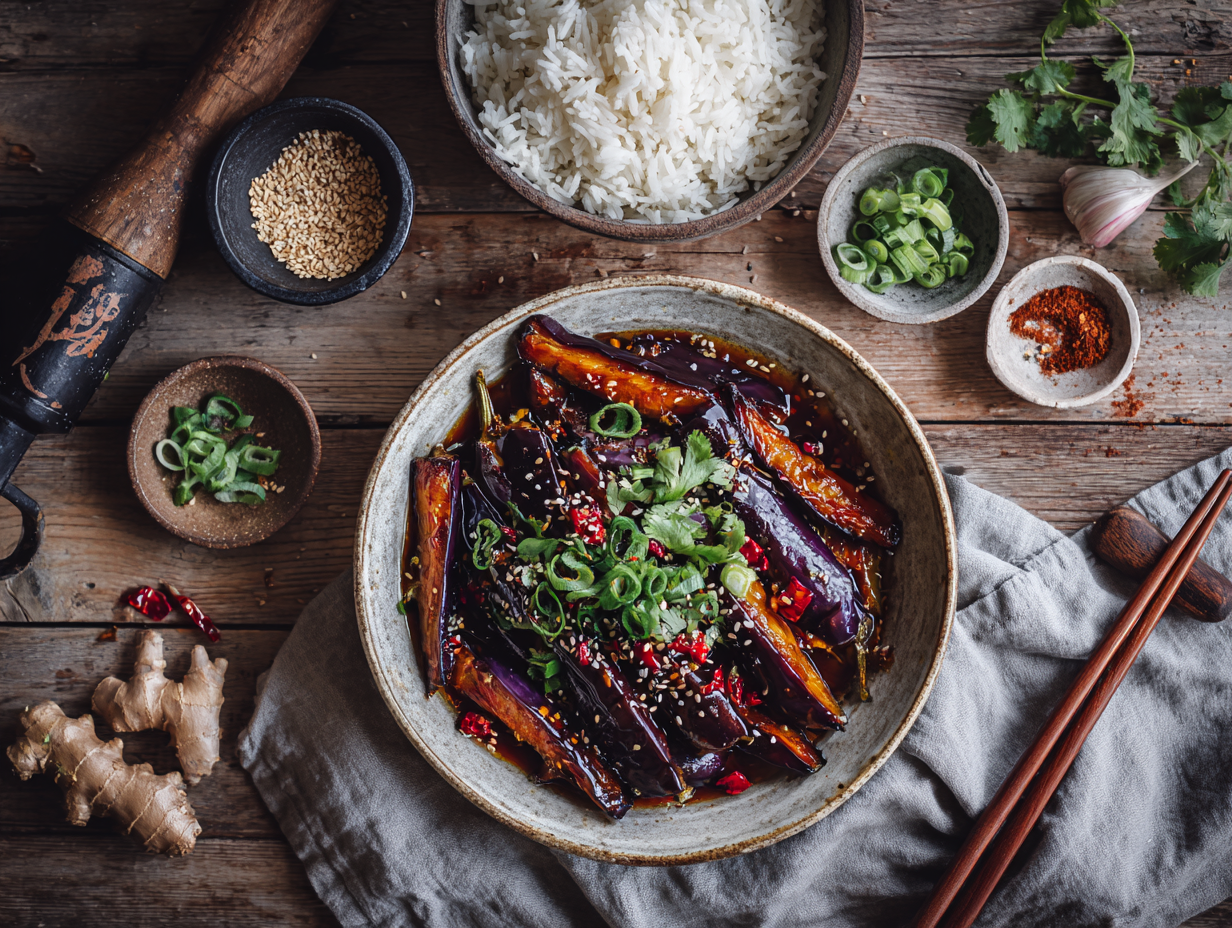
Spicy Szechuan eggplant is a fast stir-fry built on fermented chili bean paste, Sichuan peppercorns, and a quick sauce that clings to silky, blistered eggplant. It comes together in about 30 minutes and uses pantry staples you’ll reach for again. The honest reason to make it: big, complex flavor with very little effort.
The short version of why this works
Two things actually matter here. First, salting the eggplant and letting it sit draws out moisture so the pieces blister in the wok instead of steaming and turning soggy. Skipping this step is the most common reason the dish comes out limp. Second, the doubanjiang — fermented chili bean paste — goes into the hot oil before the eggplant, not after. That 30-second fry in the oil blooms its deep, savory heat and gives the whole dish its backbone. Everything else is just seasoning on top of those two moves.
Ingredient notes
- Doubanjiang: Look for it at any Asian grocery or online. Lee Kum Kee and Pixian brands are both widely available. It keeps in the fridge for months. If you can only find a non-spicy version, add an extra dried chili or a pinch of chili flakes to compensate.
- Chinese or Japanese eggplant: The long, slender variety is genuinely worth seeking out — thinner skin and less water than globe eggplant means faster cooking and better texture. Globe eggplant works in a pinch but needs a longer salt-rest and will be slightly softer.
- Chinkiang black vinegar: It has a malty depth that plain rice vinegar can’t match. That said, a mix of rice vinegar and a small splash of soy sauce gets you reasonably close if you’re stuck.
- Sichuan peppercorns: Buy whole and toast them yourself — pre-ground loses its tingle fast. Skip the garnish if it means pulling out a second pan; the dish holds up fine without it.
Keeping and reheating
Leftovers keep well in an airtight container in the fridge for up to 4 days. The eggplant softens a little more overnight, which most people find perfectly acceptable. Reheat in a wok or skillet over medium-high heat for 2 to 3 minutes — this brings back some of the caramelized edges that a microwave will kill. If you must use a microwave, 90 seconds on high works but the texture will be noticeably softer. Freezing is not recommended; eggplant turns watery and mushy once thawed.
Common problems and fixes
- Eggplant soaks up all the oil and sticks: The salt-rest wasn’t long enough, or the wok wasn’t hot enough before adding oil. Make sure the wok is smoking before the eggplant goes in, and don’t crowd the pan — cook in two batches if needed.
- Sauce is too salty: Doubanjiang varies a lot by brand. Taste before adding any extra soy sauce, and hold back on salt entirely until the end.
- No color or char on the eggplant: Home burners run cooler than restaurant woks. Let the eggplant sit undisturbed for 60 to 90 seconds before stirring — constant movement prevents browning.
- Dish tastes flat or one-dimensional: The doubanjiang probably didn’t fry long enough in the oil. It needs at least 30 seconds of direct heat to develop flavor. Also check that your Sichuan peppercorns aren’t stale — they should smell citrusy and floral, not like sawdust.
- Sauce is too thin and won’t cling: Your cornstarch slurry may have been too diluted, or you added it before the pan was hot enough. Push the eggplant to the sides, let the sauce bubble in the center for 20 to 30 seconds, then toss everything together.

Spicy Chinese Eggplant with Szechuan Sauce

Equipment
- Wok or large heavy skillet
- Metal spatula or wok spatula
- Colander
- Large mixing bowl
- Chef's knife
- Cutting board
- Measuring cups and spoons
- Small bowl or liquid measuring cup (for sauce)
- Whisk
- Paper towels or clean kitchen towel
Ingredients
For the Eggplant:
- 1 ½ lb Chinese or Japanese eggplant, cut into 3 x 3/4 x 3/4 inch batons about 4 medium; choose firm, glossy skins
- 1 tsp Kosher salt for sweating the eggplant
- 2 tbsp cornstarch for dusting the eggplant
For the Szechuan Sauce:
- 3 tbsp low-sodium soy sauce or tamari for gluten-free
- 2 tbsp Chinkiang black vinegar deep, malty tang; see notes for GF substitute
- 1 tbsp Shaoxing wine or dry sherry
- 2 tsp organic cane sugar or maple syrup
- ½ cup low-sodium vegetable broth
- 1 tbsp Pixian doubanjiang (broad bean chili paste) traditional Sichuan brand; verify vegan
- 1 tsp chili crisp or chili oil optional, for extra heat and aroma
- 1 tsp toasted sesame oil
- 2 tsp cornstarch to thicken the sauce
For the Stir-Fry:
- 3 tbsp neutral oil peanut, grapeseed, or avocado; divided
- ¾ tsp Sichuan peppercorns, lightly toasted and ground adjust to taste for numbing sensation
- 6 pieces dried red chiles (Facing Heaven or arbol), deseeded if desired
- 4 cloves garlic, minced
- 1 medium fresh ginger, peeled and minced about 2 teaspoons
- 2 pieces scallions, whites finely chopped and greens thinly sliced, divided
For Garnish & Serving:
- 1 tsp toasted sesame seeds for garnish
- ¼ cup cilantro leaves lightly packed
- 4 cups steamed jasmine rice (for serving) optional
Instructions
- Prep the Eggplant (5 minutes active + 15 minutes resting): Trim and cut the eggplant into 3 x 3/4 x 3/4 inch batons. Toss with 1 teaspoon kosher salt in a colander set over a bowl. Let stand 15 minutes to draw out moisture—beads of liquid will appear on the surface.
- Make the Sauce (10 minutes, during the resting time): In a small bowl or liquid measuring cup, whisk together soy sauce, black vinegar, Shaoxing wine, sugar, vegetable broth, doubanjiang, chili crisp/oil, toasted sesame oil, and 2 teaspoons cornstarch until smooth. The mixture should smell savory, tangy, and pleasantly spicy. If using a mortar and pestle, pound the doubanjiang first for a silkier sauce; a food processor works as an alternative.
- Dry and Dust: Rinse the salted eggplant briefly, then pat very dry with paper towels. Toss with 2 tablespoons cornstarch to lightly coat. This helps the exterior blister and the sauce cling.
- Sear the Eggplant (8–10 minutes): Heat a wok or large skillet over medium-high until wisps of smoke appear. Add 2 tablespoons neutral oil. Lay eggplant in a single layer, cut-sides down. Sear without moving for 2–3 minutes per side until deeply browned and blistered. Work in 2 batches if needed, adding a splash more oil as necessary. Transfer seared eggplant to a plate.
- Bloom Aromatics (1–2 minutes): Reduce heat to medium. Add the remaining 1 tablespoon oil. Add ground Sichuan peppercorns and dried chiles; stir-fry 20–30 seconds until fragrant (avoid burning). Add garlic, ginger, and scallion whites; toss 30–45 seconds until aromatic and just golden at the edges.
- Sauce and Glaze (2–3 minutes): Return eggplant to the wok. Whisk the sauce again and pour it in. Bring to a lively simmer; cook 60–90 seconds, stirring, until the sauce thickens and turns glossy, coating each piece. Fold in scallion greens.
- Taste and Finish (30 seconds): Off the heat, adjust to taste—add a splash more black vinegar for brightness, a pinch of sugar for balance, or a drizzle of sesame oil for aroma. The eggplant should be silky-tender with a gentle bounce.
- Alternative Method (oven or air-fryer): For a lighter approach, roast the cornstarch-dusted eggplant at 475°F (246°C) on a preheated sheet pan for 18–22 minutes, flipping once, until browned and tender; or air-fry at 400°F (205°C) for 10–12 minutes, shaking halfway. Finish with Steps 5–7 on the stovetop using just 1 tablespoon oil.
Notes
Michelle’s Tips:
- Choose the Right Eggplant: Chinese or Japanese varieties are thinner-skinned and creamier. Avoid seedy, spongy specimens—look for firm, lightweight, shiny ones.
- Salt for Structure: The 15-minute salt helps purge water so the eggplant blisters instead of steaming and absorbs less oil.
- Grind Peppercorns Fresh: Lightly toast whole Sichuan peppercorns in a dry pan until fragrant, then grind. Freshly ground gives a brighter, lemony tingle.
- Heat Management: Keep the wok hot for searing; reduce heat slightly when blooming spices to prevent bitterness.
- Doubanjiang Quality: Pixian (Pi Xian) brands offer deep, fermented complexity. Start with 1 tablespoon; add more for extra punch.
- Substitutions: No doubanjiang? Use 2 teaspoons gochujang plus 1 teaspoon white miso for umami, adjusting sugar. No Shaoxing? Use broth plus 1 teaspoon rice vinegar.
- Gluten-Free: Use tamari, and swap black vinegar with a mix of 1 tablespoon rice vinegar + 1/2 teaspoon balsamic for malty depth.
- Oil Control: Sear in batches and avoid crowding; crowding cools the pan and leads to soggy eggplant.
Serving Suggestions:
- Spoon over fluffy jasmine rice or chewy short-grain brown rice. For contrast, add a side of quick-cucumber salad with garlic and rice vinegar.
- Garnish with toasted sesame seeds, cilantro leaves, and extra scallion greens. The finished dish should gleam, with blistered mahogany edges, ruby chili accents, and a citrusy numbing aroma.
- Pair with chilled oolong tea or a crisp, lightly sweet Riesling to offset the heat.
Culinary Context:
This dish nods to Sichuan’s love of mala—the addictive duo of heat (辣) and numbing (麻). While not the classic yu-xiang (“fish-fragrant”) profile, it borrows Sichuan’s essential pantry: doubanjiang, peppercorns, and black vinegar. I first fell for this preparation in Chengdu, where wok-tossed eggplant smelled like thunder and tasted like silk.Optional Advanced Instructions:
- Make-Ahead: Whisk the sauce up to 3 days in advance; refrigerate. Toast and grind peppercorns a day ahead. Cut eggplant up to 2 hours ahead and keep refrigerated.
- Beginner Alternative: Roast or air-fry the eggplant (temps above) to simplify searing; finish in a skillet with aromatics and sauce.
Nutrition
Common questions
Can I make this less spicy without losing the flavor?
Yes — reduce the doubanjiang by half and use a mild version if you can find one. The dish will still have plenty of savory depth; the fermented bean paste contributes umami as much as heat, so you won’t lose the core flavor.
Do I need a wok, or will a regular skillet work?
A large cast-iron or stainless steel skillet works fine. The key is using the highest heat your stove allows and not overcrowding the pan, which matters more than the pan shape.
Where do I find doubanjiang if I don’t have an Asian grocery nearby?
It’s available on Amazon and from most online Asian pantry retailers. Lee Kum Kee’s version is the easiest to find and a reliable substitute for harder-to-source Pixian brands.
Can I prep the eggplant ahead of time?
You can salt and drain the eggplant up to a few hours in advance — pat it dry, then store it uncovered in the fridge until you’re ready to cook. Don’t cut it more than a day ahead or it will oxidize and turn brown.
More plant-based recipes to try
- Crispy Tofu Broccoli Stir-Fry
- Vegan Chinese Steamed Buns
- Sesame Ginger Soba Salad
- Vegan Mushroom Bulgogi Bibimbap