
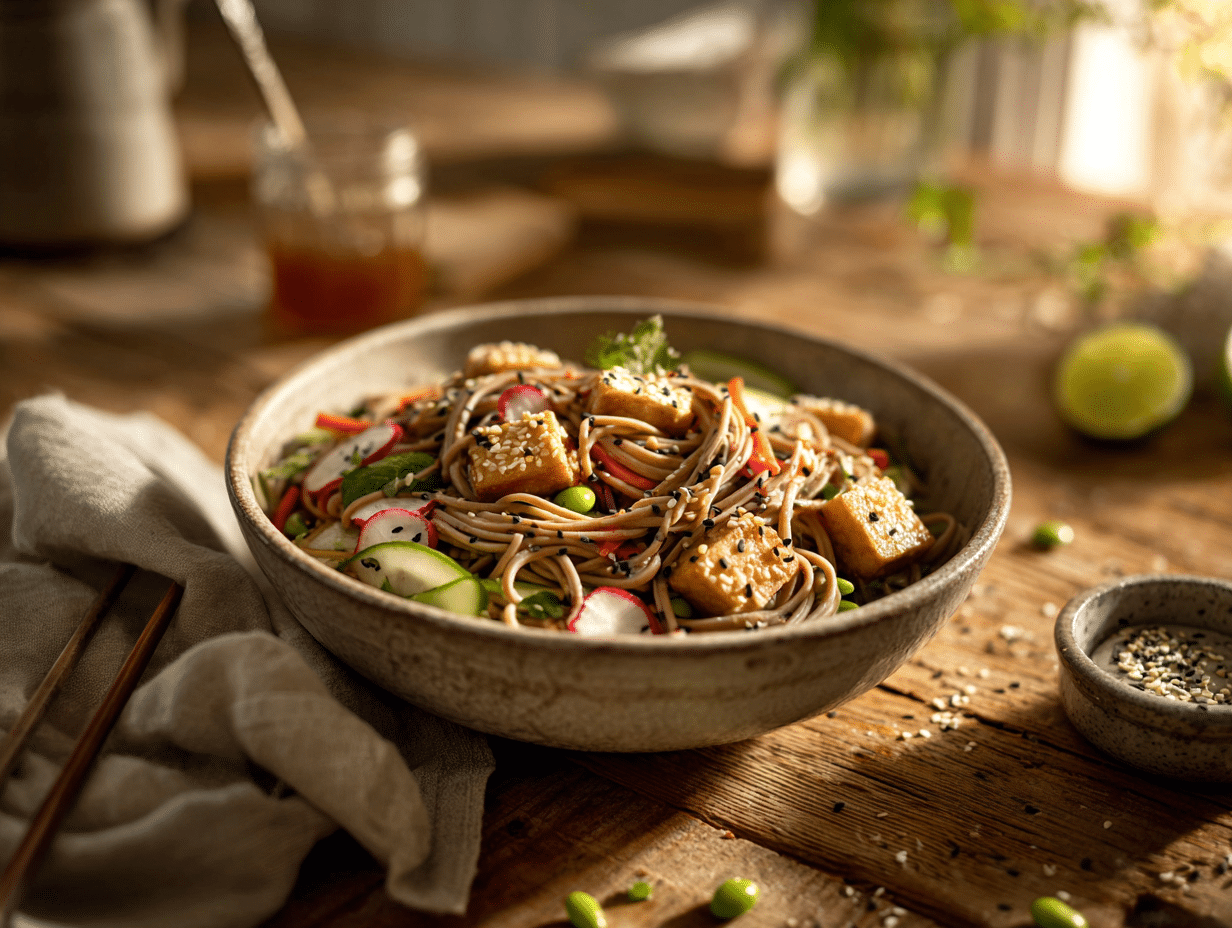
This soba salad comes together in one pot and one bowl, with a dressing you shake up in a jar. The noodles are nutty and chewy, the vegetables stay crisp, and the sesame-ginger miso dressing ties everything together without being heavy. It works as a fast weeknight dinner or a make-ahead lunch that actually holds up in the fridge.
Why this recipe works
Two things make or break soba salad. First, rinsing the noodles under cold running water immediately after cooking — not just draining them — stops the cooking, washes off surface starch, and keeps each strand separate instead of clumping into a gummy mass. Second, the dressing uses white miso rather than a heavier variety. White miso is mild and slightly sweet, so it adds umami depth without making the dressing taste salty or overpowering the buckwheat. Those two steps — the rinse and the miso choice — are what separate a soba salad you want to eat again from one that tastes like a missed opportunity.
Smart swaps
- Soba noodles: Check the label if you need this to be gluten-free. Many commercial soba blends contain wheat flour alongside buckwheat — look for 100% buckwheat soba specifically.
- Tamari vs. soy sauce: Either works in the dressing. Tamari is slightly richer and is gluten-free; regular soy sauce is fine if gluten isn’t a concern.
- Maple syrup: Agave works as a 1:1 swap. Both dissolve easily into the dressing without any extra effort.
- Edamame: Frozen shelled edamame is easiest — no extra prep. Thaw it in the same colander you drain the noodles into and it’s ready by the time the noodles are rinsed.
- Sesame oil: Don’t substitute a neutral oil here. Toasted sesame oil is doing real flavor work in this dressing; a swap would flatten the whole thing.
Mistakes to avoid
- Dressing the salad too far ahead: The dressing will draw moisture out of the cucumber and cabbage over time. If you’re prepping ahead, store the dressing separately and toss everything together within an hour of serving.
- Skipping the colander shake: After rinsing, shake the noodles well and let them drain for a full minute. Excess water sitting in the bowl will dilute the dressing noticeably.
- Cutting vegetables too thick: Thick-cut cabbage or carrot chunks don’t integrate well — you end up eating components separately rather than getting a balanced bite. Thin slices and fine shreds matter here.
- Using cold sesame oil straight from the fridge: Sesame oil can go cloudy and thick when refrigerated. Let it come to room temperature before mixing the dressing so it emulsifies properly with the miso.
- Over-toasting the sesame seeds for garnish: They go from golden to burnt in under a minute in a dry pan. Skip the garnish — not worth the extra dish — or just use them straight from the bag if you want the texture.
Storage and reheating
Store undressed soba salad in an airtight container in the fridge for up to 3 days. Keep the dressing in a separate jar — it stays good for up to a week refrigerated. Once dressed, the salad is best eaten within a few hours; the noodles will absorb the dressing and soften overnight, and the cucumber releases water that thins everything out. This salad doesn’t freeze well — the noodles turn mushy and the vegetables lose their texture entirely. Serve it cold or at room temperature; there’s no need to reheat.

Sesame-Ginger Soba Noodle Salad

Equipment
- Large pot (5–6 quart)
- Colander
- Large mixing bowl
- Small bowl or measuring cup (for dressing)
- Whisk (or lidded jar for shaking)
- Chef's knife
- Cutting board
- Microplane or fine grater
- Tongs
- Small skillet (for toasting seeds; optional)
- Rimmed baking sheet + parchment (for optional tofu)
- Paper towels (for draining tofu)
Ingredients
For the Sesame-Crusted Baked Tofu (optional protein):
- 14 ounces extra-firm tofu, drained choose a firm, non-silken style for best texture
- 1 tablespoon low-sodium tamari gluten-free if needed
- 1 teaspoon toasted sesame oil
- 1 teaspoon pure maple syrup
- 1 teaspoon cornstarch helps crisp edges
- 1 tablespoon white sesame seeds for crusting tofu
- 1 tablespoon black sesame seeds for crusting tofu
For the Salad:
- 3 quarts water for boiling soba
- 1 tablespoon kosher salt for the boiling water
- 8 ounces 100% buckwheat soba noodles look for high-quality Japanese brands like Eden or Hime
- 1 cup shelled edamame thawed if frozen
- 1.5 cups English cucumber, halved lengthwise and thinly sliced about 1 small; Persian cucumbers also work
- 1 medium carrot, julienned use a julienne peeler or mandoline for uniform matchsticks
- 4 medium radishes, thinly sliced crunchy and peppery
- 0.5 cup scallions, thinly sliced green and pale parts
- 1 cup red cabbage, very thinly shredded adds color and crunch
- 0.25 cup fresh cilantro leaves, chopped tender stems ok
- 0.25 cup fresh mint leaves, chopped or shiso if available
- 1 tablespoon toasted white sesame seeds for garnish
- 1 teaspoon black sesame seeds for garnish
- 1 sheet roasted nori, cut into thin strips use scissors for fine threads
For the Sesame-Ginger Miso Dressing:
- 3 tablespoons unseasoned rice vinegar seasoned vinegar adds salt/sugar; adjust if using
- 1 tablespoon fresh lime juice or yuzu juice for a citrusy lift
- 2 tablespoons low-sodium tamari gluten-free if needed
- 1 tablespoon white miso paste mellow, lightly sweet; use chickpea miso for gluten-free
- 1 tablespoon pure maple syrup balances the acidity
- 1 tablespoon toasted sesame oil fragrant; use sparingly for balance
- 2 tablespoons neutral oil (grapeseed or avocado) softens the dressing’s bite and clings to noodles
- 1 tablespoon fresh ginger, finely grated grate on a microplane for a juicy paste
- 1 clove garlic, finely grated just a little for perfume; avoid overpowering
- 0.5 teaspoon red pepper flakes or shichimi togarashi to taste
Instructions
- Optional Tofu Prep (adds time): If using tofu, preheat the oven to 400°F (205°C). Line a rimmed baking sheet with parchment. Pat the tofu dry and press it between paper towels for 10–15 minutes to shed excess moisture—this ensures a bouncy, custardy center after baking.
- Season and Bake the Tofu: Cut tofu into 1/2-inch cubes or planks. In a bowl, whisk 1 Tbsp tamari, 1 tsp toasted sesame oil, and 1 tsp maple syrup; sprinkle in 1 tsp cornstarch and whisk smooth. Toss tofu to coat, then roll in a mix of white and black sesame seeds. Arrange on the sheet and bake 18–22 minutes, flipping halfway, until edges are golden and seeds smell nutty. Cool slightly.
- Boil Water for Noodles: Bring 3 quarts water to a lively boil in a large pot. Salt generously with 1 Tbsp kosher salt. While it heats, make the dressing and prep vegetables for efficiency.
- Make the Sesame-Ginger Miso Dressing: In a small bowl (or a lidded jar), whisk rice vinegar, lime juice, tamari, white miso, and maple syrup until the miso dissolves. Slowly stream in toasted sesame oil and neutral oil while whisking to emulsify. Stir in grated ginger and garlic; add chili to taste. The dressing should smell citrusy and toasty with a savory miso backbone. Tip: If you don’t have a whisk, tightly seal and shake the jar until smooth.
- Prep the Vegetables and Herbs: Thinly slice cucumber and radishes; julienne the carrot; shred the red cabbage; slice the scallions; chop cilantro and mint. Keep everything crisp and dry—excess water will dilute the dressing.
- Cook Soba and Edamame: Add soba to the boiling water and stir immediately to prevent clumping. Cook 5–6 minutes until just tender with a springy bite. In the last minute, add edamame. Drain in a colander and rinse under cold running water, massaging the noodles gently until completely cool and the water runs clear—this removes surface starch for a silky, non-gummy salad. Drain very well.
- Optional Seed Toasting (if your seeds aren’t pre-toasted): Warm a small dry skillet over medium heat (about 325–350°F / 165–175°C equivalent heat). Toast sesame seeds 2–3 minutes, shaking often, until fragrant and just golden. Transfer immediately to a cool plate to prevent carryover browning.
- Dress and Toss: In a large bowl, toss the drained soba and edamame with half the dressing to lightly coat. Add cucumber, carrot, radishes, cabbage, scallions, cilantro, and mint. Toss gently with tongs. Add more dressing to taste—you want a glossy sheen, not a pool. Adjust with a pinch of salt or a splash of tamari and a squeeze of lime if needed.
- Finish and Plate: Pile into bowls, twirling noodles with tongs into neat nests. Sprinkle with white and black sesame seeds and nori threads. Top with sesame-crusted tofu, if using. Serve immediately while crisp and aromatic—the aromas should be nutty, citrusy, and lightly gingery.
Notes
Mary’s Tips:
- Choose Soba Wisely: 100% buckwheat soba has an incredible nutty flavor but can be delicate. If yours tends to break, try a blend (buckwheat + wheat) or a trusted brand like Eden or Hime.
- Rinse Thoroughly: Cold-rinsing soba and gently rubbing the strands removes surface starch and prevents gumminess. After rinsing, drain very well; a brief toss with 1/2–1 tsp sesame oil can help keep strands separate.
- Balance the Dressing: Adjust acidity (lime), salinity (tamari), sweetness (maple), and heat (chili) to your palate. A pinch of sugar can soften sharp edges if your vinegar is punchy.
- Flavor Twists: Add 1 tsp orange zest for brightness, or whisk in 1 Tbsp tahini for a creamier dressing. Swap white miso for yellow or chickpea miso (gluten-free).
- Allergen and Dietary Notes: Use certified gluten-free soba (100% buckwheat) and tamari. Some miso contains barley—choose gluten-free miso if needed.
- Knife-Work Shortcuts: A julienne peeler or mandoline gives uniform matchsticks fast; always use a guard.
- Make it a Meal: Add the sesame-crusted tofu, or sprinkle roasted peanuts/cashews for crunch.
Nutrition
Your questions, answered
Are soba noodles gluten-free?
Not automatically — it depends on the brand. Many soba noodles are a blend of buckwheat and wheat flour, which contains gluten. If you need a gluten-free version, look for noodles labeled 100% buckwheat on the package and check that tamari (not soy sauce) is used in the dressing.
Can I make this salad ahead of time?
Yes, with one condition: keep the dressing separate until close to serving. Cook the noodles, prep the vegetables, and refrigerate everything in separate containers for up to 3 days. Toss with dressing about 30 minutes before eating so the vegetables stay crisp.
What can I use instead of tofu for protein?
Shelled edamame is the easiest option and requires no cooking if you use frozen. Chickpeas work too — rinse and drain a can and toss them in with the vegetables. Both hold up well in the fridge if you’re prepping ahead.
My dressing tastes too salty. How do I fix it?
Add a little more maple syrup or rice vinegar to balance it out. Both miso and tamari vary in saltiness by brand, so it’s worth tasting the dressing before tossing it with the noodles and adjusting as you go.
Can I use a different type of noodle if I can’t find soba?
Rice noodles are the closest substitute — they’re also served cold and have a mild flavor that works with the dressing. Thin whole-wheat spaghetti cooked al dente and rinsed cold is a reasonable backup if that’s what you have on hand.
More plant-based recipes to try
- Korean Spicy Cold Noodles
- Indonesian Gado-Gado Peanut Salad
- Thai Mango Salad Delight
- Miso Glazed Sweet Potatoes