
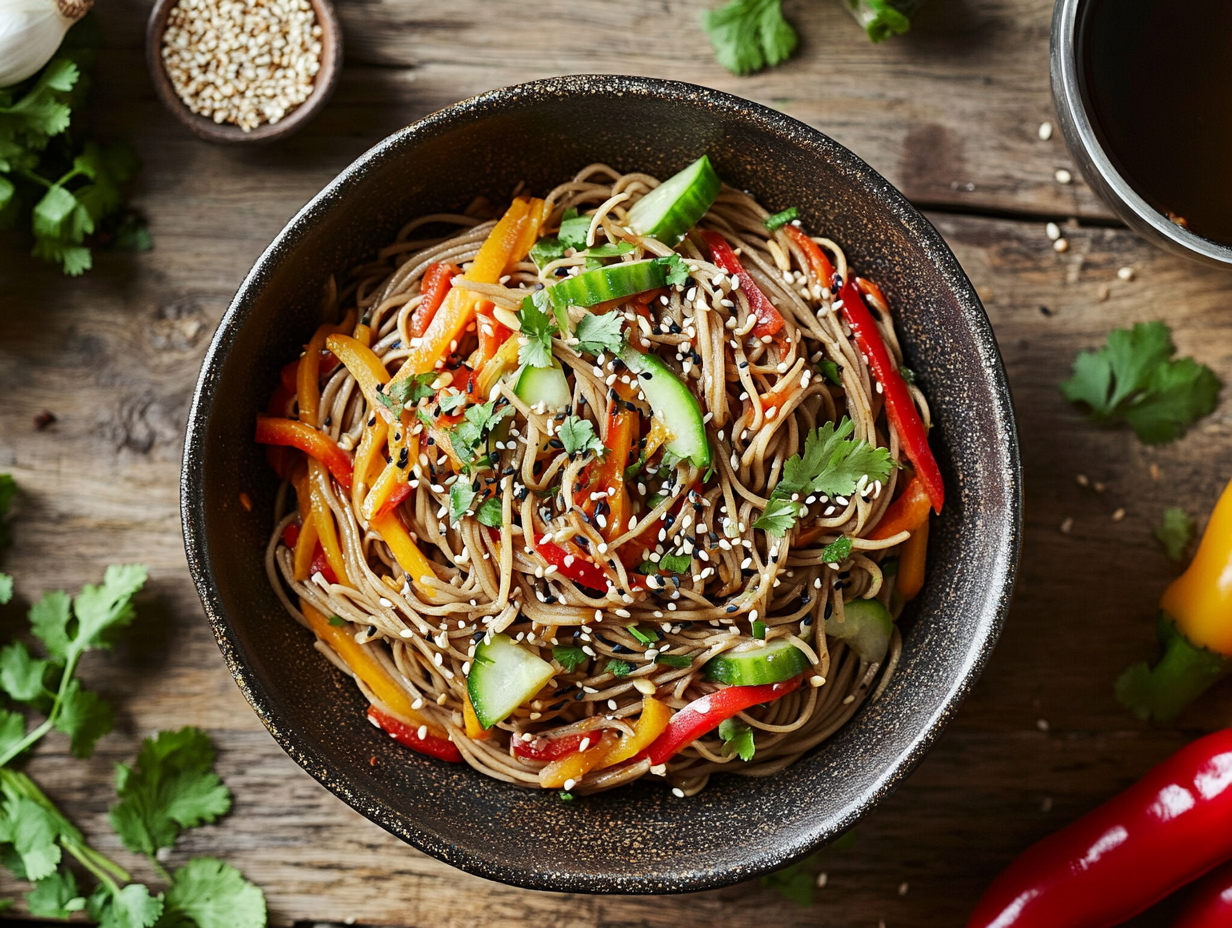
Sesame soba noodles are a cold noodle dish built around buckwheat noodles, julienned vegetables, and a sesame-ginger dressing made from tamari, rice vinegar, sesame oil, and a touch of maple syrup. The honest reason to make this: it takes about 30 minutes, holds up well in the fridge, and tastes better after the dressing has had time to soak in.
The technique that matters
Rinsing the cooked soba under cold running water is the step that actually determines the texture of the finished dish. Buckwheat noodles release a lot of starch as they cook, and if you skip the rinse, they clump into a gummy mass within minutes. Rinse thoroughly until the water runs clear and the noodles feel slippery, then shake off as much water as you can before adding the dressing. The second thing worth doing: toast your sesame seeds in a dry skillet over medium heat for 2–3 minutes, stirring constantly. The flavor difference between toasted and untoasted is significant, and it costs you almost nothing.
Shopping notes
- Soba noodles: Check the ingredient list. Many supermarket soba blends are partly wheat flour, which means they are not gluten-free. If that matters to you, look for 100% buckwheat soba, usually sold at Asian grocery stores or online. The texture is slightly more delicate, so watch the cook time closely.
- Tamari vs. soy sauce: Tamari is thicker and less salty than standard soy sauce. If you substitute regular soy sauce, start with a little less and taste before adding more.
- Rice vinegar: Seasoned rice vinegar already contains sugar and salt. If that is what you have, reduce or skip the maple syrup in the dressing and taste as you go.
- Sesame oil: Use toasted sesame oil, not plain. The flavor is completely different. A small bottle goes a long way and keeps for months in the pantry.
Keeping and reheating
Store the dressed noodles in an airtight container in the fridge for up to 4 days. The noodles will absorb some of the dressing overnight, so stir in a small splash of rice vinegar or tamari before serving to freshen things up. This dish is designed to be eaten cold or at room temperature, so reheating is not necessary and not recommended — warming sesame oil dulls its flavor. Freezing is not a good option here; the noodles turn mushy after thawing.
What can go wrong
- Noodles stick together in the container: This usually means they were not rinsed long enough, or the dressing was not tossed in while the noodles were still slightly damp. Toss immediately after rinsing and draining.
- Dressing tastes flat the next day: The noodles soak up salt and acid overnight. Add a small amount of tamari and rice vinegar when you pull the container from the fridge, stir, and taste before serving.
- Vegetables go limp: Cucumbers in particular release water as they sit. If you are making this ahead, consider storing the sliced cucumber separately and adding it just before eating. Skip the cilantro garnish on the batch you are storing — not worth the extra dish, and it wilts badly.
- Dressing breaks or looks separated: Sesame oil and tamari do not form a stable emulsion on their own. Whisk the dressing again right before tossing, or add a small amount of tahini to help it hold together.
- Noodles overcook and fall apart: Buckwheat soba cooks faster than wheat pasta, often in 4–5 minutes. Start checking a minute before the package says and pull them while they still have a slight bite.

Sesame Soba Noodles

Equipment
- Large pot for boiling noodles
- Mixing bowls
- Small saucepan
- Whisk
- Tongs
Ingredients
For the Soba Noodles:
- 8 oz soba noodles 100% buckwheat if gluten-free; cook according to package
- 1 cup julienned carrots choose firm, fresh carrots for best texture
- 1 cup thinly sliced red bell pepper organic preferred for sweetness
- 1 cup thinly sliced cucumber Persian cucumbers recommended
- ¼ cup finely chopped scallions use both white and green parts
- 2 tbsp toasted sesame seeds white and black mixed for contrast
- ¼ cup chopped fresh cilantro or Thai basil optional for garnish
For the Sesame-Ginger Dressing:
- 3 tbsp toasted sesame oil deeply aromatic quality essential
- 2 tbsp tamari or low-sodium soy sauce use tamari for gluten-free option
- 1 tbsp maple syrup or agave nectar for milder sweetness
- 1 tbsp rice vinegar unseasoned preferred
- 1 tsp freshly grated ginger peeled and finely minced or grated
- 1 clove garlic minced
Instructions
- Bring a large pot of water to a boil and cook the soba noodles according to the package instructions (usually 4–6 minutes), stirring occasionally. Drain and immediately rinse under cold water to stop the cooking and remove excess starch.
- While the noodles cook, prepare the vegetables: Julienne the carrots, thinly slice the red bell peppers and cucumber, and chop the scallions and cilantro (if using). Set aside.
- In a mixing bowl, whisk together sesame oil, tamari, maple syrup, rice vinegar, grated ginger, and minced garlic until the dressing emulsifies. Taste and adjust seasoning—add more tamari for salt or maple syrup for sweetness.
- Place the cooled noodles into a large bowl. Add the sliced vegetables and pour the dressing over. Toss everything thoroughly using tongs until evenly coated. Sprinkle in sesame seeds and gently fold them into the noodles.
- Serve immediately at room temperature, or refrigerate for 20–30 minutes for a chilled version. Garnish with additional sesame seeds, cilantro, or scallions just before serving.
Notes
- To enhance sesame flavor, dry-toast raw sesame seeds in a small skillet over medium heat for 2–3 minutes.
- You may substitute soba noodles with rice noodles or whole wheat spaghetti if desired, though the flavor will shift.
- Make extra dressing—it’s wonderful over grilled tofu or leafy greens.
Nutrition
Common questions
Can I use a different noodle if I can’t find soba?
Yes — thin rice noodles or somen work well here. Both take the sesame-ginger dressing without overpowering it, though the flavor will be milder since buckwheat has a distinct earthiness that rice noodles lack.
Can I make the dressing ahead and keep it separate?
Yes, and it is actually a good idea. The dressing keeps in a sealed jar in the fridge for up to a week. Shake or whisk it before using since the sesame oil will separate as it sits.
Is this dish filling enough as a main, or does it need something on the side?
It works as a main for a light meal, but if you want more protein, stir in a cup of shelled edamame or add sliced baked tofu directly to the bowl. Both options hold up well in the fridge alongside the noodles.
What to cook next
- Korean Spicy Cold Noodles
- Vegan Thai Drunken Noodles
- Sesame Ginger Soba Salad
- Crispy Tofu Broccoli Stir-Fry