
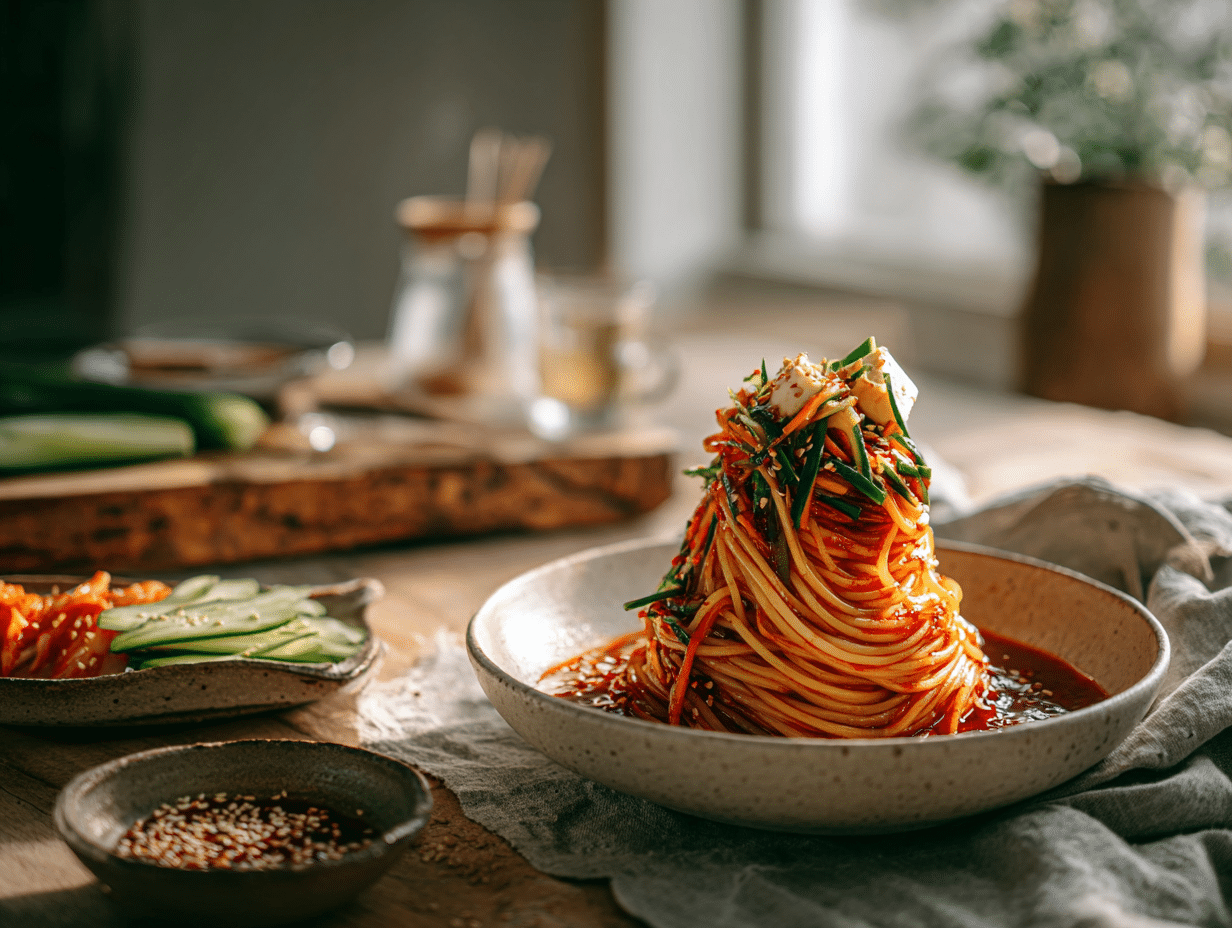
Bibim guksu is a Korean cold noodle dish built around a spicy, tangy gochujang sauce tossed with thin wheat noodles and crisp vegetables. It comes together in about 15 minutes, requires no special equipment, and delivers enough protein and fiber to work as a real meal — not just a side. If you need something fast, filling, and genuinely satisfying on a hot day, this is it.
Why this recipe works
Two things make this recipe succeed where quick noodle dishes often fall flat. First, the noodles are rinsed in ice-cold water immediately after cooking and then gently squeezed dry. That step stops carryover cooking, removes surface starch, and keeps the noodles springy instead of gummy — it also means the sauce clings rather than sliding off into a puddle at the bottom of the bowl. Second, the sauce balances gochujang’s fermented heat with acid (rice vinegar) and a small amount of sweetener, which prevents the paste from tasting raw or one-dimensional. Get those two things right and the rest is just assembly.
About the ingredients
- Gochujang: Not all gochujang is vegan — some brands include anchovy extract or other seafood. Check the label. O Food and Chung Jung One both make reliably vegan versions widely available in Asian grocery stores and online.
- Somyeon noodles: These thin wheat noodles are the traditional choice and cook in 2–3 minutes. If you can’t find them, thin rice vermicelli works and keeps the dish gluten-free; just follow the package timing since it varies.
- Protein add-ins: The base recipe is light on protein. A block of firm or silken tofu — sliced thin and either served raw or quickly pan-fried — adds substance without changing the flavor. Shelled edamame stirred in at the end is an even faster option.
- Rice vinegar: Use unseasoned rice vinegar. Seasoned rice vinegar already contains sugar and salt, which will throw off the sauce balance.
Mistakes to avoid
- Skipping the ice bath entirely: Running the noodles under cold tap water is not the same thing. Tap water in most homes isn’t cold enough to stop cooking quickly. Use a bowl of water with actual ice cubes.
- Making the sauce too far ahead and not re-stirring: Gochujang settles and the sauce separates if it sits more than 20 minutes. Give it a quick stir right before you toss it with the noodles.
- Overdressing: Add about two-thirds of the sauce first, toss, then taste. Gochujang is salty and the heat builds — it’s much easier to add more than to fix an overdressed bowl.
- Cutting vegetables too thick: Julienned cucumber and carrots should be thin enough to pick up with the noodles. Thick chunks stay separate and make the dish harder to eat. A mandoline or careful knife work matters here.
- Serving immediately after tossing without a 2-minute rest: Letting the dressed noodles sit for just 2 minutes before eating allows the sauce to absorb slightly and the flavors to settle. Skip the garnish if you’re short on time — not worth the extra dish.
Keeping and reheating
Store leftover noodles and sauce separately if possible — dressed noodles will absorb the sauce and soften overnight, though they’re still edible the next day. Undressed noodles keep in an airtight container in the fridge for up to 2 days; toss them with a few drops of sesame oil to prevent sticking. The sauce keeps refrigerated for up to 5 days. This dish is not suitable for freezing — the noodle texture becomes unpleasant after thawing. There’s no reheating involved; just pull everything from the fridge, re-stir the sauce, and assemble cold.

Vegan Bibim Guksu (Korean Spicy Cold Noodles)

Equipment
- Large pot (5–6 qt)
- Colander
- Large mixing bowl
- Small mixing bowl
- Whisk
- Tongs or chopsticks
- Cutting board
- Chef's knife
- Measuring cups and spoons
- Grater or Microplane
- Mortar and pestle (optional)
Ingredients
For Chilling:
- 3 cups ice cubes for rapidly chilling noodles to keep them bouncy
- 6 cups cold water ice bath base
For the Gochujang Dressing:
- 3 tbsp gochujang (Korean red chili paste) choose a vegan brand; O’Food or Chung Jung One are reliable
- 2 tbsp unseasoned rice vinegar Marukan or similar; unseasoned keeps salt/sugar balanced
- 1 tbsp low-sodium soy sauce or tamari use tamari for gluten-free
- 1 ½ tbsp pure maple syrup balances heat without heaviness
- 1 tbsp toasted sesame oil Kadoya brand has deep, nutty aroma
- 2 cloves garlic, finely grated use a Microplane for a smooth paste
- 1 tsp fresh ginger, finely grated brightens and perfumes the sauce
- 1 tsp gochugaru (Korean red pepper flakes) optional, for extra kick and color
- 2 tbsp Korean pear or crisp apple, finely grated optional; adds delicate sweetness and body
- 2 tsp toasted sesame seeds, lightly ground optional; grind in a mortar for extra nuttiness
- 1 ½ tbsp cold water to loosen the dressing to a ribbon consistency
For the Noodles & Vegetables:
- 8 oz thin wheat noodles (somyeon) look for Korean somyeon; thin, quick-cooking strands
- 3 qt water, for boiling generous water prevents sticking
- 1 tbsp Kosher salt for seasoning the cooking water (optional)
- 1 whole Persian cucumber, cut into matchsticks about 1 cup; English cucumber works too
- ½ cup carrot, cut into matchsticks choose a firm, sweet carrot
- ½ cup red cabbage, finely shredded adds crunch and color
- 2 whole scallions, thinly sliced green and white parts
- ¼ cup perilla leaves (kkaennip), basil, or mint, chiffonade perilla is traditional; basil or mint work well
- ½ cup vegan kimchi, chopped optional; ensure fish-free (try Wildbrine or Mother-in-Law’s Vegan)
- ¼ cup roasted seaweed (gim/nori), cut into fine strips for briny crunch
To Finish & Garnish:
- 1 tbsp toasted sesame seeds for fragrant crunch
- 1 tsp toasted sesame oil final aromatic gloss
- 1 tsp unseasoned rice vinegar optional finishing splash for brightness
- 6 oz extra-firm tofu, chilled and thinly sliced optional protein; no-cook addition
- ¼ cup Korean pear, cut into thin matchsticks optional, for refreshing crunch
Instructions
- Chill and Prepare an Ice Bath: Place 2–4 serving bowls in the freezer for 10 minutes. In a large mixing bowl, combine 3 cups ice and 6 cups cold water to make an ice bath.
- Make the Gochujang Dressing (3–5 minutes): In a small bowl, whisk together gochujang, rice vinegar, soy sauce/tamari, maple syrup, and toasted sesame oil until glossy. Whisk in the grated garlic, ginger, and gochugaru. Fold in the grated pear and lightly ground sesame seeds (if using). Add 1 1/2 tbsp cold water to loosen to a ribbon consistency—the spoon should leave a slow, silky trail. Tip: grinding sesame in a mortar releases deep aroma; if you don’t have one, pulse in a spice grinder or use a food processor (texture will be smoother).
- Prep the Vegetables (8–10 minutes): Julienne the cucumber and carrot; finely shred the red cabbage; thinly slice scallions; chiffonade perilla or herbs. Chop vegan kimchi, and slice tofu/pear if using. Keep chilled for maximum crunch.
- Bring Water to a Boil: In a large pot, bring 3 qt water to a rolling boil—about 212°F / 100°C. Season with 1 tbsp kosher salt (optional).
- Cook the Noodles (3–4 minutes): Add somyeon and stir immediately with chopsticks or tongs to prevent clumping. Boil until just tender yet springy. Sensory cue: noodles go from stark white to creamy and flexible with a slight chew.
- Shock and Rinse (1–2 minutes): Drain in a colander, then plunge noodles into the ice bath. Swirl until fully cool (30–60 seconds). Rinse under cold running water, gently rubbing to remove excess starch until water runs mostly clear. Drain well and gently squeeze by the handful to expel trapped water—this ensures the sauce clings beautifully.
- Toss with Dressing (1–2 minutes): In a large bowl, add noodles and about 2/3 of the dressing. Toss vigorously until every strand is evenly stained red and shiny. Add more dressing to taste for extra heat or tang.
- Fold in Vegetables: Add cucumber, carrot, half the scallions, and half the cabbage. If using kimchi, fold it in now for a spicy-tangy lift. Taste and adjust salt, sweetness, or acidity as desired.
- Plate: Twirl the noodles into chilled bowls to form tall nests. Scatter remaining cabbage and scallions, tuck in perilla, and drape with gim strips. Finish with toasted sesame seeds, a light drizzle of sesame oil, and a small splash of rice vinegar.
- Serve: Top with chilled tofu slices and pear matchsticks if using. Serve immediately with any extra dressing on the side. Pair with cold barley tea (bori-cha) for a classic, refreshing accompaniment.
Notes
Mary’s Tips:
- Balance Like a Pro: Adjust heat (gochugaru), tang (rice vinegar), salt (tamari), and sweetness (maple) after tossing—flavors soften slightly once on the noodles.
- Noodle Texture: Rinse well and gently squeeze; excess water dilutes flavor and prevents the dressing from clinging.
- Depth of Sesame: Lightly grind toasted sesame seeds to release oils for a fuller, pastry-like nuttiness.
- Gluten-Free: Swap somyeon for 100% buckwheat soba or thin rice vermicelli; use tamari. Rinse thoroughly to maintain bounce.
- Silkier Body: Whisk in 1 tsp tahini or smooth almond butter to the dressing for a subtle, creamy finish.
- Heat Control: Start with gochujang alone for moderate spice; layer in gochugaru incrementally.
- Brands to Trust: Vegan gochujang from O’Food or Chung Jung One; Marukan unseasoned rice vinegar; Kadoya sesame oil.
Nutrition
Frequently asked questions
Can I make this gluten-free?
Yes, with two swaps. Replace the somyeon with thin rice vermicelli and use a certified gluten-free gochujang — some brands process theirs on shared equipment. Tamari instead of soy sauce handles the rest.
How spicy is this, and can I tone it down?
With a standard amount of gochujang it’s medium-hot — noticeable but not overwhelming for most people. Reduce the gochujang by a third and add a little extra rice vinegar to keep the sauce from tasting flat.
What can I add to make this more filling?
Sliced firm tofu is the most straightforward option — it adds protein without competing with the sauce. Shelled edamame, a scoop of cooked lentils, or thin strips of pan-fried tempeh all work well too.
I can’t find somyeon noodles locally. What’s the best substitute?
Thin rice vermicelli is the most reliable swap and is available in most grocery stores. Angel hair pasta cooked al dente and rinsed cold is a workable backup, though the texture is slightly different.
Can I prep this ahead for meal prep or a packed lunch?
Pack the sauce in a separate small container and toss everything together right before eating. If you dress the noodles more than a few hours ahead, they’ll soak up the sauce and turn soft.
My sauce tastes too salty or too sharp — how do I fix it?
Too salty usually means the gochujang brand you used is high-sodium — balance it with a bit more sweetener and a splash of water. Too sharp means the vinegar is dominant; add a small amount of sweetener and a few drops of sesame oil to round it out.
If you liked this one
- Vegan Mushroom Bulgogi Bibimbap
- Korean BBQ Tempeh Bowl
- Vietnamese Rice Noodle Salad
- Vegan Thai Drunken Noodles