
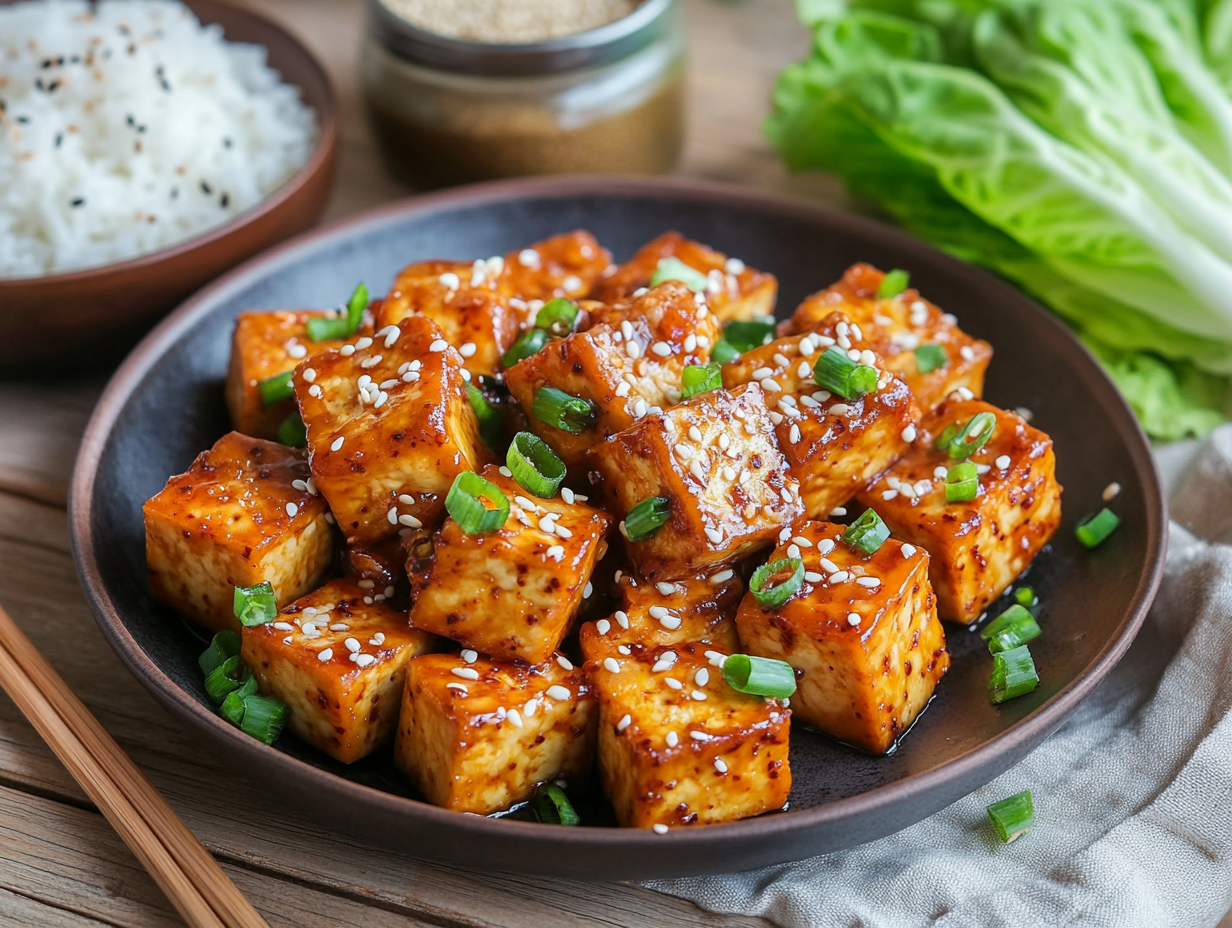
This is pan-fried tofu coated in a sticky gochujang glaze — spicy, sweet, and ready in about 30 minutes. The cornstarch crust gives you real crunch, and the fermented chili paste brings enough depth that this doesn’t taste like a compromise. Serve it over rice with a protein-rich side and it’s a complete, filling meal.
Before you start
Pressing the tofu is the one step you can’t skip. Extra-firm tofu still holds a surprising amount of water, and wet tofu steams in the pan instead of crisping — you’ll get a pale, soft exterior and the cornstarch coating will turn gummy. Press it for at least 20 minutes under something heavy, or 30 if you have the time. The second thing that matters is pan temperature. Get the oil properly hot before the tofu goes in; if it sizzles immediately on contact, you’re good. A cold pan means the coating absorbs oil and softens before a crust can form. Both of these steps take almost no active effort and they’re the difference between tofu that holds its shape through the glaze and tofu that falls apart.
Substitutions that actually work
- Gochujang: This is the flavor backbone of the dish — don’t skip it. Most large grocery stores carry it now, and it’s easy to find online. Sriracha mixed with a small amount of white miso is a workable emergency substitute, but the fermented depth won’t be the same.
- Maple syrup: Agave works in equal measure. Brown rice syrup also works but makes the glaze slightly thicker.
- Soy sauce: Use tamari for a certified gluten-free version. Coconut aminos work too — just note they’re slightly sweeter, so you may want to reduce the maple syrup by a teaspoon.
- Tofu: Tempeh is a solid swap and adds more protein per serving. Press and slice it thin so the glaze coats it evenly. It won’t have the same soft interior, but the crust is excellent.
- Cornstarch: Arrowroot powder works at the same ratio.
Keeping and reheating
Store leftovers in an airtight container in the fridge for up to 3 days. The tofu will soften as it sits in the glaze — that’s normal. To bring back some crispness, reheat in a dry non-stick skillet over medium heat for 3 to 4 minutes, turning once. The oven at 375°F for about 8 minutes also works well. Skip the microwave if you care about texture; it heats unevenly and makes the coating chewy. This dish doesn’t freeze well — the tofu becomes spongy after thawing and the glaze separates.
Common problems and fixes
- Tofu sticks to the pan: The pan wasn’t hot enough before the oil went in, or the tofu moved too soon. Let it cook undisturbed for 2 to 3 minutes — it will release naturally once a crust forms. Forcing it off early tears the coating.
- Glaze burns before the tofu is coated: Gochujang and maple syrup both scorch quickly over high heat. Add the glaze only after you’ve reduced the heat to medium-low, and keep it moving constantly once it’s in the pan.
- Coating falls off in the pan: The tofu wasn’t dry enough before the cornstarch went on. Pat each piece with a paper towel right before dredging, even if you already pressed it.
- Glaze is too thick and clumps: Add water one teaspoon at a time to loosen it while it’s still in the pan. A glaze that’s too thick won’t coat evenly and tends to pool at the bottom of the dish.
- Not enough heat or flavor in the finished dish: Gochujang varies significantly by brand — some are much milder than others. Taste the glaze before it goes on the tofu and adjust with a little extra gochujang or a small splash of rice vinegar to sharpen it up. Skip the sesame seed garnish if you’re short on time — it adds almost nothing to the flavor and just means another dish to wash.

Sweet and Spicy Korean Tofu

Equipment
- Large skillet or non-stick frying pan
- Mixing bowls
- Whisk
- Paper towels
- Chopping board and knife
Ingredients
For the Tofu and Marinade:
- 1 block extra-firm tofu (14 oz) pressed for at least 20 minutes to remove moisture
- 1 tablespoon reduced-sodium soy sauce or tamari for gluten-free
- 1 teaspoon toasted sesame oil
For the Crisping Coat:
- ¼ cup cornstarch for optimal crispiness
For the Sweet and Spicy Sauce:
- 2 tablespoons gochujang Korean fermented chili paste; choose vegan-certified
- 1 ½ tablespoons maple syrup or agave nectar
- 2 teaspoons rice vinegar unseasoned for pure flavor
- 1 tablespoon low-sodium soy sauce
- 2 cloves garlic minced
- ½ teaspoon fresh ginger grated
For Cooking and Garnish:
- 2 tablespoons neutral oil like avocado or grapeseed, for frying
- 1 tablespoon toasted sesame seeds for garnish
- 2 stalks green onions thinly sliced
Instructions
- Press the tofu for at least 20 minutes to eliminate excess moisture. Slice the block into 1-inch cubes. In a small bowl, mix 1 tbsp soy sauce and 1 tsp sesame oil. Gently toss the tofu cubes in this marinade and let sit while preparing other ingredients.
- Lightly dust the marinated tofu cubes in cornstarch, ensuring all sides are evenly coated. Shake off excess.
- Heat 2 tbsp of oil in a large non-stick skillet over medium heat (about 350°F / 175°C). Carefully add tofu cubes and pan-fry for 3–4 minutes on each side until all sides are golden and crisp. Remove and set aside on a paper towel-lined plate.
- In the same skillet, reduce heat to low. Combine gochujang, maple syrup, rice vinegar, soy sauce, garlic, and ginger. Whisk to combine. Let it gently simmer for 1–2 minutes until it thickens and becomes glossy.
- Return the crispy tofu to the pan and toss to coat completely in the sauce. Cook for an additional 1–2 minutes, ensuring the tofu absorbs the flavors evenly.
- Transfer the tofu to a serving platter. Garnish with toasted sesame seeds and freshly sliced green onions. Serve immediately.
Notes
- Using cornstarch creates a crispier texture than flour.
- Gochujang can vary in heat—taste before using to adjust sweetness or spice level accordingly.
- For oil-free version, bake tofu at 400°F (200°C) for about 25–30 minutes until golden and crispy.
- Add a sprinkle of crushed peanuts for an extra crunch and nutty aroma.
Nutrition
Frequently asked questions
Can I bake the tofu instead of pan-frying it?
Yes, baking works — spread the cornstarch-coated tofu on a parchment-lined sheet pan and bake at 400°F for 25 to 30 minutes, flipping halfway. You’ll get a drier, firmer texture rather than a true crust, and the glaze won’t cling quite as thickly, but the flavor is still good and the cleanup is easier.
What should I serve with this to make it a full meal?
Steamed short-grain or jasmine rice is the most straightforward base and adds enough carbohydrates to make the meal satisfying. For extra protein, a side of edamame, a scoop of cooked lentils under the rice, or the tempeh swap mentioned above all work well without competing with the glaze.
Is gochujang always vegan?
Most gochujang is vegan, but a small number of brands add seafood-based ingredients like shrimp paste or anchovy, so it’s worth checking the label. The ingredient list should be short — fermented chili, glutinous rice, fermented soybean, salt, and sometimes sugar.
What to cook next
- Korean BBQ Tempeh Bowl
- Korean Spicy Cold Noodles
- Vegan Mushroom Bulgogi Bibimbap
- Crispy Tofu Broccoli Stir-Fry