
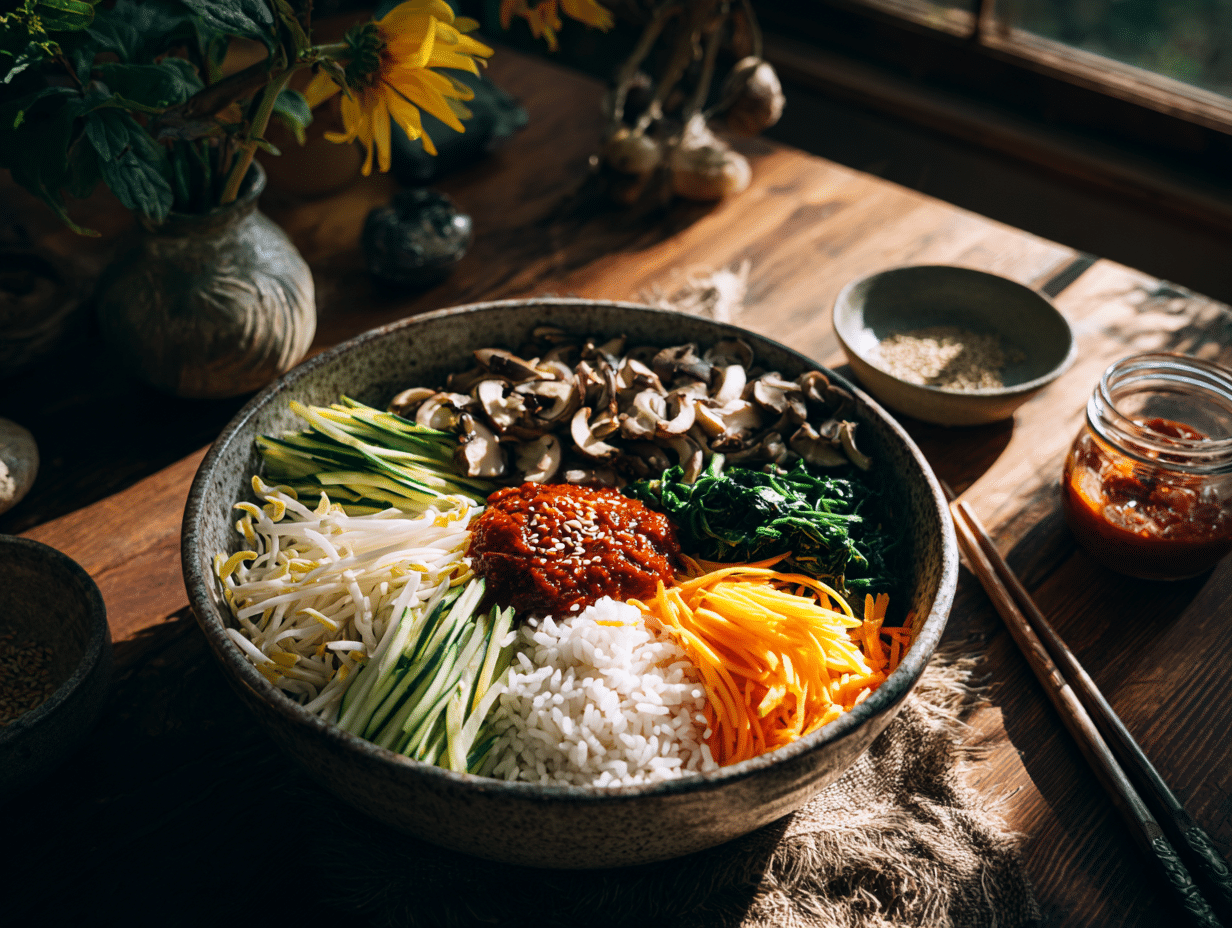
Bibimbap is a Korean rice bowl topped with individually seasoned vegetables and a spicy gochujang sauce, all mixed together before eating. This version is fully plant-based and comes together in about 45 minutes using mostly pantry staples. The real reason to make it: it looks impressive, tastes genuinely complex, and uses up whatever vegetables are sitting in your fridge.
What makes this version work
Two things matter here. First, cooking each vegetable separately and seasoning it on its own — this is what keeps the bowl from tasting like a stir-fry. Each component stays distinct, so when you mix everything at the table you get actual contrast in every bite. Second, the gochujang sauce needs to be made with a vegan-certified gochujang paste. Standard gochujang is usually vegan, but some brands add anchovy extract, so check the label. Get that right and the sauce does most of the flavor work for the whole bowl.
Shopping notes
- Gochujang: Sold at most Asian grocery stores and increasingly at mainstream supermarkets. Look for brands labeled vegan or check the ingredients for fish products. CJ Haechandle and Sempio both make widely available vegan versions.
- Shiitake mushrooms: Fresh shiitakes work best here for texture. Dried shiitakes can substitute — rehydrate in warm water for 20 minutes, then squeeze dry before cooking. Save the soaking liquid for soup stock.
- Sesame oil: Use toasted sesame oil, not plain. The flavor difference is significant. A small bottle goes a long way.
- Short-grain white rice: The stickiness matters for scooping. Long-grain rice will work in a pinch but the texture is noticeably different. Brown rice is a fine swap if you start it early — it takes about twice as long to cook.
What can go wrong
- Watery vegetables making the rice soggy: Zucchini and spinach release a lot of moisture. Cook zucchini over medium-high heat and don’t crowd the pan — if it steams instead of sautés, the bowl gets wet. Squeeze blanched spinach firmly in your hands before seasoning it.
- Bean sprouts turning mushy: They only need 1 to 2 minutes of blanching. Pull them out while they still have some snap. Overcooked sprouts go limp fast and don’t recover.
- Gochujang sauce seizing up: If the sauce thickens too much as it sits, add water a teaspoon at a time and stir. It should be pourable, not paste-like, when you spoon it over the bowl.
- Rice sticking to the bottom of the pot: Let the rice rest off heat, covered, for 10 minutes after cooking. This finishes the steam and makes it much easier to fluff without tearing the grains.
- Everything going cold before serving: The individual components cool quickly. Keep finished vegetables in the still-warm pan with the heat off, or cover them loosely with foil while you finish the rest. Serve bowls as soon as the rice is ready — skip the garnish of extra sesame seeds if you’re eating alone; not worth the extra dish.
Keeping and reheating
Store the rice and vegetable toppings separately in airtight containers in the fridge — they keep well for up to 4 days. The gochujang sauce keeps in a small jar for up to 2 weeks refrigerated. Reheat rice with a splash of water in a covered pot over low heat for 3 to 4 minutes, or microwave it covered for 90 seconds. The vegetables reheat quickly in a dry skillet over medium heat for 2 minutes, which keeps them from getting waterlogged. Freezing is not recommended for the vegetable toppings — the textures suffer too much — but plain cooked rice freezes fine for up to 2 months.

Vegan Korean Bibimbap

Equipment
- Large nonstick skillet
- Rice cooker or pot with lid
- Mixing bowls
- Blender or whisk for sauce
Ingredients
For the Base:
- 1 ½ cups short-grain white rice rinsed thoroughly until water runs clear
- 2 cups water for cooking the rice
For the Vegetables:
- 1 cup carrots julienned
- 1 cup zucchini julienned
- 1 cup shiitake mushrooms sliced, stems removed
- 2 cups baby spinach fresh, washed and drained
- 1 cup bean sprouts blanched for 1 minute and shocked in ice water
For Seasoning and Oil:
- 3 tablespoons toasted sesame oil divided, for vegetables and rice
- 2 tablespoons soy sauce use tamari for gluten-free
- 2 cloves garlic minced
For the Gochujang Sauce:
- 3 tablespoons gochujang (Korean red chili paste) make sure it’s vegan, some contain anchovy extract
- 1 ½ tablespoons rice vinegar
- 1 tablespoon maple syrup
- 1 teaspoon toasted sesame oil
For Optional Garnishes:
- 1 tablespoon toasted sesame seeds
- 2 stalks green onions thinly sliced
Instructions
- Rinse rice until water runs clear. Combine with 2 cups of water in a pot or rice cooker. Cook on low heat (or rice setting) for 20–25 minutes until fluffy and tender. Let rest for 10 minutes post-cooking.
- While rice cooks, prepare vegetables. Heat 1 tsp sesame oil in a skillet over medium heat (350°F / 175°C). Sauté carrots for 2–3 minutes with a pinch of salt. Remove. Repeat the process individually with zucchini and spinach, cooking each until just tender but still brightly colored.
- For mushrooms, use 1 tbsp soy sauce, 1 tsp sesame oil, and 1 minced garlic clove. Sauté over medium-high heat until mushrooms are browned and slightly crisped, 4–5 minutes.
- Blanch bean sprouts in boiling water for 1 minute, then shock in ice water. Drain and toss with 1 tsp sesame oil and crushed garlic.
- Prepare the gochujang sauce by whisking all sauce ingredients until smooth. Adjust sweetness or heat to taste.
- To Assemble: Portion rice into 4 bowls. Artistically arrange each vegetable group in sections over the rice. Place a spoonful of gochujang sauce in the center. Garnish with green onions and toasted sesame seeds.
Notes
- You can substitute quinoa or brown rice for a nuttier base and higher protein content.
- Use pre-sliced or pre-cooked veggie kits to save prep time.
- Adjust vegetable selection seasonally—for example, include blanched bok choy or shredded cabbage.
Nutrition
Frequently asked questions
Does the gochujang have to be vegan-certified, or is regular gochujang fine?
Most traditional gochujang is vegan, but some commercial brands add anchovy extract or other fish-based ingredients. Read the label before buying — CJ Haechandle and Sempio both make widely available versions that are free of animal products.
Can I use frozen vegetables to save time?
Yes, with one caveat: thaw them completely and pat them very dry before cooking. Frozen vegetables hold a lot of water, and if you skip that step the pan will steam instead of sauté, and the vegetables will turn soft rather than slightly caramelized.
Is there a substitute for sesame oil if I don’t have it?
There’s no perfect swap — toasted sesame oil has a very specific flavor that defines this dish. If you’re truly out, a small amount of tahini stirred into the sauce adds some nuttiness, though the result won’t be the same.
How spicy is this? Can I make it milder?
Gochujang has moderate heat — noticeably spicy but not overwhelming for most people. To make it milder, reduce the gochujang in the sauce and add a little more maple syrup and soy sauce to keep the balance.
Do I really need to cook each vegetable separately, or can I do them together?
Cooking them separately is what keeps each one tasting like itself rather than a generic stir-fry. That said, if you’re short on time, carrots and zucchini can share the pan if you add them in stages — carrots first for 2 minutes, then zucchini.
What can I use instead of shiitake mushrooms?
Cremini or portobello mushrooms work well and are easier to find. King oyster mushrooms are another solid option — slice them into strips and cook them the same way. Avoid button mushrooms here; they don’t have enough flavor to stand up to the gochujang sauce.
More plant-based recipes to try
- Vegan Mushroom Bulgogi Bibimbap
- Korean BBQ Tempeh Bowl
- Korean Spicy Cold Noodles
- Indonesian Gado-Gado Peanut Salad