
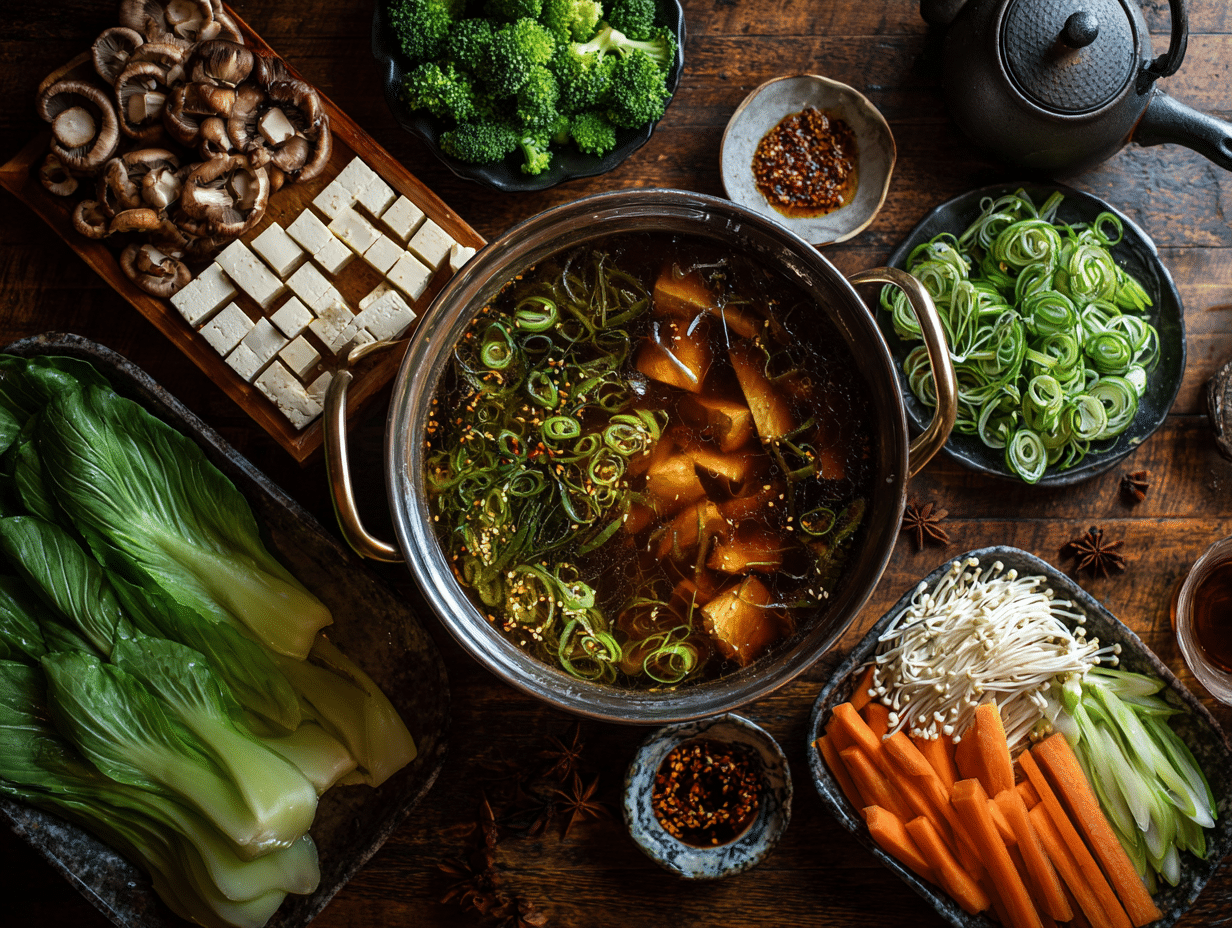
Hot pot is a cook-at-the-table meal where everyone simmers their own vegetables, tofu, and noodles in a shared pot of broth. This all-plant version builds a genuinely savory base from miso, soy sauce, garlic, and ginger — no meat or bones needed. It’s one of the better options for feeding a group with mixed tastes, since each person controls exactly what goes in their bowl.
Why this recipe works
Two things carry this dish. First, the miso goes in off the heat or at a low simmer — boiling it kills the fermentation compounds that give the broth its rounded, savory depth, leaving you with something flat and salty instead. Second, pressing the tofu before it hits the pot matters more than people expect: water-logged tofu sits in the broth rather than absorbing it, so a 15-minute press between two plates with something heavy on top makes a real difference in how much flavor it picks up.
If something goes sideways
- Broth tastes thin or one-dimensional: Stir in another teaspoon of white miso and a small splash of soy sauce. If you have dried shiitake mushrooms, drop one or two in and let them steep for five minutes — they release glutamates fast.
- Glass noodles clumped into a solid mass: They were probably left sitting in the broth too long. Pull them out, rinse under warm water, and toss with a few drops of sesame oil to keep them separate.
- Vegetables turning mushy before everyone is done eating: Add them in small batches rather than all at once. Broccoli and bok choy only need 90 seconds to two minutes; add them per person rather than loading the pot.
- Tofu falling apart when you try to pick it up: Firm tofu that wasn’t pressed enough will do this. For next time, freeze the block overnight, thaw it, and press — the texture becomes much sturdier. For tonight, switch to a slotted spoon instead of chopsticks or tongs.
- Broth level dropping too low mid-meal: Keep a small pot of plain water or light vegetable broth warm on a back burner and top up as needed. Adding cold water straight from the tap stalls the simmer and dilutes flavor.
Leftovers and meal prep
Store the broth and any cooked components separately — broth keeps in the fridge for up to four days and freezes well for two months. Cooked vegetables and tofu are best eaten within two days; they soften further in storage, so skip the freezer for those. Noodles should be stored dry and cooked fresh each time, since refrigerated cooked glass noodles turn gummy and don’t recover well. To reheat, bring the broth back to a gentle simmer on the stovetop — the microwave works in a pinch but tends to unevenly heat miso-based broths. If you want to get ahead on prep, the broth can be made up to three days in advance and refrigerated, which actually improves the flavor as the aromatics continue to meld. Skip pre-slicing the vegetables more than a day out; cut produce sitting in the fridge loses texture faster than you’d expect.

Vegan Hot Pot

Equipment
- Large pot or tabletop hot pot cooker
- Chef's knife
- Cutting board
- Soup ladle
Ingredients
For the Broth Base:
- 1 gallon vegetable broth preferably homemade or low-sodium for best flavor
- 3 tablespoons white miso paste adds umami depth
- 2 tablespoons low-sodium soy sauce
- 1 tablespoon fresh ginger grated
- 4 cloves garlic minced
- 2 teaspoons toasted sesame oil for richness
For the Hot Pot:
- 1 cup shiitake mushrooms stems removed, sliced
- 1 cup baby bok choy halved lengthwise
- 1 cup carrots thinly sliced on bias
- 1 cup broccoli florets
- 8 ounces firm tofu cubed and lightly pressed
- 4 ounces glass noodles or rice noodles soaked per package instructions
For Garnish:
- ¼ cup green onions sliced thin
- 1 tablespoon toasted sesame seeds
- 4 tablespoons chili oil or chili garlic sauce to taste; optional for heat
Instructions
- In a large pot, combine the vegetable broth, miso paste, soy sauce, grated ginger, minced garlic, and sesame oil. Stir well and bring to a gentle boil over medium-high heat (approx. 10 minutes). Reduce to a simmer and let the flavors meld for 10 more minutes. The broth should be fragrant and slightly opaque.
- While the broth simmers, prepare your hot pot ingredients. Slice mushrooms, cut bok choy lengthwise, slice carrots on a bias, and cut tofu into cubes. Soak noodles according to package instructions and set aside.
- Once the broth is ready, transfer it into a hot pot cooker or keep it on the stove. Begin adding your vegetables and tofu in batches, allowing each to simmer for 3–5 minutes until just tender but still bright and crisp.
- Add the noodles last and heat through for 2–3 minutes. They should soften slightly but retain a springy texture.
- Ladle the broth and ingredients into bowls. Top with green onions, sesame seeds, and a drizzle of chili oil if desired.
Notes
- For a smoky twist, add a dried kombu strip to the broth during boiling and remove it before serving.
- If you'd like a stronger umami base, add 2 dried shiitake mushrooms with the fresh ones.
Nutrition
Your questions, answered
Do I need a special hot pot burner for this?
No — a regular pot on your stove works fine, though a portable induction burner set in the middle of the table makes the communal cooking part easier. If you don’t have one, just keep the pot on the stove and let people bring their bowls to it; the meal still works, it’s just less interactive.
Can I use regular noodles instead of glass or rice noodles?
Yes, thin wheat noodles or ramen noodles both work. Just be aware they release more starch into the broth as they cook, which will thicken it slightly over time — not a problem for a single sitting, but worth knowing if you’re doing multiple rounds.
What can I use instead of tofu for more protein?
Tempeh holds up very well in simmering broth and has a firmer bite than tofu. Edamame, canned chickpeas (rinsed and added at the end), or store-bought plant-based fish balls are all solid options that don’t require any extra prep.
My grocery store doesn’t carry white miso — can I substitute?
Yellow miso is the closest swap and works well here. Red miso will make the broth noticeably stronger and saltier, so use about half the amount called for and taste as you go.
More plant-based recipes to try
- Vegan Mushroom Bulgogi Bibimbap
- Korean BBQ Tempeh Bowl
- Vegan Malaysian Laksa Soup
- Miso Glazed Sweet Potatoes