
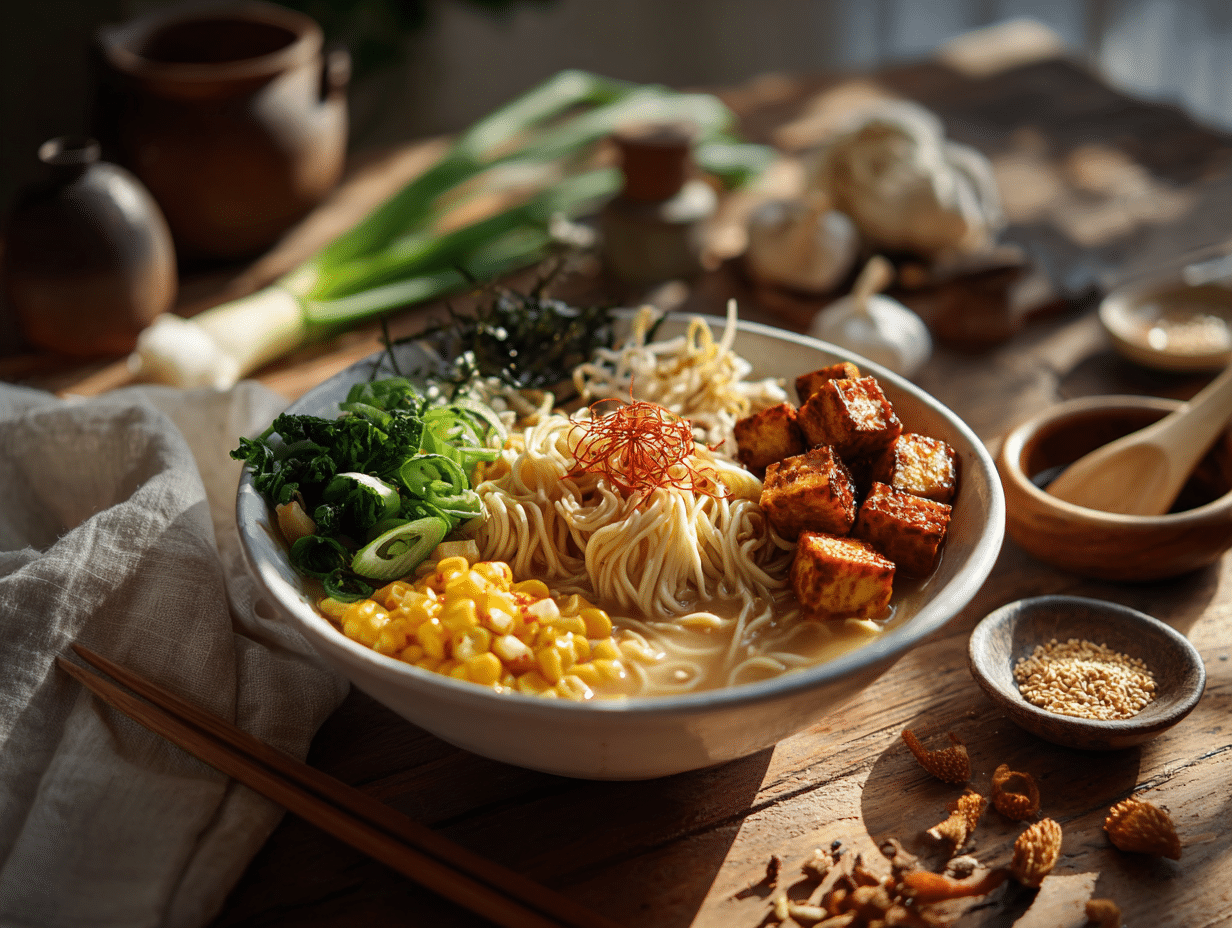
This is a full-bowl vegan miso ramen — chewy noodles in a rich, savory broth built from kombu, dried shiitake, miso, and tahini, topped with crispy tofu, corn, and bamboo shoots. It takes about 45 minutes start to finish, and most of that is hands-off simmering. On a cold weeknight, it beats takeout by a wide margin.
The technique that matters
The broth is everything here, and it comes down to two things: charring your aromatics properly and adding the miso off the heat. Get your pan genuinely hot before the onion, garlic, and ginger go in — you want real dark spots, not just softening. That browning adds depth that nothing else can replicate in a plant-based broth. Then, once the broth is done, pull it off the burner before whisking in the miso. Boiling miso kills the fermented flavor compounds you’re cooking for in the first place. Stir it in while the broth is hot but no longer bubbling, and the difference is noticeable.
If something goes sideways
- Broth tastes flat or thin: Add another tablespoon of miso and a teaspoon of soy sauce. Flat usually means not enough salt or umami, not a technique problem.
- Tahini made the broth grainy or separated: It seized from heat shock. Whisk a small amount of hot broth into the tahini in a separate bowl first, then stir that mixture back into the pot.
- Tofu isn’t crisping up: The pan isn’t hot enough, or the tofu wasn’t pressed dry. Pat it firmly with a paper towel and give the pan another minute before adding oil.
- Noodles turned to mush: They kept cooking in the residual heat of the broth. Next time, cook them 30 seconds under the package time and rinse with cold water immediately to stop cooking before adding to the bowl.
- Broth is too salty after adding miso: Dilute with a splash of unsweetened soy milk or plain water, then taste again. Adding more kombu broth also works if you have extra.
Substitutions that actually work
- Kombu: If you can’t find it, double the dried shiitake and add a strip of nori to the simmering broth instead. The result is slightly earthier but still solid.
- Tahini: Japanese sesame paste (nerigoma) is the closer match, but tahini works fine. Unsweetened sunflower seed butter is a nut-free alternative — use the same amount.
- Menma (bamboo shoots): Canned bamboo shoots are easy to find and work well. Skip the garnish of nori if you’re short on time — not worth the extra dish.
- Ramen noodles: Fresh or dried both work. In a pinch, dried soba or even thick rice noodles hold up reasonably well in this broth.
- Firm tofu: Extra-firm is better for crisping. Baked or pan-fried tempeh is a good swap if you want more protein and a nuttier flavor.
Leftovers and meal prep
Store the broth and noodles separately — noodles left in broth overnight turn soft and absorb most of the liquid. The broth keeps in the fridge for up to 4 days and freezes well for up to 2 months; freeze it in single-serving portions for the fastest weeknight turnaround. Reheat the broth on the stovetop over medium heat until just steaming, then cook fresh noodles to order. Crispy tofu is best made fresh, but leftover pieces can be re-crisped in a dry skillet for 3–4 minutes. Prepped toppings like corn and bamboo shoots keep refrigerated for 3 days in a covered container.

Vegan Miso Ramen

Equipment
- Large stockpot (6–8 quart)
- Heavy pot or Dutch oven
- Nonstick or cast-iron skillet
- Fine mesh strainer
- Ladle
- Whisk
- Tongs
- Chef's knife
- Cutting board
- Measuring cups and spoons
- Heatproof mixing bowl
- Soup bowls (warmed)
Ingredients
For the Kombu–Shiitake Dashi (Broth Base):
- 8 cups filtered water use cold, filtered water for the cleanest flavor
- 1 piece kombu (dried kelp), about 4×4 inches prefer Rishiri or Hidaka kombu for refined umami
- 6 pieces dried shiitake mushrooms thick caps add more depth; avoid cracked, powdery pieces
For the Aromatics for Charring:
- 1 tbsp neutral oil avocado or grapeseed oil for high-heat searing
- 1 medium yellow onion, halved look for firm, heavy onions without soft spots
- 4 cloves garlic, smashed fresh, juicy cloves give the best aroma
- 2 pieces fresh ginger (inch), sliced young ginger is less fibrous and spicier
- 2 pieces scallions, cut into 3-inch pieces use both white and green parts for complexity
For the Miso–Sesame Tare:
- ⅓ cup white miso paste (shiro miso) Hikari or Marukome for consistent quality
- 2 tbsp red miso paste (aka miso) adds robust depth and color
- 2 tbsp tahini (toasted sesame paste) Japanese nerigoma or well-stirred tahini for silkiness
- 1 tbsp soy sauce or tamari use tamari for gluten-free
- 1 tbsp mirin hon-mirin preferred for balanced sweetness
- 1 tsp toasted sesame oil a finishing oil—fragrant, use sparingly
- 1 tsp sugar or maple syrup balances miso’s salinity
For the Soup Finishers:
- 1 cup unsweetened soy milk (optional, for creamy style) barista-style soy milk won’t split under gentle heat
- 1 tsp rice vinegar brightens the broth; add to taste
- ½ tsp white pepper for gentle heat and aroma
For the Crispy Tofu Topping:
- 14 oz extra-firm tofu, pressed and cut into 1-inch cubes choose vacuum-packed for easier pressing
- 1 tbsp soy sauce or tamari (for tofu marinade)
- 1 tbsp mirin (for tofu marinade)
- 1 tsp maple syrup (for tofu marinade)
- 1 tbsp neutral oil (for searing tofu)
For the Noodles & Toppings:
- 24 oz fresh ramen noodles about 6 oz per person; use alkaline noodles for bounce
- 2 cups corn kernels fresh in season; frozen works well year-round
- 1 cup bamboo shoots (menma-style), rinsed look for seasoned menma in Asian markets
- 1 cup bean sprouts, rinsed shock in cold water for extra crunch
- 1 cup thinly sliced scallions (greens), for garnish
- 4 sheets toasted nori, cut into strips
- 2 tbsp toasted sesame seeds lightly crush for more aroma
- 2 tsp chili oil (la-yu), to taste optional, for heat and color
- 4 tsp black garlic oil (mayu), optional smoky, bittersweet depth
- 1 pinch kosher salt to taste; for seasoning noodles and toppings as needed
Instructions
- Mise En Place (10 minutes): Press the tofu by wrapping it in a clean towel and placing a weight on top for 15 minutes. Slice aromatics, measure tare ingredients, and set a large stockpot with 8 cups water on the stove.
- Start the Kombu–Shiitake Dashi (30 minutes soak): Wipe the kombu clean and add it with the dried shiitake to the pot of water. Soak off heat for 30 minutes to draw out delicate umami.
- Heat the Dashi Gently (10–12 minutes): Place the pot over medium heat and bring to 175–180°F (80–82°C)—small bubbles at the edges, no boil. Remove kombu just before boiling to avoid bitterness, then keep shiitake in and steep 10 minutes more. Strain and reserve the clear broth; slice shiitake caps if you’d like them as a topping.
- Char the Aromatics (8–10 minutes): In a Dutch oven over medium-high, heat 1 tbsp neutral oil. Place the onion cut-side down with ginger, garlic, and scallions. Sear until the onion’s edges are deep golden and the ginger smells spicy-sweet. Charring builds a toasted, ramen-shop depth. Alternative: broil on a sheet pan at 500°F (260°C) for 6–8 minutes, watching closely.
- Simmer to Marry Flavors (10 minutes): Pour the strained dashi into the Dutch oven with the charred aromatics. Simmer gently at about 185–195°F (85–90°C) for 10 minutes. Strain and keep the broth hot on low. You should have roughly 7 cups of intensely fragrant broth.
- Whisk the Miso–Sesame Tare (3–5 minutes): In a heatproof bowl, whisk white miso, red miso, tahini, soy/tamari, mirin, sesame oil, and sugar/maple until smooth. Whisk in a ladle of hot broth to loosen. For an ultra-silky finish, push through a fine sieve. Note: Avoid boiling miso; its aromatics fade with high heat.
- Crisp the Tofu (6–8 minutes): Toss pressed tofu with 1 tbsp soy/tamari, 1 tbsp mirin, and 1 tsp maple. Heat 1 tbsp oil in a skillet over medium-high (surface approx. 375°F/190°C). Sear cubes 3–4 minutes per side until deep golden and crisp. Alternatives: air-fry at 400°F (205°C) for 12–14 minutes, shaking once; or bake at 425°F (220°C) for 20 minutes, flipping halfway.
- Sauté the Corn (2–3 minutes): In the same skillet, add corn and a pinch of salt; cook over high heat until lightly blistered and sweet. Set aside with other toppings (menma, bean sprouts, sliced scallions, nori).
- Cook the Noodles (2–3 minutes): Bring a large pot of well-salted water to a rolling boil (212°F/100°C). Cook fresh ramen 2–3 minutes (dried 4–5) until springy with a slight bite. Drain thoroughly—do not rinse—so broth clings beautifully.
- Finish the Broth (3–5 minutes): Over low heat, whisk the tare into the hot broth (start with about 1 cup tare for the full pot, adjusting to taste). Stir in soy milk and 1 tsp rice vinegar. Warm gently to 160–170°F (71–77°C)—do not boil. Season with white pepper and salt if needed. The broth should taste savory, slightly sweet, and round, with toasted sesame aroma.
- Assemble and Serve (2 minutes): Divide noodles among 4 warmed bowls. Ladle steaming miso broth over. Arrange tofu, corn, menma, bean sprouts, and scallions around the bowl in neat clusters. Garnish with nori, sesame seeds, a drizzle of chili oil, and mayu if using. Serve immediately while the noodles are lively and aromatic.
Notes
Michelle’s Tips:
- Balance the Tare: For lighter bowls, reduce red miso and add more white miso. For deeper savoriness, add 1 tsp mushroom powder or a dash of dark soy.
- Ultra-Creamy Style: Blend a ladle of hot broth with 1 tbsp tahini or 1/4 cup silken tofu, then stir back in; heat gently.
- Faster Browning: Sprinkle the onions with a tiny pinch (1/8 tsp) baking soda to accelerate Maillard reaction—watch closely.
- Gluten-Free: Use tamari, GF ramen or rice noodles, and check miso labels for barley/wheat.
- Soy-Free Variation: Use chickpea miso, coconut aminos, oat milk, and replace tofu with seared king oyster mushroom “scallops.”
- No Mortar/Pestle? A small food processor or immersion blender makes an ultra-smooth tare; texture will be slightly lighter.
Nutrition
Your questions, answered
Can I use regular grocery store miso instead of a specific type?
Yes — white (shiro) miso from most grocery stores works well and is the most forgiving. Red miso gives a deeper, saltier result; if that’s what you have, start with a little less than the recipe calls for and adjust to taste.
Do I have to make the broth from scratch, or can I use store-bought?
Store-bought vegetable broth can stand in for the kombu-shiitake base if you’re short on time. Add a small piece of kombu and a couple of dried shiitake mushrooms to the store-bought broth and let it simmer for 10 minutes — that’s enough to get most of the umami depth without starting from zero.
How do I keep the noodles from getting soggy if I’m serving this in stages?
Cook the noodles separately and keep them in a bowl with a tiny drizzle of sesame oil tossed through to prevent sticking. Add them to the hot broth right before eating, not before.
Is this recipe gluten-free?
Not as written — standard ramen noodles and most miso pastes contain wheat. To make it gluten-free, use rice noodles and a certified gluten-free miso (they exist and are widely available online), and swap soy sauce for tamari.
What to cook next
- Vegan Malaysian Laksa Soup
- Vegan Thai Drunken Noodles
- Sesame Ginger Soba Salad
- Miso Glazed Sweet Potatoes