
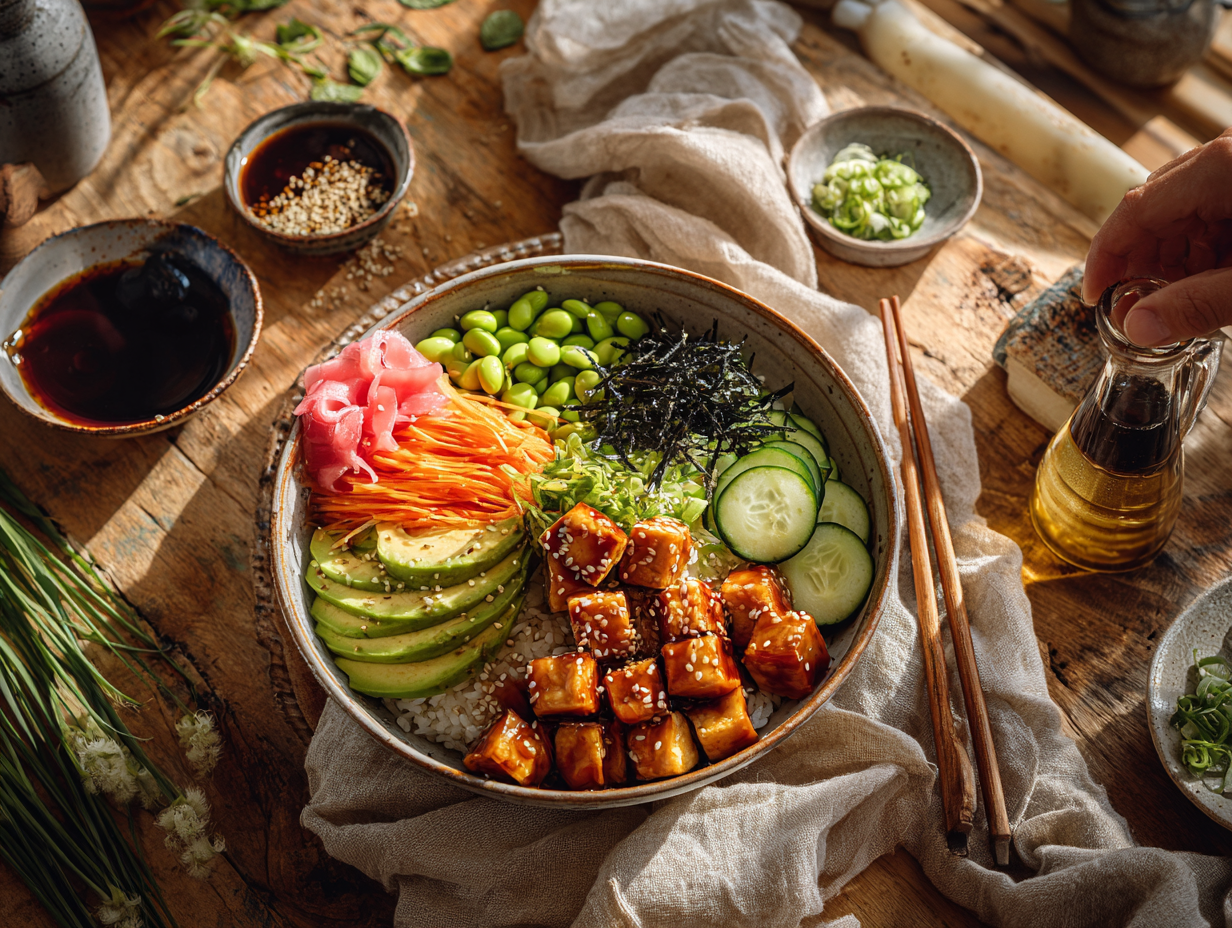
This bowl puts seasoned sushi rice, tamari-glazed tofu, and fresh vegetables together in one dish — no rolling mat, no special skills required. The glaze is sweet, salty, and a little sticky, and it does most of the flavor work for you. If you want a filling plant-based dinner that comes together in about an hour on a weeknight, this is a reliable one to have in your rotation.
The technique that matters
The rice is the part that rewards attention. Sushi rice needs to be seasoned while it is still hot — pour the vinegar mixture over warm rice, not cold, so it absorbs evenly instead of sitting on the surface. Use a wide bowl or baking sheet and fold the vinegar in with a flat spatula using gentle cutting strokes rather than stirring. Stirring breaks the grains and makes the rice gluey. The second thing worth getting right is pressing the tofu dry before glazing it. Extra-firm tofu still holds a lot of water, and wet tofu steams in the pan instead of browning. Press it between two plates with something heavy on top for at least 15 minutes, or use a tofu press if you have one. Dry tofu picks up the tamari-maple glaze and holds it; wet tofu just makes the glaze slide off.
Shopping notes
- Sushi rice: Look for short-grain Japanese white rice labeled “sushi rice” or “calrose.” Long-grain rice like basmati will not get sticky enough to hold together in the bowl.
- Tamari: This is a Japanese soy sauce made with little or no wheat. Most tamari is gluten-free, but check the label if that matters to you. Regular soy sauce works as a straight swap if tamari is not available.
- Kombu: Dried kelp, usually sold in the Asian foods aisle or at a Japanese grocery. A small piece goes into the rice water and gets discarded before serving — it adds a mild savory depth. If you cannot find it, skip it rather than substitute it. The rice will still be good.
- Miso paste: White (shiro) miso is the mildest and most widely available. It is usually in the refrigerated section near tofu. Red miso works but has a stronger, saltier flavor — use a little less.
- Edamame: Frozen shelled edamame is fine and much easier than fresh. Thaw under warm water for a few minutes before using.
Storage and reheating
Store components separately if you can — sushi rice gets hard and dry in the fridge when it is mixed with the toppings. Plain seasoned rice keeps for up to 2 days in an airtight container. Glazed tofu keeps for 3 days refrigerated and reheats well in a dry skillet over medium heat for 2 to 3 minutes, which brings back some of the caramelized edges. To revive cold sushi rice, put it in a bowl with a damp paper towel on top and microwave for 60 to 90 seconds — this steams it back to a softer texture. Sliced avocado does not store well once cut; add it fresh each time. This recipe is not a good candidate for freezing, since the rice texture suffers significantly after thawing.
Mistakes to avoid
- Skipping the rinse on the rice: Unrinsed sushi rice turns out thick and paste-like because of excess surface starch. Rinse under cold water until the water runs mostly clear — usually 3 to 4 rounds.
- Cooking the glaze too long: The tamari-maple glaze burns fast because of the sugar in the maple syrup. Keep the heat at medium and pull the pan off the heat the moment the glaze thickens and coats the tofu. Thirty seconds too long and it turns bitter.
- Cutting tofu too thin: Thin slices fall apart in the pan when you try to flip them. Cut tofu into slabs or cubes at least half an inch thick so they hold together through the glazing process.
- Adding avocado too early: If you slice the avocado and let it sit while you finish the rest of the bowl, it will brown before anyone eats. Slice it last, right before serving — skip the garnish of sesame seeds on the avocado specifically, not worth the extra dish to prep them separately.
- Using warm toppings on warm rice: The contrast between cool, crisp vegetables and warm rice is part of what makes this bowl work. If your cucumber or carrot has been sitting near the stove, give it a minute in the fridge before assembling.

Umami-Glazed Tofu Sushi Bowl

Equipment
- Fine mesh sieve
- Medium saucepan with tight-fitting lid (or rice cooker)
- Small saucepan
- Large mixing bowl (or wooden hangiri if available)
- Nonstick or cast-iron skillet
- Cutting board and chef’s knife
- Rubber spatula or rice paddle
- Tongs
Ingredients
For the Sushi Rice:
- 2 cups short-grain sushi rice rinse until water runs mostly clear; choose high-quality Japanese rice for best texture
- 2 ¼ cups water for cooking the rice
- 1 piece kombu (dried kelp) about 3 inches; optional, for delicate ocean umami
For the Sushi Vinegar (Awasezu):
- ⅓ cup unseasoned rice vinegar unseasoned gives you control over sugar and salt
- 2 tbsp organic cane sugar dissolve fully for a glossy finish
- 1 tsp fine sea salt adjust to taste
For the Tamari-Glazed Tofu:
- 14 oz extra-firm tofu pressed 10 minutes, then cut into 3/4-inch cubes
- 1 tbsp toasted sesame oil for searing the tofu
- 2 tbsp tamari (or soy sauce) use gluten-free tamari if needed
- 1 tbsp maple syrup balances the salinity and adds sheen
- 1 tsp unseasoned rice vinegar brightens the glaze
- 1 tsp fresh ginger, finely grated microplane for a smooth texture
- 1 tsp sriracha or chili-garlic sauce optional, for gentle heat
- 1 tsp cornstarch for silky, clingy glaze
For the Toppings & Garnishes:
- 1 cup shelled edamame blanched; choose bright green, tender beans
- 1 medium cucumber, seeded and thinly sliced about 1 1/2 cups
- 1 large carrot, julienned about 1 cup
- 1 large ripe avocado, sliced choose just-yielding fruit for clean slices
- 4 sheets nori, cut into thin strips or use vegan furikake
- 2 tbsp toasted sesame seeds mixed black and white for visual contrast
- 2 pieces scallions green and white parts, thinly sliced
- ¼ cup pickled ginger (gari), vegan optional, for brightness
- 2 tbsp tamari (for drizzling) serve at the table
- 1 tsp toasted sesame oil (finishing) optional aromatic finish
- 1 tsp wasabi paste, vegan optional, serve on the side
Instructions
- Rinse the Rice: Place the sushi rice in a bowl, cover with cool water, and rub the grains gently between your fingers. Drain through a fine-mesh sieve and repeat until the water runs mostly clear (about 3–4 rinses). This removes excess starch for pearly, distinct grains.
- Soak for Plumpness (Optional): Cover rinsed rice with fresh water and soak 20 minutes, then drain very well. This step enhances texture but can be skipped if you’re short on time.
- Cook the Rice: Combine rice, 2 1/4 cups water, and kombu in a medium saucepan. Bring to a gentle boil over medium heat, remove the kombu, cover, reduce heat to low, and simmer 16–18 minutes. Turn off heat and let rest, covered, 10 minutes. Grains should be tender, moist, and slightly sticky with a glossy sheen.
- Make the Sushi Vinegar: In a small saucepan over low heat, warm the rice vinegar, sugar, and salt, stirring just until dissolved and clear (do not boil). This keeps the aroma delicate and prevents harsh acidity.
- Season and Cool the Rice: Transfer hot rice to a wide bowl (or wooden hangiri). Drizzle the warm vinegar mixture evenly over the rice. Using a rice paddle or spatula, slice and lift through the rice—avoid mashing—while fanning or wafting to cool. Continue until the rice looks glossy and reaches warm room temperature. Cover with a damp towel to prevent drying.
- Prep the Tofu: Pat the pressed tofu dry and cut into 3/4-inch cubes for a satisfying bite and good sear.
- Whisk the Glaze: In a bowl, whisk tamari, maple syrup, rice vinegar, grated ginger, sriracha (if using), and cornstarch until smooth and glossy.
- Sear and Glaze the Tofu: Heat a nonstick or cast-iron skillet over medium-high with toasted sesame oil until shimmering. Add tofu in a single layer and sear 3–4 minutes per side until deep golden and crisp at the edges. Reduce heat to medium, pour in the glaze, and toss until thick, shiny, and clinging to the tofu, 1–2 minutes.Oven Alternative: Bake tofu on a lined sheet at 400°F (200°C) for 20–25 minutes, flipping once; toss with glaze in the last 5 minutes to set.
- Blanch the Edamame: Boil a small pot of water. Add edamame and cook 2 minutes until bright green and tender-crisp. Drain and rinse briefly under cool water to stop cooking.
- Prep the Vegetables and Garnishes: Thinly slice cucumber and scallions; julienne carrot; slice avocado just before serving. Cut nori into fine ribbons and have sesame seeds ready.
- Assemble the Bowls: Divide seasoned sushi rice among 4 bowls (about 1 1/4 to 1 1/2 cups each). Arrange glazed tofu, edamame, cucumber, carrot, and avocado in neat sections for color contrast. Sprinkle nori and sesame seeds, add scallions, and tuck in pickled ginger. Finish with a light drizzle of tamari and a few drops of toasted sesame oil. Serve wasabi on the side.
Notes
Michelle’s Tips:
- Rice Texture: Fanning while folding in vinegar cools the rice quickly, tightening starches for a lacquered, sushi-shop sheen.
- Faster Tofu Crisping: After pressing, dust tofu lightly with cornstarch before searing for extra crunch.
- Citrus Lift: Add 1 tsp yuzu or lemon zest to the vinegar for a bright, modern twist.
- Gluten-Free: Use certified gluten-free tamari and check your nori and wasabi labels.
- No Stovetop Rice? A rice cooker yields excellent results; follow the same water ratio and rest time.
- Seasonal Swaps: Try mango in summer, roasted kabocha in fall, or blanched asparagus in spring.
Serving Suggestions:
For a restaurant-caliber presentation, pack warm sushi rice into a shallow bowl creating a smooth bed. Fan avocado slices over one quadrant, then create tidy lanes of cucumber, carrot, and edamame. Crown with glossy tofu, sprinkle black-and-white sesame for contrast, and rain down fine nori ribbons. A small mound of pink pickled ginger adds color pop and perfume. Pair with chilled green tea or a crisp, dry sake (junmai) for balance.Culinary Context:
This bowl channels the spirit of chirashi and donburi—comforting rice bowls in Japanese cuisine—translated for a vegan pantry. The kombu-kissed rice and nori bring the sea’s whisper without fish, while the tamari-maple glaze nods to tare sauces used to lacquer proteins in classic preparations.Optional Advanced Prep:
- Rice: Rinse and soak rice up to 2 hours ahead; drain well before cooking.
- Tofu: Press and cube tofu in the morning; refrigerate uncovered for drier surfaces and crispier searing.
- Veg Prep: Julienne carrots and slice cucumbers up to 6 hours ahead; store chilled with a damp towel to prevent drying.
- Batching: Double the tofu and keep the extra glazed pieces for next-day bowls or sushi rolls.
Timing:
- Prep Time: 25 minutes (0:25)
- Cook Time: 37 minutes (0:40) — includes rice simmer/rest, tofu sear/glaze, and edamame blanch
- Total Time: 65 minutes (1:05)
Nutrition
FAQ
Can I use a different protein instead of tofu?
Tempeh is the most practical swap — slice it thin, steam it for 5 minutes first to mellow the bitterness, then glaze it the same way. Canned chickpeas, drained and patted dry, also work if you roast them in the oven at 400°F for 20 minutes before tossing them in the glaze.
My sushi rice always comes out mushy. What am I doing wrong?
The most common cause is too much water or lifting the lid while the rice cooks. Use a 1:1.1 ratio of rice to water for sushi rice (slightly less water than standard white rice), and do not lift the lid during cooking or the resting period. Also make sure you rinsed the rice thoroughly — leftover surface starch adds to mushiness.
Is this recipe gluten-free?
It can be, with one check: use certified gluten-free tamari rather than regular soy sauce, which contains wheat. Everything else in the bowl — rice, tofu, vegetables, nori, rice vinegar — is naturally gluten-free, but always verify your specific brands if you are cooking for someone with celiac disease.
Can I make any part of this ahead of time?
Yes — the seasoned rice and glazed tofu both keep well in the fridge for up to 2 days. Prep and refrigerate the vegetables too, but keep them dry and uncut until you are ready to assemble. The only thing to do fresh is slice the avocado, which takes about 30 seconds.
If you liked this one
- Vegan Mushroom Bulgogi Bibimbap
- Sesame Ginger Soba Salad
- Miso Glazed Sweet Potatoes
- Crispy Tofu Broccoli Stir-Fry