
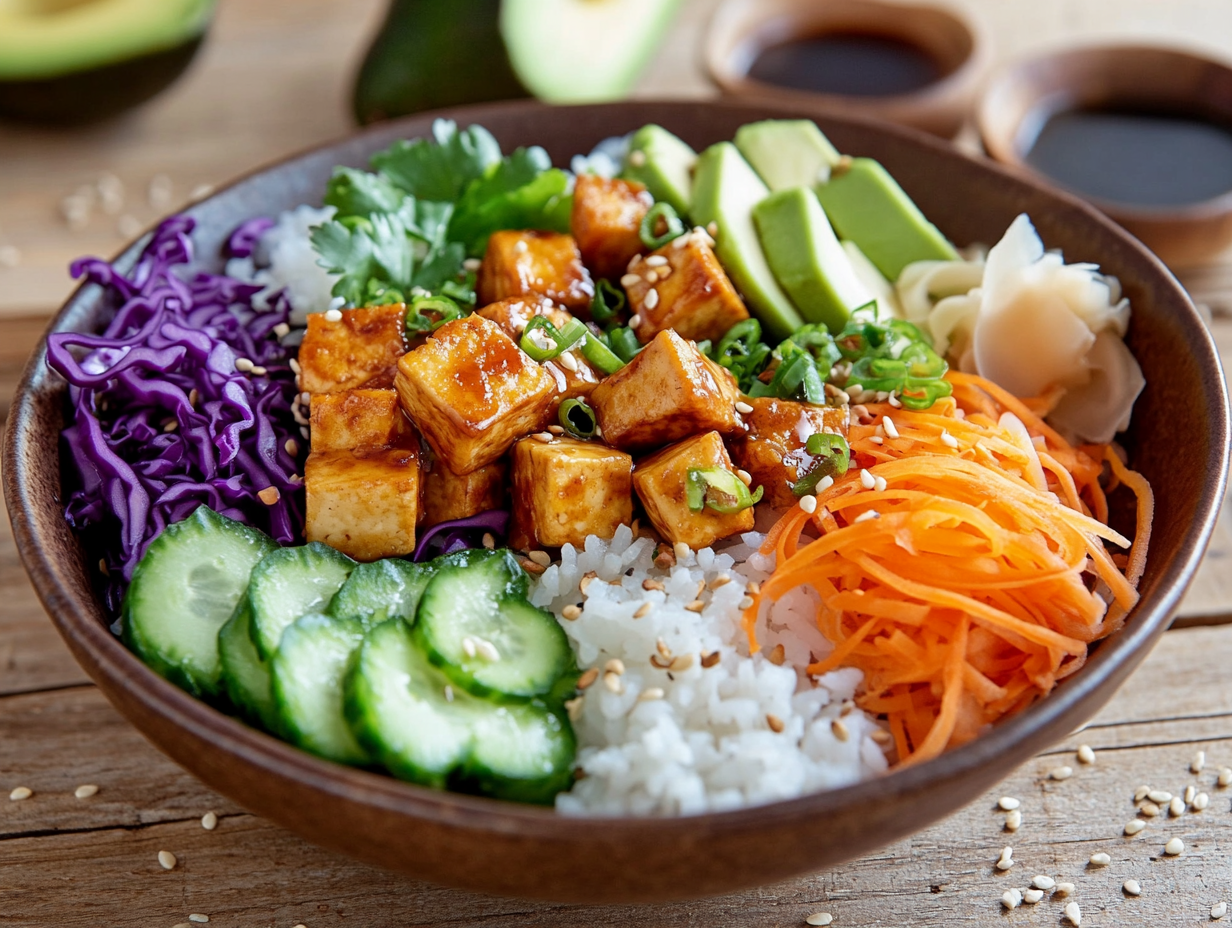
These vegan sushi bowls give you seasoned sushi rice, crisp vegetables, baked tofu, and a sesame-tamari drizzle — all the flavors of a sushi platter without a rolling mat in sight. The whole thing comes together in one pot for the rice and one sheet pan for the tofu, which is the real reason to make it on a weeknight. Assembly takes minutes once those two components are done.
Why this recipe works
Two things matter here. First, the rice seasoning: dissolving the rice vinegar, cane sugar, and sea salt together before folding it into hot rice — rather than adding them separately — means every grain gets evenly coated without turning mushy. Second, baking the tofu at high heat on a dry sheet pan (no oil pooling underneath) is what gets you a firm, slightly chewy cube that holds up against the wet toppings instead of going soggy by the time you sit down.
Troubleshooting
- Rice is gummy and clumping in wet clumps: You likely added the vinegar mixture while the rice was still steaming hard. Let the rice sit off the heat for 5 minutes first, then fold gently with a wooden spoon or rice paddle using a cutting motion, not stirring.
- Tofu won’t brown — it’s steaming instead: The tofu wasn’t dry enough before it went in the oven. Press it for at least 15 minutes between paper towels and a heavy pan. Crowding the sheet pan has the same effect — give the cubes space.
- Sesame-tamari sauce is too salty: Tamari brands vary a lot in sodium. Taste before drizzling and thin it with a small splash of water and a few drops of lime juice to balance it out.
- Avocado turns brown before serving: Toss the sliced avocado in a little lime juice right after cutting. If you’re building bowls for meal prep, keep the avocado whole and slice it fresh at serving time.
- Purple cabbage bleeds color onto the rice: This is harmless but looks messy. Add the cabbage last, right before eating, or keep it in a small separate pile on the bowl rather than mixing it in.
Ingredient notes
- Sushi rice: Short-grain Japanese white rice is the right call here — it has the starch content needed to clump slightly so the bowl holds together as you eat. Long-grain rice won’t do the same job.
- Tamari vs. soy sauce: Tamari is typically gluten-free and has a rounder, less sharp flavor than regular soy sauce. Either works in the sauce, but check the label if you’re cooking for someone gluten-sensitive.
- Nori: Buy a pack of full sushi sheets and cut them into thin strips with scissors directly over the bowl — skip the garnish dish entirely, not worth the extra dish.
- Pickled ginger: Most store-bought pickled ginger contains no animal products, but a few brands use colorings derived from non-vegan sources. Check the label or make a quick batch at home with rice vinegar, sugar, salt, and thinly sliced fresh ginger.
- Protein swap: Crispy chickpeas roasted on the same sheet pan as the tofu work well if you want to skip the tofu entirely — just reduce the roast time slightly and watch for burning.
Make-ahead notes
The sushi rice keeps well in an airtight container in the fridge for up to 3 days. It will firm up when cold — spread it in a shallow bowl and microwave with a damp paper towel over the top for about 60 seconds to loosen it back up before assembling. Baked tofu lasts up to 4 days refrigerated and can go straight from the fridge onto the bowl cold or be warmed in a dry skillet for 2 minutes. The sesame-tamari sauce keeps for a week in a small jar. Slice fresh vegetables the day you’re eating — cucumber and avocado especially don’t hold well once cut. There’s no good reason to freeze any component of this dish; the rice texture suffers significantly after thawing.

Vegan Sushi Bowls

Equipment
- Rice cooker or saucepan
- Mixing bowls
- Sharp knife
- Cutting board
- Medium skillet
- Small saucepan
Ingredients
Sushi Rice
- 1 ½ cups short-grain sushi rice organic if possible
- 2 cups water
- 2 tbsp rice vinegar unseasoned
- 1 ½ tbsp organic cane sugar
- ½ tsp sea salt
Toppings
- 1 large avocado sliced
- 1 cup julienned cucumber preferably Persian cucumber for less bitterness
- 1 cup shredded purple cabbage for color and crunch
- 1 cup carrot ribbons peeled using a vegetable peeler
- 3 oz baked tofu cut into cubes or strips
- 2 tbsp pickled ginger optional, for garnish
- 1 sheet nori cut into thin strips
- 1 tbsp toasted sesame seeds white or black or a mix
Sauce
- 3 tbsp tamari gluten-free soy sauce
- 1 tbsp toasted sesame oil
- 1 tbsp maple syrup
- 1 tsp freshly grated ginger
- 1 tsp lime juice freshly squeezed
Instructions
- Rinse and Cook Rice: Rinse 1½ cups of sushi rice under cold water until the water runs clear. In a rice cooker or saucepan, combine rinsed rice with 2 cups of water. Bring to a boil, then reduce to a simmer. Cover and cook for 18–20 minutes (until water is fully absorbed). Let sit, covered, for 10 minutes after cooking.
- Prepare Sushi Seasoning: In a small saucepan, gently heat 2 tbsp rice vinegar, 1½ tbsp cane sugar, and ½ tsp sea salt until dissolved (do not boil). Pour this over the cooked rice, gently folding with a wooden spoon or rice paddle to avoid mashing the grains. Let cool slightly.
- Slice and Prep Toppings: While rice cools, slice 1 avocado, julienne cucumber, shred purple cabbage, peel carrot ribbons, cube the baked tofu, and slice the nori sheet into thin ribbons.
- Mix Sauce: In a small bowl, whisk together 3 tbsp tamari, 1 tbsp toasted sesame oil, 1 tbsp maple syrup, 1 tsp grated ginger, and 1 tsp lime juice. Set aside.
- Assemble Bowls: Divide seasoned sushi rice into four bowls. Arrange avocado slices, cucumber, cabbage, carrot ribbons, tofu, and pickled ginger on top. Drizzle with sauce, sprinkle with sesame seeds and shredded nori.
Notes
- You can substitute brown sushi rice for extra fiber; just adjust cooking time accordingly.
- If baked tofu isn't available, use seasoned tempeh or crispy chickpeas for added texture.
- To speed up cooling rice, spread it on a large plate and fan it lightly before adding seasoning.
- Add a spoonful of vegan wasabi mayo for heat and creaminess.
Nutrition
FAQ
Can I use brown rice instead of sushi rice?
You can, but the texture will be noticeably different — less sticky and harder to eat as a cohesive bowl. If you go that route, short-grain brown rice works better than long-grain, and you’ll still want to season it with the vinegar mixture while it’s warm.
How do I keep the tofu from sticking to the sheet pan?
Line the pan with parchment paper rather than foil — tofu sticks to foil even when oiled. Parchment lets the cubes release cleanly when you flip them halfway through baking.
Is this recipe gluten-free?
It is if you use tamari instead of regular soy sauce and confirm your other condiments (like pickled ginger) are gluten-free. Sushi rice itself contains no gluten.
What can I use instead of avocado if I don’t have one?
Thinly sliced mango adds a creamy-sweet element that fills a similar role. Edamame or a spoonful of hummus also work if you want something with more substance.
Can I make this for a group without assembling individual bowls?
Yes — set it up as a build-your-own station with the rice in one bowl and all the toppings in small dishes alongside the sauce. It’s easier to manage for four or more people and lets everyone control their own ratios.
More plant-based recipes to try
- Vegan Mushroom Bulgogi Bibimbap
- Sesame Ginger Soba Salad
- Miso Glazed Sweet Potatoes
- Crispy Tofu Broccoli Stir-Fry