
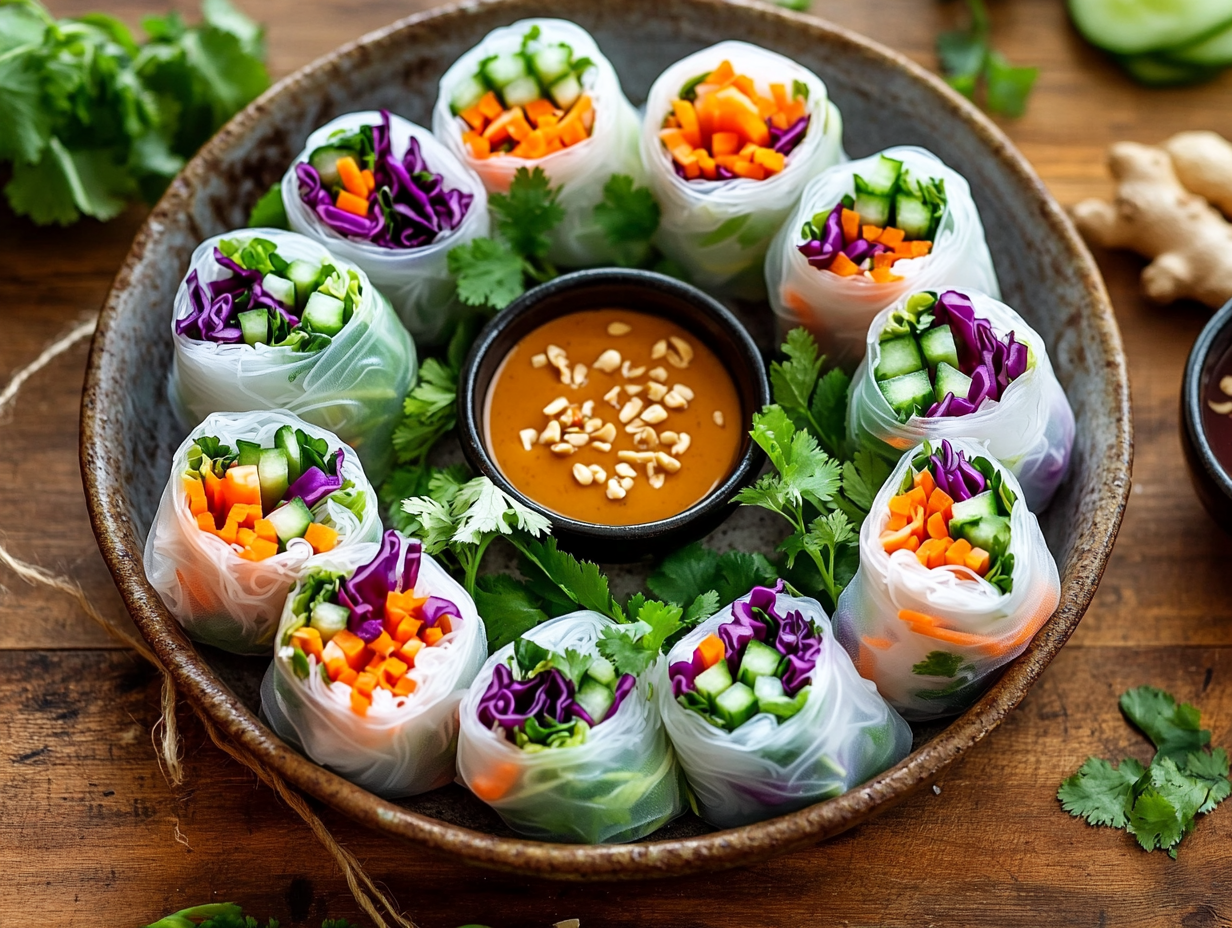
These are fresh Vietnamese-style rice paper rolls — gỏi cuốn — filled with julienned vegetables, rice noodles, and herbs, served with a homemade peanut dipping sauce. No cooking beyond boiling noodles, which means the whole thing comes together in about 30 minutes. That’s the real reason to make them on a weeknight.
Before you start
The only technique that actually matters here is handling the rice paper. Dip each sheet in warm (not hot) water for about 5–8 seconds — it should still feel slightly stiff when you lay it down. It keeps softening as you add the fillings, and if it’s already fully limp before you start rolling, it will tear. The second thing worth knowing: have all your fillings prepped and lined up before you touch the water. Once you start dipping sheets, you want to move without stopping, and scrambling to julienne a carrot mid-roll is how you end up with a soggy mess on the board.
Troubleshooting
- Rolls stick to the plate or to each other: Place finished rolls on a lightly damp surface and keep them spaced apart. If they’re sitting out for more than a few minutes before serving, lay a damp paper towel loosely over the top.
- Peanut sauce seizes up and turns thick: Add warm water a teaspoon at a time and stir. Cold water can make it clump; warm water brings it back to a pourable consistency quickly.
- Rice paper tears during rolling: You’re either overfilling or the paper soaked too long. Use less filling than you think you need, and keep the dip time short — the paper will finish softening on its own.
- Herbs turn brown before you’re done assembling: Don’t wash herbs until right before you use them, and pat them dry. Wet herbs sitting at room temperature bruise faster.
- Rolls fall apart when dipped: The seam needs to be tucked tightly and resting seam-side down on the plate before you move them. Give each roll 30 seconds to set before picking it up.
About the ingredients
- Rice paper wrappers: Found in most Asian grocery stores and many mainstream supermarkets in the international aisle. Brands vary — thinner sheets are more delicate but wrap more neatly; thicker ones are more forgiving for beginners.
- Hoisin sauce: Check the label — most commercial hoisin is vegan, but a few brands include oyster extract. Annie Chun’s and Kikkoman’s hoisin are both vegan-friendly.
- Natural peanut butter: Use the kind with just peanuts (and maybe salt) on the ingredient list. Conventional peanut butter with added sugar and oil makes the sauce too sweet and harder to balance.
- Thai basil vs. regular basil: Thai basil has a slightly anise-like flavor and holds up better in the roll. Regular Italian basil works fine as a swap — skip the garnish of extra basil leaves on top if you’re using it, not worth the extra dish.
- Sunflower seed butter: A reliable nut-free swap for peanut butter in the dipping sauce. The flavor is milder, so add a small extra splash of soy sauce to compensate.
Keeping and reheating
Assembled rolls keep in the fridge for up to 24 hours. Wrap each one individually in plastic wrap or store them in a single layer in an airtight container with a damp paper towel laid over the top — this prevents the rice paper from drying out and cracking. Beyond 24 hours the wrappers get rubbery and the vegetables lose their crunch. These rolls are meant to be eaten cold or at room temperature; there’s nothing to reheat. The peanut sauce keeps separately in a sealed jar in the fridge for up to 5 days and may thicken — just stir in a little warm water to loosen it before serving. Do not freeze assembled rolls; the rice paper becomes brittle and the vegetables turn watery.

Fresh Vegan Spring Rolls

Equipment
- Large bowl for soaking rice paper
- Cutting board
- Sharp knife
- Small saucepan
Ingredients
For the Fresh Spring Roll:
- 8 sheets rice paper wrappers round, 8.5-inch diameter
- 2 oz rice vermicelli noodles cooked and drained according to package instructions
- 1 cup carrot julienned
- 1 cup cucumber julienned, remove seeds for best texture
- 1 cup red bell pepper julienned
- 1 cup purple cabbage thinly shredded
- 1 cup fresh mint leaves rinsed and dried
- 1 cup fresh Thai basil or sweet basil optional but recommended
- 1 cup fresh cilantro rough stems removed
For the Peanut Dipping Sauce:
- ⅓ cup natural peanut butter smooth and unsweetened preferred
- 2 tbsp hoisin sauce vegan-friendly brand
- 1 tbsp soy sauce or tamari for gluten-free option
- 1 tbsp rice vinegar
- 2 tsp maple syrup
- 1 tsp freshly grated ginger optional
- 2 tbsp warm water add more to adjust consistency
Instructions
- Prepare the rice vermicelli noodles according to the package instructions. Rinse with cold water and drain thoroughly. Set aside.
- Wash and prepare all vegetables: julienne the carrots, cucumber, and bell pepper, and shred the cabbage. Pick fresh herb leaves and keep them dry to avoid tearing the rice paper.
- Fill a large bowl with warm water. Dip a rice paper wrapper into the water for about 5–8 seconds, just until it's slightly softened. Remove and place it on a clean damp cloth or cutting board. It will continue to soften as you assemble.
- In the center of the wrapper, place a small amount of noodles, layered with veggies, and a few leaves of each herb. Keep filling minimal to make rolling easier.
- Fold the bottom of the wrapper over the filling, then fold in the sides, and roll tightly like a burrito. Repeat with remaining wrappers and filling.
- To make the peanut sauce, whisk all sauce ingredients in a small bowl until smooth and creamy. Add more warm water to loosen the consistency as desired.
Notes
- Use fresh, crisp vegetables to keep the rolls vibrant and textural. Rainbow carrots and baby cucumbers make a beautiful presentation.
- Work quickly and gently with rice paper to avoid tearing. A damp towel under your workspace can prevent sticking.
- Try mango or avocado slices for a sweeter twist.
- Peanut Allergies? Substitute with sunflower seed butter or tahini for the dipping sauce.
- Make Ahead Tip: Rolls can be prepped and stored in an airtight container lined with damp paper towels for up to 24 hours.
Nutrition
FAQ
Can I make these ahead for a packed lunch?
Yes, up to the morning of the same day works well. Wrap each roll tightly in plastic wrap individually, keep them in the fridge, and pack the peanut sauce in a separate small container — the sauce will keep the rolls from getting soggy if combined too early.
Where do I find rice paper wrappers?
Most Asian grocery stores carry them, and they’re increasingly stocked in the international or health food aisle of mainstream supermarkets. Look for round wrappers labeled ‘bánh tráng’ or ‘rice spring roll wrappers’ — the 22cm size is the most practical for home use.
Do the noodles need to be a specific type?
The recipe uses thin rice vermicelli, which are the standard choice and cook in about 3–4 minutes in boiling water. Don’t substitute glass noodles (mung bean) without expecting a different texture — they’re chewier and can make the roll harder to bite through cleanly.
My rice paper keeps tearing. What am I doing wrong?
Almost always it’s either over-soaking or overfilling. Pull the sheet out of the water when it still has a little resistance, and use a smaller amount of filling than feels intuitive — about two tablespoons of total filling is enough for a neat roll.
Is the peanut dipping sauce gluten-free?
Not automatically — standard soy sauce contains wheat. Swap in tamari or a certified gluten-free soy sauce and double-check your hoisin sauce label, since many hoisin sauces also contain wheat. With those two swaps, the sauce and the rolls are fully gluten-free.
Can I add tofu for more protein?
Yes, and it works well. Use extra-firm tofu pressed and cut into thin matchsticks — no need to cook it, though pan-fried tofu strips add a firmer bite if you have an extra 10 minutes. Baked or air-fried tofu also holds its shape better inside the roll than soft or silken varieties.
If you liked this one
- Vegan Vietnamese Sizzling Crepes
- Indonesian Gado-Gado Peanut Salad
- Sesame Ginger Soba Salad
- Thai Mango Salad Delight