
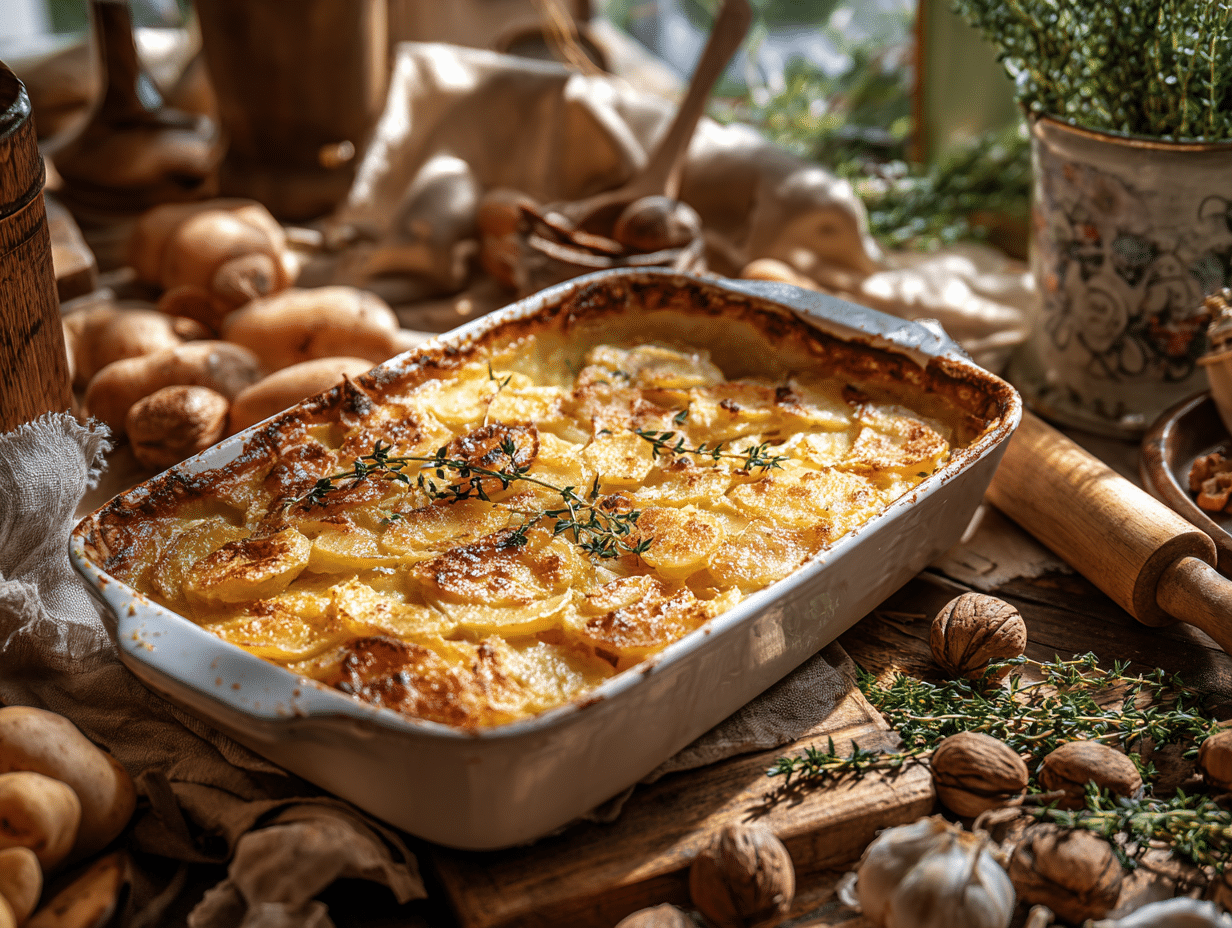
These scalloped potatoes swap dairy cream for a blended cashew sauce that thickens in the oven and coats every layer the same way a classic béchamel does. Yukon gold potatoes, thinly sliced onion, and fresh thyme do the rest of the work. It comes together faster than most baked potato dishes and holds up well for days, which makes it genuinely useful on a weeknight.
The short version of why this works
Two things matter here. First, the cashews are blended with almond milk, olive oil, nutritional yeast, and garlic into a smooth, pourable sauce — not a thick paste. That consistency lets it seep between the potato slices before baking, so the layers cook evenly rather than steaming on top and staying dry underneath. Second, slicing the potatoes to a consistent 1/8-inch thickness is non-negotiable. Thicker slices stay underdone in the center while the edges overbrown. A mandoline gets you there in two minutes; a sharp knife works if you go slowly and check as you go. Everything else in this recipe is forgiving — those two steps are not.
Smart swaps
- Cashews: Raw cashews are the base of the sauce and can’t be swapped for roasted ones — the flavor turns too strong. If you’re out, raw sunflower seeds soaked the same way produce a slightly earthier sauce that still works.
- Almond milk: Any unsweetened, unflavored plant milk works. Oat milk gives a slightly thicker result; rice milk is thinner and may need an extra tablespoon of cashews to compensate.
- Yukon gold potatoes: Russets are a workable substitute but release more starch — rinse the slices under cold water and pat them dry before layering or the sauce can turn gluey.
- Fresh thyme: Dried thyme works at about one-third the quantity. Add it directly to the sauce rather than sprinkling it between layers so it doesn’t turn dusty during the long bake.
- Nutritional yeast: Don’t skip it — it’s doing the savory, cheesy work in the sauce. Most grocery stores carry it now, often near the bulk bins or health food aisle.
Leftovers and meal prep
Leftovers keep in the fridge for up to four days in a covered container. The sauce firms up overnight, which actually makes the slices easier to cut and serve the next day — reheat individual portions in a skillet over medium-low with a splash of plant milk to loosen the sauce, about five minutes. The microwave works in a pinch but can make the potatoes a little rubbery. For freezing, let the dish cool completely, portion it into airtight containers, and freeze for up to six weeks. Thaw overnight in the fridge before reheating; don’t try to reheat from frozen or the sauce will split. If you want to prep ahead, you can blend and refrigerate the cashew sauce up to three days in advance — just give it a good stir before using since it will settle.
Troubleshooting
- Sauce is grainy after baking: The cashews weren’t soaked long enough or the blender didn’t run long enough. Soak at least four hours (or 20 minutes in just-boiled water if you’re short on time) and blend on high for a full two minutes until completely smooth before pouring over the potatoes.
- Potatoes are still firm in the center after the full bake time: Your slices were likely uneven or too thick. Push a knife straight down through the center of the dish — if there’s resistance, cover with foil and return to the oven in ten-minute increments. Next time, check thickness before layering.
- Top is browning too fast before the potatoes are cooked through: Cover the dish loosely with foil after the first 25 minutes and remove it only for the final 10 to 15 minutes to finish the top.
- Sauce is too thick and doesn’t flow between layers: Add two to three tablespoons of plant milk and blend again briefly. The sauce should pour easily off a spoon — if it plops, it’s too thick and the layers won’t cook evenly. Skip the garnish of extra thyme sprigs on top before baking — they burn and don’t add anything by the time the dish comes out.
- Dish is watery after baking: The potatoes released excess moisture, which happens most often with russets or very fresh potatoes. Next time, salt the slices lightly, let them sit for ten minutes, then pat dry before layering. If it’s already happened, uncover the dish and return it to a 400°F oven for an additional ten minutes to reduce the liquid.

Vegan Scalloped Potatoes

Equipment
- Mandoline or sharp knife
- High-speed blender
- Large saucepan
- 9x13-inch baking dish
- Aluminum foil
Ingredients
For the cashew béchamel
- 1 cup raw cashews soaked in hot water for 30 minutes, then drained
- 2 cups unsweetened almond milk or other neutral plant-based milk
- 3 tablespoons nutritional yeast adds cheesy flavor
- 2 tablespoons olive oil extra virgin preferred
- 3 cloves garlic minced
- 1 teaspoon sea salt
- ½ teaspoon ground black pepper freshly cracked
Main dish
- 2.5 pounds Yukon gold potatoes thinly sliced to about 1/8-inch using mandoline
- 1 medium yellow onion very thinly sliced
- 1 tablespoon fresh thyme leaves plus more for garnish
Instructions
- Preheat oven to 375°F (190°C).
- Prepare the cashew béchamel: In a high-speed blender, combine soaked cashews, almond milk, nutritional yeast, olive oil, garlic, salt, and black pepper. Blend on high for 1–2 minutes, until completely smooth and creamy. Set aside.
- Layer the vegetables: Lightly oil a 9x13-inch baking dish. Arrange a third of the sliced potatoes at the bottom, slightly overlapping. Top with a layer of sliced onion, a sprinkle of thyme, and one-third of the béchamel. Repeat layers two more times.
- Cover with foil and bake for 45 minutes. Then remove foil and bake another 15 minutes until bubbling and golden on top.
- Let rest for 10–15 minutes to set. Garnish with more thyme before serving.
Notes
- Cashew soak tip: In a hurry? Boil cashews for 10 minutes instead of soaking.
- Flavor boosters: Add a pinch of nutmeg to the sauce for warmth, or smoked paprika on top for a subtle smoky finish.
- Potato swap: Russet potatoes work if Yukon golds aren't available, but be sure to rinse off excess starch.
Nutrition
Common questions
Do I have to soak the cashews overnight, or is there a faster way?
No, overnight soaking isn’t required. Cover the cashews with just-boiled water and let them sit for 20 minutes — they’ll soften enough to blend completely smooth. Cold-soaking overnight also works if you’re planning ahead, but the hot-water method is just as effective for this recipe.
Can I assemble this the night before and bake it the next day?
Yes, and it works well. Assemble the full dish, cover it tightly with foil, and refrigerate overnight. Add about ten extra minutes to the covered bake time since you’re starting from cold. The potatoes may release a little more liquid than usual, but it cooks off.
How do I know when it’s actually done?
A knife inserted straight down through the center should meet no resistance — the potatoes should feel as soft as a cooked baked potato all the way through. The top should be golden and the sauce should be bubbling at the edges, not just the center.
Is this dish gluten-free?
Yes, as written it contains no gluten. Just double-check your nutritional yeast and plant milk labels if you’re cooking for someone with celiac disease, since some brands are processed in facilities that handle wheat.
Can I make this in a smaller or larger pan than the recipe calls for?
You can scale it, but pan depth matters more than surface area. Keep the potato layers no more than about two inches deep total — deeper than that and the center won’t cook through in the given time. If you’re using a wider, shallower pan, start checking for doneness about ten minutes early.
What to cook next
- Vegan Polenta Mushroom Bliss
- Hearty Plant-Based British Hotpot
- Chestnut Shepherd’s Pie Revival
- Mushroom Ale Pie Recipe