
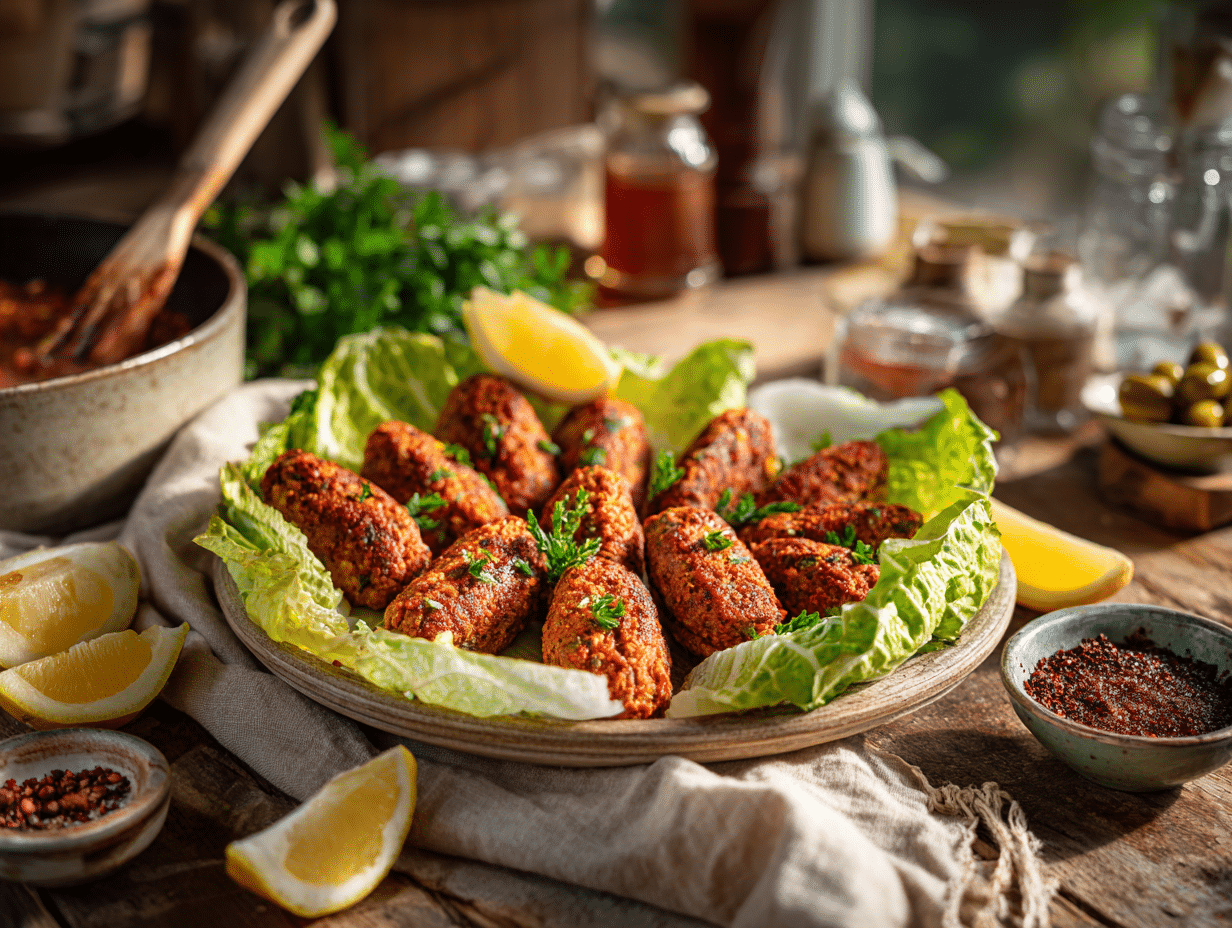
Mercimek Köftesi are Turkish red lentil and bulgur patties shaped by hand and served at room temperature — no oven, no frying. They’re a complete protein in finger-food form, and they come together from pantry staples in under an hour.
Before you start
Two things determine whether these hold together or crumble on the plate. First, cook the lentils until they are genuinely soft and nearly dry — any excess water will prevent the bulgur from absorbing properly and leave you with a sticky mess that won’t shape. Drain them well and let steam escape for a minute before adding the bulgur. Second, the resting step is not optional. Once you combine the hot lentils with the bulgur and pastes, the mixture needs at least 15–20 minutes covered so the bulgur fully hydrates and the whole thing cools enough to handle. Rush that window and the köfte will be gummy inside and fall apart when you press them.
About the ingredients
- Fine bulgur (#1 grind): This is not the coarse bulgur used in pilafs. Coarse bulgur won’t hydrate fully from residual heat alone and will leave the köfte grainy. Look for it at Middle Eastern or Turkish grocery stores, or online.
- Biber salçası (Turkish red pepper paste): Sold as sweet or hot. The sweet version is more common in this dish. If you can’t find it, a mix of tomato paste and a small amount of roasted red pepper purée is a workable substitute, though the flavor is milder.
- Tomato paste: Use a concentrated double-strength paste, not tomato sauce or crushed tomatoes — the moisture ratio matters here.
- Pomegranate molasses: Adds a low, tart sweetness that lemon juice alone doesn’t replicate. It’s worth finding; most Middle Eastern grocery stores carry it and it keeps for months in the fridge.
Common problems and fixes
- Köfte won’t hold their shape: The mixture is too wet. Spread it on a wide plate or baking sheet for 10 minutes to let more moisture evaporate, then try shaping again. Skip the garnish of extra olive oil drizzled on top before serving — not worth the extra dish and it makes them slippery to pick up.
- Mixture is too stiff to shape smoothly: Add olive oil a teaspoon at a time and knead it in. A small amount of oil loosens the texture without adding moisture that will break the structure.
- Bland flavor after resting: Taste after the mixture cools completely — spices mellow as it sits. Adjust with more lemon juice first, then salt, then a pinch of cumin. Don’t season only when the mixture is hot.
- Lentils turned to mush during cooking: This is actually fine and expected. The lentils should be fully broken down. If they’re still holding their shape as whole lentils, cook them longer before adding the bulgur.
- Köfte dry out quickly on the serving plate: Cover the platter loosely with plastic wrap or a damp paper towel until you’re ready to serve. Exposure to air dries the surface fast, especially in a warm kitchen.
Storage and reheating
Store shaped köfte in an airtight container in the refrigerator for up to 4 days. Separate layers with parchment so they don’t stick together. They’re best eaten at room temperature, so pull them out 20–30 minutes before serving rather than eating them cold straight from the fridge. For longer storage, freeze them on a parchment-lined tray until solid, then transfer to a freezer bag — they keep well for up to 2 months. Thaw overnight in the refrigerator. These do not reheat well in a microwave, which makes them dense and rubbery; room-temperature thawing is the right approach. The unformed mixture can also be refrigerated for up to 2 days before shaping if you want to prep ahead.

Vegan Turkish Lentil Köfte (Mercimek Köftesi)

Equipment
- Medium saucepan with lid
- Fine mesh sieve
- 10-inch skillet
- Large mixing bowl
- Wooden spoon or silicone spatula
- Chef’s knife and cutting board
- Measuring cups and spoons
- Citrus juicer
- Serving platter
Ingredients
For the Köfte Mixture:
- 1 cup dry red lentils pick over and rinse until water runs clear
- 2 ½ cups water or low-sodium vegetable broth broth adds depth; water yields a cleaner lentil flavor
- 1 cup fine bulgur (köftelik bulgur) look for Turkish köftelik bulgur; fine grind is essential
- 2 tbsp olive oil for sautéing; neutral or light olive oil preferred for frying
- 1 medium yellow onion, finely diced about 1 cup diced
- 1 ½ tbsp tomato paste double-concentrated if available for deeper flavor
- 1 tbsp Turkish mild red pepper paste (biber salçası) or sub 1/2 tbsp extra tomato paste + 1/2 tsp Aleppo pepper
- 1 ½ tsp ground cumin freshly ground for best aroma
- 1 tsp Aleppo pepper (pul biber) adjust to taste; mild, fruity heat
- 1 ¼ tsp kosher salt, divided Diamond Crystal; reduce to 3/4–1 tsp if using Morton
- ½ tsp freshly ground black pepper
- 4 whole scallions, thinly sliced white and green parts
- 1 cup flat-leaf parsley, finely chopped loosely packed; about 1/2 cup when finely chopped
- 2 tbsp fresh mint, finely chopped (optional) adds cooling lift
- 3 tbsp fresh lemon juice freshly squeezed
- 1 tsp pomegranate molasses (optional) subtle sweet-tart depth
- 1 tbsp extra-virgin olive oil for finishing and sheen
For Serving:
- 12–16 leaves romaine or little gem lettuce washed and well-dried
- 1–2 wedges lemon for squeezing at the table
- 1 tsp extra Aleppo pepper and ground sumac to taste; for garnish
Instructions
- Prep the Aromatics and Herbs (about 20 minutes prep total): Finely dice the onion; thinly slice the scallions; finely chop the parsley and mint. Juice the lemon. Rinse the lentils in a fine-mesh sieve until the water runs clear; drain well.
- Cook the Lentils (16 minutes): In a medium saucepan, bring the water or broth to a boil (212°F / 100°C). Stir in the rinsed red lentils, reduce to a gentle simmer, and cook uncovered for 16 minutes, stirring occasionally, until the lentils are soft and beginning to break down into a porridge-like consistency. If foam forms, skim it off. The mixture should be loose but not watery.
- Hydrate the Bulgur (11 minutes off heat): Remove the saucepan from heat. Stir in the fine bulgur until evenly moistened. Cover with a lid and let it stand for 11 minutes so the bulgur hydrates and the mixture thickens. Do not add extra liquid; it should plump from the residual heat.
- Sauté the Onion (7 minutes): In a 10-inch skillet over medium heat, warm 2 tbsp olive oil until shimmering (about 320–340°F / 160–170°C surface temperature if using an infrared thermometer). Add the diced onion and 1/2 tsp kosher salt. Cook for 7 minutes, stirring, until translucent with light golden edges and a sweet aroma—this mellows the bite and builds savoriness.
- Bloom the Pastes and Spices (1 minute): Add the tomato paste, pepper paste, cumin, Aleppo pepper, and black pepper to the skillet. Cook, stirring constantly, for 1 minute until the paste turns brick-red, glossy, and smells toasty. Blooming concentrates flavor and removes raw acidity.
- Combine and Season: Scrape the hot aromatic paste into the lentil–bulgur base. Add the sliced scallions, chopped parsley and mint, the remaining kosher salt (to taste), lemon juice, pomegranate molasses (if using), and 1 tbsp extra-virgin olive oil. Mix thoroughly with a spoon or clean hands until the color is uniform and the mixture holds together when pressed. Let it cool just until warm to the touch—warm shaping yields smoother köfte.
- Shape the Köfte: Lightly moisten your hands. Pinch off golf-ball-size portions (about 2 tbsp each), then press and roll between your palms to form oval, finger-length torpedoes with shallow indentations. The dimples catch lemon juice and spices when serving. If the mix sticks, wet your hands again or add a teaspoon more lemon juice or oil for glide.
- Plate and Garnish: Arrange the köfte on a platter lined with crisp romaine or gem lettuce leaves. Dust with a pinch of Aleppo pepper and sumac for color and brightness. Serve with lemon wedges for squeezing at the table—the perfect final lift.
- Optional: Warm some flatbreads at 350°F / 175°C for 5–7 minutes to serve alongside. This optional step is not required for timing.
Notes
Mary’s Tips:
- Texture Control: Use fine (köftelik) bulgur only. Medium or coarse bulgur won’t hydrate properly and will feel gritty.
- Salt Matters: If using Morton kosher salt, reduce the total to 3/4–1 tsp; it’s denser than Diamond Crystal.
- Paste Substitutions: If Turkish red pepper paste is unavailable, mix extra tomato paste with Aleppo (pul biber) or a mild chili flake. Avoid smoked paprika, which shifts the flavor profile.
- Herb Freshness: Keep herbs dry before chopping to avoid watering down the mix. Fold them in after the aromatic paste to preserve their color and aroma.
- Shaping Trick: Slightly warm mixture shapes best. If it crumbles, add a teaspoon of warm water or lemon juice; if too soft, chill it 10 minutes.
- Make it Spicier: Add an extra 1/2–1 tsp Aleppo pepper or a pinch of hot isot pepper.
- Gluten-free Adaptation: Sub fine quinoa flakes for bulgur (start with 3/4 cup and add gradually), allowing a few extra minutes to hydrate.
- Oil Choices: Sauté with light olive oil and finish with a peppery extra-virgin for both depth and sheen.
Serving Suggestions:
- Plate on crisp lettuce, alternating pale green leaves with deep brick-red köfte for contrast. Finish with a lace of pomegranate molasses and a sprinkle of sumac.
- Pair with pickled vegetables, fresh cucumbers, and olives for a full meze spread.
- Drinks: Turkish tea, a chilled lemon–mint spritz, or a plant-based ayran (unsweetened vegan yogurt, cold water, pinch of salt).
- Visual Cues: Köfte should be matte with a gentle sheen, hold their shape, and release a warm aroma of cumin, pepper, and herbs when broken.
Culinary Context:
Mercimek Köftesi is a staple of Turkish home cooking and meze culture—humble pantry ingredients transformed by careful technique. The red lentils symbolize comfort; the pepper paste and lemon reflect Anatolia’s love of bold-yet-balanced flavors. I first learned to make these in a bustling Istanbul kitchen where they were shaped while still warm and eaten standing, with laughter and fresh lemon.Optional Advanced Instructions:
- Make-ahead: Cook the lentil–bulgur base and sauté the aromatic paste up to 24 hours in advance; chill separately. Warm the paste gently and combine with herbs just before shaping.
- Parallel Workflow: To save time, sauté the onion and bloom the pastes while the lentils simmer; just ensure the total hydration time for bulgur remains 11 minutes off heat.
- Equipment Swap: Mix with a silicone spatula or the paddle attachment of a stand mixer on low for 30–60 seconds—avoid over-mixing, which can make the köfte pasty.
Nutrition
Your questions, answered
Can I use green or brown lentils instead of red?
No — red lentils are essential here. Green and brown lentils hold their shape after cooking and won’t break down into the smooth, cohesive paste that binds the köfte together.
Are these köfte actually filling, or more of a snack?
A serving of four to five köfte provides a meaningful amount of plant protein from both the lentils and the bulgur together. Pair them with a side of hummus or a bulgur salad and it’s a complete, satisfying meal rather than just an appetizer.
My bulgur is still crunchy after resting — what went wrong?
The lentils weren’t hot enough when you added the bulgur, or the bowl wasn’t covered tightly. The bulgur relies entirely on trapped steam and residual heat to hydrate — if either is lost, it stays gritty. Reheat the mixture gently in a pan with a splash of water, cover, and let it steam for another 10 minutes.
Can I make these gluten-free?
Not with a direct swap — bulgur is structural here, not just a filler, and removing it changes the texture entirely. Some cooks use very finely ground cooked quinoa as a substitute, though the result is softer and less traditional.
What do I serve alongside these to make a full meal?
Flatbread, a simple tomato and cucumber salad, and a scoop of hummus or white bean dip round this out into a protein-complete spread. The köfte themselves are relatively low in fat, so a tahini-based sauce on the side also helps with satiety.
More plant-based recipes to try
- Mediterranean Lentil Power Bowl
- Lebanese Vegan Grape Leaves
- Brightened Bulgur Wheat Salad
- Vibrant Vegan Fattoush Salad