
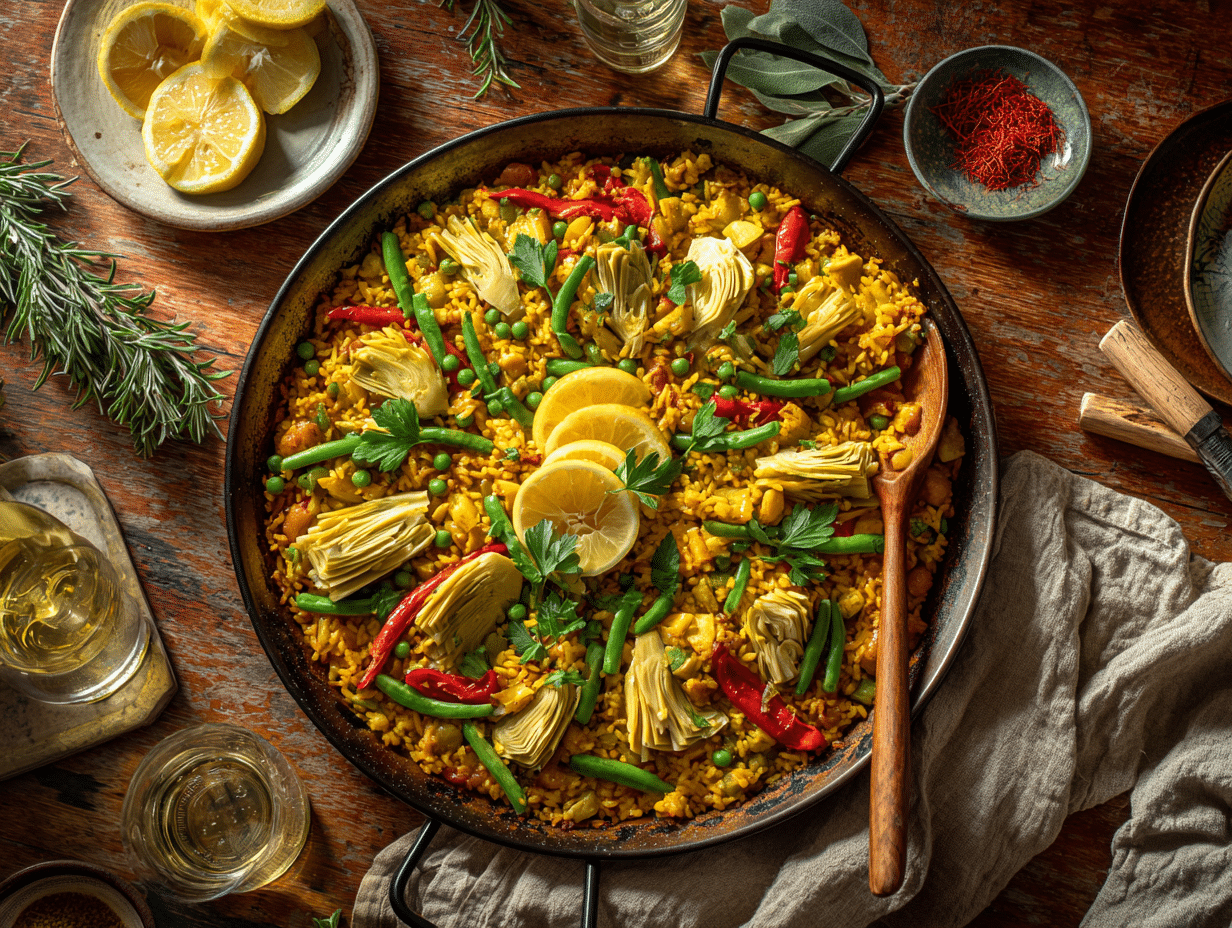
This is a saffron-scented rice dish cooked in a single wide pan with artichokes, peas, and a slow-cooked sofrito of tomato and pepper. The bottom layer of rice crisps against the pan into socarrat — that’s the whole point, and it’s worth the effort. One pan, real flavor, feeds a crowd.
The technique that matters
Two things decide whether this works. First, the sofrito has to cook down until it’s jammy and concentrated — not just softened. Rushing it means the rice won’t have enough flavor base to carry the whole dish. Give it a full 10–12 minutes over medium heat, stirring occasionally, until the tomato darkens and the mixture looks almost paste-like. Second, once the stock goes in, leave the rice alone. No stirring, no adjusting grains. Stirring releases starch and kills any chance of socarrat. In the last 2–3 minutes, turn the heat up slightly and listen for a faint crackling from the bottom of the pan — that’s the crust forming. Pull it off heat the moment you smell toasted rice, not burned rice. Those are two very different smells and you’ll know the difference fast.
If something goes sideways
- Rice is cooked but there’s still liquid pooling: Remove the lid or foil if you’re using any, crank the heat to medium-high for 2–3 minutes to drive off the excess. Don’t stir.
- Bottom burned before rice finished cooking: Your heat was too high or your pan is thin. Next time, use a heavier pan and keep the flame at a steady medium once the stock is in. For now, serve from the top and leave the scorched layer behind — the rest is usually fine.
- Rice is mushy: Too much liquid or the wrong rice variety. Bomba and Calasparra absorb more liquid than standard short-grain; if you substituted regular short-grain rice, reduce the stock by about 10% next time.
- No socarrat forming: The pan may be too thick or the heat too low at the finish. After the rice looks done on top, give it 90 seconds on medium-high with no lid. If it still won’t crust, it’s still a good paella — just not a crispy one.
- Saffron flavor is barely there: Saffron needs to bloom. Steep the threads in 2–3 tablespoons of warm (not boiling) stock for 10 minutes before adding. Dropping dry threads straight into a big pot of liquid wastes most of the flavor.
Substitutions that actually work
- Saffron: There’s no real substitute for saffron’s flavor, but if cost is the issue, use a small pinch of turmeric for color and add an extra half-teaspoon of smoked paprika for depth. The dish will taste different but still good.
- Artichoke hearts: Frozen or canned (packed in water, drained) work well here. Fresh artichokes are more work and don’t meaningfully improve the final result once they’re cooked into the rice.
- Fresh peas: Frozen peas are a straight swap — add them in the last 5 minutes so they don’t turn gray and mushy.
- Bomba or Calasparra rice: If you can’t find either, arborio works in a pinch. Use slightly less stock and watch the liquid carefully — arborio absorbs faster and can go mushy quickly. Skip the garnish of extra lemon wedges on the pan — not worth the extra cutting board and dish.
Make-ahead notes
Paella is best eaten straight from the pan — the socarrat softens as it sits and doesn’t come back. That said, the sofrito can be made up to 3 days ahead and kept in a sealed container in the fridge, which cuts active cooking time significantly. Leftover cooked paella keeps in the fridge for up to 3 days. Reheat it in a covered skillet over medium-low with a splash of vegetable stock (about 2 tablespoons per serving) to rehydrate the rice without drying it out. Freezing is not recommended — the rice texture degrades and turns grainy after thawing.

Vegan Paella Valenciana with Artichokes and Peas

Equipment
- 15-inch paella pan (or wide, shallow skillet 12–14 inch)
- Ladle
- Wooden spoon or flat-edged spatula
- Measuring cups and spoons
- Small pot or kettle for warming stock
- Mortar and pestle (or small bowl) for crushing saffron
- Tongs
- Instant-read thermometer (optional)
- Aluminum foil or clean kitchen towel
Ingredients
- 5 cups low-sodium vegetable stock, kept hot (4 1/2 cups plus 1/2 cup reserve) use a flavorful, clear stock; homemade preferred
- ½ teaspoon saffron threads, lightly crushed Spanish saffron for best color and aroma
- 1 sprig fresh rosemary traditional Valencian touch; keep whole
- 1 piece bay leaf dried
- 3 tablespoons extra-virgin olive oil Spanish EVOO if available
- 2 cups artichoke hearts, quartered and well-drained from brine, not oil-packed; or see fresh artichoke option below
- 8 small fresh artichokes, trimmed and quartered (optional substitute) about 1 lb; use instead of jarred when in season
- 6 ounces flat green beans (Romano), cut into 2-inch pieces Judías verdes; about 2 cups
- 1 medium yellow onion, finely chopped about 1 cup
- 1 ¼ teaspoons kosher salt, divided adjust to taste
- 4 cloves garlic, minced freshly minced for best aroma
- 1 cup ripe tomatoes, grated or finely chopped heirloom or vine-ripe for sweetness
- 1 ½ teaspoons smoked paprika (pimentón de la Vera, dulce) sweet smoked paprika for depth
- ½ cup dry white wine (vegan), optional Albariño or sauvignon blanc; for deglazing
- 1 ½ cups bomba or Calasparra rice do not rinse for traditional texture; short-grain Spanish rice
- 1 cup green peas (fresh or frozen) no need to thaw if frozen
- ½ cup roasted red bell pepper, cut into strips optional, for color and sweetness
- ¼ teaspoon freshly ground black pepper
- 1 medium lemon, cut into wedges for serving
- ¼ cup fresh flat-leaf parsley, chopped for garnish
- 1 tablespoon extra-virgin olive oil, for finishing optional drizzle before serving
Instructions
- Heat and Perfume the Stock: In a small pot, bring 5 cups vegetable stock to a bare simmer, about 185–195°F (85–90°C). Add the saffron, rosemary sprig, and bay leaf. Keep hot over low heat; cover to prevent evaporation. Infuse 5–10 minutes while you begin the sauté.
- Sear the Artichokes and Beans: Set a 15-inch paella pan over medium heat. Add 2 tablespoons olive oil. When the oil shimmers, add the artichoke hearts and green beans. Season with a pinch of salt. Sauté, tossing occasionally, until lightly blistered and just tender, 3–4 minutes. Transfer to a plate, leaving the pan’s fond (browned bits) behind.
- Build a Jammy Sofrito: Add the remaining 1 tablespoon olive oil to the pan. Stir in the onion and 1/4 teaspoon of the kosher salt. Cook over medium heat, stirring, until translucent and lightly golden at the edges, 5–6 minutes—it should smell sweet and mellow. Add the garlic and cook 30 seconds, just until fragrant. Stir in the tomatoes and cook until thick and jammy, 3–4 minutes. Sprinkle in the smoked paprika and toast 20 seconds (it will turn brick-red and aromatic). Deglaze with the white wine (if using); simmer until nearly absorbed, 1–2 minutes.
- Toast the Rice: Add the rice and stir to coat every grain in the sofrito, 1 minute. You’ll see the rice turn glossy—this protects the grains and keeps them distinct.
- Build and Simmer the Paella: Return the artichokes and green beans to the pan. Fish the rosemary and bay from the stock (optional), then pour in 4 1/2 cups of the hot saffron stock. Season with the remaining 1 teaspoon kosher salt and the black pepper. Shake the pan to distribute rice evenly, then do not stir again. Maintain a lively simmer over medium to medium-low heat; the surface should gently percolate. Cook 14–16 minutes, rotating the pan occasionally for even heat. If the pan looks dry before the rice is al dente, add stock from your 1/2-cup reserve a little at a time.
- Finish the Vegetables: Scatter the peas and the roasted red pepper (if using) across the surface. Cook until the peas are vibrant green and tender, 3 minutes.
- Create the Socarrat: Increase heat to medium-high for 2–3 minutes to form the crispy bottom crust. Listen for a gentle crackling and notice a toasty aroma—this means the socarrat is forming. If you smell burning or see wisps of smoke, reduce the heat immediately. Oven alternative: For very even cooking, you may transfer the pan to a preheated 400°F (205°C) oven for the final 5–7 minutes before the socarrat step, then return to the stovetop for 2 minutes to form the crust.
- Rest and Garnish: Remove from heat. Drizzle with the finishing olive oil, cover loosely with foil or a clean towel, and rest 5 minutes to let the rice relax and finish steaming. Discard herb stems if present. Shower with parsley and serve with lemon wedges.
Notes
- Stock Intensity: A robust stock is the backbone of flavor. Simmer onion skins, fennel tops, parsley stems, and a pinch of tomato paste in your stock for 20 minutes for an extra savory lift.
- Saffron Extraction: Lightly crush and bloom in hot stock (not boiling) to release color without bitterness.
- No Stirring After Liquid: Stirring releases starch and prevents a proper crust. Instead, rotate the pan for even cooking.
- Rice Choice: Bomba or Calasparra absorb more liquid without breaking. If using Arborio, reduce total stock to about 4 cups and watch closely.
- Artichokes: Fresh are sublime in spring. If using fresh, rub cut surfaces with lemon and briefly blanch 2 minutes to keep color.
- Speed Up Onions: A small pinch of salt at the start draws moisture and helps them soften faster.
- Heat Management: Aim for a steady simmer; too hard and the bottom scorches before the top cooks.
- For the most even cooking, a wide, shallow pan is essential. Avoid overcrowding; if your pan is smaller, reduce quantities proportionally.
Serving Suggestions:
Bring the paella pan straight to the table for dramatic effect. The rice should be saffron-gold with pops of emerald peas and ruby pepper. Garnish with parsley and nestle lemon wedges around the rim. For plating, use a flat spoon to lift broad scoops, scraping down to include a bit of socarrat for each guest. Pair with a crisp, chilled Spanish white (vegan) or sparkling water with lemon and a pinch of sea salt.Culinary Context:
Paella Valenciana traditionally features local rice, vegetables, and often rabbit or chicken. This vegan rendition leans into the heritage of Valencia’s huerta (market gardens), spotlighting artichokes, beans, and peas with a classic rosemary perfume. The technique—especially the sofrito and socarrat—keeps it unmistakably Valencian.Optional Advanced Instructions:
- Make-Ahead: The sofrito can be prepared up to 3 days in advance and refrigerated. Rewarm before adding rice.
- Parallel Prep: While onions soften, trim beans and chop parsley to save time.
- Beginner Alternative: Finish the last 5–7 minutes in a 400°F (205°C) oven for gentler, more even heat, then return to the stovetop briefly for socarrat.
Timing:
- Prep Time: 25 minutes (0 hours 25 minutes)
- Cook Time: 35 minutes (0 hours 35 minutes)
- Total: 60 minutes (1 hour 0 minutes)
Nutrition
Common questions
Can I make this without a paella pan?
Yes — a 12-inch or larger stainless steel or carbon steel skillet works well. The key is a wide, shallow pan with a flat bottom; avoid deep pots because the rice layer will be too thick to cook evenly and socarrat won’t form properly.
What kind of rice do I actually need?
Bomba or Calasparra rice are the right choices — both are short-grain Spanish varieties that absorb a lot of liquid without turning mushy. They’re available at most well-stocked grocery stores, Spanish delis, and online; it’s worth tracking them down because the texture difference is real.
How do I know when the socarrat is ready without burning everything?
Listen and smell. You’ll hear a quiet crackling from the bottom of the pan, and the steam coming off will shift from watery to slightly toasty. Pull the pan off heat at that point — if you wait until you can clearly smell burning, it’s already too late.
My grocery store only has ground saffron in a jar. Will that work?
It works, but use about half the amount called for since ground saffron is more concentrated than threads. Stir it directly into the warm stock rather than blooming it separately.
Can I double the recipe for a larger group?
You can, but you’ll need a significantly larger pan — at least 15–16 inches. Stacking more rice in the same pan ruins the socarrat and leads to uneven cooking. If you don’t have a bigger pan, it’s better to make two separate batches.
Is this recipe gluten-free?
Yes, as written it is naturally gluten-free. Just double-check your vegetable stock label, since some brands add wheat-based ingredients or are processed in facilities that handle gluten.
If you liked this one
- Smoky Spanish Chickpea Stew
- Mediterranean Orzo Artichoke Salad
- Louisiana Style Vegan Gumbo
- Spring Pea Mint Risotto