
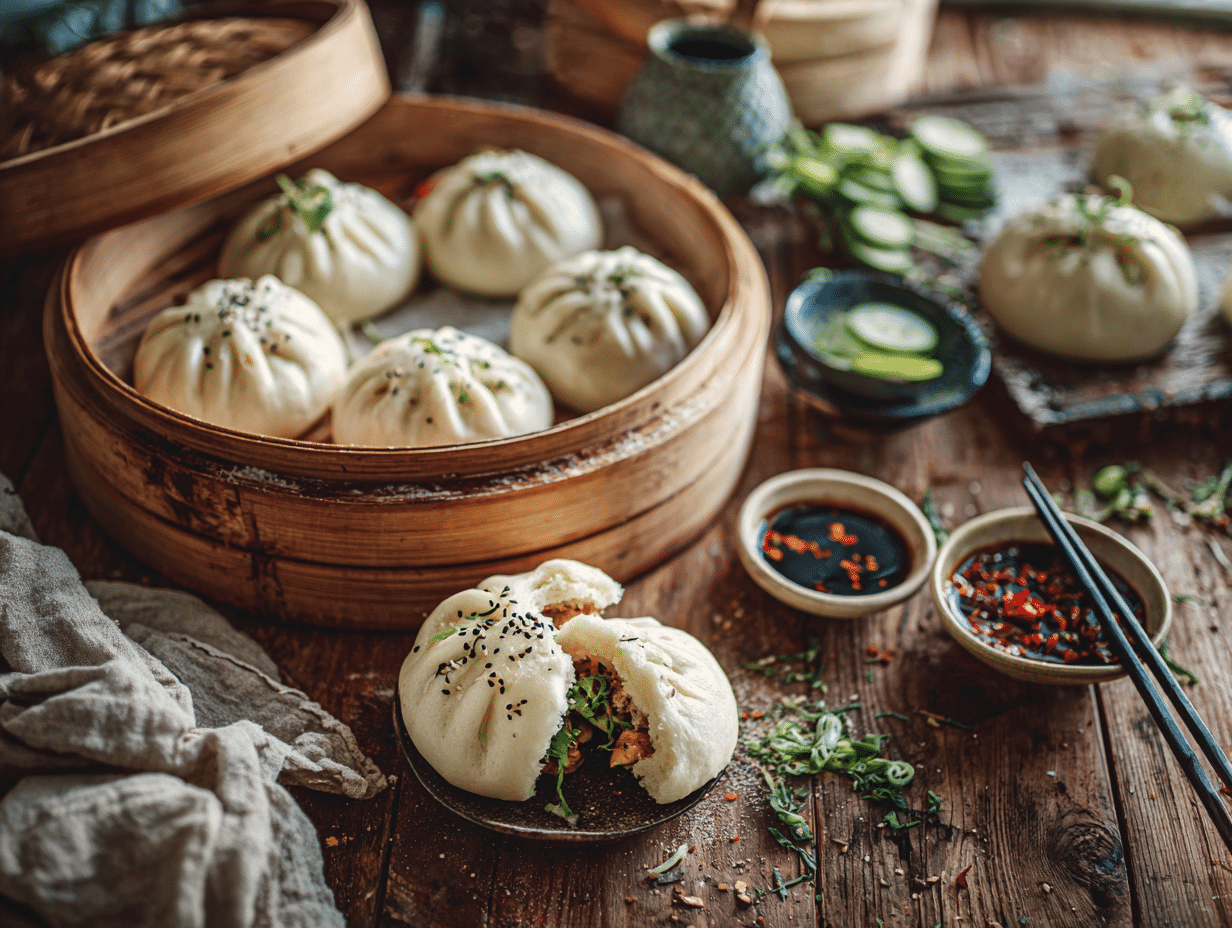
These are soft, yeasted steamed buns filled with a savory mushroom-tofu mixture — the kind of thing that looks impressive but is mostly just patient waiting while dough rises. They take a couple of hours start to finish, and the payoff is a batch of genuinely satisfying buns that cost almost nothing to make from pantry staples.
Ingredient notes
- Shaoxing wine: Dry sherry is a solid swap at a fraction of the cost. In a pinch, a small splash of rice vinegar plus a pinch of sugar gets you close enough.
- Water chestnuts: Fresh are great, canned work fine. If you can’t find either, diced jicama or even finely chopped celery gives you that same crunch that keeps the filling from going mushy.
- Firm tofu: Press it well — at least 20 minutes under something heavy. Extra-firm saves you that step. Silken tofu won’t work here; it makes the filling wet and loose.
- Sesame oil: Use it as a finishing oil, not for cooking. A little goes a long way, so the small bottle is worth buying. No real substitute for the flavor, but you can skip it if needed — the filling still works.
- Cake flour or low-protein flour: If your grocery store only stocks all-purpose, use it — the buns will be slightly less pillowy but still good. Bread flour will make them chewy and dense, so avoid it.
The technique that matters
The single thing that separates flat, dense buns from light, fluffy ones is how you handle the dough after shaping. Once you’ve filled and pleated each bun, set it on a square of parchment and let it rest for 15 minutes before it goes into the steamer — this second proof is short but it matters. Skipping it means the dough is too tight and the buns won’t puff properly in the steam. Also, when you start steaming, keep the lid slightly cracked for the first two minutes, then close it fully. This gradual heat-up prevents the sudden blast of steam from causing the surface to wrinkle or collapse. When the timer goes off, don’t lift the lid immediately — turn off the heat and wait five minutes before opening, or the sudden temperature drop will make the buns shrink and dimple.
What can go wrong
- Buns stick to the steamer basket: Parchment squares under each bun fix this completely. Cut them slightly larger than the bun base so they’re easy to lift out.
- Filling leaks during steaming: Usually means the pleats weren’t sealed tightly enough, or the filling was too wet. Squeeze any excess liquid from the tofu and mushrooms before mixing, and pinch the dough closure firmly — give it a little twist at the top.
- Dough doesn’t rise: Your yeast may be old or your water too hot. Water above 115°F kills yeast. If the mixture doesn’t look foamy after 10 minutes, start over with fresh yeast before you invest time in the rest of the recipe.
- Buns turn out gummy inside: They’re understeamed. Gummy texture means the dough is still raw at the center. Add 3–4 minutes and check again — bun size varies and affects cook time.
- Buns collapse after steaming: Almost always caused by opening the lid too soon. The five-minute rest off the heat with the lid on is not optional — skip the garnish instead, not this step.
Keeping and reheating
Leftover buns keep in an airtight container in the fridge for up to four days. For longer storage, freeze them in a single layer on a baking sheet until solid, then transfer to a zip-lock bag — they’ll keep for up to two months. Reheat refrigerated buns by steaming for 4–5 minutes or microwaving with a damp paper towel loosely draped over them for about 60–90 seconds. Frozen buns go straight from the freezer into the steamer for 8–10 minutes; no need to thaw first. Avoid reheating in a dry oven — it toughens the exterior and dries out the filling.

Vegan Baozi (Chinese Steamed Buns with Veggie Filling)

Equipment
- Large mixing bowl
- Stand mixer with dough hook (optional)
- Bench scraper or knife
- Rolling Pin
- 12 parchment squares (4-inch)
- 10-inch bamboo steamer or metal steamer insert with lid
- Large skillet or wok
- Measuring cups and spoons
- Clean kitchen towel or plastic wrap
- Instant-read thermometer (for water temperature)
Ingredients
For the Dough:
- 3 ¼ cups unbleached all-purpose flour use a soft, low-protein AP flour if possible for extra tenderness
- 2 tablespoons granulated sugar superfine sugar dissolves more evenly
- 2 ¼ teaspoons instant yeast one standard packet; use fresh, within date
- 1 ½ teaspoons baking powder aluminum-free for a clean flavor
- ½ teaspoon fine sea salt helps balance sweetness and enhance flavor
- 1 ⅛ cups warm water 105–110°F (40–43°C) to activate yeast without killing it
- 1 tablespoon neutral oil grapeseed, canola, or refined peanut oil
- ¼ cup all-purpose flour, for dusting use as needed to prevent sticking while shaping
For the Filling:
- 14 ounces firm tofu, pressed and crumbled press 15 minutes to remove excess moisture; Hodo or House Foods are great
- 1 tablespoon neutral oil for sautéing
- 12 ounces cremini mushrooms, very finely chopped chop to rice-sized bits for a juicy, cohesive filling
- 4 cups napa cabbage, very finely chopped about 1/2 medium head; squeeze lightly to remove excess moisture
- 1 cup carrot, shredded freshly shredded for best texture
- 4 whole scallions, thinly sliced (whites for filling; greens for garnish) divide whites and greens
- 3 cloves garlic, minced fresh for best aroma
- 1 tablespoon fresh ginger, minced use young ginger for a less fibrous bite
- 1 tablespoon Shaoxing wine or dry sherry as a substitute
- 3 tablespoons light soy sauce use a naturally brewed brand for depth
- 1 teaspoon granulated sugar balances savory notes
- ½ teaspoon ground white pepper classic aromatic heat
- 1 tablespoon toasted sesame oil adds nutty finish
- ½ cup water chestnuts, diced for a delicate crunch
- 2 tablespoons cornstarch for thickening and binding the filling
- 3 tablespoons water for the cornstarch slurry
For the Dipping Sauce:
- ¼ cup Chinese black vinegar (Chinkiang) essential for classic tang
- 1 tablespoon light soy sauce adds salinity and umami
- 1-2 teaspoons chili crisp adjust to heat preference
- 1 teaspoon fresh ginger, julienned optional but highly recommended
For Steaming & Finishing:
- 1 teaspoon neutral oil, for brushing lightly oil parchment or steamer if not nonstick
- 1 tablespoon toasted sesame seeds optional garnish
Instructions
Make the Dough:
- In a large bowl, whisk together 3 1/4 cups flour, 2 tablespoons sugar, 2 1/4 teaspoons instant yeast, 1 1/2 teaspoons baking powder, and 1/2 teaspoon fine sea salt until evenly combined.
- Add 1 1/8 cups warm water (105–110°F / 40–43°C) and 1 tablespoon neutral oil. Stir with chopsticks or a spatula until a shaggy dough forms, about 2–3 minutes.
- Rest (autolyse) the dough for 10 minutes to hydrate the flour—this makes kneading easier and buns fluffier.
Knead to Smoothness:
- Hand-knead on a lightly floured surface for 8–10 minutes until the dough is silky-smooth and elastic. It should feel supple and slightly tacky but not sticky. Aim for a dough temperature around 78–82°F (25–28°C).
- Stand mixer option: Mix on low with a dough hook for 6–8 minutes (speed 2) until smooth. If the dough climbs the hook and smears, pause and scrape down.
First Rise (Bulk Fermentation):
- Lightly oil a bowl, place the dough inside, and cover with a towel or plastic wrap. Let rise in a warm, draft-free spot at about 75–80°F (24–27°C) until doubled in size, 60–75 minutes. Sensory cue: a gentle finger press should slowly spring back, leaving a slight indent.
Prepare the Filling:
- While the dough rises, press the tofu for 15 minutes, then crumble it into small, pea-sized bits.
- Heat 1 tablespoon neutral oil in a large skillet or wok over medium-high heat until shimmering. Add 12 ounces finely chopped mushrooms; sauté until they release moisture and turn deep brown at the edges, 4–5 minutes. Aromatic cue: nutty, roasty aroma.
- Add 4 cups chopped Napa cabbage and 1 cup shredded carrot; cook until just wilted, 2–3 minutes.
- Stir in the scallion whites, 3 minced garlic cloves, and 1 tablespoon minced ginger; sauté 30 seconds until fragrant.
- Deglaze with 1 tablespoon Shaoxing wine (or dry sherry), scraping up browned bits, about 30 seconds.
- Add crumbled tofu, 3 tablespoons light soy sauce, 1 teaspoon sugar, and 1/2 teaspoon white pepper; toss to combine. Stir in 1 tablespoon toasted sesame oil and 1/2 cup diced water chestnuts.
- Mix 2 tablespoons cornstarch with 3 tablespoons water. Stir the slurry into the filling and cook 1 minute until glossy and cohesive. Transfer to a tray to cool completely (10–15 minutes). Cool filling prevents soggy buns.
Portion the Dough:
- Punch down the risen dough to deflate. Turn out onto a lightly floured surface and knead briefly (30 seconds) to smooth.
- Shape into a 12–14 inch log and cut into 12 equal pieces (about 2 ounces each). Keep pieces covered with a towel to prevent drying.
Roll Wrappers:
- Working one piece at a time, flatten into a disk. Using a rolling pin, roll the edges thinner than the center: rotate the dough with one hand while rolling with short strokes with the other, keeping a slightly thicker belly in the middle. Aim for 3 1/2–4 inch rounds, about 1/8 inch thick at the edges.
Fill and Pleat:
- Place 2 tablespoons cooled filling in the center. Pleat by making small folds around the edge, gathering toward the center with 10–14 pleats, then twist to seal. Alternative: simply pinch to seal without pleats for a smooth look.
- Set each bun seam-side up on a 4-inch parchment square. Keep covered while shaping the rest.
Second Proof:
- Let shaped buns rest until slightly puffy, 15–20 minutes. They should feel lighter and springy to the touch—don’t overproof or they may collapse after steaming.
Steam:
- Bring water to a rolling boil (212°F / 100°C) in a wok or pot fitted with a bamboo or metal steamer. Line steamer with parchment squares (lightly oiled if needed). Arrange 6 buns per 10-inch tier with space to expand.
- Cover tightly. Steam over steady medium-high heat for 12 minutes per batch. Do not lift the lid during steaming.
- When time is up, turn off heat and let buns rest, covered, for 5 minutes to set the crust and prevent wrinkling. Then crack the lid for 1–2 minutes to release steam gently.
- Total cooking time assumes 2 batches: about 12 minutes per batch (24 minutes) plus ~10 minutes for filling sauté = ~35 minutes.
Make the Dipping Sauce and Serve:
- Stir together 1/4 cup black vinegar, 1 tablespoon light soy sauce, 1–2 teaspoons chili crisp, and 1 teaspoon julienned ginger.
- Garnish buns with reserved scallion greens and a sprinkle of toasted sesame seeds. Serve hot with dipping sauce; the buns should be glossy, bouncy, and release a fragrant puff of steam when torn open.
Notes
Mary’s Tips:
- Flour Choice: A softer AP flour (lower protein) makes a more tender, snowy bun. If using bread flour, add 1 extra teaspoon oil and extend the rest by 5 minutes.
- Water Temperature: Keep at 105–110°F (40–43°C). Too hot will kill yeast; too cold slows rise.
- Faster Caramelization: For deeper mushroom flavor, spread them in an even layer and avoid stirring for the first 2 minutes to brown properly.
- Substitutions: Swap cremini with shiitake for extra umami; replace Napa cabbage with finely chopped bok choy; use tamari for gluten-free soy sauce and certified GF baking powder for gluten-sensitive diners (dough will be less traditional).
- Bamboo vs. Metal: Bamboo absorbs condensation for smoother buns. With a metal lid, wrap it in a towel to catch drips.
- No Rolling Pin? Use a straight-sided glass or a clean bottle; the key is thinner edges and a slightly thicker center.
- Freeze for Later: Freeze shaped, proofed buns on a tray, then bag. Steam from frozen 14–15 minutes.
Serving Suggestions:
Plate buns on a bamboo steamer lid or warm platter lined with a banana leaf for contrast. Sprinkle scallion greens and sesame seeds. Offer small dipping bowls of black vinegar-chili crisp and a side of quick-pickled cucumbers. Pair with hot jasmine tea or a chilled oolong. Perfectly cooked bao are pale, glossy, and gently domed; the crumb is fluffy and slightly chewy, and the filling is juicy with ginger-sesame aroma.Culinary Context:
Baozi are a beloved staple across northern China, enjoyed at breakfast stalls and family tables alike. This plant-based rendition leans on Buddhist vegetarian traditions, building savoriness with mushrooms, soy, and sesame. My first bao lesson was from a Beijing cook who repeated: “Thin edges, thick center”—advice that ensures a generous, juicy core without leaks.Optional Advanced Instructions:
- Make-Ahead: Cook filling up to 2 days in advance; chill well so it’s firm and easy to wrap.
- Overnight Dough: After the first knead, refrigerate 8–12 hours (cold ferment). Bring to room temp, then proceed—flavor improves and shaping is easier.
- Batch Steaming: If using a multi-tier steamer, rotate tiers halfway through for even cooking.
- Beginner Alternative: If pleating is tricky, seal like a dumpling and place seam-side down for a smooth top.
Timing (matches instructions):
- Prep Time: 2 hours 10 minutes (10 min autolyse + 10 min knead + 60–75 min first rise + 25–30 min shaping + 15–20 min second proof)
- Cook Time: 35 minutes (8–10 min filling sauté + 12 min x 2 steaming batches)
- Total: 2 hours 45 minutes
Course, Cuisine, Origin:
- Course: MainCourse
- Cuisine: Chinese
- Origin: Northern Chinese street food and family-style cooking; common at breakfast shops and dim sum houses
Nutrition
Frequently asked questions
Can I make the dough the night before?
Yes — after the first knead, cover the dough tightly and refrigerate it overnight instead of proofing at room temperature. Let it sit on the counter for 30 minutes before shaping so it’s easier to work with.
I don’t have a bamboo steamer. What else can I use?
Any lidded pot with a steamer insert or rack works fine. Even a large skillet with a tight lid and a folded foil ring to hold a heatproof plate above the water level will do the job.
Can I use instant yeast instead of active dry?
Yes, and you can skip the proofing step — just mix instant yeast directly into the dry ingredients. Use about 25% less than the recipe calls for, since instant yeast is more potent.
My pleating looks messy. Does it actually matter?
It doesn’t affect the flavor at all. As long as the top is sealed so filling can’t escape, the buns will steam up fine — uneven pleats and all.
Can I swap the mushroom-tofu filling for something else?
Absolutely. Finely chopped cabbage with ginger and garlic, or mashed sweetened red bean paste, are both common fillings that work with the same dough. Just make sure any vegetable filling is cooked and fairly dry before using it, or the buns will get soggy from the inside.
What to cook next
- Vegan Mushroom Bulgogi Bibimbap
- Crispy Tofu Broccoli Stir-Fry
- Sesame Ginger Soba Salad
- Vegan Malaysian Laksa Soup