
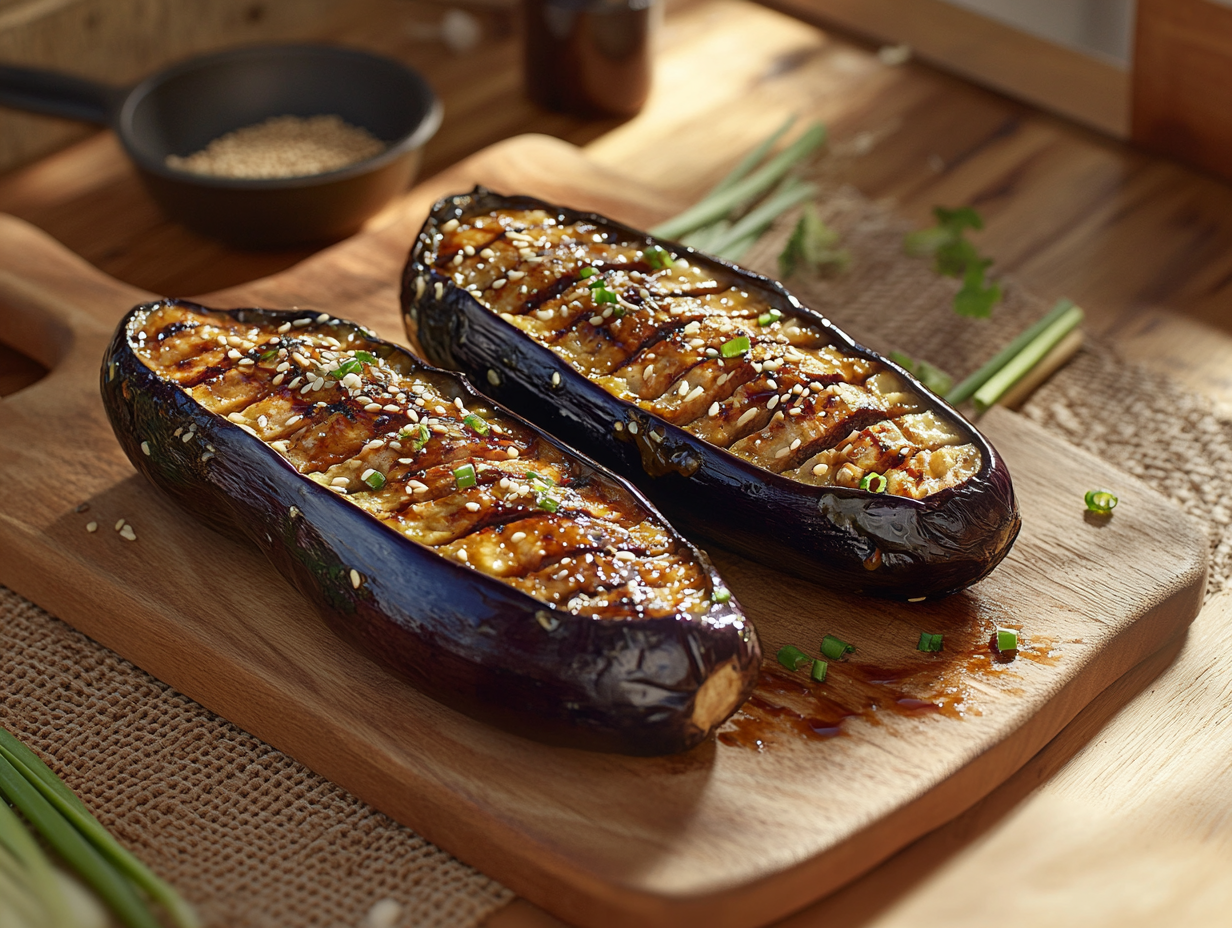
Miso glazed eggplant (nasu dengaku) is a Japanese broiled eggplant dish where a short ingredient list produces a lot of flavor. The glaze takes about two minutes to mix, and the whole thing is on the table in under 30 minutes. That’s the real reason to make it on a Tuesday.
The short version of why this works
Two things matter here. First, scoring the eggplant flesh in a crosshatch before it goes in the oven isn’t decorative — it lets heat reach the center faster and gives the glaze somewhere to pool instead of sliding off. Second, the broiler finish is what separates this from plain roasted eggplant. That two-to-three minute blast caramelizes the sugars in the miso and maple syrup into something slightly sticky and lightly charred at the edges. Pull it a minute too early and the glaze stays pale and flat; leave it a minute too long and it burns. Watch it.
Smart swaps
- White miso (shiro miso): This is the one ingredient worth tracking down — it’s mild enough that the glaze doesn’t overwhelm the eggplant. Most grocery stores carry it near the tofu. In a pinch, yellow miso works but the flavor will be stronger and saltier, so reduce the quantity slightly.
- Mirin: If you don’t have it, a mix of rice vinegar and a small amount of maple syrup is a reasonable stand-in. Avoid regular white vinegar — it’s too sharp.
- Japanese eggplant vs. globe eggplant: Japanese eggplants are thinner and cook faster with no bitterness. Globe eggplant works but takes longer and benefits from salting and pressing for 10 minutes first to draw out excess moisture.
- Toasted sesame oil: Don’t substitute regular sesame oil or a neutral oil — the toasted version is what adds the nutty depth to the glaze. A small bottle goes a long way and keeps for months.
Mistakes to avoid
- Skipping the parchment or foil: The miso glaze contains sugar and will bond aggressively to a bare baking sheet. Line the pan — cleanup otherwise is genuinely unpleasant.
- Applying the glaze before the initial roast: Miso burns fast under direct heat. Roast the eggplant plain first until the flesh softens, then glaze and broil. Adding it at the start gives you scorched miso and undercooked eggplant.
- Not pressing the eggplant cut-side down during the initial roast: Placing it cut-side down for the first roasting phase traps steam and speeds up softening significantly. Skipping this step means the flesh stays dense when the glaze goes on.
- Using cold eggplant straight from the fridge: Cold eggplant takes noticeably longer to soften in the oven and can cook unevenly. Let it sit at room temperature for 10 to 15 minutes before you start.
- Over-garnishing: Sesame seeds are worth it — they add a little crunch. Skip the scallions if you’re short on time; they don’t change the flavor enough to justify the extra knife work.

Miso Glazed Eggplant

Equipment
- Oven
- Small saucepan
- Baking sheet
- Pastry brush
Ingredients
Eggplant:
- 2 whole Japanese eggplants choose firm, glossy eggplants for best texture
- 1 tablespoon neutral oil like grapeseed or avocado oil
Miso Glaze:
- 3 tablespoons white miso paste also called shiro miso — mild and slightly sweet
- 1 tablespoon mirin or substitute with seasoned rice vinegar and a dash of maple syrup
- 1 tablespoon maple syrup use pure maple syrup for best flavor
- 1 teaspoon toasted sesame oil adds a nutty, aromatic depth
- 1 tablespoon water to thin the glaze just slightly for brushing
Garnish (Optional but Recommended):
- 1 teaspoon toasted white sesame seeds
- 1 tablespoon thinly sliced scallions
Instructions
- Preheat your oven to 400°F (200°C). Line a baking sheet with parchment paper.
- Slice each Japanese eggplant in half lengthwise. Score the flesh in a crisscross pattern, about ½ inch deep, taking care not to pierce the skin.
- Brush the cut sides of the eggplant halves with neutral oil and place them flesh side up on the baking sheet.
- Roast for 25 minutes or until the flesh is soft and beginning to brown slightly around the edges.
- While the eggplant roasts, prepare the glaze: In a small saucepan over low heat, whisk together the miso paste, mirin, maple syrup, sesame oil, and water. Stir constantly until smooth and warm—do not boil. Set aside.
- Once the eggplants are roasted, remove from oven and brush generously with the miso glaze. Return to oven under the broiler for 3–5 minutes until the glaze bubbles and starts to caramelize. Watch closely to avoid burning.
- Remove from oven, and allow to cool for a few minutes before plating.
- Garnish with sesame seeds and scallions before serving.
Notes
- You can substitute maple syrup with agave nectar or coconut nectar depending on your preference.
- To create a smoky variant, roast the eggplant on a grill instead of an oven for added flavor.
- For a gluten-free version, ensure your miso paste and mirin are certified gluten-free.
Nutrition
Your questions, answered
Can I make this ahead of time?
You can roast the eggplant and mix the glaze up to a day ahead, but broil it right before serving. Reheated miso glaze loses the caramelized texture and goes a bit gummy — the broiler step is fast enough that it’s worth doing fresh.
My eggplant turned out watery and soft instead of silky. What went wrong?
The oven temperature was likely too low or the pan was overcrowded. Eggplant releases a lot of moisture; if pieces are too close together they steam instead of roast. Use a large pan and make sure there’s space between each half.
Is this recipe gluten-free?
Not automatically — standard miso and mirin often contain wheat. Look for certified gluten-free white miso and a gluten-free mirin or rice wine substitute, and it’s straightforward to make it fully gluten-free.
What can I serve this with to make it a full meal?
Steamed short-grain rice is the fastest option and soaks up any extra glaze well. A simple cucumber salad dressed with rice vinegar rounds it out without adding much prep time.
Try these next
- Miso Glazed Sweet Potatoes
- Vegan Japanese Katsu Curry
- Sesame Ginger Soba Salad
- Crispy Tofu Broccoli Stir-Fry