
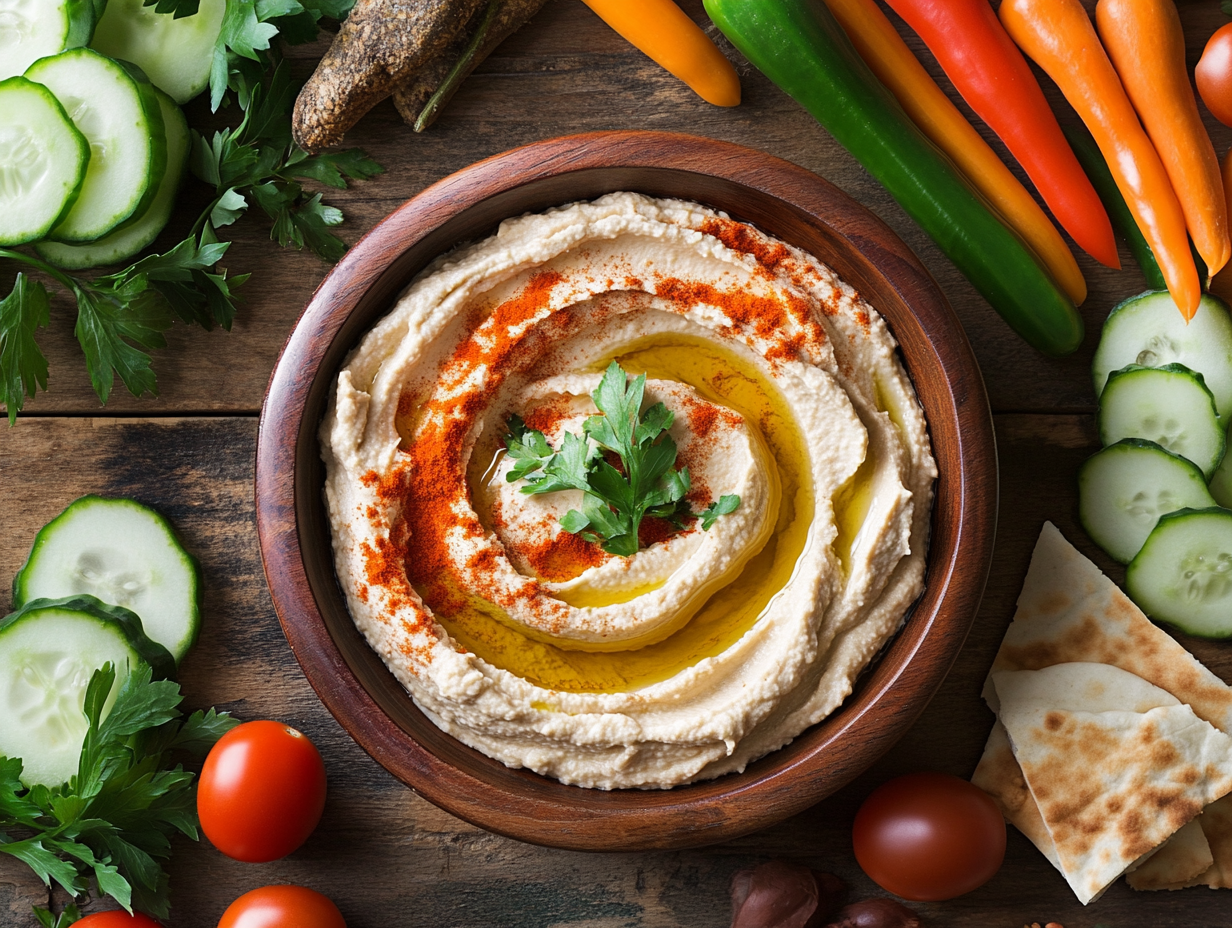
This is a smooth, garlicky chickpea dip made with roasted garlic, tahini, lemon juice, and a handful of pantry staples. Roasting the garlic first takes about 40 minutes of mostly hands-off oven time, but it completely changes the flavor — no sharpness, just a mellow, slightly sweet depth that raw garlic can’t give you. If you’ve only ever bought hummus from a tub, this is worth making at least once.
What makes this version work
Two things actually move the needle here. First, peeling the chickpeas. It’s tedious — about five minutes of pinching — but it removes the thin skin that causes graininess, and the difference in final texture is real and noticeable. Second, the ice water. Adding ice-cold water while blending causes the tahini to emulsify differently than it would at room temperature, giving you a lighter, airier result. Skip either step and the hummus is still good. Do both and it’s genuinely smooth all the way through.
Common problems and fixes
- Hummus tastes flat or dull: Add lemon juice a little at a time at the end, after blending. Acid brightens everything, but the right amount varies by batch depending on your chickpeas and tahini brand.
- Texture is thick and pasty, not creamy: Keep the food processor running longer than feels necessary — at least 3 to 4 minutes — and add ice water one tablespoon at a time until it loosens up. Most people stop blending too soon.
- Roasted garlic is bitter or burnt: Check it at 35 minutes. The cloves should be golden and soft, not dark brown. If your oven runs hot, tent the foil loosely or drop the temperature by 25°F.
- Hummus turns out gluey after refrigerating: It thickens significantly when cold. Stir in a tablespoon of water or a small drizzle of olive oil before serving and it comes back to a spreadable consistency.
- Tahini seized up and turned thick during blending: This happens when tahini hits lemon juice without enough liquid around it. Add the ice water before the lemon juice, or blend the tahini on its own for 30 seconds first.
About the ingredients
Tahini is the ingredient most worth spending a little more on. Cheap tahini can be bitter and gritty in a way that doesn’t blend out. Brands like Soom or Seed + Mill are consistently smooth and mild. If you only have a store-brand option, taste it first — if it’s very bitter on its own, it will dominate the finished hummus. Sumac is a dark red ground spice with a tart, slightly fruity flavor; it’s sold at most Middle Eastern grocery stores and increasingly at larger supermarkets. Skip the garnish if you can’t find it — not worth a special trip when the hummus is already well-seasoned underneath. Canned chickpeas work perfectly here; just drain and rinse them well.
Make-ahead notes
This hummus keeps well in an airtight container in the fridge for up to five days. Press a piece of plastic wrap directly onto the surface before sealing to slow oxidation and keep the top from drying out. The flavor actually improves after a few hours as everything settles together, so making it the night before a gathering is a smart move. For longer storage, freeze it in a sealed container for up to two months; thaw overnight in the fridge and stir well before serving. Don’t freeze it with the olive oil garnish on top — add that fresh.

Silky Roasted Garlic Hummus

Equipment
- Baking sheet
- Blender or food processor
- Small saucepan
Ingredients
- 1 head garlic whole head, papery skin on, top sliced off to expose cloves
- 1 tablespoon olive oil extra virgin, for roasting garlic
- 1.5 cups cooked chickpeas or 1 (15-ounce) can, drained and rinsed. Preferably peeled for ultra-smooth texture.
- ⅓ cup tahini stirred well; use a good-quality, stone-ground tahini like Soom or Seed + Mill
- ¼ cup fresh lemon juice freshly squeezed, about 1 large lemon
- ½ teaspoon ground cumin toasted for enhanced aroma if desired
- ½ teaspoon sea salt to taste
- 4 to 6 tablespoons ice water add gradually for smoothness
- 2 tablespoons olive oil for blending and drizzling
- 1 teaspoon paprika or sumac optional, for garnish
- 2 tablespoons chopped parsley optional garnish
Instructions
- Preheat oven to 400°F (205°C). Place the garlic head on foil, drizzle with 1 tablespoon olive oil, and wrap tightly. Roast for 40-45 minutes until golden and very soft. Let cool slightly, then squeeze the cloves out.
- In a food processor or high-speed blender, combine chickpeas, roasted garlic, tahini, lemon juice, cumin, and salt. Blend for 30 seconds to combine.
- With the motor running, drizzle in 4 to 6 tablespoons of ice water one tablespoon at a time until the hummus becomes very smooth and creamy. Scrape down the sides as needed.
- Taste and adjust seasoning. For extra richness, blend in 1 tablespoon of olive oil. Pulse to incorporate fully.
- Scoop into a wide, shallow bowl. Use the back of a spoon to create swoops or a well. Drizzle with remaining olive oil. Sprinkle with paprika or sumac, and top with parsley if using.
Notes
- To achieve ultra-smooth hummus, peel chickpeas by rubbing them between a kitchen towel.
- Add a pinch of baking soda to the cooking water when boiling dried chickpeas to soften them further.
- For a smoky twist, substitute half the chickpeas with charred eggplant (for a baba ghanoush-style blend).
Nutrition
Common questions
Can I use dried chickpeas instead of canned?
Yes, and the texture will be slightly better. Soak 1 cup of dried chickpeas overnight, then simmer them until very soft — about 1 to 1.5 hours. Slightly overcooked is fine here; you want them easy to blend and easy to peel.
Do I really need a food processor, or can I use a blender?
A high-speed blender like a Vitamix will actually produce a smoother result than most food processors. A standard blender works too, though you may need to stop and scrape down the sides more often and add a bit more ice water to keep things moving.
My garlic head is small — how do I know I have enough roasted garlic?
You’re looking for roughly 8 to 10 soft, squeezable cloves after roasting. If your head is small, roast two heads at the same time; leftover roasted garlic keeps in the fridge for a week and is useful in soups, dressings, and pasta sauces.
Is this recipe gluten-free?
The hummus itself is gluten-free. Just check your tahini label to confirm it was processed in a gluten-free facility if that matters for your household, and serve with gluten-free crackers or vegetable dippers instead of pita bread.
What to cook next
- Lebanese Vegan Grape Leaves
- Mediterranean Lentil Power Bowl
- Vibrant Vegan Fattoush Salad
- Brightened Bulgur Wheat Salad