
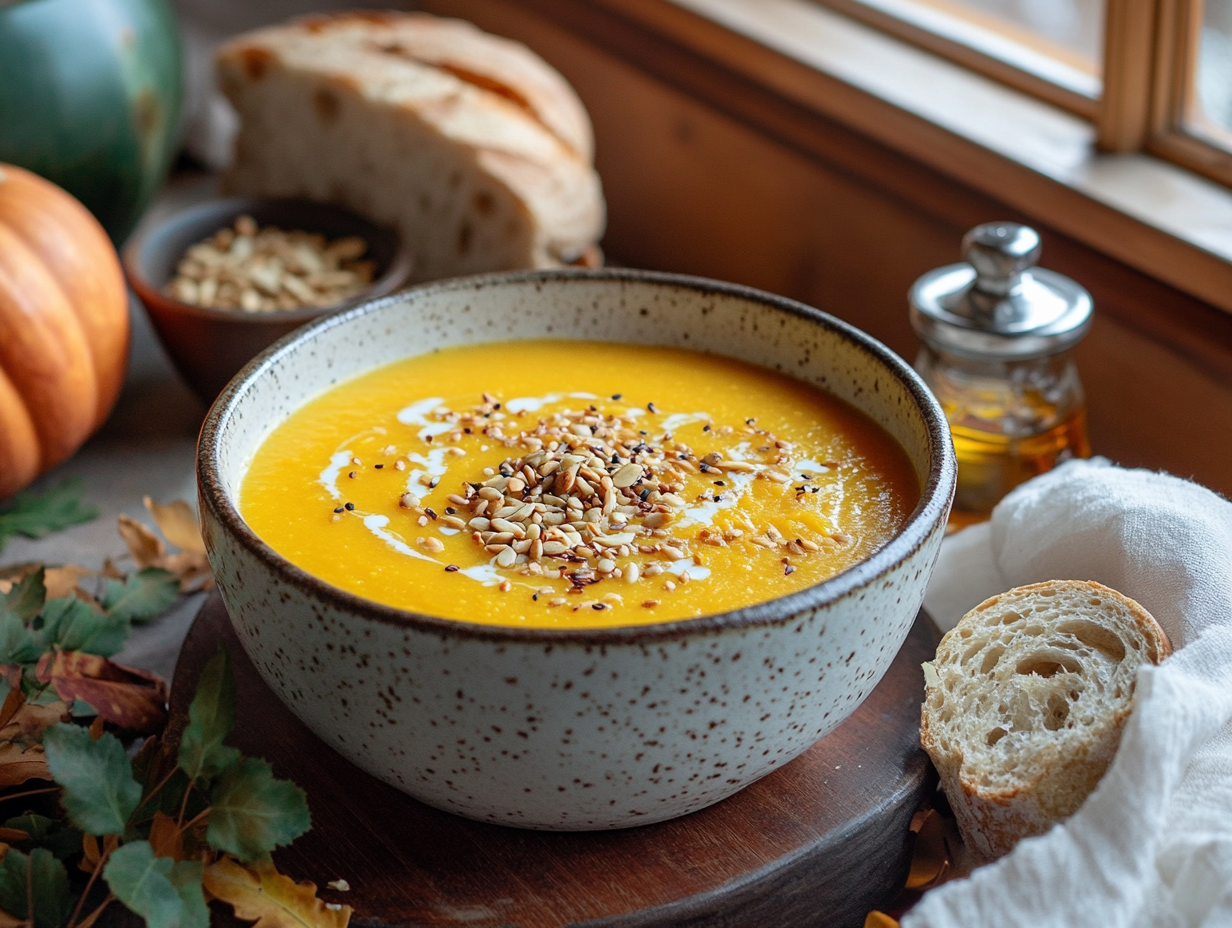
This soup is butternut squash blended with white miso and tahini, served over brown rice. It comes together in about an hour, and the rice plus tahini means it holds up as a full meal rather than a side. The flavor is savory, a little nutty, and genuinely filling.
Before you start
Roasting the squash before it goes into the pot is the step that matters most. Raw squash blended into broth tastes flat; roasted squash adds a concentrated sweetness that carries the whole soup. Give it real oven time — pale and soft is not enough, you want the edges to brown. The second thing worth knowing: add the miso and tahini off the heat after blending. Boiling miso kills the fermented flavor you’re paying for, and tahini can turn grainy if it hits a rolling boil. Stir both in at the end, taste, and adjust from there.
About the ingredients
- White miso (shiro miso): The mildest variety — shorter fermentation, lighter salt. If you only find red or brown miso, use about half the amount called for or the soup will be too salty.
- Tahini: Quality varies a lot. Runny, pale tahini (well-stirred from the bottom of the jar) blends smoothly. Thick, dry tahini can make the soup gluey. If yours is stiff, thin it with a tablespoon of warm water before adding.
- Soy-free swap: Chickpea miso works as a direct substitute for white miso and keeps the soup gluten-free and soy-free.
- Brown rice: It takes 40–50 minutes to cook, so start it before you do anything else or use pre-cooked rice from the freezer to save time.
What can go wrong
- Soup turns out too thick after blending: Tahini and squash together make a dense purée. Add warm vegetable broth a splash at a time until you hit the consistency you want — do this after blending, not before.
- Bitter or metallic aftertaste: This usually means the miso was added while the soup was still boiling. Let it cool for two minutes off the heat before stirring in the miso and tahini.
- Soup separates or looks grainy: Tahini can break if it hits very high heat. If this happens, blend the soup again for 30 seconds — it should come back together.
- Brown rice is mushy by the time you serve: Keep the rice separate and spoon soup over it at the table. Rice sitting in hot soup continues to absorb liquid and gets soft fast — skip combining them in the pot.
- Flat, underseasoned flavor: Miso is salty but not the only seasoning the soup needs. A small squeeze of lime juice or a splash of rice vinegar added at the end brightens everything and makes the squash flavor pop.
Leftovers and meal prep
Store the soup and rice separately — combined, the rice soaks up all the broth overnight and you end up with a thick paste. The soup keeps in the fridge for up to 4 days in a sealed container and freezes well for up to 3 months; freeze it in single-serving portions for easy weekday lunches. Reheat the soup gently on the stovetop over medium-low heat, stirring often, and add a splash of water or broth to loosen it back up. The tahini thickens considerably when cold. Cooked brown rice keeps refrigerated for 4 days or frozen for 2 months — freeze it flat in zip bags so it reheats quickly from frozen in the microwave in about 3 minutes.

Miso-Tahini Squash Soup with Brown Rice

Equipment
- Blender or immersion blender
- Large soup pot
- Baking sheet
- Chef's knife
Ingredients
For the Soup Base:
- 1 medium butternut squash peeled, seeded and cubed (about 4 cups)
- 1 tbsp olive oil extra-virgin preferred
- 1 medium yellow onion chopped
- 3 cloves garlic minced
- 4 cups vegetable broth low-sodium recommended
- 2 tbsp white miso paste shiro miso preferred for a milder flavor
- 3 tbsp tahini creamy and well-stirred
- 1 tsp freshly grated ginger or 1/2 tsp ground ginger
For the Brown Rice:
- 1 cup brown rice cooked according to package instructions
For Optional Garnish:
- 2 tbsp pumpkin seeds toasted
- 1 tbsp sesame oil drizzled on top for flavor
Instructions
- Preheat the oven to 400°F (200°C). Spread the cubed butternut squash on a baking sheet, drizzle with 1/2 tablespoon of olive oil, and roast for 25–30 minutes, flipping once, until soft and lightly caramelized at the edges.
- While the squash roasts, heat the remaining 1/2 tablespoon olive oil in a large soup pot over medium heat. Sauté the chopped onion until translucent and slightly golden, about 6–7 minutes. Add the garlic and ginger and cook for another minute until fragrant.
- Add the roasted squash to the pot along with the vegetable broth. Bring to a gentle boil, then reduce heat and simmer for 10 minutes to allow the flavors to meld.
- Remove from heat. Stir in the miso paste and tahini. Use an immersion blender directly in the pot (or transfer to a countertop blender in batches) to blend until silky smooth. Taste and adjust salt if needed.
- Scoop a portion of cooked brown rice into each bowl and ladle the hot soup over top. Garnish with toasted pumpkin seeds and a drizzle of sesame oil for added richness and crunch.
Notes
- For a lighter soup, reduce tahini to 2 tablespoons.
- Substitute kabocha or acorn squash for butternut, if in season.
- Add a pinch of chili flakes to the garnish for heat.
Nutrition
Your questions, answered
Can I use a different squash if I can’t find butternut?
Yes — kabocha or red kuri squash both work well and roast in a similar time. Acorn squash is fine but has a slightly more watery texture, so drain off any liquid on the pan before blending.
Is this soup high in protein?
It has a solid amount for a vegetable soup, mainly from the tahini and brown rice. Tahini contributes around 5–6g of protein per two tablespoons, and a cup of cooked brown rice adds another 5g — together they also provide a more complete amino acid profile than either alone.
Can I make this without a blender?
A standard immersion blender works fine directly in the pot. If you don’t have any blender, mash the roasted squash very thoroughly with a fork or potato masher — the soup will be chunkier and less silky, but still good.
How do I know when the squash is roasted enough?
The cut edges should be visibly browned and the flesh should be completely tender when pierced with a fork — no resistance at all. Pale or just-soft squash hasn’t developed enough flavor yet; give it another 10 minutes.
Can I use something other than brown rice?
Farro, white rice, or quinoa all work as the base. Quinoa is worth considering if you want more protein per serving — it has roughly twice the protein of brown rice by weight.
The soup tastes too salty. How do I fix it?
Add more roasted squash if you have it, or stir in a small amount of unsweetened plant-based milk to dilute without watering down the texture. A squeeze of lime juice also helps balance salt perception without making the soup taste sour.
If you liked this one
- Miso Glazed Sweet Potatoes
- Golden Curried Parsnip Soup
- Sesame Ginger Soba Salad
- Vegan Indonesian Rice Bowl