
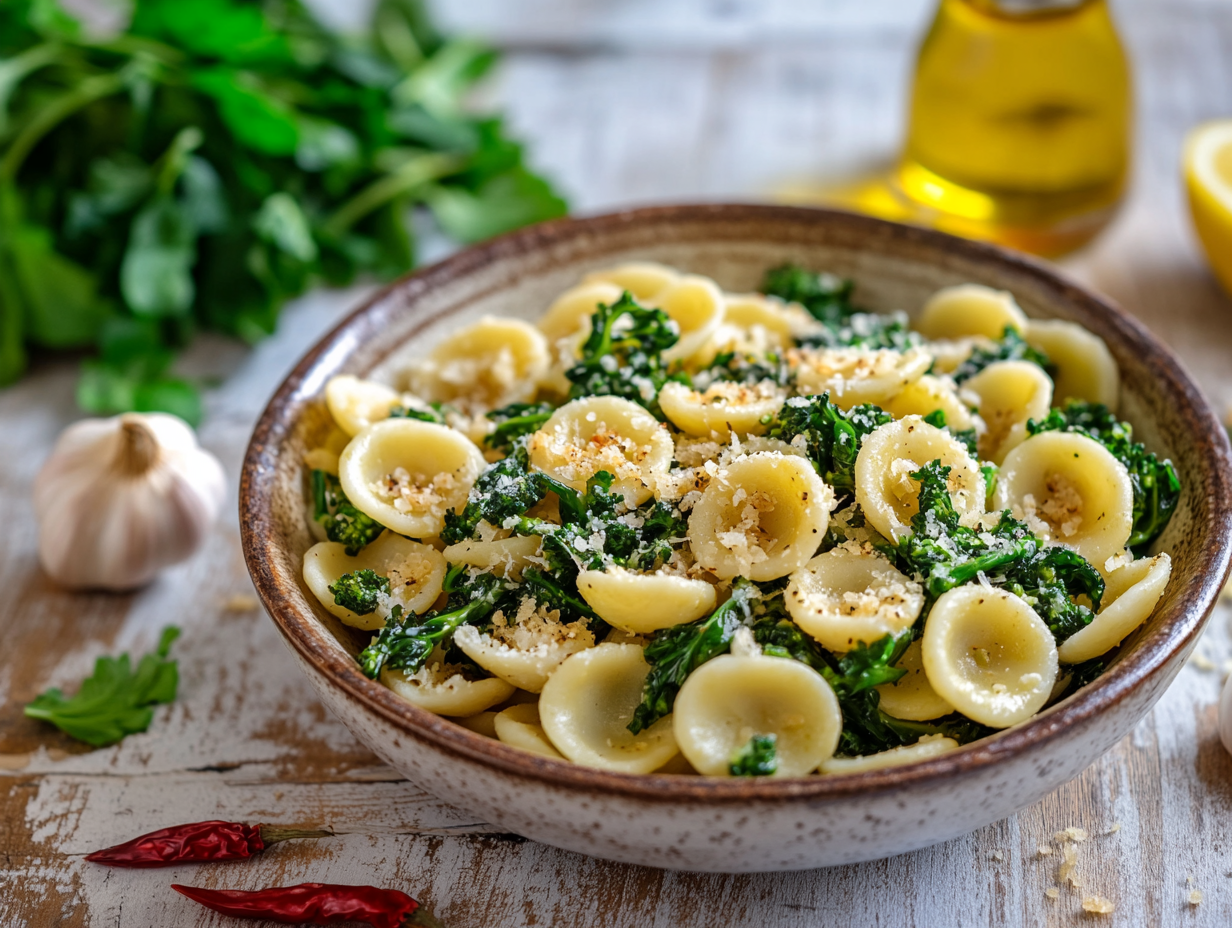
Orecchiette with broccoli rabe is a pasta dish built on garlic, olive oil, bitter greens, and toasted breadcrumbs — no meat, no cheese, no complicated sauce. It comes together in 35 minutes and is the kind of thing that makes skeptical dinner guests ask for the recipe before they’ve finished the bowl. The bitterness of the broccoli rabe is the whole point, and this recipe handles it correctly.
The short version of why this works
Two things make or break this dish. First, blanching the broccoli rabe before sautéing it — this pulls out some of the sharpest bitterness while keeping the greens tender and bright green rather than army-drab. Skip the blanch and the bitterness can overwhelm everything else, especially for people who don’t eat bitter greens regularly. Second, the pasta water. A splash of the starchy cooking liquid added to the skillet while you toss everything together creates a light, glossy coating that makes the dish feel saucy without any actual sauce. Without it, the pasta and greens sit separately in the bowl instead of coming together. These two steps are what separate a good version of this from a flat one.
Smart swaps
- Broccoli rabe: This is the ingredient most people haven’t cooked before. If you genuinely can’t find it, broccolini works and is milder. Regular broccoli florets will do the job but lose the peppery edge that defines the dish.
- Orecchiette: Bronze-cut pasta (look for “trafilata al bronzo” on the package) grips the oil and greens better than smooth-extruded pasta. If you can only find standard orecchiette, it still works fine. In a pinch, small shells or cavatappi hold the greens reasonably well.
- Breadcrumbs: Panko toasted in olive oil gives a crunchier result than standard breadcrumbs. Use gluten-free panko if needed — the texture is nearly identical once toasted.
- Red pepper flakes: The heat level here is adjustable. Start with less than you think you need; you can always add more at the table.
Keeping and reheating
Leftovers keep in an airtight container in the fridge for up to 3 days. The pasta absorbs the oil as it sits, so reheat it in a skillet over medium heat with a small splash of water or vegetable broth to loosen it — about 3 to 4 minutes, stirring occasionally. Microwaving works but dries it out faster. Store the toasted breadcrumbs separately in a small jar at room temperature; they stay crisp for up to a week and should be added after reheating, not before. This dish doesn’t freeze well — the broccoli rabe turns mushy and the pasta goes soft.
Mistakes to avoid
- Not salting the blanching water enough: The water for blanching the broccoli rabe should taste noticeably salty, like pasta water. Under-salted water means under-seasoned greens that no amount of finishing salt will fully fix.
- Burning the garlic: Garlic goes into the oil over medium heat, not high. It should turn pale gold and fragrant — 60 to 90 seconds. Brown garlic turns bitter in a way that competes badly with the broccoli rabe.
- Adding pasta water all at once: Add it a few tablespoons at a time while tossing. Too much at once makes the dish watery rather than lightly sauced.
- Toasting the breadcrumbs too early: They soften quickly once they hit moisture. Toast them last, right before serving, and add them at the table — skip pre-mixing them into the bowl before serving, not worth the extra dish.
- Overcooking the broccoli rabe in the skillet: It’s already blanched, so it only needs 3 to 4 minutes in the pan. Cook it longer and it goes from tender to mushy and loses its color.

Orecchiette with Broccoli Rabe

Equipment
- Large pot
- Skillet or sauté pan
- Colander
- Tongs or slotted spoon
Ingredients
- 12 oz orecchiette pasta preferably bronze-cut for better sauce adhesion
- 1 lb broccoli rabe trimmed and washed thoroughly
- 3 tbsp extra-virgin olive oil high-quality, cold-pressed
- 4 cloves garlic thinly sliced
- ¼ tsp red pepper flakes adjust to taste
- ½ cup toasted breadcrumbs homemade or panko, toasted in olive oil
- 1 tbsp lemon juice freshly squeezed
- 1 pinch sea salt or kosher salt to taste
- 1 pinch freshly cracked black pepper to taste
Instructions
- Bring a large pot of salted water to a boil. Add the orecchiette and cook until al dente according to the package instructions (typically 10-12 minutes). Reserve 1/2 cup of pasta water before draining.
- While the pasta cooks, blanch the broccoli rabe in another pot of boiling water for 1-2 minutes until bright green. Remove with a slotted spoon or tongs and transfer to an ice bath to halt cooking. Drain and set aside.
- In a large sauté pan, heat 2 tablespoons of olive oil over medium heat (160°C / 320°F). Add sliced garlic and red pepper flakes. Cook, stirring, for 1-2 minutes until garlic is just turning golden and fragrant—do not let it burn.
- Add the blanched broccoli rabe to the pan and sauté for 4-5 minutes, until lightly wilted and tender. Season with salt and black pepper.
- Add the cooked orecchiette directly into the pan with the broccoli rabe. Toss everything together, adding reserved pasta water a splash at a time to loosen and create a light sauce. Finish with lemon juice and adjust seasoning if needed.
- Separately, toast breadcrumbs in 1 tablespoon of olive oil over medium heat until golden and crispy, about 2–3 minutes. Stir frequently and remove from heat immediately once evenly browned.
- Plate the orecchiette with broccoli rabe into shallow bowls. Generously sprinkle with toasted breadcrumbs. Serve warm with additional olive oil drizzled on top if desired.
Notes
- To reduce bitterness in broccoli rabe, soak in cold water for 30 minutes before blanching.
- Swap orecchiette with whole wheat or gluten-free pasta as needed.
- Breadcrumbs can be made ahead and stored in an airtight jar for up to 1 week.
Nutrition
Frequently asked questions
Is broccoli rabe the same as broccoli or rapini?
Broccoli rabe and rapini are the same thing — two names for the same vegetable. It is not the same as regular broccoli; it’s more closely related to turnips, has thinner stalks, small florets, and a distinctly bitter, peppery flavor that regular broccoli doesn’t have.
Can I make this gluten-free?
Yes. Use a gluten-free orecchiette or small shell pasta — several brands make them from rice or corn flour. Swap in gluten-free panko for the breadcrumbs and the dish is fully gluten-free.
My family doesn’t like bitter greens — will they eat this?
Blanching the broccoli rabe first significantly reduces the bitterness, which is the step that makes this approachable for people who are usually put off by bitter vegetables. If you want to go further, use broccolini instead, which is noticeably milder.
Do I really need to reserve pasta water, or is that just a chef thing?
It’s genuinely necessary here, not optional. The starch in the cooking water is what helps the olive oil and garlic cling to the pasta and greens as a light coating rather than pooling at the bottom of the bowl. Plain tap water won’t do the same thing.
Try these next
- Macadamia Nut Pesto Pasta
- Vegan Polenta Mushroom Bliss
- Mediterranean Orzo Artichoke Salad
- Spring Pea Mint Risotto