
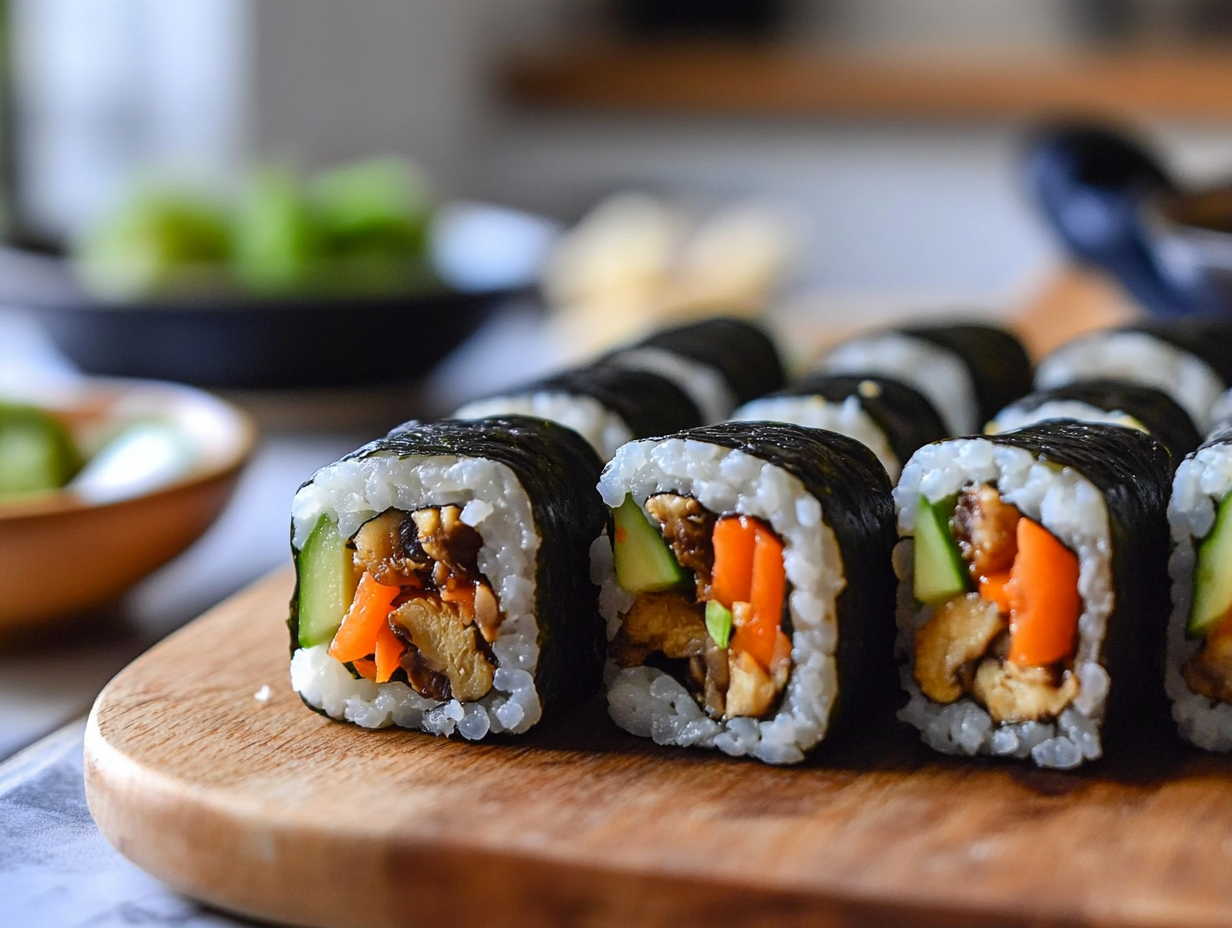
These shiitake maki rolls are straightforward vegan sushi you can make at home with a bamboo mat and about an hour of your time. The filling — sesame-sautéed shiitake mushrooms with cucumber, carrot, and avocado — gives you something genuinely satisfying rather than a roll that tastes like it’s missing something. Shiitakes bring enough protein and meaty texture that this works as a full meal, not just a snack.
Before you start
Two things determine whether your rolls hold together or fall apart. First, the sushi rice temperature: it needs to be at body temperature — warm but not hot — when you roll. Hot rice makes the nori go limp and soggy before you even finish rolling. Spread the cooked, seasoned rice on a wide plate or sheet pan and fan it for about 10 minutes. Second, don’t overload the nori. It’s tempting to pile in more filling, but a thin, even layer of rice leaving a 1-inch border at the far edge, with a modest line of filling in the lower third, is what lets you close the roll cleanly. Overfilled rolls split at the seam and are hard to slice without everything pushing out the ends.
Ingredient notes
- Shiitake mushrooms: Fresh shiitakes give better texture than dried here. If you only have dried, rehydrate them fully and squeeze out all excess liquid before sautéing — residual water will make the filling wet and loosen the rice.
- Short-grain sushi rice: Don’t substitute long-grain or jasmine rice. They don’t have the starch content to hold the roll together. Calrose is the most widely available short-grain variety in US grocery stores and works well.
- Nori sheets: Buy full-size roasted nori sheets, not the snack-size ones. Check the package — it should say “roasted” or “yaki nori.” Unroasted nori is tougher and harder to roll.
- Rice vinegar: Seasoned rice vinegar already contains sugar and salt, so if that’s what you have, reduce or skip the added sugar and salt in the rice seasoning step.
- Avocado: Slice it right before rolling. It browns fast and a brown-edged avocado makes the whole roll look unappetizing — skip the garnish of extra avocado slices on the plate, not worth the extra dish.
If something goes sideways
- The nori tears when you roll it: Nori that’s been exposed to humidity goes brittle. Wave the sheet over a low gas flame or a dry skillet for 5–10 seconds per side to re-crisp it before using.
- Rice keeps sticking to your hands: Keep a small bowl of water with a splash of rice vinegar nearby and wet your fingertips before each roll. Dry hands pull the rice off the nori and create gaps in the layer.
- The roll won’t seal at the seam: Run a finger dipped in water along the bare 1-inch border of nori just before you complete the roll. Press and hold for 10 seconds. The moisture activates the nori’s natural stickiness.
- Slices compress or squash when you cut them: Your knife isn’t wet enough. Wipe the blade with a damp cloth between every single cut — not every few cuts. A sharp knife also matters more here than in most cooking tasks.
- Mushroom filling is watery: The shiitakes released too much liquid during cooking. Turn the heat up and cook them longer until all the liquid has evaporated and the mushrooms are starting to caramelize. Wet filling is the most common reason rolls taste bland.
Keeping and reheating
Sushi rolls are best eaten the day they’re made, ideally within 2–3 hours of rolling. If you need to store them, wrap each roll tightly in plastic wrap before slicing and refrigerate for up to 24 hours — sliced rolls dry out quickly and the rice hardens in the fridge. Do not freeze assembled rolls; the rice turns grainy and the avocado goes gray. If you want to prep ahead, cook and season the rice and sauté the mushrooms up to a day in advance, storing them separately in the fridge. Bring the rice back to room temperature and the mushrooms to room temperature before rolling. Cold rice does not roll well.

Shiitake Maki Sushi

Equipment
- Sushi Rolling Mat (Makisu)
- Medium saucepan
- Sharp knife
- Rice Paddle or Wooden Spoon
- Small Bowl of Water with Rice Vinegar
Ingredients
For the Sushi Rice:
- 1 ½ cups sushi rice rinsed until water runs clear
- 2 cups water
- 2 ½ tablespoons rice vinegar unseasoned
- 1 tablespoon organic cane sugar
- ½ teaspoon sea salt
For the Filling:
- 6 large shiitake mushrooms stems removed, sliced
- 1 tablespoon toasted sesame oil
- 2 tablespoons low-sodium soy sauce
- ½ medium cucumber julienned
- 1 medium carrot peeled and julienned
- 1 medium avocado thinly sliced
For Assembly:
- 4 sheets nori seaweed full-size roasted nori sheets
Instructions
- Prepare the Sushi Rice: In a medium saucepan, combine the rinsed sushi rice with water. Bring to a boil, then reduce to low heat, cover, and simmer for 15 minutes. Remove from heat and let it steam, covered, for another 10 minutes. Meanwhile, in a small bowl, mix the rice vinegar, sugar, and salt until dissolved. Once the rice is done steaming, gently fold in the vinegar mixture using a rice paddle. Allow to cool to room temperature.
- Sauté the Shiitake Mushrooms: Heat sesame oil in a skillet over medium heat (about 350°F / 175°C). Add the sliced shiitakes and sauté for 6–8 minutes, stirring occasionally, until they soften and deepen in color. Add soy sauce and cook another 1–2 minutes until glazed. Remove from heat and set aside to cool.
- Prepare Vegetables: While mushrooms cool, julienne the cucumber and carrot and slice the avocado. Keep components ready for assembly. Have a small bowl of water mixed with a splash of rice vinegar nearby to wet your fingers while rolling.
- Assemble the Maki Rolls: Place a sheet of nori shiny-side down on a bamboo rolling mat. Wet your fingers and spread about 3/4 cup of the sushi rice evenly over two-thirds of the nori, leaving the top third bare. Arrange a few shiitake slices, some cucumber, carrot, and avocado across the lower third of the rice.
- Roll and Seal: Use your thumbs to lift the mat while holding the fillings in place with your fingers. Roll tightly into a cylinder and press lightly along the length for even shaping. Dab a little water on the exposed edge of the nori to seal the roll. Slice using a sharp wet knife into 6–8 even pieces.
Notes
- Substitute tamari for soy sauce to make this recipe gluten-free.
- To enhance umami even more, marinade the shiitake in miso and sesame oil for 20 minutes before sautéing.
- Prepare sushi rice ahead and chill—just bring to room temp before assembling to avoid chewy texture.
Nutrition
Frequently asked questions
Do I need a bamboo rolling mat, or can I use something else?
A bamboo mat makes tighter, more even rolls, but a clean kitchen towel or a sheet of parchment paper laid flat on the counter works in a pinch. The towel method gives you less leverage for the final tight squeeze, so press firmly with both hands as you finish the roll.
Is this recipe filling enough to be a complete meal?
Yes, especially if you serve 2–3 rolls per person alongside a bowl of miso soup or edamame. The shiitake mushrooms and avocado together provide meaningful protein and fat, and the sushi rice adds sustained carbohydrates — it holds you better than a salad-based meal.
Can I use brown rice instead of white sushi rice?
You can, but the texture will be noticeably different — chewier and denser, and the rolls are harder to seal. Short-grain brown rice is the best option if you want to go that route; cook it until it’s quite soft and season it the same way as white sushi rice.
My grocery store doesn’t have fresh shiitakes. What’s the best substitute?
King oyster mushrooms are the closest substitute — they have a firm, meaty texture and absorb the soy-sesame seasoning well. Cremini mushrooms work too but are softer and release more water, so cook them over higher heat and longer to drive off the moisture.
Can I make these rolls gluten-free?
Yes. Swap the soy sauce in the mushroom filling for tamari, which is widely available and nearly identical in flavor. Everything else in the recipe is naturally gluten-free, including nori and rice vinegar — just double-check your specific brand labels to be sure.
Try these next
- Vegan Japanese Katsu Curry
- Sesame Ginger Soba Salad
- Vegan Mushroom Bulgogi Bibimbap
- Miso Glazed Sweet Potatoes