
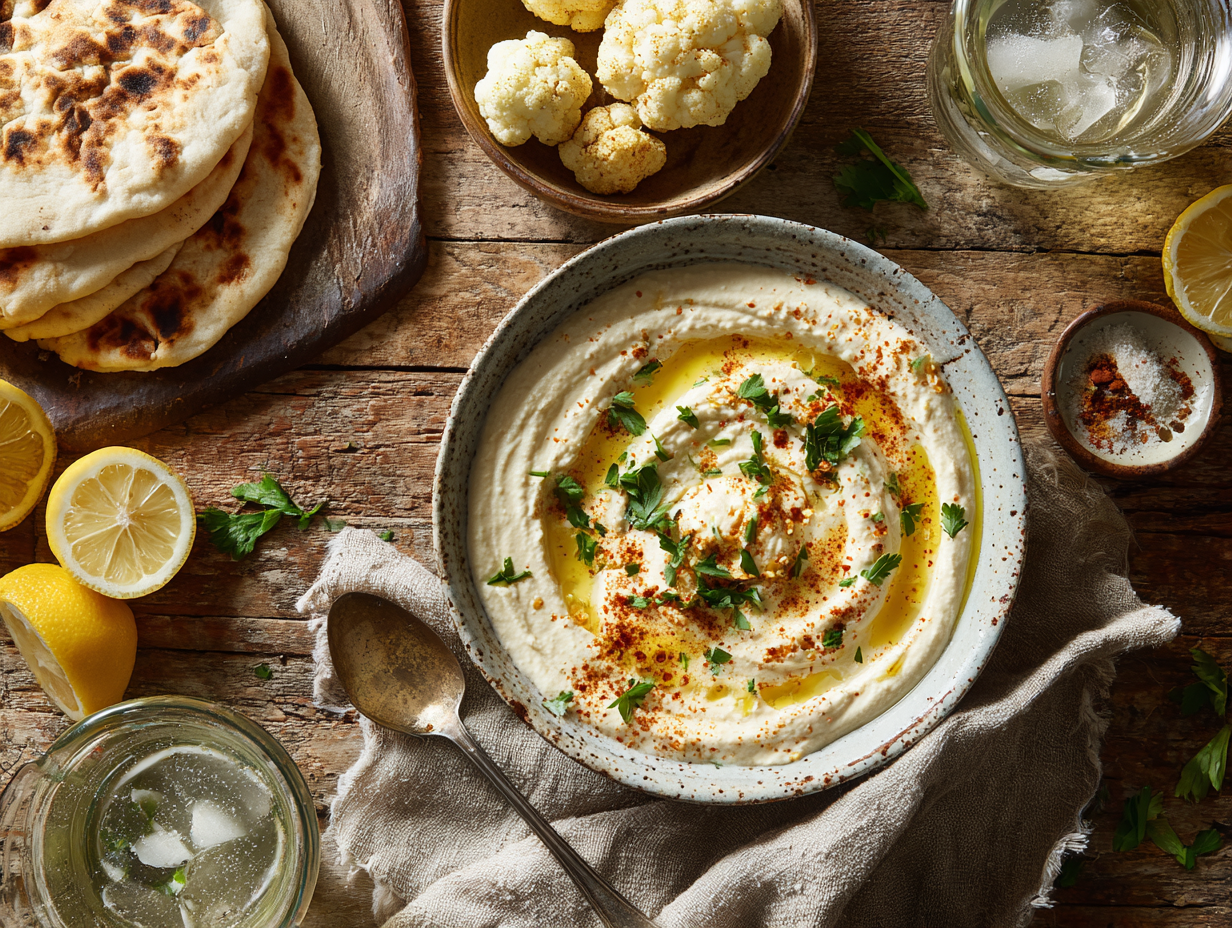
Silky Lemon Garlic Tahini is a five-ingredient sauce that comes together in about five minutes and makes almost any plant-based meal taste more finished. The lemon and garlic are sharp enough to cut through rich dishes, and the tahini gives it enough body to work as a dip, a dressing, or a drizzle. It’s the kind of thing you’ll make once and then keep a jar of in the fridge permanently.
Why this recipe works
Two things actually matter here. First, adding the lemon juice directly to the tahini before any water causes the mixture to seize and thicken — that’s not a mistake, it’s the setup. When you then add cold water gradually, the seized paste loosens into a smooth, pale emulsion that holds together instead of separating into an oily puddle. Second, using raw garlic rather than roasted gives the sauce a sharp, clean bite that stays present even after the tahini’s richness coats your palate. That contrast is what makes the sauce interesting enough to serve to people who think they don’t like tahini.
Common problems and fixes
- Sauce is gluey and won’t loosen: Add cold water one teaspoon at a time and whisk hard between additions. Warm or hot water can make it seize further rather than smooth out.
- Bitter aftertaste: This usually comes from the tahini brand, not the recipe. Bitter tahini means the sesame seeds were over-roasted. Try a different brand — lighter-colored tahini tends to be milder.
- Garlic flavor is too sharp or harsh: Let the minced garlic sit in the lemon juice for two to three minutes before adding the tahini. The acid mellows the raw bite without losing the flavor.
- Sauce separates after refrigerating: This is normal. Stir it back together and add a small splash of cold water if it’s too thick. It does not mean anything went wrong.
- Too salty after tasting: A squeeze of extra lemon juice — not more water — usually rebalances it better than trying to dilute the salt out.
Smart swaps
- Tahini: This is the one ingredient worth buying well. Runny, light-colored tahini (look for Lebanese or Palestinian brands, or well-reviewed domestic ones) blends far more smoothly than thick, dry paste. If yours is very stiff, warm the jar briefly in hot water before measuring.
- Lemon juice: Fresh only. Bottled lemon juice has a cooked, flat flavor that shows up clearly in a sauce this simple. Skip the garnish of lemon zest if you’re short on time — not worth the extra dish.
- Garlic: One standard clove is a starting point. If you’re serving people who find raw garlic aggressive, use half a clove or let it steep in the lemon juice longer before mixing.
Make-ahead notes
This sauce keeps well in a sealed jar in the fridge for up to five days. It will thicken considerably as it sits — that’s the tahini proteins continuing to absorb liquid. Before serving, stir in cold water a teaspoon at a time until it reaches the consistency you want. It does not freeze well; the emulsion breaks on thawing and the texture turns grainy. Make it fresh in small batches rather than trying to freeze a large one.

Silky Lemon–Garlic Tahini Sauce (Levantine Vegan Classic)

Equipment
- Medium mixing bowl
- Balloon whisk
- Citrus juicer
- Microplane or fine grater
- Measuring cups and spoons
- Small food processor (optional)
- Mortar and pestle (optional)
- Small skillet (optional, for toasting spices)
Ingredients
- ½ cup freshly squeezed lemon juice about 3–4 medium lemons; choose bright, heavy, thin-skinned fruit for maximum juice
- 2 cloves garlic, finely grated use a Microplane for a smooth paste; 1 clove for milder flavor
- 1 teaspoon fine sea salt adjust to taste; start with 3/4 teaspoon if your tahini is salty
- ¾ cup tahini (sesame paste), well-stirred smooth, runny tahini such as Soom, Al Arz, Seed + Mill, or Al Wadi yields the best texture
- ½ cup ice-cold water plus up to 1/4 cup more as needed for desired consistency
- ¼ teaspoon ground cumin optional, for warm, earthy depth
- ½ teaspoon pure maple syrup optional; rounds the lemon’s sharpness and tahini’s natural bitterness
- 1 tablespoon extra-virgin olive oil optional; adds sheen and a softer, luxurious mouthfeel
- 2 tablespoons flat-leaf parsley, finely chopped optional; fold in for a speckled, herby finish
- ⅛ teaspoon Aleppo pepper or sweet paprika optional garnish for color and gentle warmth
Instructions
- Mise en place: Stir your tahini until homogenous. Juice the lemons (strain seeds), finely grate the garlic, and prepare at least 1/2 cup ice-cold water. Have a medium bowl and whisk ready.
- Bloom the Garlic in Lemon: In the bowl, whisk together lemon juice, grated garlic, and salt. Let stand 5 minutes; the acid mellows the garlic’s bite and perfumes the base.
- Emulsify with Tahini: Whisk in the tahini. The mixture will seize and thicken, turning grainy and very pale—this is expected and key to a creamy sauce.
- Loosen with Ice Water: Drizzle in 1/2 cup ice-cold water, a tablespoon at a time, whisking vigorously. The sauce will relax into a smooth, glossy, pourable cream. Adjust with up to 1/4 cup more water until it ribbons off the whisk and leaves trails that disappear in 2–3 seconds.
- Season and Finish: Whisk in cumin and maple syrup, if using. For extra silk, whisk in olive oil. Fold in parsley for a speckled, fresh finish. Taste and adjust salt or lemon to balance nutty, tangy, and savory notes.
- Texture Targets: For a dip, keep it thicker (add less water). For a drizzle, thin until it flows in a steady, pale stream. If it thickens after resting or refrigeration, whisk in a splash of ice water to revive.
- Alternative Methods: A mortar and pestle yields exceptional smoothness—pound garlic and salt to a paste, blend in tahini and lemon, then water. A small food processor also works: run garlic, salt, and lemon first, then add tahini and water. Hand-whisking offers the most control over texture.
- Optional Variation (not included in times): For roasted garlic tahini, roast a whole head at 400°F (205°C) until soft and caramelized, 30–35 minutes; squeeze out the cloves and whisk into the lemon before adding tahini.
- Storage: Refrigerate in an airtight jar up to 7 days. Flavors bloom by day two; whisk in cold water to loosen before serving.
Notes
Michelle’s Tips:
- Choose Great Tahini: Look for smooth, pourable brands (Soom, Al Arz, Seed + Mill). If your tahini is thick or separated, stir thoroughly before measuring.
- Ice Water Matters: The shock relaxes the emulsion, yielding a paler, silkier sauce.
- Bitterness Check: If your tahini tastes bitter, a few drops of maple syrup rounds the edge without making it sweet.
- Garlic Control: Prefer a gentler bite? Macerate grated garlic in the lemon for 10 minutes, then strain out the solids before adding tahini.
- Spice Bloom: Warm cumin briefly in a dry skillet over medium heat for 30–45 seconds until fragrant before adding; it will taste sweeter and fuller.
- Allium Alternatives: 1/4 teaspoon garlic powder or 1 small grated shallot can stand in for fresh garlic; adjust to taste.
- Oil-Free Option: Omit olive oil entirely; the emulsion is naturally luscious.
- Ultra-Light Version: Whisk in 1–2 tablespoons aquafaba (chickpea liquid) with the water for extra fluff without added fat.
Serving Suggestions:
- Classic Plating: Spoon into a shallow bowl, swirl the surface with the back of a spoon, drizzle with olive oil, dust with Aleppo pepper or paprika, and scatter a few parsley leaves. The ideal hue is pale ivory with a gentle sheen.
- For Bowls and Salads: Thin slightly and cascade over roasted cauliflower, charred broccoli, or a couscous–herb salad. Add zest with extra lemon and a crack of black pepper.
- For Sandwiches and Wraps: Keep thicker for spreadability; it should cling to warm pita or lavash and perfume the wrap with lemon–garlic aroma.
- Pairings: Serve with falafel, grilled oyster mushrooms, crispy chickpeas, or sumac-roasted carrots. Sip with mint tea or a bright Sauvignon Blanc.
Culinary Context:
Tahini sauce (tarator) is a pillar of Levantine and broader Middle Eastern cooking—celebrated for its ability to bridge fattiness (think fried falafel) and acidity (fresh salads) while adding sesame depth. I first learned to whisk it tableside in Beirut, where the test of mastery was how pale and fluffy you could coax it—an elegant balance of technique and restraint.Optional Advanced Instructions:
- Make-Ahead: Prepare up to 3 days before serving for best flavor melding. Whisk in cold water just before service to restore flow.
- Batching: This scales cleanly; for large gatherings, use a stand mixer with the whisk attachment on low speed to drizzle in water gradually.
- Beginner Alternative: Blend everything in a small processor, adding water in a slow stream. It’s foolproof, though slightly less airy than hand-whisked.
Timing:
- Prep Time: 15 minutes
- Cook Time: 0 minutes (no-cook; optional roasted garlic variation excluded)
- Total Time: 15 minutes
Course & Cuisine:
- Course: Dinner (condiment/side)
- Cuisine/Origin: Middle Eastern, Levantine
Nutrition
Common questions
Can I use a blender or food processor instead of whisking by hand?
Yes, a blender works fine for this sauce. Add the garlic and lemon juice first, blend briefly, then add the tahini and water with the machine running. The texture will be slightly smoother than hand-whisked, though you’ll have more to clean up.
My tahini sauce turned out really thick and paste-like — did I do something wrong?
No, that seizing is supposed to happen when lemon juice hits tahini. Keep adding cold water a little at a time and keep whisking — it will loosen into a pourable consistency. Most people add the water too fast and then think the sauce is ruined when it isn’t.
What can I serve this with besides falafel?
It works on roasted vegetables, grain bowls, lentils, flatbread, and as a salad dressing thinned with a bit more water. It’s also good as a dip for raw vegetables if you want something to put out while dinner finishes cooking.
Is this recipe gluten-free?
All the core ingredients — tahini, lemon, garlic, salt, water — are naturally gluten-free. Check your tahini label if cross-contamination is a concern, since some brands are processed in facilities that handle wheat.
How do I get the garlic flavor without it being overwhelming?
Mince the garlic as finely as possible, or grate it on a microplane so it fully incorporates rather than leaving chunks. Letting it sit in the lemon juice for a few minutes before adding the tahini also takes the sharpest edge off.
Can I make this without garlic for people who don’t eat it?
Yes, it still tastes good without garlic — the lemon and tahini carry the sauce on their own. If you want a little savory depth to replace it, a pinch of ground cumin stirred in at the end does the job without being obvious.
What to cook next
- Lebanese Vegan Grape Leaves
- Mediterranean Lentil Power Bowl
- Vibrant Vegan Fattoush Salad
- Indonesian Gado-Gado Peanut Salad