
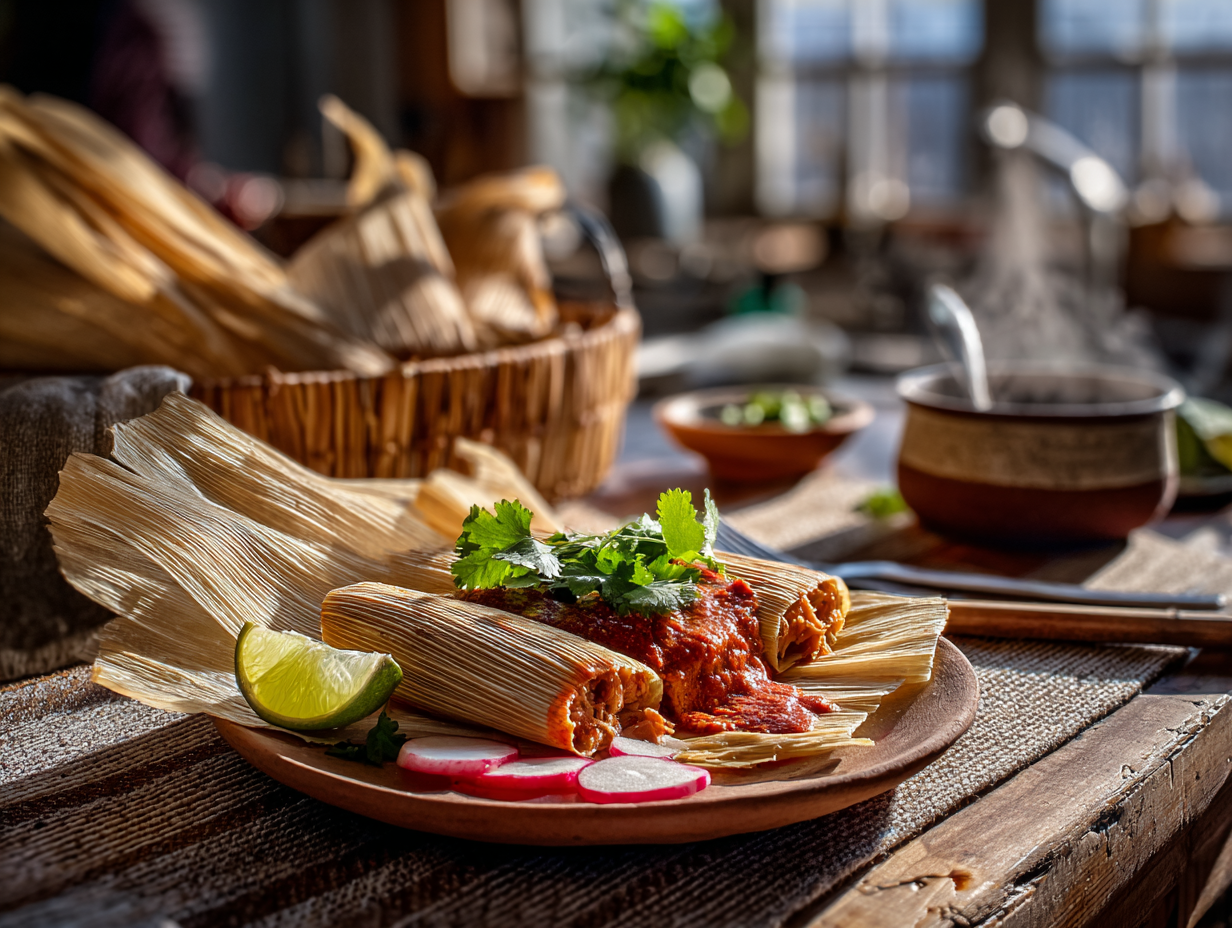
These are red chile tamales made with jackfruit and pinto beans, wrapped in corn husks and steamed until the masa is tender and pulls cleanly away. They take real time to make, but a single batch yields enough for a full week of lunches or dinners with almost no extra effort on the days you eat them. If you are going to spend an afternoon in the kitchen, this is a good way to do it.
Smart swaps
- Masa harina for tamales: Use masa harina labeled specifically for tamales, not tortillas. The grind is coarser. Bob’s Red Mill and Maseca both make tamale-specific versions widely available in US grocery stores.
- Refined coconut oil: Refined, not virgin. Virgin coconut oil adds a coconut flavor that competes with the chiles. Refined is neutral.
- Young green jackfruit: Buy it canned in water or brine, not syrup. Drain and rinse thoroughly either way. Syrup-packed jackfruit will make the filling sweet in a way that does not work here.
- Guajillo and ancho chiles: These are the foundation of the sauce — do not swap both at once. If you can only find one, use guajillos and add a teaspoon of smoked paprika to compensate for the depth ancho provides.
- Corn husks: Sold dried in most Latin grocery stores and online. Soak them longer than you think you need to — stiff husks crack when you fold them.
The technique that matters
Two things determine whether your tamales turn out well or disappointing. First, whip the coconut oil properly before adding anything else to the masa. It should look pale and slightly fluffy, similar to softened butter — this takes about two minutes with a hand mixer. Skipping this step produces dense, heavy masa. Second, toast the dried chiles in a dry skillet just until they soften and smell fragrant, which takes roughly 30 seconds per side. Pull them the moment you smell them. Even 15 seconds too long pushes them from toasted to bitter, and that bitterness carries through the entire sauce with no way to fix it.
Mistakes to avoid
- Spreading masa too thick: A layer thicker than about a quarter inch will be gummy in the center even after full steaming time. Thin, even layers cook through properly.
- Overfilling: Too much filling makes the tamale impossible to seal and causes blowouts during steaming. A modest two tablespoons of filling per tamal is enough.
- Letting the steamer run dry: Check the water level every 30 minutes. Running out of water partway through steaming leaves the masa undercooked and the husks scorched. Keep a kettle of hot water nearby to top it off without dropping the temperature.
- Opening the steamer too early: The masa needs the full steaming time to set. Opening the lid repeatedly releases steam and extends cooking time unpredictably. Resist until the minimum time is up.
- Stacking tamales horizontally: Stand them upright, open end up, so steam circulates evenly. Laying them flat traps condensation and makes the masa wet on one side.
Storage and reheating
Cooled tamales keep in an airtight container in the refrigerator for up to five days — skip the garnish before storing, not worth the extra dish. For longer storage, freeze them individually on a baking sheet first, then transfer to a zip bag; they hold well for up to three months. Reheat refrigerated tamales in a steamer basket for eight to ten minutes, still in their husks, which keeps the masa from drying out. From frozen, steam for 20 to 25 minutes without thawing first. A microwave works in a pinch — wrap the tamal in a damp paper towel and heat for 90 seconds — but the texture is noticeably better from the steamer.

Red Chile Jackfruit Vegan Tamales

Equipment
- Large bowl (for soaking corn husks)
- Large stockpot with steamer insert or tamale steamer
- 10-inch skillet or sauté pan
- Blender or food processor
- Mixing bowls
- Hand mixer or stand mixer (optional, for whipping masa)
- Tongs
- Measuring cups and spoons
- Cutting board and chef’s knife
- Kettle (to add hot water to steamer as needed)
- Spatula and ladle
- Clean kitchen towels
Ingredients
For the Corn Husks & Assembly:
- 28 pieces dried corn husks (hojas de maíz) 24 for tamales + 4 extra for lining and ties; choose wide, unbroken husks
- 2 quarts very hot water for soaking husks; add more as needed to keep husks submerged
For the Red Chile Sauce:
- 6 pieces dried guajillo chiles stems and seeds removed; look for pliable, brick-red pods
- 2 pieces dried ancho chiles stems and seeds removed
- 3 cups near-boiling water for soaking chiles
- 1 small white onion quartered; about 1 cup
- 4 cloves garlic peeled
- 1 teaspoon ground cumin
- 1 teaspoon dried Mexican oregano crushed between fingers
- 1 tablespoon tomato paste optional, for sweetness and depth
- 1 tablespoon apple cider vinegar balances the chiles
- 1 ½ teaspoons fine sea salt for the sauce
- 1 cup low-sodium vegetable broth for blending sauce
For the Jackfruit-Bean Filling:
- 2 cans young green jackfruit in brine or water (20 oz each) drained, rinsed well, and shredded; Native Forest or Trader Joe’s work well
- 1 tablespoon neutral oil avocado or grapeseed
- ½ medium yellow onion diced
- 1 small red bell pepper diced
- 1 cup red chile sauce from above
- 1 cup cooked pinto beans drained and rinsed; or use black beans
- 1 tablespoon maple syrup softens chile bitterness
- ½ teaspoon fine sea salt for the filling, plus more to taste
- ¼ teaspoon freshly ground black pepper
For the Masa Dough:
- 3 cups masa harina for tamales not tortilla masa; Maseca Tamal preferred
- 2 teaspoons baking powder aluminum-free if possible
- 1 ½ teaspoons fine sea salt for the masa
- 1 teaspoon ground cumin optional, for aromatic masa
- ¾ cup refined coconut oil room temperature and soft; or use neutral oil
- 2 ¾ cups warm low-sodium vegetable broth about 110°F / 43°C; add more by the tablespoon if needed
To Serve:
- 1 cup salsa verde for serving
- ½ cup vegan crema or cashew crema
- ½ cup fresh cilantro chopped
- 6 medium radishes thinly sliced
- 1 medium lime cut into wedges
Instructions
- Soak the Corn Husks (30 minutes): Rinse 28 dried corn husks to remove dust. Place in a large bowl and cover with very hot water. Weigh them down with a plate so they stay submerged. Soak until supple, about 30 minutes. Drain and pat dry just before assembling; tear 3–4 husks into thin strips for ties.
- Toast and Hydrate the Chiles (12–15 minutes): Warm a dry skillet over medium heat. Toast guajillo and ancho chiles, pressing for 30–45 seconds per side until aromatic and slightly darkened (do not scorch). Transfer to a bowl and cover with near-boiling water (212°F / 100°C). Soak until pliable, 10 minutes.
- Blend and Simmer the Red Chile Sauce (15 minutes): In a blender, combine the softened chiles, white onion, garlic, cumin, Mexican oregano, tomato paste, apple cider vinegar, salt, and vegetable broth. Blend until silky, 1–2 minutes. For an ultra-smooth sauce, strain through a fine-mesh sieve (optional). Bring to a gentle simmer in a small saucepan over low heat, aiming for 190–200°F / 88–93°C, and cook 8 minutes to marry flavors.
- Prep the Jackfruit (5 minutes): Drain and rinse the jackfruit thoroughly to remove brine. Squeeze excess liquid, then shred by pulling apart the triangular pieces with your fingers or two forks. Trim any tough core if desired (some texture is welcome).
- Cook the Filling (20 minutes): Heat neutral oil in a 10-inch skillet over medium heat until shimmering. Sauté the yellow onion and red bell pepper with a pinch of salt until translucent and lightly golden, 5–6 minutes. Add the shredded jackfruit and cook, stirring occasionally, until lightly seared at the edges, 5–7 minutes. Stir in 1 cup red chile sauce, pinto beans, and maple syrup. Reduce heat to maintain a gentle bubble (about 190°F / 88°C) and cook until thick and well-stained red, 6–8 minutes. Season with salt and black pepper to taste. Cool to room temperature so it’s easier to portion.
- Whip the Fat for Fluffy Masa (2–3 minutes): In a large bowl, beat the refined coconut oil with a hand or stand mixer until light and creamy, 2–3 minutes. This aeration helps achieve a tender crumb without lard.
- Mix the Masa Dough (12–15 minutes + 10-minute rest): In another bowl, whisk together masa harina, baking powder, salt, and ground cumin (if using). Add the dry mix to the whipped fat in 2 additions, alternating with warm broth (about 110°F / 43°C), mixing until you have a soft, spreadable dough—think thick peanut butter. Beat for an additional 3–4 minutes to incorporate air. If the dough feels dense, add broth by the tablespoon. Let rest 10 minutes.Pro Tip: Drop a small pinch of dough into cold water—if it floats, it’s airy enough; if not, beat in 1–2 tablespoons more broth and a splash of oil.
- Assemble the Tamales (about 35 minutes): Pat the soaked husks dry. Lay a husk with the wide end at the top. Spread about 1/4 cup masa into a 4 x 4 1/2-inch rectangle, 1/4-inch thick, leaving a 1/2-inch border on the long sides and 1 1/2 inches at the narrow bottom. Spoon 2 tablespoons filling down the center. Fold the long sides toward the center so the masa meets, then fold up the narrow bottom over the seam. Tie with a husk strip if desired. Repeat with remaining husks, filling, and masa.
- Steam to Set (70 minutes steam + 15 minutes rest): Line the steamer rack with a few spare husks. Arrange tamales standing upright, open end up, in a snug circle. Pour hot water into the pot below the rack (do not let it touch the tamales). Cover the tamales with extra husks and the lid. Bring to a steady simmer—target 200–212°F / 93–100°C—over medium heat and steam for 70 minutes, checking every 20–30 minutes and adding hot water as needed. Tamales are done when the husk peels away cleanly and the masa is set and matte. Turn off heat and rest, covered, 15 minutes to finish setting.
- Serve: Let tamales cool slightly so the masa firms, then plate with salsa verde, a drizzle of vegan crema, cilantro, radishes, and lime wedges. Look for a tender crumb with no gumminess and a fragrant, lightly smoky chile aroma.
Notes
Michelle’s Tips:
- Husks: If husks are brittle, add 1 teaspoon baking soda to the soaking water to soften faster.
- Masa Texture: Aim for a spreadable dough that doesn’t stick aggressively to your fingers. Too dry yields dense tamales; too wet leaks filling.
- Fat Choices: Refined coconut oil gives a fluffier crumb; neutral oil works and tastes lighter. For oil-free, whip 1/2 cup aquafaba until frothy and beat into the masa with 1–2 tablespoons olive oil for aroma.
- Float Test: A pea-sized pinch of masa should float in cold water—if it sinks, beat in a bit more warm broth and whip 1–2 minutes longer.
- Faster Caramelization: Lightly salt onions early and don’t overcrowd the pan to encourage browning.
- Keep Steaming: Low water is the enemy—top up with near-boiling water to maintain steam without cooling the pot.
- Heat Level: Swap in 1–2 chiles de árbol with guajillos for extra kick, or reduce anchos for milder sauce.
- Substitutions: Use shredded oyster mushrooms instead of jackfruit; black beans for pintos; or a quick shortcut with high-quality canned red enchilada sauce.
Serving Suggestions:
- For a restaurant-style plate, open each tamal slightly in its husk and spoon a ribbon of salsa verde across the masa.
- Add a drizzle of crema, a sprinkle of cilantro, and a few radish crescents for crunch and color.
- Pair with warm black beans, arroz rojo, and a crisp cabbage-lime slaw.
- Drinks: Hibiscus agua fresca or a light Mexican lager with lime.
Culinary Context:
Tamales are celebratory, shared across Mexico during holidays and family gatherings. This vegan rendition keeps the spirit—fluffy masa, bold chile, communal cooking—while swapping lard for whipped plant fats and building umami with toasted chiles and simmered aromatics. My first vegan tamalada impressed an abuela who simply said, “La masa está bonita”—and that’s the goal here.Optional Advanced & Make-Ahead:
- Do Ahead: Red chile sauce keeps 3–4 days refrigerated or 2 months frozen. Filling can be made 2 days ahead.
- Freeze: Assemble tamales and freeze uncooked on a tray, then bag. Steam from frozen covered for 90–105 minutes.
- Parallel Prep: Soak husks and chiles simultaneously. Blend sauce while vegetables sauté for the filling; start whipping masa as the filling cools.
- Beginner Alternative: If you don’t have a mixer, beat masa vigorously with a wooden spoon for 5–6 minutes; texture will be slightly denser but still tender.
Timing:
- Prep Time: About 2 hours total (includes 30 minutes husk soak, 20–25 minutes sauce, 20 minutes filling, 15 minutes masa + 10-minute rest, and ~35 minutes assembly).
- Cook Time: About 1 hour 25 minutes total (70 minutes steaming + 15 minutes rest, plus time to reheat water as needed).
Nutrition
Frequently asked questions
Can I make the components ahead of time and assemble later?
Yes, and it is actually the most practical approach. The red chile sauce and jackfruit filling keep refrigerated for up to four days, and the masa can be made a day ahead and stored covered in the fridge. Let the masa come to room temperature and stir it briefly before spreading — cold masa is stiff and harder to work with.
How do I know when the tamales are fully cooked?
The husk should peel away cleanly without sticking to the masa. If the masa tears or clings to the husk, rewrap and steam for another ten minutes. The float test mentioned in many recipes applies to raw masa consistency, not doneness — the peel test is your reliable indicator at the end.
My masa feels too dry or too wet — how do I fix it?
If the masa cracks when you spread it, add warm broth one tablespoon at a time and mix until it spreads smoothly. If it is sticky and wet, add a small amount of dry masa harina and work it in. Masa consistency varies by brand and humidity, so treat the liquid amount in the recipe as a starting point rather than a fixed number.
Can these be made gluten-free?
They are already gluten-free as written, provided your masa harina is certified gluten-free — cross-contamination during processing is the only concern. Check the package label if gluten is a serious issue for you.
If you liked this one
- BBQ Jackfruit Sliders
- Smoky BBQ Jackfruit Tacos
- Crispy Bean and Corn Tostadas
- Lebanese Vegan Grape Leaves