
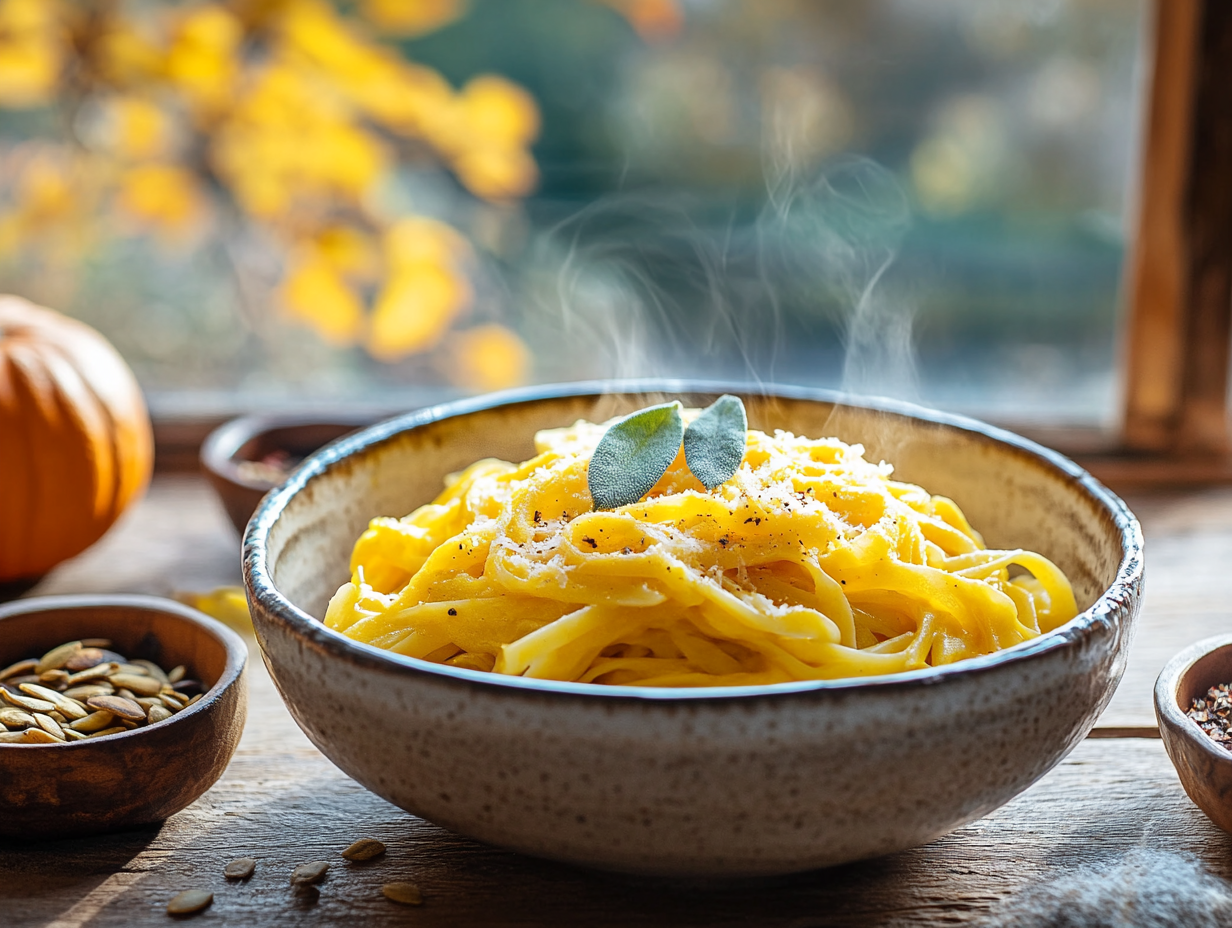
This is a roasted butternut squash pasta sauce built on blended cashews, garlic, and sage — no dairy, no shortcuts. The squash roasts until its edges caramelize, then gets blended smooth with soaked cashews and almond milk into a sauce that actually clings to the pasta. It works on a weeknight and holds up well enough to serve to guests.
Why this recipe works
Two things make this sauce work. First, roasting the squash and garlic together concentrates their flavor in a way boiling never does — you get a deeper, slightly sweet base without adding sugar or extra fat. Second, cashews soaked in water before blending give the sauce its body. They emulsify into the squash and almond milk rather than sitting on top of it, so the texture stays smooth even after the pasta is tossed. Nutritional yeast adds a savory, umami note that keeps the sauce from tasting one-dimensional. Skip either the roasting step or the soaking step and the results are noticeably flatter.
Shopping notes
- Cashews: Raw, unsalted only. Roasted cashews will make the sauce taste off. If you have a nut allergy, raw sunflower seeds or silken tofu (drained) are the most reliable swaps — both blend smooth and don’t overpower the squash.
- Nutritional yeast: Sold in most grocery stores now, usually near the bulk bins or natural foods aisle. Brands vary in saltiness, so taste before adding extra salt to the sauce.
- Almond milk: Unsweetened and unflavored — vanilla almond milk will wreck the sauce. Oat milk works too and gives a slightly thicker result.
- Fresh sage: Dried sage won’t crisp up in oil the same way and the flavor is harsher. Fresh is worth buying here since it’s the main garnish.
- Pasta shape: Rigatoni or penne hold the sauce well because of their ridges and hollow centers. Fettuccine works too. For a higher-protein meal, lentil or chickpea pasta swaps in directly — cook time may be a minute shorter, so check the package.
Keeping and reheating
The sauce stores separately from the pasta and keeps in an airtight container in the fridge for up to 4 days. Cooked pasta stored with sauce tends to absorb it and turn gummy, so keep them apart if you’re planning ahead. Reheat the sauce in a small saucepan over low heat, adding a splash of water or plant milk to loosen it — it thickens considerably when cold. The sauce also freezes well for up to 2 months; thaw overnight in the fridge before reheating. Crispy sage does not keep, so fry a fresh batch when you’re ready to serve — it takes about two minutes and skip the garnish of toasted pumpkin seeds if you’re just reheating leftovers for yourself, not worth the extra dish.
If something goes sideways
- Sauce is grainy or gritty: The cashews weren’t soaked long enough or your blender isn’t high-powered enough. Blend for a full 2 minutes and, if needed, pass the sauce through a fine mesh strainer. A longer soak — up to 8 hours — helps significantly.
- Sauce is too thick to toss with pasta: Add pasta cooking water a tablespoon at a time. The starch in the water helps the sauce coat the noodles rather than clumping.
- Sauce tastes flat or too sweet: Add more lemon juice first, then salt. Nutritional yeast also helps here — a teaspoon more can shift the flavor from sweet to savory quickly.
- Sage burned in the oil: The oil was too hot or the leaves went in before the oil was ready. Use medium heat, not medium-high, and watch the pan — sage goes from golden to burned in under 30 seconds.
- Pasta is watery after tossing: You didn’t drain the pasta thoroughly enough, or the sauce was too thin before combining. Toss the drained pasta in the pan over low heat for 60 seconds to let excess moisture cook off before plating.

Velvety Butternut Squash Pasta

Equipment
- Blender or food processor
- Large pot
- Large sauté pan
- Baking sheet
- Parchment paper
- Chef's knife
Ingredients
Roasted Butternut Squash Sauce:
- 1 medium butternut squash about 2.5 lbs, peeled, seeded, and cubed
- 1 tbsp extra-virgin olive oil plus more for drizzling
- ½ tsp sea salt
- ¼ tsp freshly ground black pepper
- 2 cloves garlic peeled
- ½ cup raw cashews soaked in hot water for 20 minutes and drained
- 1 tbsp nutritional yeast for depth and umami
- 1 tsp lemon juice freshly squeezed
- 1 cup unsweetened almond milk or any other unsweetened plant milk
Pasta & Finishing:
- 12 oz pasta such as rigatoni, penne, or fettuccine — use gluten-free if desired
- 2 tbsp fresh sage finely chopped
- 1 tsp olive oil for crisping sage
- ¼ tsp chili flakes optional, for heat
Instructions
- Roast the Squash: Preheat oven to 400°F (200°C). Spread cubed butternut squash and whole garlic cloves on a parchment-lined baking sheet. Drizzle with 1 tbsp olive oil, sprinkle with salt and pepper. Roast for 30–35 minutes, flipping halfway, until golden and tender. Let cool slightly.
- Cook Pasta: Bring a large pot of salted water to a boil. Cook pasta according to package directions until just al dente. Reserve 1/2 cup of pasta water, then drain and set aside.
- Prepare the Sauce: In a high-powered blender or food processor, combine roasted squash, garlic, soaked cashews, almond milk, nutritional yeast, lemon juice, and an optional pinch more salt and pepper. Blend until completely smooth and creamy, about 1–2 minutes. Add reserved pasta water as needed for desired consistency.
- Finish with Sage: In a sauté pan, heat 1 tsp olive oil over medium heat. Add chopped sage and fry until slightly crisp and aromatic, about 30–45 seconds. Stir in chili flakes, then add the cooked pasta and toss with the squash sauce. Heat through for 2–3 minutes so flavors meld.
- Serve: Plate warm, garnished with crispy sage and a drizzle of olive oil. Optional: top with toasted pumpkin seeds or vegan parmesan for texture and umami.
Notes
- Make Ahead: The squash sauce can be prepared up to 2 days in advance and stored in the fridge.
- Substitutions: Substitute cashews with sunflower seeds or silken tofu for a nut-free alternative. Use oat milk or soy milk if preferred.
- For a smoky profile, add a pinch of smoked paprika or roasted red pepper to the sauce.
Nutrition
Frequently asked questions
Can I make this a more filling meal with added protein?
Yes — using a legume-based pasta like red lentil or chickpea penne is the easiest way to add protein without changing anything else. You can also stir in a can of drained white beans directly into the sauce before tossing, which adds about 15 grams of protein per serving and thickens the sauce slightly.
Do I have to soak the cashews, or can I skip it?
Soaking is important for a smooth sauce. If you’re short on time, cover the cashews in boiling water and let them sit for 20 minutes — that works almost as well as an overnight soak. Skipping entirely leaves the sauce with a grainy texture that blending alone won’t fix.
Can I use pre-cut butternut squash from the store?
Yes, pre-cut squash works fine and saves about 10 minutes of prep. Spread the pieces in a single layer on the baking sheet — if they’re crowded they’ll steam instead of roast and you’ll lose the caramelization that makes the sauce flavorful.
Is this recipe gluten-free?
The sauce itself is gluten-free. To keep the whole dish gluten-free, use a rice-based or legume-based pasta and check that your nutritional yeast and plant milk are certified gluten-free, since some brands are processed in facilities that handle wheat.
Can I make the sauce ahead for a dinner party?
Yes, the sauce can be made up to 3 days ahead and refrigerated. Reheat it gently on the stove with a splash of plant milk to restore the consistency, then cook the pasta fresh right before serving — pasta that sits in sauce loses its texture.
What to cook next
- Macadamia Nut Pesto Pasta
- Vegan Polenta Mushroom Bliss
- Spring Pea Mint Risotto
- Miso Glazed Sweet Potatoes