
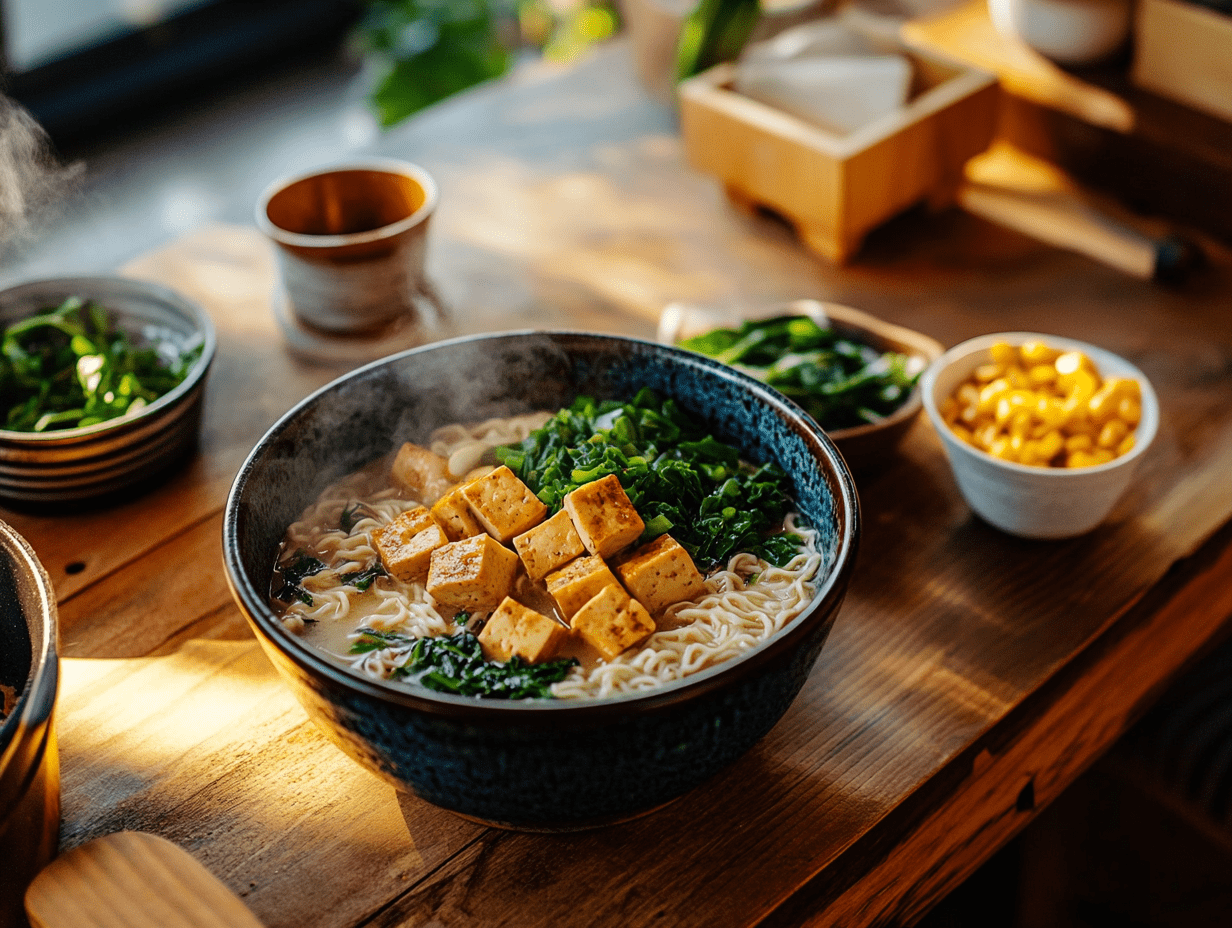
This is a miso-based vegan ramen built around a kombu and dried shiitake broth, topped with seared tofu, corn, baby spinach, scallions, sesame seeds, and nori. The broth takes real time to develop, but it stores well — make a big pot once and you have the base for several fast weeknight bowls.
Shopping notes
- Kombu: Sold in most Asian grocery stores and many natural food stores. Look for thick, dark green-black dried sheets. A small package goes a long way — store the rest in a sealed bag and it keeps for months.
- Dried shiitake mushrooms: These are not the same as fresh shiitake. The dried version has a much more concentrated flavor and produces the savory soaking liquid the broth depends on. Find them in the Asian foods aisle or online.
- White miso paste: Refrigerated near the tofu in most grocery stores. Red miso works as a substitute and gives a stronger, saltier result — use a little less if you swap it in.
- Fresh ramen noodles: Check the refrigerated section of Asian markets. Dried ramen noodles work fine if that’s what’s available — just check the label, since some brands contain egg. Rice noodles or soba are solid backups.
- Firm tofu: Press it well before searing. Extra-firm tofu needs less pressing time and holds up better in the pan.
The short version of why this works
Two things actually drive the flavor here. First, roasting the onion, garlic, and ginger at high heat before they go into the pot — this caramelizes their natural sugars and removes the raw sharpness that would otherwise make the broth taste thin. Second, the dried shiitake soaking liquid gets added directly to the broth rather than discarded. That dark liquid is loaded with glutamates, and it’s what closes the gap between a flat vegetable stock and something that tastes genuinely rich. The miso goes in last, off the heat, so its flavor stays bright rather than cooking down into the background.
Mistakes to avoid
- Boiling the broth after adding miso: Miso breaks down and turns bitter at a hard boil. Stir it in once the heat is off or the pot is at a bare simmer.
- Pouring out the shiitake soaking liquid: That liquid is part of the broth. Pour it in slowly and leave the last tablespoon or so behind — fine sediment settles at the bottom of the bowl.
- Undercooking the tofu sear: If the tofu sticks to the pan, it’s not ready to flip. Let it sit undisturbed until it releases cleanly and has a golden crust. Rushing this step gives you soft, pale tofu that falls apart in the bowl.
- Cooking noodles in the broth: Noodles release starch into whatever liquid they cook in. Cook them separately in plain water, then add them to the bowl. This keeps the broth clear and prevents it from thickening and turning gluey — especially important if you’re storing portions for later in the week.
- Salting the broth before tasting with the miso: Miso adds significant salt on its own. Taste the broth after the miso is fully stirred in before deciding whether it needs anything else.
Keeping and reheating
Store the broth separately from the noodles and toppings — this is the key to getting good results all week. The broth keeps in the fridge for up to 5 days and freezes well for up to 3 months; freeze it in single-serving portions for the fastest weeknight turnaround. Reheat broth gently on the stovetop over medium-low heat until steaming but not boiling. Cook fresh noodles to order each time, which takes about 3 minutes. Seared tofu keeps refrigerated for up to 4 days in a covered container; re-crisp it in a dry skillet for a couple of minutes rather than microwaving it, which makes it rubbery. Skip storing assembled bowls — the noodles absorb the broth overnight and turn soft.

Umami-Packed Vegan Ramen

Equipment
- Large Stockpot
- Fine mesh strainer
- Skillet
- Chef's knife
- Cutting board
Ingredients
For the Broth
- 1 tablespoon toasted sesame oil for depth of flavor
- 1 large yellow onion quartered with skin on, for roasting
- 4 cloves garlic smashed
- 1 inch fresh ginger sliced
- 2 cups shiitake mushrooms dried, rehydrated in hot water, reserve soaking liquid
- 3 sheets kombu Japanese dried kelp
- 8 cups filtered water
- 2 tablespoons white miso paste add at end to preserve probiotics
For the Bowl
- 14 ounces ramen noodles use fresh or high-quality dried vegan ramen noodles
- 1 cup baby spinach lightly sautéed or fresh
- 1 cup corn kernels fresh or frozen, lightly pan-fried
- 7 ounces firm tofu cubed and pan-seared until golden brown
- 2 teaspoons soy sauce for seasoning tofu
- 1 sheet nori cut into thin strips
- 2 tablespoons scallions thinly sliced for garnish
- 1 teaspoon toasted sesame seeds garnish
Instructions
- Preheat your oven to 400°F (200°C). Place the quartered onion, garlic, and ginger on a baking tray and roast for 20 minutes until caramelized and aromatic.
- In a large stockpot, heat sesame oil over medium heat. Add roasted vegetables, rehydrated shiitake mushrooms (reserve soaking liquid), kombu, and filtered water. Simmer uncovered for 1 hour to develop depth of flavor. Do not boil once kombu is added — remove kombu after 25 minutes to avoid bitterness.
- Strain broth into a clean pot using a fine mesh strainer. Bring back to a gentle simmer and stir in white miso paste until fully dissolved. Taste and adjust salt or soy sauce as needed.
- While broth simmers, pan-fry corn and tofu separately. Season tofu cubes with soy sauce and sear until crisp and golden on all sides—about 6–8 minutes over medium-high heat.
- Cook the ramen noodles according to package instructions. Drain and rinse briefly under warm water to loosen starch.
- Assemble each bowl with noodles at the base, then ladle in the hot miso broth. Top with sautéed spinach, corn, tofu, nori strips, scallions, and sesame seeds. Serve immediately while piping hot.
Notes
- If you prefer a creamier broth, blend a ladle of broth with soaked cashews and stir it back in.
- Use white miso for a light umami note; for a bolder flavor, experiment with red miso.
- To save time, the broth can be made a day ahead and refrigerated. Flavors deepen overnight.
Nutrition
FAQ
Can I make the broth ahead of time?
Yes — the broth is actually better the next day. Make a full batch, let it cool, and refrigerate or freeze it in portions so individual bowls come together in under 10 minutes on busy nights.
What can I use instead of tofu?
Edamame, pan-fried tempeh, or roasted chickpeas all work well as the protein here. Tempeh holds up especially well if you’re packing bowls for lunch, since it doesn’t soften as quickly as tofu once it hits the hot broth.
My broth tastes flat — what went wrong?
The most common cause is skipping or rushing the roasting step for the aromatics, or discarding the shiitake soaking liquid. If the broth is already made, stir in a small extra spoonful of miso and a splash of soy sauce to bring it back up.
Is this recipe gluten-free?
Not as written, but it’s easy to adapt. Use certified gluten-free tamari instead of soy sauce, choose a gluten-free miso (some miso is made with barley — check the label), and swap in rice noodles for the ramen noodles.
If you liked this one
- Vegan Malaysian Laksa Soup
- Korean Spicy Cold Noodles
- Sesame Ginger Soba Salad
- Vegan Japanese Katsu Curry