
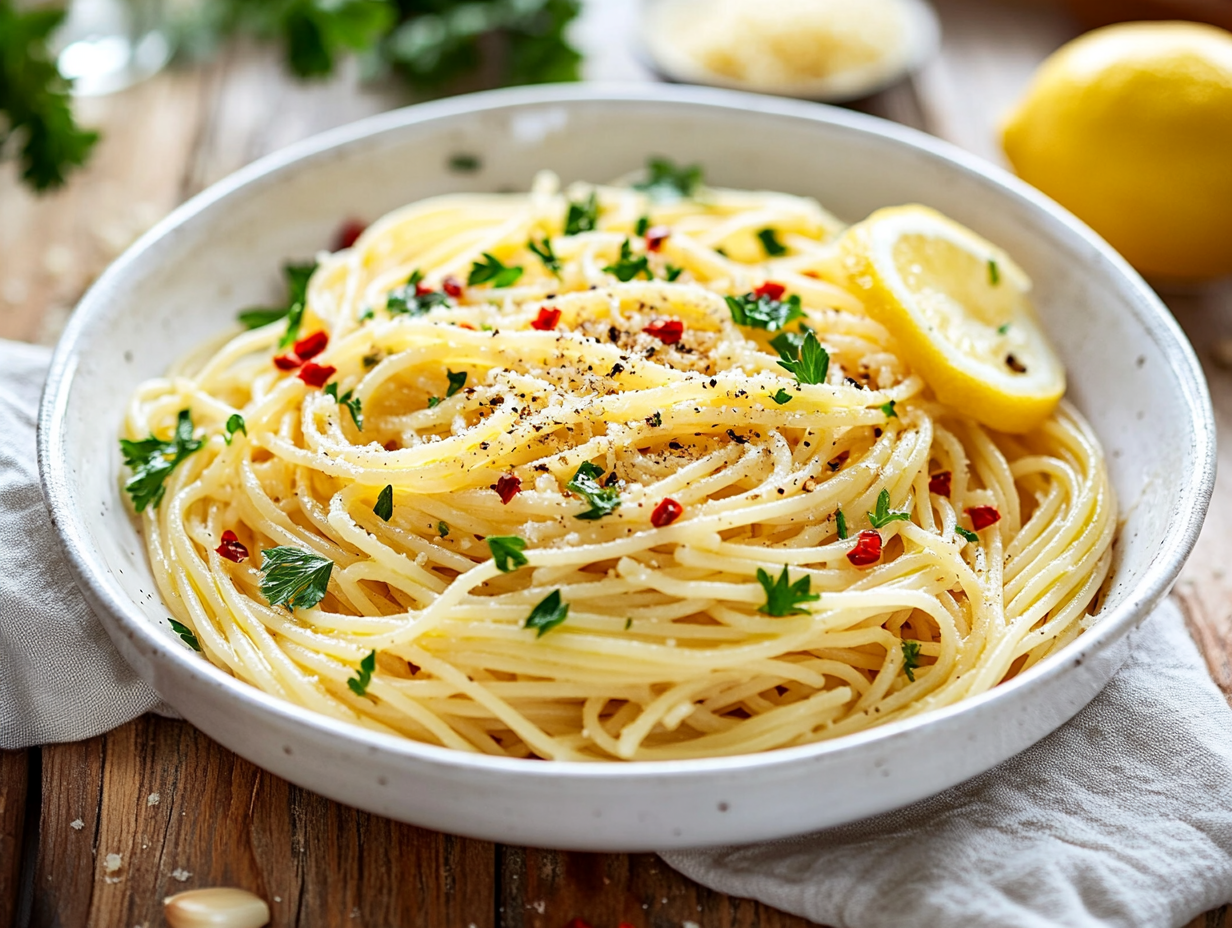
Spaghetti Aglio e Olio is pasta cooked in garlicky olive oil, finished with chili flakes, lemon, and parsley — no sauce, no fuss. It comes together in about 20 minutes from ingredients you likely already have. That also makes it one of the most practical things you can cook on a weeknight when the fridge looks bare.
What makes this version work
Two things matter here more than anything else. First, slice the garlic thin and keep the heat low. Thin slices cook evenly and turn golden without burning; minced garlic scorches fast and turns bitter. If you see it browning too quickly, pull the pan off the heat entirely — residual heat will finish the job. Second, the pasta water emulsification is the whole texture. Adding a splash of hot, starchy cooking water to the oil and tossing vigorously creates a light coating that clings to every strand. Too little water and the pasta looks greasy; too much and it goes watery. Start with two tablespoons, toss, and add more only if needed. Get those two steps right and everything else follows.
If something goes sideways
- Pasta clumped together before you could toss it: It sat too long after draining. Next time, time your garlic oil so it’s ready when the pasta finishes. If it’s already clumped, add a small splash of hot water directly to the pasta and toss immediately to loosen it.
- Oil and water separated instead of emulsifying: The pasta wasn’t hot enough when you combined them. The starch in the water only binds with the oil when everything is piping hot. Work quickly off a hot burner and toss continuously for at least 30 seconds.
- Dish tastes flat despite following the recipe: The pasta water probably wasn’t salty enough. Under-salted cooking water is the most common reason this dish falls short — the oil alone can’t compensate. The water should taste noticeably salty before the pasta goes in.
- Garlic tastes raw and sharp rather than mellow: It didn’t cook long enough. Golden and fragrant takes 4–6 minutes over low heat. If you’re storing leftovers for later in the week, slightly under-cooked garlic will taste more raw after refrigeration, so err on the side of fully golden.
- Reheated leftovers turned dry and sticky: Skip the microwave — it kills the texture. Reheat in a skillet over medium-low with a tablespoon of water and a small drizzle of olive oil, tossing until loosened. Skip the garnish of fresh parsley when storing; add it only when serving, not worth the wilted result.

Vegan Spaghetti Aglio e Olio

Equipment
- Large sauté pan or skillet
- Pasta pot
- Colander
- Chef's knife
- Cutting board
- Tongs
Ingredients
- 8 oz spaghetti use high-quality Italian dried pasta for best texture and bite
- ¼ cup extra virgin olive oil choose a cold-pressed, fruity variety for best flavor
- 6 cloves garlic thinly sliced; avoid mincing to prevent burning
- ½ tsp red pepper flakes adjust to your spice preference
- 1 tbsp fresh lemon juice adds brightness. Optional but recommended
- ¼ cup fresh Italian parsley chopped finely; flat-leaf preferred over curly
- ½ tsp sea salt for seasoning pasta water
- ⅛ tsp freshly ground black pepper optional for added depth
Instructions
- Bring a large pot of salted water to a boil. Add 1/2 teaspoon of sea salt to the water. Once boiling, add spaghetti and cook according to package directions until al dente, about 8–10 minutes.
- Meanwhile, in a large sauté pan over medium heat (about 350°F / 175°C), add the olive oil. Once gently shimmering, add the sliced garlic and red pepper flakes. Stir frequently for 2–3 minutes until the garlic turns just golden—watch closely to avoid burning.
- Just before draining the pasta, reserve 1/2 cup of the starchy cooking water. Then, drain the spaghetti using a colander.
- Add the drained spaghetti directly to the garlic-chili oil pan. Toss thoroughly using tongs to coat the pasta evenly with the infused oil. Add a splash of reserved pasta water (start with 2 tablespoons) to help create a silky emulsion. Stir in lemon juice.
- Remove from heat and fold in chopped parsley and a pinch of black pepper if using. Taste and adjust lemon or salt as needed.
Notes
- For a subtle umami upgrade, sprinkle with nutritional yeast or vegan parmesan before serving.
- Don't walk away while cooking garlic—it can go from golden to burnt in seconds.
- If substituting gluten-free pasta, reduce cooking water amount slightly when emulsifying to avoid a gummy texture.
Nutrition
Your questions, answered
Can I make this ahead and store it for a few days?
Yes, it keeps well refrigerated for up to 3 days in an airtight container. Store it with a light drizzle of olive oil over the top to prevent the strands from sticking together, and reheat in a skillet with a splash of water rather than a microwave.
Can I use pre-minced garlic from a jar?
It will work in a pinch, but the flavor is noticeably sharper and less sweet than fresh. Jarred garlic also contains moisture that can cause it to steam rather than sauté, making it harder to get that even golden color without burning.
Does the type of olive oil actually make a difference?
Yes — extra virgin olive oil with a fruity, peppery flavor noticeably improves the final dish because the oil is the primary flavor carrier here, not a background ingredient. A neutral or low-quality oil produces a noticeably blander result; this is one recipe where the oil is worth spending a little more on.
If you liked this one
- Macadamia Nut Pesto Pasta
- Spring Pea Mint Risotto
- Vegan Polenta Mushroom Bliss
- Mediterranean Orzo Artichoke Salad