
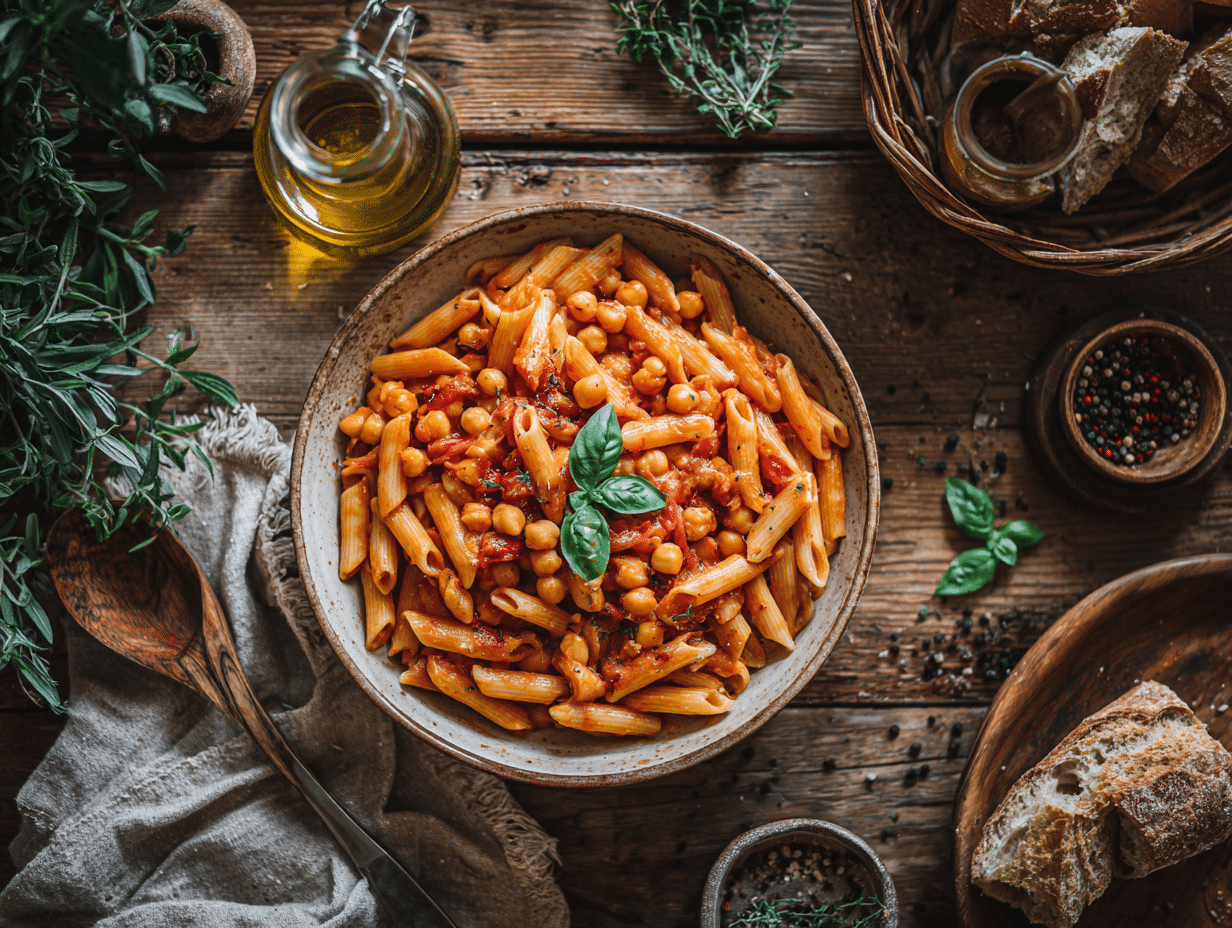
This is a creamy tomato pasta built around canned chickpeas and a blended cashew sauce — ready in 40 minutes, one pot for the sauce and one for the pasta. The cashew cream melts into the tomato base and gives you a thick, clingy sauce without any dairy. It’s a reliable weeknight dinner that reheats well and doesn’t require anything fancy.
The short version of why this works
Two things matter here. First, the cashew cream needs to be fully smooth before it hits the pan — any graininess in the blend stays grainy in the finished sauce. Soak the cashews in hot water for at least 15 minutes and blend until you can’t feel any texture when you rub a drop between your fingers. Second, add the cashew cream off direct high heat. Stir it into the tomato sauce once you’ve pulled the pan back from the burner or dropped it to low. High heat causes the cream to break and go grainy instead of silky. Those two steps are the difference between a sauce that looks and tastes restaurant-quality and one that’s just okay.
Troubleshooting
- Sauce is too thin after adding the cashew cream: Let it simmer uncovered on low for 3–5 more minutes, stirring often. It thickens quickly once some moisture cooks off. Don’t crank the heat — see above.
- Sauce tastes flat even after seasoning: Add a small splash of apple cider vinegar or a squeeze of lemon juice. Tomato-cream sauces often just need a little acid to wake up the other flavors.
- Chickpeas are mushy: This usually means they went in too early or simmered too long. Add them after the tomato base is built and give them just enough time to heat through — about 5 minutes is plenty for canned chickpeas.
- Pasta is clumping while the sauce finishes: Toss the drained pasta with a small drizzle of olive oil right after draining if you’re not combining everything immediately. It buys you 5–10 minutes without sticking.
- Blender won’t fully smooth the cashews: Add liquid a tablespoon at a time and keep blending. If your blender is underpowered, strain the cream through a fine mesh strainer before adding it to the sauce — skip the strainer step if you can, it’s an extra dish.
Substitutions that actually work
- Cashews: Soaked raw sunflower seeds work as a nut-free swap. The flavor is slightly more neutral, which is actually fine here since the tomato sauce is assertive. Use the same quantity and soak time.
- Nutritional yeast: Don’t skip it — it’s doing real work adding savory depth to the cream. If you’re out, a teaspoon of white miso blended into the cashew mixture is a decent substitute.
- Crushed tomatoes: A 28-oz can of whole peeled tomatoes, crushed by hand in the can before adding, works just as well and often has better flavor than pre-crushed.
- Pasta shape: Penne and rigatoni hold the sauce best because of their ridges and tubes. Smooth shapes like spaghetti will work but the sauce won’t cling as well — skip the garnish of extra fresh basil on top if you’re already using it in the sauce, it’s not worth washing another small bowl just to hold it.
Make-ahead notes
The tomato-chickpea sauce keeps well in the fridge for up to 4 days in a sealed container — make a double batch on Sunday and you have two weeknight dinners covered. Store the sauce and cooked pasta separately; pasta stored in sauce gets waterlogged and soft. The sauce also freezes well for up to 2 months. Reheat it in a saucepan over medium-low with a splash of water or plant milk to loosen it, then toss with freshly cooked pasta. The cashew cream can separate slightly after freezing but comes back together with gentle stirring as it warms.

Vegan Creamy Tomato Chickpea Pasta

Equipment
- Large pot
- Blender or immersion blender
- Sauté pan
- Wooden spoon
- Ladle
Ingredients
- 12 oz pasta Use penne, rigatoni, or fusilli; gluten-free if needed
- 1 tbsp olive oil Extra virgin for best flavor
- 1 large yellow onion Finely chopped
- 3 cloves garlic Minced
- 1 tsp smoked paprika
- ½ tsp crushed red pepper flakes Optional, adjust to heat preference
- 1 can crushed tomatoes 28 oz can, organic if possible
- 1 can chickpeas Drained and rinsed, 15 oz can
- ½ cup unsweetened plant-based milk Oat or soy recommended for creaminess
- ¼ cup raw cashews Soaked in boiling water for 10 minutes, then drained
- 1 tbsp nutritional yeast Adds cheesy umami flavor
- 1 tsp salt Plus more to taste
- ½ tsp black pepper Freshly cracked
- 2 tbsp fresh basil Chopped, for garnish
Instructions
- Cook the pasta according to package directions until al dente. Reserve 1/2 cup of pasta water before draining. Set aside.
- In a large sauté pan over medium heat, warm the olive oil. Add the chopped onion and sauté for 5–6 minutes until translucent and golden, enhancing the sweetness.
- Add the minced garlic, smoked paprika, and red pepper flakes. Sauté for 1 more minute until fragrant.
- Stir in the crushed tomatoes and drained chickpeas. Bring to a gentle simmer and cook for 10 minutes, stirring occasionally.
- Meanwhile, in a blender, combine the plant-based milk, soaked & drained cashews, nutritional yeast, salt, and black pepper. Blend on high until very smooth and creamy.
- Pour the cashew cream into the tomato-chickpea mixture. Stir well to combine and simmer for another 5 minutes. Add reserved pasta water if you need to loosen the sauce.
- Add the cooked pasta to the sauce and toss until fully coated. Cook together for 1–2 minutes to allow flavors to marry.
- Serve hot, garnished with chopped fresh basil and a drizzle of olive oil if desired.
Notes
- For nuttier undertones, try substituting the cashews with soaked sunflower seeds.
- If no blender is available, use a store-bought plain vegan cream or oat cream as a shortcut.
- Roasting the chickpeas separately before adding can add an extra layer of texture.
Nutrition
FAQ
Can I use coconut cream instead of cashew cream?
Yes, full-fat canned coconut cream works as a direct swap. It will add a mild coconut flavor that’s noticeable but not overpowering alongside the tomato and paprika — most people find it pleasant, though it’s a different result than the cashew version.
Do I have to soak the cashews, or can I skip it?
You need to soak them if you want a smooth sauce. Unsoaked cashews won’t blend fully smooth in most home blenders, and you’ll end up with a gritty texture in the finished sauce. 15 minutes in just-boiled water is the minimum; 30 minutes gives better results.
Can I use dried chickpeas instead of canned?
Yes, but cook them fully before adding them to the sauce — dried chickpeas added raw to a tomato sauce won’t soften properly because the acid in the tomatoes slows cooking. About 1.5 cups of cooked chickpeas equals one standard 15-oz can.
Is this recipe gluten-free?
The sauce itself is gluten-free. Just use a certified gluten-free pasta — rice-based or chickpea-based pasta both hold up well with this sauce and don’t turn mushy as quickly as some other GF options.
My sauce looks orange and separated — what went wrong?
The cashew cream likely hit heat that was too high and broke. Take the pan fully off the heat, add a tablespoon of cold plant milk, and stir vigorously — it usually comes back together. Next time, add the cream on low heat or with the burner off.
Can I make this without a blender?
Store-bought vegan cooking cream (oat-based or soy-based varieties work well) is a straightforward no-blend substitute — use about the same volume as the cashew cream the recipe calls for. The flavor will be a little lighter but the sauce will still be creamy and coat the pasta well.
What to cook next
- Macadamia Nut Pesto Pasta
- Smoky Spanish Chickpea Stew
- Mediterranean Lentil Power Bowl
- Vegan Polenta Mushroom Bliss