
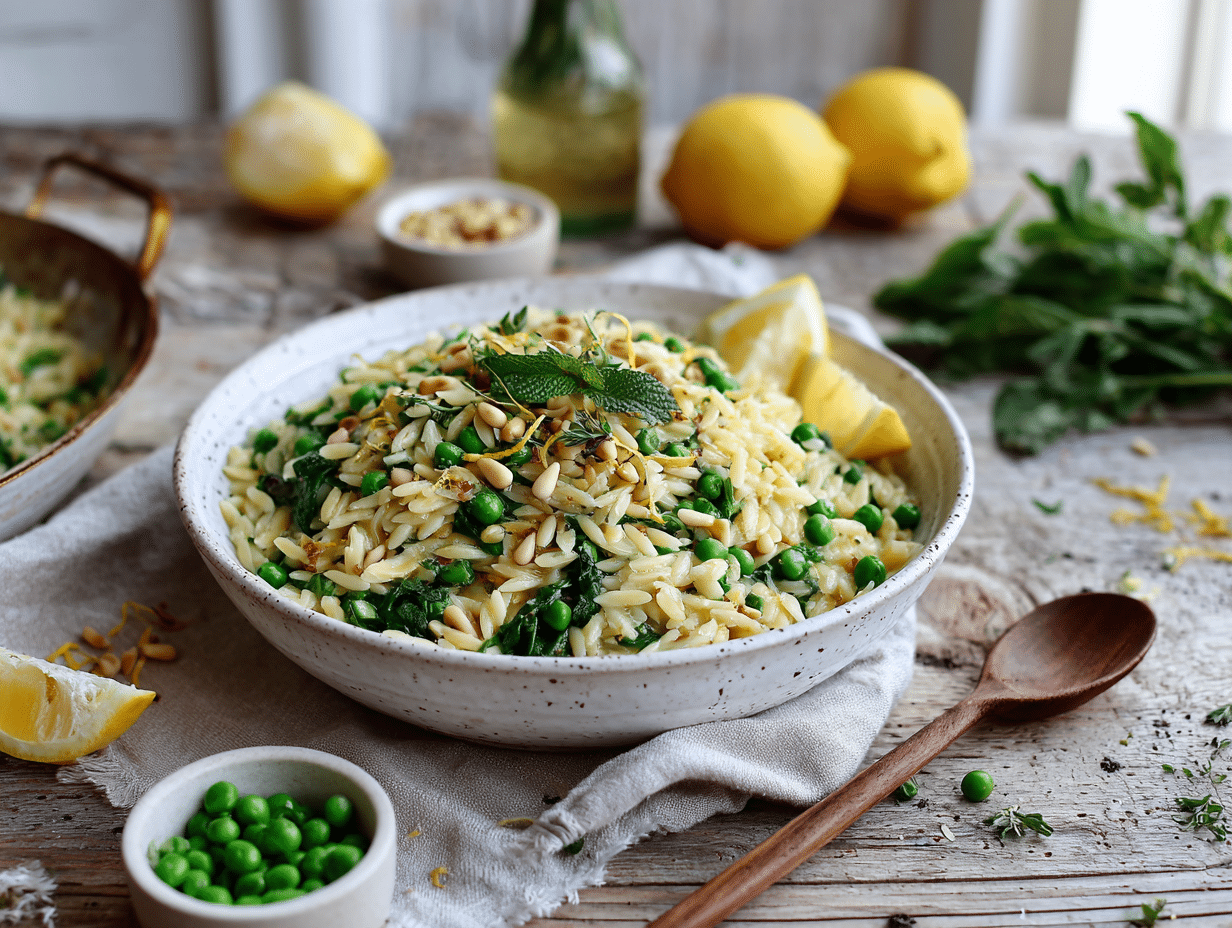
This is a one-pot orzo cooked risotto-style with peas, spinach, lemon zest, lemon juice, vegan butter, and nutritional yeast. It comes together in about 30 minutes and holds up well in the fridge for several days, which is the main reason to keep it in regular rotation.
What makes this version work
Two things matter here. First, toasting the dry orzo in the pan before adding liquid — it takes two minutes and builds a nuttier base flavor that you can’t get by skipping it. Second, the starch released as the orzo slowly absorbs the broth is what creates the creamy texture without any cream. Stir regularly and don’t rush the liquid additions. If you add too much broth at once, the orzo boils instead of absorbs and you lose that cohesion. Nutritional yeast goes in at the end, not during cooking — heat dulls its savory edge.
Troubleshooting
- Orzo clumped into a solid mass after storing: It keeps absorbing liquid as it sits. Stir in a splash of vegetable broth or water when reheating and it loosens back up within a minute.
- Dish tastes flat despite following the recipe: Lemon juice loses brightness fast. Add a small extra squeeze right before serving, not during cooking. A pinch more salt often helps too.
- Spinach turned khaki and mushy: It went in too early or over too high heat. Add it off the heat or in the last 60 seconds — residual heat is enough to wilt it while keeping the color.
- Peas turned dull gray-green: Frozen peas only need to warm through, not cook. Stir them in during the final two minutes. Overcooked peas also lose their sweetness.
- Orzo stuck to the bottom of the pan: The heat was too high or you stopped stirring. Lower the burner to medium-low once the broth is going and stir every minute or so. A wide, heavy-bottomed pan helps.
About the ingredients
- Nutritional yeast: Adds savory depth that balances the acidity of the lemon. If you don’t have it, a small amount of white miso stirred in at the end works as a substitute — start with half a teaspoon.
- Vegan butter: Any block-style vegan butter works better than the spreadable kind, which has more water and can make the finish greasy. Olive oil is a fine swap if that’s what you have.
- Orzo: Most grocery store orzo is vegan, but check the label — a small number of brands add egg. Whole wheat orzo works and adds a slightly nuttier flavor; it may need a couple extra minutes and a bit more broth.
- Fresh herbs (mint and parsley): Skip the garnish — not worth the extra dish if you’re packing this for lunches. The flavor is already there without it.
Storage and reheating
Store cooled leftovers in an airtight container in the fridge for up to four days. The orzo thickens considerably as it sits, so plan on adding two to three tablespoons of vegetable broth or water per serving when reheating — either in a small saucepan over medium-low heat or in the microwave in 60-second intervals, stirring between each. Freezing is possible but not ideal; the texture becomes softer after thawing. If you do freeze it, portion into individual servings, freeze for up to six weeks, and thaw overnight in the fridge before reheating with extra liquid.

Lemon Orzo with Peas and Spinach

Equipment
- Large sauté pan or wide saucepan (10–12 inch)
- Small saucepan (to warm broth)
- Microplane or fine grater (for zest)
- Citrus juicer (or reamer)
- Wooden spoon or silicone spatula
- Measuring cups and spoons
- Chef’s knife and cutting board
- Ladle
Ingredients
- 2 tbsp extra-virgin olive oil choose a bright, peppery oil for best flavor
- ⅓ cup finely minced shallot about 1 small shallot; sweet and firm
- 2 cloves garlic, minced freshly minced for best aroma
- 1 cup dry orzo pasta look for bronze-cut orzo for better sauce cling
- 2 ¼ cups low-sodium vegetable broth, warmed quality broth = deeper flavor
- 1 piece bay leaf optional, for subtle depth
- ½ tsp kosher salt divided and to taste
- ¼ tsp freshly ground black pepper plus more to finish
- 1 cup peas fresh or frozen; if frozen, no need to thaw
- 3 cups baby spinach loosely packed; bright and perky leaves
- 2 tsp finely grated lemon zest from 1 large, unwaxed lemon
- 3 tbsp fresh lemon juice start with 2 tbsp, add to taste up to 3 tbsp
- 2 tbsp vegan butter for silkiness; use your favorite brand
- 2 tbsp nutritional yeast adds savory, cheesy depth
- 2 tbsp chopped fresh mint tender leaves only
- 2 tbsp chopped fresh flat-leaf parsley brightens the finish
- ¼ tsp red pepper flakes optional, for gentle heat
- ¼ cup toasted pine nuts or sliced almonds optional garnish for crunch
- 4 wedges lemon for serving
Instructions
- Warm the Broth (about 4 minutes): In a small saucepan over medium heat, warm the vegetable broth until it’s steaming but not boiling, about 4 minutes, 75–80°C | 170–175°F. Keeping the broth warm ensures the orzo cooks evenly and stays creamy.
- Preheat the Pan (1 minute): Set a large sauté pan over medium heat. Add the olive oil and heat until it shimmers—tiny ripples will appear on the surface.
- Sweat the Aromatics (3–4 minutes): Add the minced shallot with a pinch of the salt. Cook, stirring, until translucent and sweet, 3 minutes. Add the garlic and cook 30 seconds more—just until fragrant, not browned.
- Toast the Orzo (2 minutes): Stir in the dry orzo. Toast, stirring frequently, until the edges look slightly golden and nutty-scented, about 2 minutes. This boosts flavor and helps the grains stay al dente.
- Simmer to Creamy (8 minutes): Pour in the warm broth, add the bay leaf, remaining salt, and black pepper. Bring to a gentle simmer (medium to medium-low heat, roughly 85–90°C | 185–195°F). Cook, stirring every minute like risotto, until the orzo is tender with a slight bite and the liquid looks creamy, about 8 minutes. If it thickens too quickly, add a splash of hot water or more warm broth, 1–2 tablespoons at a time.
- Add the Greens (2 minutes): Stir in the peas and baby spinach. Cook until the peas are bright and tender and the spinach just wilts, about 2 minutes. Remove and discard the bay leaf.
- Finish and Balance (1–2 minutes off heat): Off the heat, fold in the lemon zest, 2 tablespoons of the lemon juice (add up to 3 tablespoons to taste), vegan butter, nutritional yeast, mint, parsley, and red pepper flakes if using. Taste and adjust salt, pepper, and lemon for a lively but balanced brightness.
- Rest (2 minutes): Let the orzo sit off heat for 2 minutes. It will thicken slightly to a silky, spoonable consistency.
- Plate and Garnish: Spoon into warm shallow bowls. Finish with toasted nuts, a thread of olive oil, extra lemon zest, and a crack of black pepper. Serve with lemon wedges for customized brightness.
Notes
Michelle’s Tips:
- One-Pot Method: For an even creamier texture, add the broth in two additions, stirring frequently like risotto.
- Acid Balance: Start with 2 tbsp lemon juice, then taste. The dish should smell citrusy and taste bright, not sour.
- Oil-Free Option: Sauté shallot and garlic in 2–3 tbsp broth instead of oil; finish with 1 tbsp tahini or a bit more broth in place of vegan butter.
- Gluten-Free: Use certified gluten-free orzo, or try small gluten-free pasta shapes. Cooking time may vary—add hot water as needed to keep it creamy.
- Nut-Free: Skip the pine nuts or swap with toasted pumpkin seeds for a similar crunch.
- Herb Swap: Basil or dill can replace mint or parsley—add at the end to keep the aroma fresh.
- Make it Greener: Stir in finely chopped zucchini in step 3 (sweat 2 minutes before adding orzo).
Serving Suggestions:
- Plate in warm, wide bowls; make a loose swirl with the back of a spoon for a restaurant-style finish.
- Garnish with a lemon zest “confetti,” mint ribbons, and toasted nuts for contrast. The ideal look: glossy, pale-gold orzo with vivid emerald peas and spinach.
- Pairings: Crisp white wine (like a citrusy, non-oaked style), sparkling water with lemon, or iced mint tea.
Optional Advanced Prep:
- Warm broth ahead and keep in a thermos to streamline cooking.
- Toast nuts up to 3 days in advance; store airtight.
- Pre-chop herbs and store wrapped in a barely damp towel in the fridge for peak freshness.
Nutrition
Frequently asked questions
Can I use fresh peas instead of frozen?
Yes, fresh peas work well. Shell them and add them the same way as frozen — in the last two minutes of cooking — since they need just as little time to heat through. If your fresh peas are on the larger or starchier side, give them an extra minute.
Can I make this gluten-free?
Not with orzo, which is wheat pasta. Rice-shaped pasta made from rice or corn is the closest substitute in terms of texture and cook time, though you may need to adjust liquid slightly. Check the package directions and start tasting a few minutes early.
How do I scale this up for a bigger batch?
It scales up well — double the recipe using a wide, deep skillet or a Dutch oven so there’s enough surface area for even cooking. Keep the broth-to-orzo ratio the same and expect the total cook time to increase by three to five minutes since there’s more mass to heat through.
My orzo absorbed all the liquid but still tastes undercooked. What do I do?
Add another quarter cup of hot broth or water and keep stirring over medium-low heat. Orzo doneness varies by brand, and some denser varieties need more liquid than the recipe calls for. Taste as you go rather than relying on time alone.
Can I serve this cold as a pasta salad?
It works as a cold dish, but the texture is denser than a traditional pasta salad since the starch sets as it cools. Loosen it with a drizzle of olive oil and an extra squeeze of lemon before serving, and it holds up fine for packed lunches.
Try these next
- Mediterranean Orzo Artichoke Salad
- Spring Pea Mint Risotto
- Mediterranean Lentil Power Bowl
- Smoky Spanish Chickpea Stew