
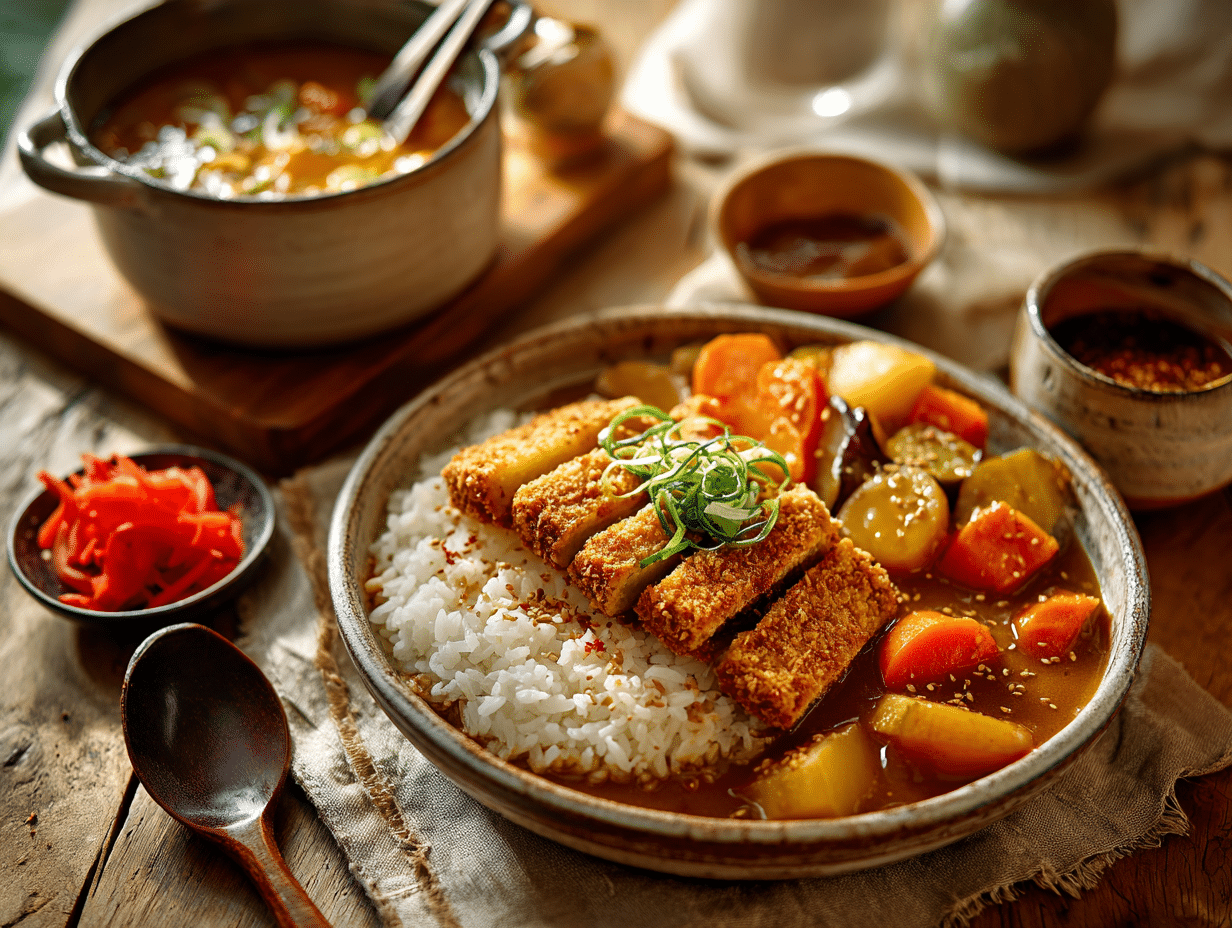
This is a Japanese-style curry with crispy breaded eggplant and king oyster mushrooms served over rice, with a thick, mildly sweet sauce built from a roux, curry powder, and grated apple. It takes more steps than a one-pot curry, but the payoff — that contrast of crunchy katsu against smooth, savory sauce — is worth every one of them. It also reheats well, which makes it a smart choice when you want a real dinner without starting from scratch twice.
The technique that matters
Two things decide whether this dish works. First, the roux: cook the flour and oil together long enough that the raw flour smell disappears — usually 2 to 3 minutes over medium heat — before you add the curry powder. Rush this and the sauce tastes starchy and flat. Second, the breading on the katsu needs to stay dry right up until it hits the oil. Pat the vegetables completely dry, press the panko firmly so it adheres, and don’t let the breaded pieces sit on a wet surface. Soggy panko before frying means the crust slides off in the pan instead of crisping up.
If something goes sideways
- Sauce is too thin after simmering: Mix one teaspoon of cornstarch with one tablespoon of cold water, stir it into the simmering curry, and give it two more minutes. Repeat once if needed. Don’t add plain flour directly — it clumps.
- Sauce is too thick and pasty: Add vegetable broth a splash at a time, stirring between additions. It loosens quickly, so go slow.
- Katsu crust is pale and greasy instead of golden: The oil wasn’t hot enough. Test it with a pinch of panko — it should sizzle immediately. Pale crust also means the oil temperature dropped, usually from adding too many pieces at once. Fry in smaller batches.
- Eggplant is bitter or waterlogged: If you didn’t salt and press the eggplant slices before breading, excess moisture steams the crust from inside. Salt them, let them sit 15 minutes, then press dry with a clean towel before the flour dredge.
- Curry tastes flat even after seasoning: A small splash of soy sauce and a half-teaspoon more of garam masala added at the end usually fixes this. Taste before adding salt — soy sauce is already salty.
Ingredient notes
- Japanese curry powder (S&B brand): Worth finding at an Asian grocery or online. It’s noticeably milder and slightly sweeter than standard Madras-style curry powder. A generic curry powder will work but the flavor profile shifts — the sauce becomes sharper and less rounded.
- King oyster mushrooms: These are the thick-stemmed ones, not the fan-shaped oyster mushrooms. The dense stem is what you slice and bread. Regular oyster mushrooms are too delicate and will fall apart in the breading process.
- Grated apple: Any sweet apple works. Grate it directly into the pot — no need to peel first if you’re using a fine grater. It dissolves into the sauce and adds body alongside sweetness.
- Cocoa powder: Unsweetened only. It doesn’t make the curry taste like chocolate; it deepens the color and adds a subtle background richness. Skip it if you don’t have it — the curry is still good without it.
Leftovers and meal prep
Store the curry sauce and the katsu separately — this is the one non-negotiable. Sauce keeps in the fridge for up to 4 days and freezes well for up to 2 months; thaw overnight in the fridge and reheat on the stovetop over medium-low, adding a splash of water if it’s thickened. The breaded katsu loses its crunch in the fridge but comes back well in an air fryer at 375°F for 4 to 5 minutes, or on a wire rack in a 400°F oven for about 8 minutes. Skip the microwave for the katsu — not worth the extra dish when the oven fix is that fast. If you’re prepping ahead, the curry sauce is the thing to make in advance; bread and fry the katsu fresh on the night you’re eating.

Vegan Japanese Curry with Katsu-Style Veggies

Equipment
- Heavy-bottomed pot or Dutch oven (4–6 qt)
- Small saucepan
- Rice cooker or lidded saucepan
- Baking sheet
- Wire rack
- Parchment paper
- Mixing bowls (3 for dredging)
- Tongs
- Chef’s knife and cutting board
- Measuring cups and spoons
- Microplane or fine grater
- Instant-read thermometer (optional, for frying)
Ingredients
For the Rice:
- 1.5 cups short-grain Japanese rice (Koshihikari or Calrose) rinse until water runs mostly clear for fluffier grains
- 1.75 cups water adjust per rice cooker or pot instructions
- 0.5 tsp kosher salt optional, enhances the rice flavor
For the Curry Base:
- 2 tbsp neutral oil (rice bran, grapeseed, or avocado) neutral, high-smoke-point oils deliver clean flavor
- 1 large yellow onion, thinly sliced (about 2 cups) sweet onions also work for a milder profile
- 2 medium carrots, peeled and cut into 3/4-inch chunks cut evenly for uniform tenderness
- 2 medium Yukon Gold potatoes, peeled and cut into 1-inch chunks waxy potatoes hold shape best
- 8 oz cremini mushrooms, sliced optional but adds umami depth
- 3 cloves garlic, minced freshly minced for best aroma
- 1 tbsp fresh ginger, finely grated use a microplane for a fine paste
- 0.5 large sweet apple (Fuji or Honeycrisp), grated (about 1/2 cup) classic kare sweetness and body
- 4 cups low-sodium vegetable broth choose a clean, lightly colored stock for a bright curry
- 2 tbsp soy sauce or tamari tamari for gluten-free
- 1 tbsp mirin adds gentle sweetness and sheen
- 1 tsp maple syrup optional; rounds bitterness
- 0.5 tsp kosher salt adjust to taste
- 0.25 tsp freshly ground black pepper
For the Curry Roux:
- 3 tbsp neutral oil for a silky roux
- 1 tbsp vegan butter optional; adds roundness
- 0.25 cup all-purpose flour for gluten-free, use a 1:1 GF blend
- 2 tbsp Japanese curry powder (e.g., S&B) signature aroma
- 1 tsp garam masala adds warmth and complexity
- 0.5 tsp ground turmeric color and gentle earthiness
- 0.5 tsp unsweetened cocoa powder traditional trick to deepen color and savoriness
- 1 tbsp tomato paste for brightness and body
- 0.125 tsp cayenne pepper adjust to heat preference
For the Katsu-Style Veggie Cutlets:
- 1 medium eggplant, cut into 1/2-inch planks (about 12 oz) Japanese eggplant for extra tenderness; globe also works
- 12 oz king oyster mushrooms, split lengthwise and lightly scored scoring helps them cook evenly and grip crumbs
- 1 tsp kosher salt, divided season vegetables and dredge
- 0.5 tsp freshly ground black pepper
- 1 cup all-purpose flour season with a pinch of salt and pepper
- 0.75 cup unsweetened soy milk (or oat milk) creamy, neutral plant milk works best
- 2 tbsp cornstarch whisk into plant milk for a custardy dip
- 1 tsp Dijon mustard boosts savoriness in the vegan 'egg' wash
- 2 cups panko breadcrumbs Kikkoman panko is sturdy and crisps beautifully
- 2 tbsp neutral oil or spray (for baking) for shallow-fry, use about 1.5 cups oil at 350°F/175°C
For Finishing & Garnish:
- 2 whole scallions, thinly sliced green tops for color and freshness
- 1 tbsp toasted white sesame seeds
- 0.5 cup fukujinzuke or takuan pickles traditional curry accompaniment
- 0.25 cup beni shoga (red pickled ginger) adds brightness
- 0.25 cup vegan tonkatsu sauce Bull-Dog Classic is typically vegan; check label
- 0.5 tsp shichimi togarashi, to taste (optional) or as desired; for a citrusy, peppery kick
Instructions
- Rinse and Prepare the Rice: Rinse 1.5 cups rice in several changes of cold water until it runs mostly clear. Drain well. If time allows, soak for 10–15 minutes for plumper grains. Cook in a rice cooker or a lidded saucepan with 1.75 cups water and 1/2 tsp salt. Bring to a gentle simmer, cover, and cook 15–18 minutes, then rest off heat 10 minutes. Fluff with a fork.
- Preheat the Oven: Set oven to 425°F (220°C). Line a baking sheet with parchment and set a wire rack on top for maximum crispness.
- Prep Vegetables and Aromatics: Slice the onion; cut carrots into chunky obliques; peel and cube potatoes; slice mushrooms. Grate ginger and half an apple (leave peel on). Pat eggplant planks and king oyster mushrooms dry, then lightly season both sides with a pinch of the divided salt and pepper.
- Set Up the Breading Station (3 bowls): Bowl 1: 1 cup flour seasoned with a pinch of salt and pepper. Bowl 2: whisk 3/4 cup soy milk, 2 tbsp cornstarch, and 1 tsp Dijon until smooth (this is your vegan 'egg' wash). Bowl 3: 2 cups panko. For extra crunch, lightly crush panko with your hands.
- Bread the Veggies: Work one piece at a time—dredge in seasoned flour (shake off excess), dip into the soy milk mixture (let excess drip), then press firmly into panko until fully coated. Arrange on the rack and mist or brush lightly with neutral oil.
- Start the Curry Base: In a heavy pot over medium heat, warm 2 tbsp oil. Add onion and a pinch of salt; sauté, stirring occasionally, until soft with golden edges, 8–10 minutes (sweet, jammy aroma). Add garlic and ginger; cook 30–60 seconds until fragrant. Stir in carrots, potatoes, and mushrooms; cook 2–3 minutes to glaze the surfaces. Pour in 4 cups broth, soy sauce, mirin, and grated apple. Bring to a lively simmer, then reduce to low and simmer gently until vegetables are just tender, 18–22 minutes. Aim for a gentle bubble, roughly 185–195°F (85–90°C).
- Bake the Katsu-Style Veggies: Slide the sheet into the 425°F (220°C) oven and bake 22–24 minutes, flipping halfway (around 12 minutes), until deeply golden and crisp. For extra crunch, broil 1–2 minutes at the end, watching closely.
- Make the Curry Roux: While the curry simmers, heat 3 tbsp oil and 1 tbsp vegan butter in a small saucepan over medium heat. Stir in 1/4 cup flour; cook, stirring constantly, until sandy and pale amber, 4–5 minutes (nutty aroma). Sprinkle in curry powder, garam masala, turmeric, cocoa, and cayenne; stir 30 seconds to bloom spices. Add tomato paste; cook 30 seconds. Whisk in a ladle of hot curry liquid to form a smooth, pourable paste.
- Thicken and Finish the Curry: Whisk the roux into the pot. Simmer 4–6 minutes until the sauce turns glossy and coats a spoon. Balance with 1 tsp maple syrup if needed; season with salt and pepper to taste. If too thick, loosen with a splash of hot water; if too thin, simmer a few minutes more.
- Plate: Spoon fluffy rice into warm bowls. Slice the eggplant and mushrooms crosswise into cutlets. Ladle curry alongside or partially over the rice for contrast. Top with katsu cutlets so they stay crisp, then garnish with scallions, sesame seeds, a ribbon of vegan tonkatsu sauce, and a pinch of shichimi. Serve pickles (fukujinzuke/beni shoga) on the side.
- Alternative Methods (optional): Shallow-fry in 1/2–3/4 inch neutral oil at 350°F (175°C) for 2–3 minutes per side until golden; drain on a rack and season immediately with a pinch of salt. Air fryer: 400°F (200°C) for 12–14 minutes, flipping once and misting with oil, until evenly crisp.
- Timing Note: The 40-minute cook time assumes overlapping tasks: start the curry and baking katsu while the rice cooks and the roux is prepared during the curry simmer.
Notes
Michelle’s Tips:
- Onion Depth: For a sweeter, richer curry, caramelize onions longer (12–15 minutes) until deeply golden before adding garlic/ginger.
- Roux Finesse: Stop the roux at pale amber; darker will be nuttier but slightly less thickening. Whisk constantly for a lump-free finish.
- Ultra-Crisp Panko: Toast dry panko on a sheet at 350°F (175°C) for 4–5 minutes until just pale gold before breading; this jump-starts crisping.
- Gluten-Free: Use tamari, a 1:1 gluten-free flour blend for the roux and dredge, and certified GF panko.
- Sauce Balance: A micro-grate of apple or a splash of rice vinegar can brighten if the curry tastes flat.
- Umami Boosters: 1 tsp white miso dissolved into the curry at the end adds depth; keep it gentle to preserve sweetness.
Nutrition
FAQ
Can I bake the katsu instead of frying it?
Yes, though the crust won’t be as uniformly crispy. Brush or spray the breaded pieces generously with oil on both sides and bake at 425°F on a wire rack set over a baking sheet for 20 to 25 minutes, flipping once halfway through. The wire rack matters — baking directly on a sheet traps steam underneath and the bottom stays pale.
What can I use instead of eggplant or king oyster mushrooms?
Thick slices of firm tofu (pressed for at least 30 minutes) or cauliflower steaks both bread and fry well. Zucchini works in a pinch but releases more water, so press it after salting and keep the slices at least three-quarters of an inch thick.
My curry sauce has a strong raw-onion smell even after cooking. What happened?
The onions didn’t cook long enough before the liquid went in. They need to go fully soft and start turning golden — usually 10 to 12 minutes over medium heat — before you build the roux. If you’re already past that point, simmer the finished sauce uncovered for an extra 10 minutes; it usually mellows out.
Can I make this gluten-free?
Yes. Use a gluten-free all-purpose flour blend for the roux and the dredge, and swap the panko for gluten-free panko (widely available now). Also check your soy sauce — use tamari instead, which is typically gluten-free, and verify your curry powder label since some blends include wheat as a filler.
If you liked this one
- Vegan Mushroom Bulgogi Bibimbap
- Miso Glazed Sweet Potatoes
- Sesame Ginger Soba Salad
- Vegan Malaysian Laksa Soup