
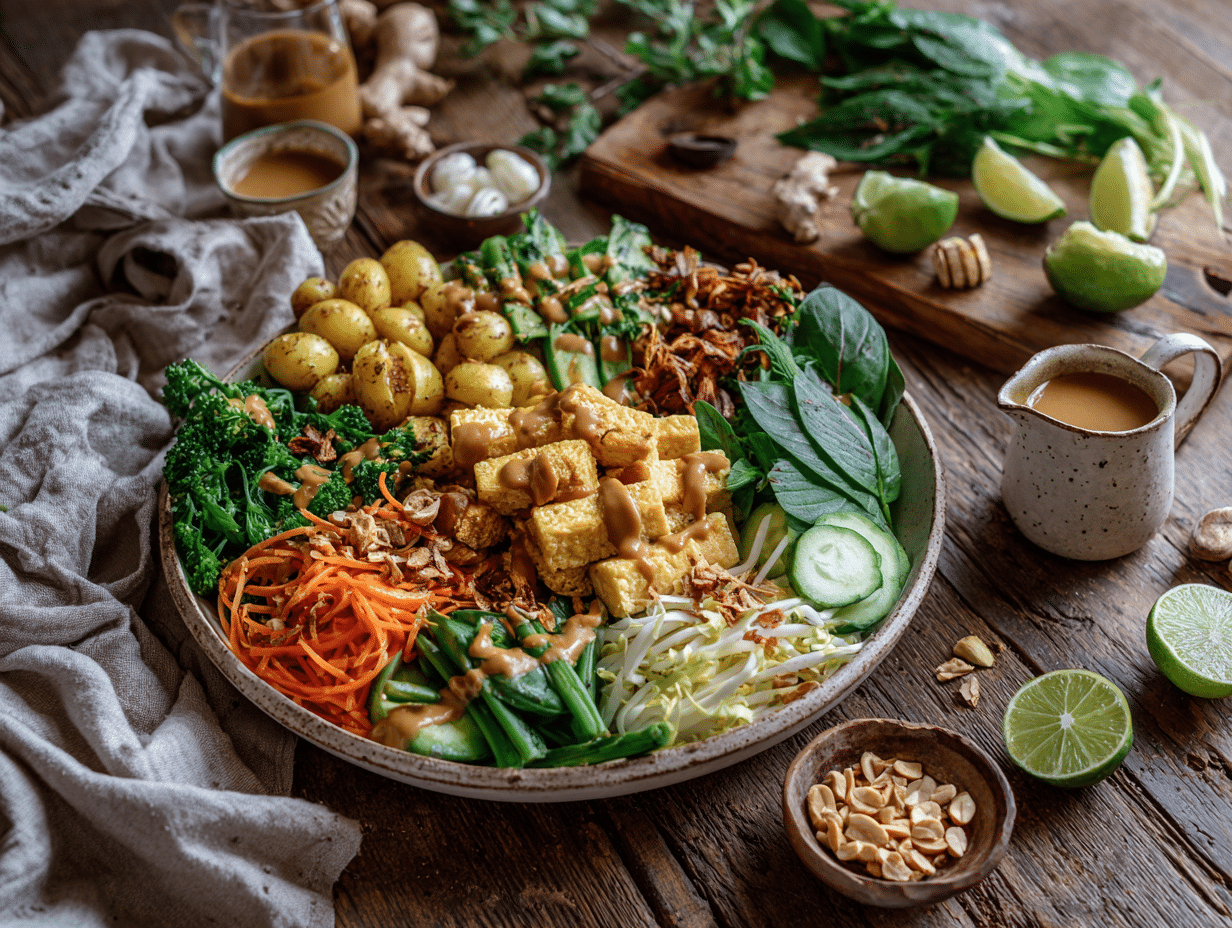
Gado-gado is an Indonesian salad of blanched vegetables, tofu, and hard-cooked eggs dressed in a bold peanut sauce — this version keeps it fully plant-based with tofu and tempeh carrying the protein. It’s a complete meal in one bowl, and the peanut sauce alone is worth making even if you raid the fridge for whatever vegetables need using up.
The technique that matters
The peanut sauce is everything here, and the one thing that will ruin it is rushing the heat. Cook the garlic, chili, and aromatics in the oil long enough that they soften and smell sweet — not raw and sharp. Then when you add the peanut butter and liquids, keep the heat low and stir constantly. The sauce seizes and scorches fast if you walk away. Pull it off the heat while it still looks slightly thin; it thickens as it cools, and you want it pourable when it hits the vegetables. Blanching the vegetables in order — dense ones first, leafy ones last — is the other thing worth doing carefully. Thirty seconds too long on the green beans and they go from crisp to limp, which changes the whole texture of the bowl.
Smart swaps
- Kecap manis: If you can’t find this sweet Indonesian soy sauce, mix 2 tablespoons regular soy sauce with 1 tablespoon brown sugar or maple syrup and reduce it briefly — close enough for this recipe.
- Tamarind: Tamarind paste is ideal, but a squeeze of lime juice plus a small splash of rice vinegar gets you the same sour-fruity note without a specialty ingredient.
- Tempeh: Extra-firm tofu works in its place — press it well and pan-fry until the outside is genuinely crispy, not just warm.
- Vegetables: The recipe’s vegetable list is a guide, not a rule. Shredded cabbage, frozen edamame, sliced cucumber, or whatever is in the crisper drawer all work. Skip the garnish of fried shallots if you don’t have them — not worth the extra dish.
- Natural peanut butter vs. commercial: Natural (just peanuts and salt) gives a cleaner, less sweet sauce. If you only have commercial-style, reduce or skip any added sugar in the sauce.
What can go wrong
- Sauce turns into a thick paste: You added too much peanut butter relative to liquid, or the heat was too high. Fix it by whisking in warm water a tablespoon at a time until it loosens to a pourable consistency.
- Sauce tastes flat: It needs more acid. Add lime juice in small amounts and taste after each addition — the brightness wakes up the peanut flavor without making the sauce sour.
- Tofu is soggy instead of crispy: The pan wasn’t hot enough before the tofu went in, or the tofu wasn’t pressed dry. Pat it firmly with a clean towel right before it hits the oil, and don’t move it for the first 3 minutes.
- Vegetables are waterlogged: After blanching, spread them on a clean towel or rack rather than piling them in a bowl. Steam trapped underneath makes everything wet, and the sauce won’t cling properly.
- Sauce seizes and looks broken or oily: The heat got too high and the oil separated from the peanut solids. Take the pan off the heat, add a splash of warm water, and whisk vigorously — it usually comes back together.

Indonesian Gado-Gado Salad with Peanut Dressing (Vegan)

Equipment
- Large pot
- Large bowl for ice bath
- Colander or spider/slotted spoon
- 12-inch skillet (nonstick or cast iron)
- Small saucepan
- Whisk
- Cutting board
- Chef's knife
- Tongs
- Measuring cups and spoons
- Citrus juicer (or reamer)
- Microplane or fine grater
- Mortar and pestle (optional)
- Food processor (optional)
Ingredients
For the Peanut Dressing:
- ½ cup creamy natural peanut butter, well-stirred choose unsweetened, high-quality peanut butter for best flavor
- 1 cup warm water, divided start with 3/4 cup and adjust to desired thickness
- 2 tbsp fresh lime juice about 1 large lime; adjust to taste
- 1 tbsp tamarind concentrate optional but recommended; Tamicon brand works well
- 1 tbsp kecap manis (Indonesian sweet soy sauce) ABC brand preferred; substitute 1 tbsp soy sauce + 1 tsp molasses if needed
- 2 tbsp coconut sugar or light brown sugar coconut sugar gives a more authentic caramel note
- 2 tsp toasted sesame oil just enough for aroma; don’t overpower the peanut
- 2 cloves garlic, minced to a paste use a Microplane for a smooth sauce
- 1 tsp freshly grated ginger
- 1-2 pieces red Thai chilies, finely chopped seed for less heat; or use 1/2 tsp red pepper flakes
- ¼ tsp kosher salt plus more to taste
For the Salad & Assembly:
- 8 oz firm or extra-firm tofu drain and press 15 minutes for best sear
- 1 tbsp neutral oil avocado, grapeseed, or peanut oil; plus more as needed for the pan
- ¼ tsp ground turmeric optional, for color and warmth on the tofu
- 8 oz small waxy potatoes (baby Yukon Gold or red), halved choose evenly sized potatoes for even cooking
- 1 tbsp kosher salt, for blanching water
- 2 cups green beans, trimmed about 8 oz; choose crisp, fresh beans
- 2 cups shredded green cabbage about 6 oz; Napa cabbage also works
- 1 cup mung bean sprouts, rinsed and drained use fresh, crisp sprouts
- 2 medium carrots, peeled into ribbons about 1 cup loosely packed ribbons
- 1 medium English cucumber, halved lengthwise and thinly sliced about 2 cups
- 2 cups baby spinach or blanched water spinach if available
- 1 cup lontong (Indonesian compressed rice cake), 1-inch cubes optional but traditional; warm before serving if desired
- ¼ cup roasted peanuts, roughly chopped for garnish and crunch
- ¼ cup crispy fried shallots store-bought or homemade
- 1 medium lime, cut into wedges for serving
- 2 tbsp fresh cilantro or Thai basil leaves, torn optional herb finish
Instructions
- Set Up and Press the Tofu (15 minutes): Line a plate with paper towels, place the 8 oz tofu on top, cover with more towels, and weigh down with a skillet. Meanwhile, prepare an ice bath (large bowl filled with ice and water) and wash/trim vegetables. This brief pressing improves searing and texture.
- Make the Peanut Dressing (8–10 minutes): In a small saucepan, whisk together 1/2 cup peanut butter with 3/4 cup warm water until smooth. Whisk in 2 tbsp lime juice, 1 tbsp tamarind (optional), 1 tbsp kecap manis, 2 tbsp coconut sugar, 2 tsp sesame oil, 2 cloves garlic (paste), 1 tsp ginger, 1–2 chopped Thai chilies, and 1/4 tsp salt. Place over low heat and simmer gently for 3–5 minutes at about 180°F / 82°C, stirring, until glossy and pourable. Do not boil. Adjust with up to 1/4 cup more warm water for your preferred thickness. Taste and balance salt, lime, and sweetness. Keep warm off heat.
- Cook the Potatoes (15 minutes): Bring a large pot of water to a rolling boil (212°F / 100°C). Salt with 1 tbsp kosher salt, add the 8 oz halved baby potatoes, reduce to a lively simmer, and cook until just tender when pierced, about 12–15 minutes. Use a spider to transfer potatoes to a tray to steam-dry briefly.
- Blanch the Green Beans (2–3 minutes): In the same boiling water, add the 2 cups trimmed green beans and cook until bright green and crisp-tender, 2–3 minutes. Immediately plunge into the ice bath to stop cooking. Drain well.
- Blanch the Cabbage (45–60 seconds): Add the 2 cups shredded cabbage to the boiling water and cook just until pliable and vivid, 45–60 seconds. Shock in the ice bath and drain thoroughly, squeezing out excess water gently.
- Flash-Blanch the Bean Sprouts (about 30–60 seconds): Dip the 1 cup mung bean sprouts into the boiling water briefly until just wilted, 30–60 seconds. Shock, then drain well. Keep the carrots, cucumber, and spinach raw for refreshing crunch and contrast.
- Optional: Warm the Lontong (2 minutes): If using 1 cup lontong, warm the cubes by submerging briefly in hot water at about 160–175°F / 71–80°C for 1–2 minutes, or microwave covered for 30–45 seconds until just warm. Do not overheat or it can become dry.
- Sear the Tofu (6–8 minutes): Pat the pressed tofu dry and cut into 1/2-inch slabs or cubes. Season with a pinch of salt and 1/4 tsp ground turmeric. Heat 1 tbsp neutral oil in a 12-inch skillet over medium-high heat (surface around 375°F / 190°C). Sear tofu until deeply golden on each side, 3–4 minutes per side. Transfer to a plate.
- Assemble the Gado-Gado: On a large platter or into 4 bowls, arrange in sections: potatoes, green beans, cabbage, sprouts, carrot ribbons, cucumber, and spinach. Nestle in the tofu (and lontong, if using). Spoon the warm peanut dressing generously over the top or serve it in a small pitcher on the side.
- Finish and Serve: Shower with 1/4 cup chopped roasted peanuts and 1/4 cup crispy fried shallots. Add torn cilantro or Thai basil, and serve with lime wedges. The ideal plate is a study in contrast: glossy sauce, vivid greens, and fragrant steam kissed with peanut, lime, and garlic.
Notes
Mary’s Tips:
- Texture Control: Thin the dressing with warm water for a drizzly finish, or cook 1–2 minutes longer for a clingy, satay-like coating.
- Substitutions: Almond butter works well; for nut-free, use sunflower seed butter and a touch more lime. Gluten-free? Use tamari and verify your kecap manis is gluten-free (or DIY with tamari + molasses).
- Mortar & Pestle Magic: For a rustic, ultra-fragrant sauce, pound garlic, chilies, and sugar first, then whisk in peanut butter and liquids. A food processor works too, though the texture will be smoother.
- Extra-Crisp Tofu: After pressing, toss tofu lightly in 1 tsp cornstarch before searing for an even crunchier crust.
- Season Your Blanching Water: The 1 tbsp kosher salt in the pot subtly seasons veg, so they don’t taste flat under the dressing.
- Fast Ice Bath: If low on ice, chill a metal bowl in the freezer beforehand and use very cold water to quickly halt cooking.
Serving Suggestions:
- Plating: Build a colorful wheel—segment potatoes, beans, cabbage, sprouts, carrots, cucumber, and greens around the perimeter; place tofu and lontong at the center. Spoon sauce in sweeping ribbons so you can still see the colors beneath.
- Garnish: A confetti of chopped peanuts, crisp shallots, and torn herbs adds height and texture. Finish with lime wedges and a light drizzle of kecap manis for a lacquered sheen.
- Perfect-Done Cues: Beans vivid green and snap-crisp; potatoes tender but not crumbling; tofu deep gold with toasty edges; sauce glossy and aromatic.
- Pairings: Serve with jasmine rice on the side or extra lontong; drink with iced lemongrass tea or a light lager.
Culinary Context:
Gado-gado is a beloved Indonesian staple—an everyday “mix” of market vegetables, tofu/tempeh, and rice cake, all unified by a robust peanut sauce that echoes satay traditions. Styles vary by region and cook; some add boiled egg (omitted here for a fully vegan take), others include different greens like water spinach. My first bowl in Jakarta taught me the beauty of contrast: warm sauce over cool, crisp vegetables—simple, soulful, and endlessly customizable.Optional Advanced Instructions:
- Make-Ahead: The peanut dressing keeps 5 days refrigerated; thin with warm water before serving. Blanch vegetables up to 24 hours ahead—drain well and refrigerate; let them come slightly toward room temp before plating.
- Parallel Workflow: While potatoes simmer, sear the tofu and warm the dressing to shave minutes off total time.
- No-Press Tofu Method: Freeze tofu overnight, thaw, and press lightly—the structure becomes spongier and soaks up sauce beautifully.
Timing:
- Prep Time: 30 minutes (includes 15 minutes tofu pressing while you prep aromatics and vegetables)
- Cook Time: 33 minutes total (dressing 3–5 minutes simmer; potatoes 12–15; green beans 2–3; cabbage 1; sprouts 0.5–1; tofu 6–8; optional lontong 1–2)
Nutrition
Common questions
Can I make the peanut sauce ahead of time?
Yes — it keeps well in the fridge for up to five days in a sealed container. It will thicken considerably when cold, so stir in a tablespoon or two of warm water and whisk it before serving.
I don’t have tamarind or kecap manis. Can I still make this?
You can. Use the substitutions in the swaps section above — lime juice plus rice vinegar for the tamarind, and soy sauce with a little brown sugar or maple syrup for the kecap manis. The sauce will be slightly simpler in flavor but still very good.
Is this dish served warm, cold, or at room temperature?
Room temperature for the vegetables and tofu, with the peanut sauce warm or at room temperature — not cold from the fridge. Cold sauce is too thick and dulls the flavor; give it a few minutes on the counter or a quick warm in a small pan before dressing the bowl.
Try these next
- Vegan Indonesian Rice Bowl
- Vegan Malaysian Laksa Soup
- Sesame Ginger Soba Salad
- Thai Mango Salad Delight