
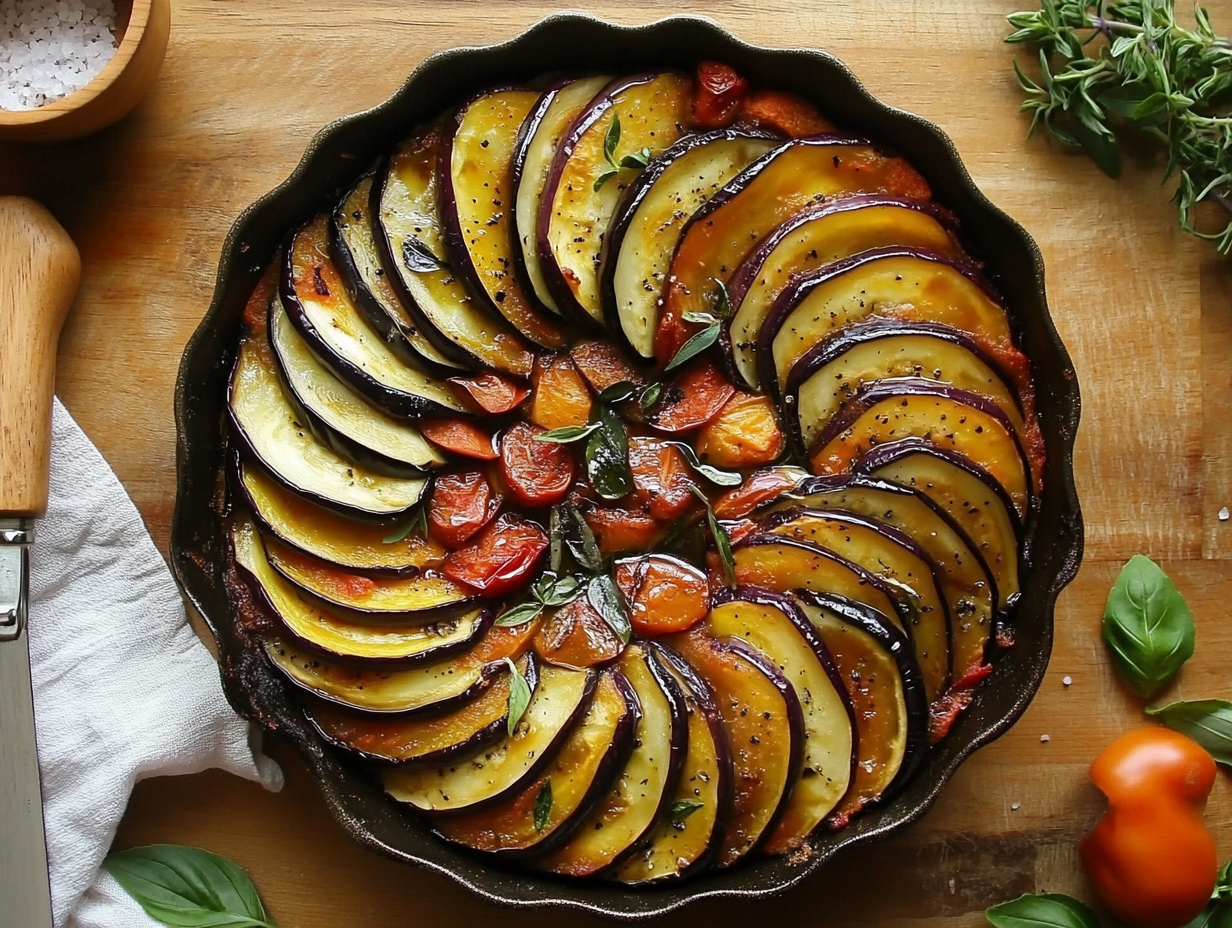
Ratatouille is a slow-roasted French vegetable dish built on a simple tomato base with layered rounds of eggplant, zucchini, yellow squash, and tomato. It takes some hands-on prep time, but the oven does most of the work — and it reheats so well that making it a day ahead is genuinely the better move.
The short version of why this works
Two things matter here. First, the tomato sauce base gets cooked down before the vegetables go on top — this concentrates flavor and prevents the finished dish from sitting in watery liquid. Second, slicing the vegetables to a consistent thickness (about 1/4 inch) means everything finishes at the same time. Thicker slices stay firm and underdone while thinner ones turn to mush. A mandoline makes this fast, but a sharp knife and patience get you there too. Everything else — the herbs, the olive oil, the arrangement — is secondary to those two steps.
Storage and reheating
Ratatouille keeps well in an airtight container in the fridge for up to 5 days, and the flavor genuinely improves by day two as the vegetables absorb the sauce. To reheat, cover the dish with foil and warm it in a 325°F oven for about 15 minutes, or reheat individual portions in a skillet over medium-low heat with a splash of water to loosen things up. It also freezes well — portion it into freezer-safe containers and freeze for up to 3 months. Thaw overnight in the fridge before reheating; the texture softens slightly but holds up fine for serving over polenta or grains where that doesn’t matter.
Mistakes to avoid
- Skipping the salt-and-wait step on eggplant: If your eggplant is large or the skin looks tough, salting the slices and letting them sit for 20 minutes draws out excess moisture. Skip this and the eggplant can make the base watery. Pat the slices dry before arranging them.
- Using watery canned tomatoes for the base: Crushed tomatoes vary a lot by brand. If yours look thin, simmer the sauce an extra 5 minutes before spreading it in the baking dish. A loose sauce steams the vegetables instead of roasting them.
- Crowding the slices flat instead of overlapping them: Laying slices flat in a single layer causes them to steam and go limp. Overlapping them slightly upright — like fallen dominoes — lets the edges caramelize while the centers stay tender.
- Pulling it out of the oven too early: The dish looks done before it actually is. The vegetables need enough time to fully soften and for the edges to start catching color. If the top looks pale after the foil comes off, give it another 10 minutes uncovered. Skip the garnish of extra fresh basil added before baking — it burns and adds nothing; stir it in after.
- Using only one type of squash: If you can’t find yellow squash, just use more zucchini. The color contrast is nice but the flavor difference is minimal, and the dish works fine as an all-zucchini version.

Provencal Ratatouille

Equipment
- Mandoline slicer
- Large oven-proof skillet or Dutch oven
- Sharp chef's knife
- Cutting board
- Mixing bowls
- Oven
Ingredients
- 2 tablespoons extra virgin olive oil use high-quality, cold-pressed for best flavor
- 1 medium yellow onion thinly sliced
- 4 cloves garlic minced
- 1 cup crushed San Marzano tomatoes canned or fresh, no added salt
- 1 teaspoon fresh thyme leaves or 1/2 teaspoon dried thyme
- ½ teaspoon sea salt or to taste
- ¼ teaspoon fresh ground black pepper adjust to taste
- 1 small eggplant cut into 1/8-inch rounds
- 1 medium zucchini cut into 1/8-inch rounds
- 1 medium yellow squash cut into 1/8-inch rounds
- 2 small heirloom tomatoes cut into 1/8-inch rounds
- 2 tablespoons extra virgin olive oil for drizzling over the top
- 2 tablespoons fresh basil chopped for serving
Instructions
- Preheat the oven to 375°F (190°C).
- Begin the tomato base: In a large, oven-proof skillet or Dutch oven, heat 2 tbsp olive oil over medium heat. Add the sliced onions and sauté for about 6–8 minutes, or until translucent and just starting to caramelize. Add minced garlic and cook for an additional 1 minute until fragrant.
- Stir in the crushed tomatoes, thyme, sea salt, and pepper. Simmer for 5–7 minutes to allow the sauce to slightly reduce and deepen in flavor. Remove from heat and smooth the tomato mixture evenly over the pan.
- Prepare your sliced vegetables: Using a mandoline for uniformity, slice eggplant, zucchini, yellow squash, and heirloom tomatoes into 1/8-inch rounds. Separate them into neat piles for layering.
- Layer the vegetables: Arrange the vegetable slices in alternating patterns directly on top of the tomato base, slightly overlapping in a circular, spiral pattern if using a round pan.
- Drizzle the vegetables with olive oil and sprinkle with another pinch of thyme, salt, and black pepper.
- Cover the dish with parchment paper, slightly domed above the vegetables, and bake in the oven for 45 minutes. Uncover and continue baking for another 30 minutes or until vegetables are fork-tender and lightly caramelized.
- Let rest for 10 minutes before garnishing with chopped basil and serving warm.
Notes
- To enhance sweetness, sprinkle a pinch of sugar into the tomato sauce during simmering if your tomatoes are particularly acidic.
- Substitute Japanese eggplant for a more delicate flavor or for better color balance.
- If you don’t have an oven-proof skillet, assemble everything in a baking dish instead after cooking the sauce on the stovetop.
Nutrition
Frequently asked questions
Can I use regular canned tomatoes instead of San Marzano?
Yes, any canned crushed or whole-peeled tomatoes work fine. San Marzanos are lower in acidity and slightly sweeter, so if your tomatoes taste sharp, stir in a small pinch of sugar or a few drops of balsamic vinegar while the sauce simmers to balance them out.
My eggplant turned out bitter — what went wrong?
Larger, older eggplants tend to be more bitter than small or medium ones. Next time, salt the slices and let them sit for 20 minutes before patting dry. Japanese eggplant is a reliable swap if you want to avoid the issue entirely — it’s milder and has fewer seeds.
Can I make this without a mandoline?
Absolutely. A sharp chef’s knife works — just take your time and aim for slices around 1/4 inch thick. Consistency matters more than perfection, so don’t stress over a few uneven pieces.
What can I serve this with to make it a full meal?
Spoon it over cooked polenta, white beans, or a grain like farro or couscous to add protein and bulk. Crusty bread works too if you want to keep it simple — the sauce in the bottom of the dish is worth soaking up.
Can I swap out any of the vegetables based on what I have?
Yes. Thinly sliced bell pepper rounds, fennel, or even parsnip can fill in for squash or zucchini. The key is choosing vegetables with similar water content and density so they cook at the same rate — avoid anything very starchy like potato, which won’t soften in time.
Can I make this ahead for a dinner party?
It’s actually better made a day ahead. The flavors settle and deepen overnight in the fridge. Reheat covered in a 325°F oven for 15 to 20 minutes and it will look and taste just as good as fresh out of the oven.
What to cook next
- Baked Ratatouille with Herb Oil
- Vegan Polenta Mushroom Bliss
- Smoky Spanish Chickpea Stew
- Mediterranean Lentil Power Bowl