
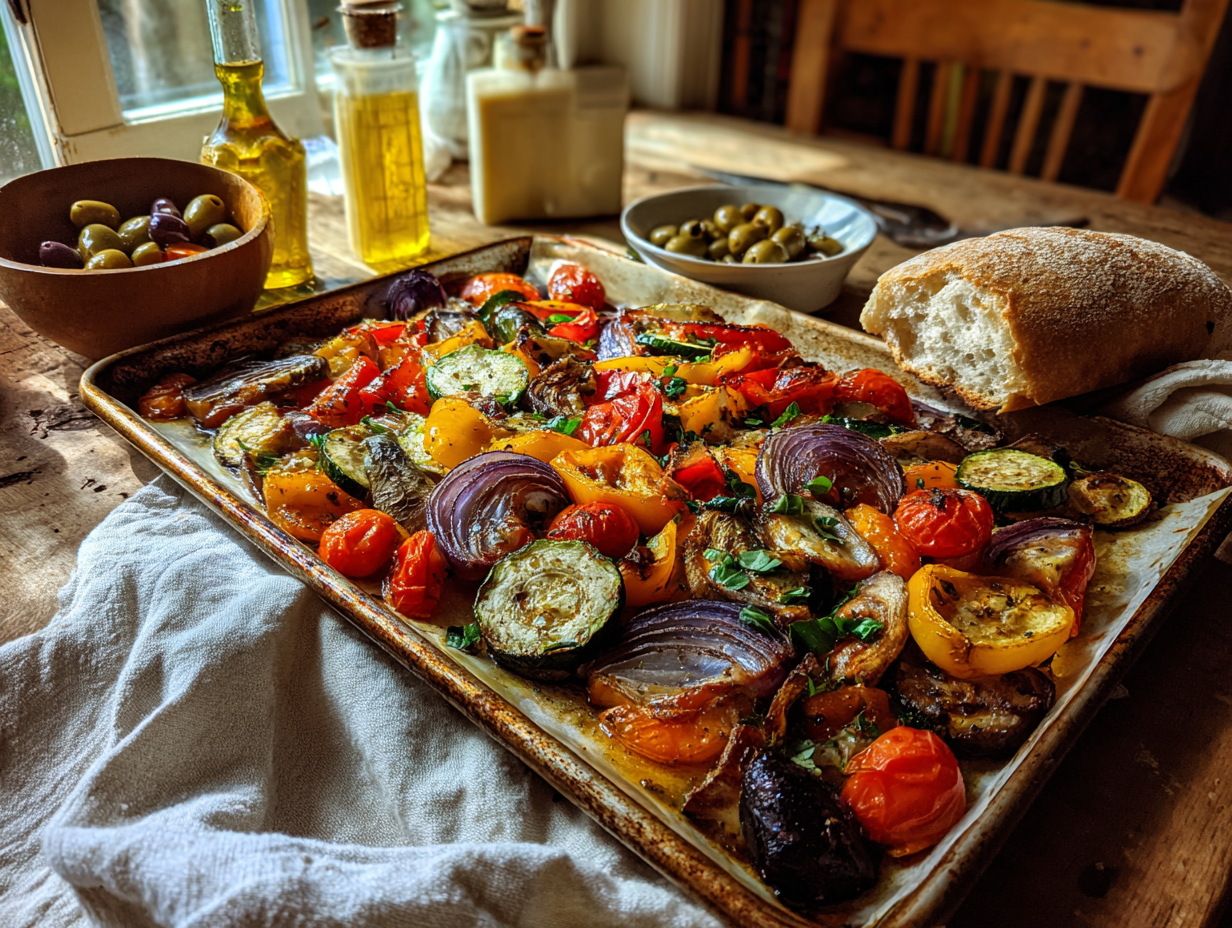
Roasted ratatouille is a one-pan vegetable dish built from eggplant, zucchini, bell peppers, and cherry tomatoes, roasted at high heat until everything is tender and a little charred at the edges. The honest reason to make it: it takes about 15 minutes of actual work, uses vegetables that are easy to find year-round, and the leftovers are genuinely better the next day.
Before you start
Two things make or break this recipe. First, salt the eggplant and let it sit for at least 20 minutes before roasting — this draws out moisture so the eggplant roasts instead of steams, and you get actual browning rather than a soggy result. Pat it dry before it goes on the pan. Second, preheat your sheet pan in the oven before adding the vegetables. A cold pan causes the vegetables to release liquid and stew in it; a hot pan starts searing them on contact. Both steps add a little time upfront and save you from a watery, flat-tasting dish at the end.
About the ingredients
- Herbes de Provence: Most grocery stores carry this in the spice aisle. If you can’t find it, a mix of dried thyme, rosemary, and oregano in equal parts works fine.
- Tomato paste: Helps the oil coat the vegetables evenly and adds a savory depth you won’t get from olive oil alone. Don’t skip it — a tablespoon goes a long way.
- Cherry tomatoes: These hold their shape better than chopped larger tomatoes and burst into a jammy sauce at the end. Regular tomatoes cut into chunks will work but release more liquid, so expect a wetter result.
- Bell peppers: Red and yellow are sweeter and softer than green once roasted. Green peppers will taste more bitter here — use them only if that’s what you have.
Common problems and fixes
- Vegetables are steaming instead of roasting: The pan is overcrowded. Spread everything in a single layer with space between pieces — use two sheet pans if needed. Crowded vegetables trap steam and never brown.
- Eggplant is mushy: It went on the pan too wet. After salting and rinsing, press the pieces firmly between paper towels or a clean kitchen towel before roasting.
- Cherry tomatoes dried out instead of bursting: They were added at the start with the heartier vegetables. Add them in the last 15 minutes of roasting so they soften and release their juices without shriveling.
- Everything tastes flat after roasting: The balsamic vinegar and fresh herbs at the end are not optional finishing touches — they reset the acidity that roasting cooks off. Skip the garnish of extra herb sprigs on top though — not worth the extra dish.
- Dish is watery when served: Let the ratatouille rest on the pan for 5 minutes out of the oven before transferring. Some liquid will evaporate and the vegetables will firm up slightly.

Sheet-Pan Ratatouille

Equipment
- Half-sheet pan (18x13-inch)
- Parchment paper or silicone baking mat
- Large mixing bowl
- Small bowl
- Chef's knife
- Cutting board
- Measuring cups and spoons
- Tongs or wide spatula
- Oven mitts
- Colander
- Microplane or garlic press (optional)
Ingredients
For the Sheet-Pan Ratatouille:
- 1 lb eggplant 1 large, cut into 1-inch chunks; choose firm, glossy skin
- 1 ¼ tsp kosher salt divided; use a flaky kosher salt for even seasoning
- 2 medium zucchini cut into 1/2-inch half-moons; firm, small-to-medium for fewer seeds
- 1 medium red bell pepper cut into 1-inch pieces; look for heavy, glossy peppers
- 1 medium yellow bell pepper cut into 1-inch pieces for color contrast and sweetness
- 1 medium red onion cut into 8 wedges, root intact for easier handling
- 3 cloves garlic finely minced or grated on a microplane
- ⅓ cup extra-virgin olive oil fruity, peppery EVOO; a quality brand elevates the finish
- 2 tbsp tomato paste double-concentrated if available; tube paste like Mutti preferred
- 1 tsp dried herbes de Provence or 1/2 tsp dried thyme + 1/2 tsp dried oregano
- ½ tsp smoked paprika optional, for gentle smokiness
- ¼ tsp crushed red pepper flakes optional, adjust to taste for heat
- ½ tsp black pepper freshly ground, to taste
- 2 cups cherry tomatoes ripe and sweet; left whole or halved if large
- ⅓ cup pitted Niçoise olives halved; or use Kalamata if preferred
- 1 tbsp balsamic vinegar for brightening and balancing sweetness at the end
- 1 tsp lemon zest finely grated, optional but recommended for lift
- ¼ cup fresh basil leaves torn by hand; more for garnish
- 2 tbsp fresh flat-leaf parsley chopped
To Serve (optional):
- 1 loaf crusty bread warmed; or serve over creamy polenta or quinoa to keep it gluten-free
Instructions
- Preheat the Oven and Pan: Place a rack in the center of the oven and preheat to 425°F (220°C). Slide an empty half-sheet pan into the oven to heat while you prep; a hot pan helps the vegetables sear on contact.
- Prep and Salt the Eggplant (10 minutes): In a colander, toss the 1 lb eggplant with 1/2 tsp of the kosher salt. Let it stand for 10 minutes until beads of moisture appear; this tames bitterness and improves texture. Pat dry with paper towels.
- Make the Roasting Marinade (3 minutes): In a large bowl, whisk together 1/3 cup olive oil, 2 tbsp tomato paste, 3 cloves garlic, 1 tsp herbes de Provence, 1/2 tsp smoked paprika (optional), 1/4 tsp red pepper flakes (optional), 1/2 tsp black pepper, and the remaining 3/4 tsp kosher salt until the paste dissolves and the mixture turns a glossy brick red. If you don’t have a whisk, a fork works perfectly.
- Toss the Vegetables: Add the zucchini, red and yellow peppers, red onion, and the salted eggplant to the bowl. Use your hands to coat every surface—look for a light sheen without pooling oil at the bottom.
- Roast, Stage 1 (25 minutes at 425°F/220°C): Carefully pull out the hot sheet pan. Line with parchment or a silicone mat (work carefully; the pan is hot), then spread the vegetables in a single, uncrowded layer. Roast for 25 minutes, turning with tongs at around the 15-minute mark. Visual cues: edges should be caramelized and the onion translucent with browned tips; aromas will be sweet and toasty.
- Roast, Stage 2—add tomatoes and olives (15 minutes): Sprinkle 2 cups cherry tomatoes and 1/3 cup Niçoise olives over the pan. Toss gently on the sheet to coat with residual marinade and return to the oven for 15 minutes. The tomatoes should slump and blister; peppers and zucchini should be tender with charry spots.
- Finish and Aromatize: Remove from the oven and immediately drizzle with 1 tbsp balsamic vinegar and scatter over 1 tsp lemon zest, 1/4 cup torn basil, and 2 tbsp parsley. Toss gently so the vinegar picks up pan sugars, forming a glossy, savory-sweet glaze. Taste and adjust salt and pepper as needed.
- Serve: Transfer to a warm platter, letting the juices cascade around the vegetables. Serve with crusty bread or over creamy polenta or quinoa.
Notes
Mary’s Tips:
- Choose the Right Eggplant: Smaller, heavier eggplants tend to be creamier and less seedy.
- Maximize Caramelization: Don’t overcrowd the pan—use one generous layer. If needed, divide between two pans and swap racks halfway.
- Convection Option: If using a convection/fan oven, roast at 400°F (205°C) and check 5 minutes earlier.
- Flavor Twists: Add a sprig of rosemary during stage 1 for resinous perfume (remove before serving), or fold in 2 tbsp capers with the olives for briny pop.
- Substitutions: Swap Niçoise for Kalamata olives; use Japanese eggplant if globe isn’t available; replace tomato paste with 1/4 cup sun-dried tomatoes in oil (minced) for a deeper note.
- Allergen/Diet Notes: Naturally vegan and gluten-free; serve with gluten-free bread or grains to keep the whole meal GF.
Serving Suggestions:
- Plating: Mound the vegetables slightly off-center on a wide, warm platter. Spoon the pan juices around for a glossy frame.
- Garnish: Finish with torn basil, a drizzle of your best olive oil, and a few grinds of black pepper. Add lemon zest curls for sparkle.
- Sides & Sips: Serve with creamy polenta, herbed couscous, or quinoa. Pair with a chilled rosé (or sparkling water with lemon and mint).
- Visual Cues of Perfection: Char-kissed edges, tomatoes just burst, and a heady aroma of herbs and sweet garlic.
Culinary Context:
Ratatouille hails from Provence in the South of France, traditionally stewed on the stovetop. Roasting on a sheet pan is a modern technique that heightens Maillard browning, delivering concentrated sweetness and a refined, restaurant-quality texture—each vegetable retains its character while joining a cohesive whole.Optional Advanced Instructions:
- Make-Ahead: Pre-chop vegetables up to 24 hours in advance and refrigerate in separate containers. The marinade can be whisked 3 days ahead.
- Parallel Prep: Salt the eggplant while you preheat and chop the remaining veg. Whisk the marinade during the last few minutes of salting.
- Beginner Alternative: If handling a hot sheet pan feels daunting, skip preheating the pan. Roast 5–8 minutes longer in stage 1 to compensate.
Nutrition
Common questions
Can I make this ahead of time?
Yes — this dish keeps well and actually tastes better after a few hours once the flavors settle. Store it covered in the fridge for up to 4 days and reheat in a skillet over medium heat or eat it at room temperature.
What do I serve it with to make it a full meal?
Spoon it over cooked white beans, polenta, or crusty bread to add protein and make it more filling. It also works well alongside cooked grains like farro or quinoa.
Can I use frozen vegetables?
Not recommended here. Frozen vegetables contain too much water and will steam rather than roast, giving you a soft, pale result instead of caramelized edges. Fresh is the one place this recipe doesn’t have a shortcut.
My oven runs hot — should I adjust the temperature?
Drop it to 400°F and check the vegetables about 5 minutes earlier than the recipe suggests. The goal is deep golden color on the edges without the smaller pieces burning before the eggplant is cooked through.
More plant-based recipes to try
- Baked Ratatouille with Herb Oil
- Mediterranean Lentil Power Bowl
- Smoky Spanish Chickpea Stew
- Mediterranean Roasted Veggie Wraps