
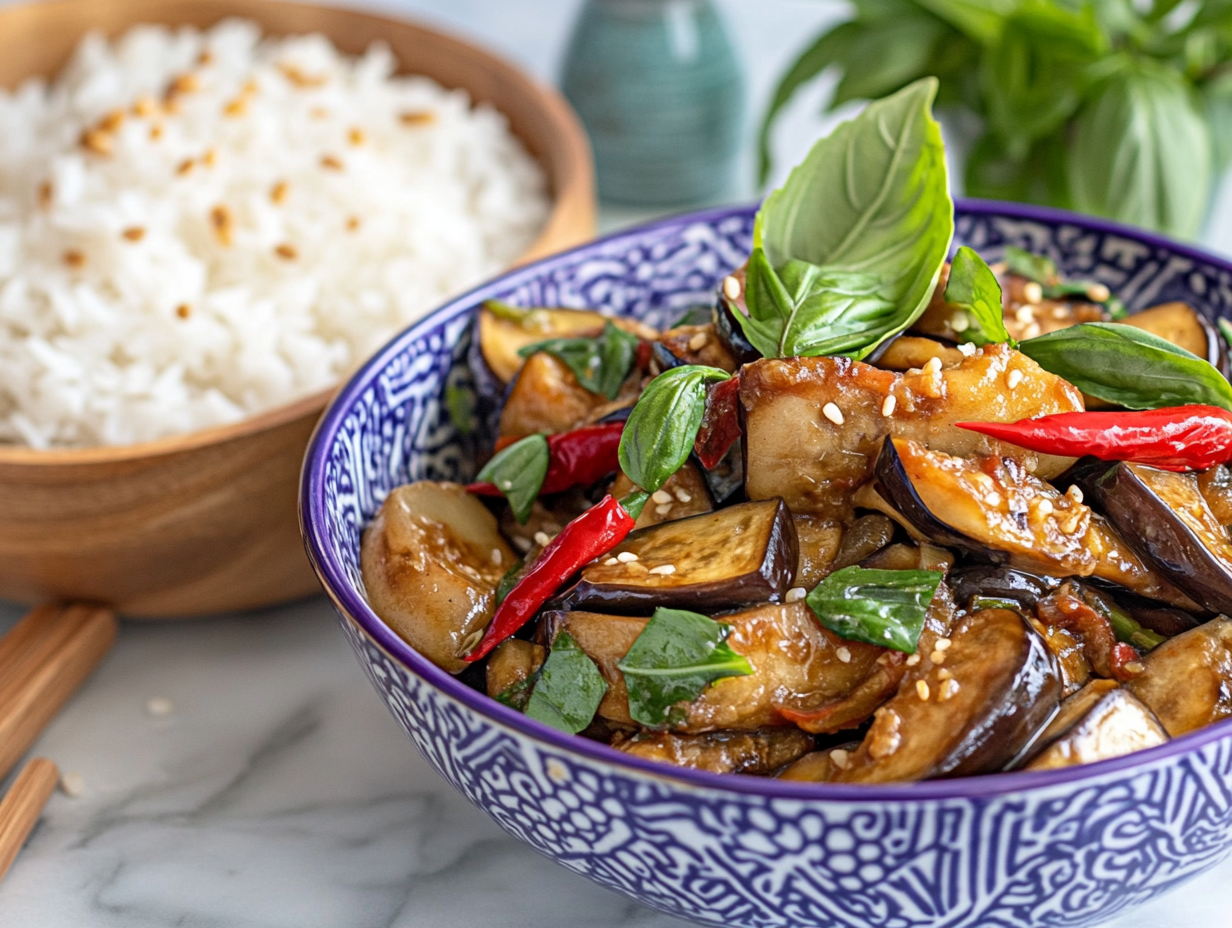
This is a fast weeknight stir-fry built around tender Asian eggplant, Thai basil, and a savory sauce of soy, vegan oyster sauce, and a little dark soy for color. It comes together in under 30 minutes and produces the kind of deeply flavored, glossy result that makes people ask what restaurant it came from. If you’re cooking for anyone who thinks plant-based food is bland, this is a good one to make.
The technique that matters
Heat is everything here. The wok or pan needs to be genuinely hot before the eggplant goes in — not warm, not medium-high, but as hot as your burner allows. That initial blast of heat is what gives the eggplant its golden exterior instead of a steamed, mushy one. The second thing that matters is sequencing: eggplant first, then garlic and chili, then sauce, then basil off the heat. Each step takes only a minute or two, so have everything measured and within arm’s reach before you turn on the burner. Once the garlic hits the pan, the whole dish is done in about four minutes.
Substitutions that actually work
- Asian eggplant vs. globe eggplant: Asian eggplant (Chinese or Thai varieties) has thinner skin and cooks faster without turning to mush. Globe eggplant works but needs to be salted and pressed for 15 minutes first to draw out moisture, or it will steam instead of sear.
- Vegan oyster sauce: Mushroom-based vegan oyster sauce is the right swap here — it carries the same thick, savory richness. Plain soy sauce alone won’t replicate it.
- Thai basil vs. Italian basil: Thai basil has a faintly anise-like edge that holds up to heat. Italian basil is a workable substitute but tastes noticeably milder and more floral. Use it if that’s what you have.
- Bird’s eye chili: Serrano or a pinch of red chili flakes can stand in. Start with less — you can always add heat, not subtract it.
- Coconut sugar: Brown sugar is a direct swap in equal amounts.
Make-ahead notes
The sauce can be mixed and stored in a small jar in the fridge for up to five days — that alone cuts prep time significantly on a busy night. The cooked stir-fry keeps in an airtight container in the fridge for up to three days, though the eggplant softens further as it sits. Reheat in a hot skillet with a splash of water rather than the microwave, which makes the eggplant watery. Freezing is not recommended — eggplant turns spongy and releases a lot of liquid when thawed, and the basil loses its character entirely.
Mistakes to avoid
- Crowding the pan: Too much eggplant at once drops the pan temperature and you get steamed, pale pieces instead of golden ones. Cook in two batches if needed — skip the garnish, not this step.
- Adding the basil too early: Basil added while the pan is still on high heat turns black and bitter. Take the pan off the heat first, then stir it in.
- Under-seasoning before tasting: Soy sauces vary in saltiness by brand. Taste the dish before serving and adjust — a small splash of regular soy sauce is usually all it needs.
- Using cold eggplant straight from the fridge: Cold eggplant lowers the pan temperature quickly. Let it sit at room temperature for 10 minutes before cooking so it sears rather than stews.
- Skipping the dark soy sauce: It’s a small amount but it’s what gives the dish its deep mahogany color and a slightly richer flavor. Without it, the sauce looks pale and tastes thinner.

Thai Basil Eggplant Stir-Fry

Equipment
- Wok or large skillet
- Chef's knife
- Cutting board
- Small bowl
Ingredients
Main Ingredients
- 2 tablespoons neutral oil such as grapeseed or avocado oil
- 1 pound Asian eggplant cut into 1/2-inch thick half moons
- 4 cloves garlic minced
- 1 piece Thai bird’s eye chili finely chopped, adjust to taste
- 1 cup Thai basil leaves loosely packed, fresh only
Sauce Mix
- 2 tablespoons soy sauce use gluten-free tamari if needed
- 1 tablespoon vegan oyster sauce or mushroom stir-fry sauce
- 1 teaspoon dark soy sauce adds color and depth, optional
- 1.5 teaspoons coconut sugar or brown sugar
- 2 tablespoons water to thin sauce
Instructions
- In a small bowl, whisk together soy sauce, vegan oyster sauce, dark soy sauce (if using), coconut sugar, and water. Set aside.
- Heat the neutral oil in a wok or large skillet over medium-high heat (about 375°F / 190°C). Once shimmering, add the sliced eggplant in a single layer. Cook undisturbed for 3–4 minutes until golden brown, then flip and cook for another 3 minutes. You may need to work in batches to avoid overcrowding. Remove and set aside.
- In the same pan, reduce heat to medium and add garlic and chili. Stir-fry for 30 seconds until fragrant—do not let it brown.
- Return cooked eggplant to the pan. Pour in the sauce and stir-fry briskly for 2–3 minutes to coat evenly and allow flavors to meld.
- Turn off the heat, then immediately fold in the Thai basil leaves. Stir until just wilted and glossy.
- Serve hot over steamed jasmine rice or noodles. Garnish with additional fresh basil, sliced chilies, or toasted sesame seeds if desired.
Notes
- Eggplant tip: Salt your sliced eggplant and let it sit for 15 minutes to draw out moisture and reduce bitterness, then pat dry before sautéing.
- You can substitute Thai basil with Italian basil if needed, but it will alter the flavor slightly—Thai basil is more peppery and licorice-forward.
- For a less spicy version, omit or reduce the Thai chili and add a splash of lime juice for zip.
Nutrition
Common questions
Can I add tofu or tempeh to make it more filling?
Yes — firm tofu or tempeh both work well. Press and cube the tofu, pan-fry it separately until crispy, then add it with the sauce at the end so it doesn’t break apart during stir-frying.
What if I can’t find vegan oyster sauce?
Mushroom-based vegan oyster sauce is widely available in Asian grocery stores and most large supermarkets, usually in the international aisle. If you genuinely can’t find it, a mix of soy sauce and a small amount of hoisin sauce gets close, though the result is slightly sweeter.
How spicy is this dish, and can I control the heat?
Bird’s eye chilies are quite hot, so the spice level depends entirely on how many you use. Start with one, taste the finished dish, and add more next time if you want more heat — removing seeds also reduces intensity without losing the chili flavor.
Do I need a wok, or will a regular skillet work?
A large cast iron or stainless steel skillet works fine. The key is that it can get very hot and has enough surface area to avoid crowding the eggplant — a 12-inch skillet is the minimum size worth using for a full batch.