
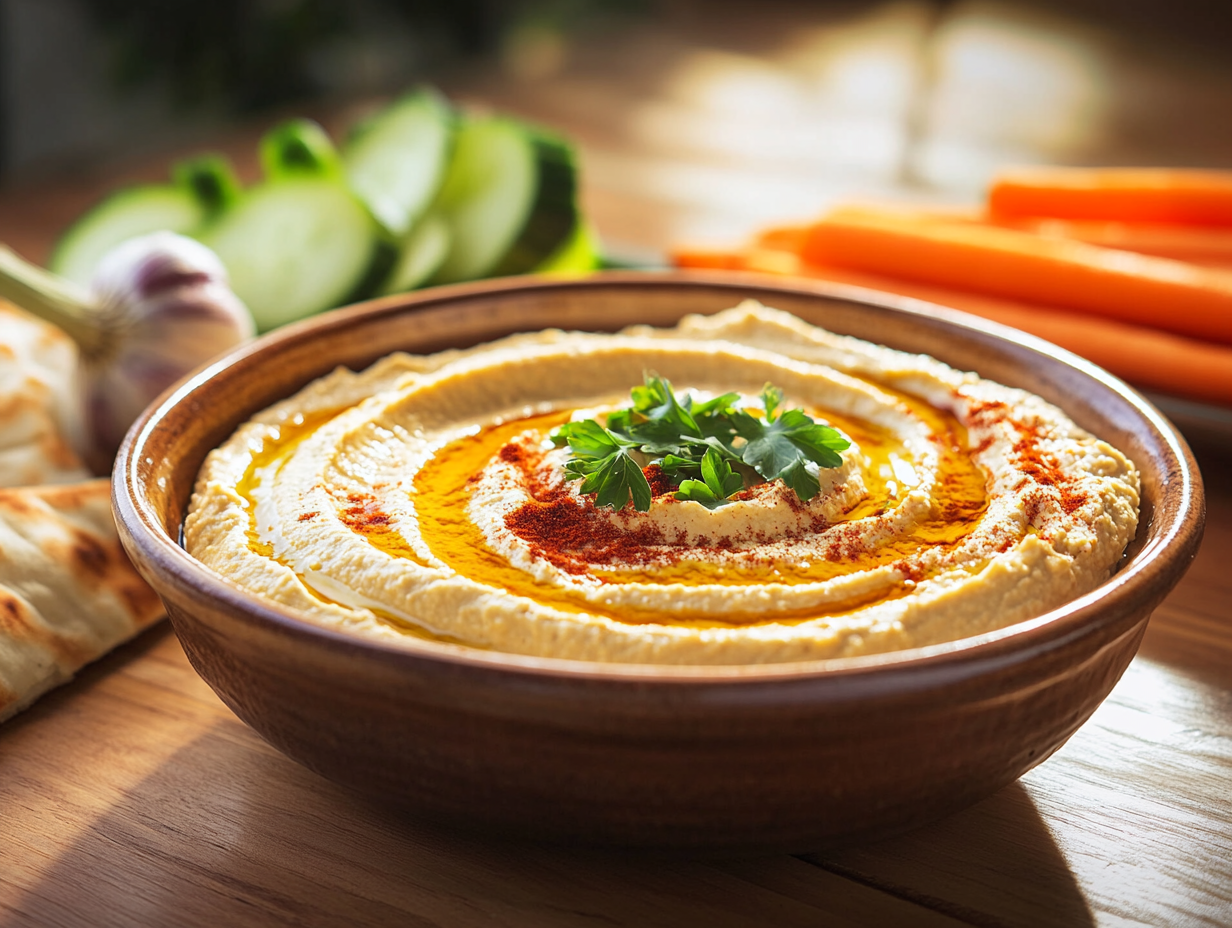
This is a roasted garlic hummus — chickpeas blended with tahini, lemon juice, olive oil, and a full head of garlic that’s been roasted until soft and sweet. The roasting step takes about 40 minutes in the oven, but you’re not doing anything during that time, and the result is noticeably mellower and richer than hummus made with raw garlic. If you’ve bought hummus from a tub your whole life, this is a good first recipe to show you how much better homemade can be.
What makes this version work
Two things actually move the needle here. First, roasting the garlic low and slow converts its sharp, sulfurous compounds into sweeter, milder ones — you get garlic flavor without the raw bite that can overpower everything else in the bowl. Second, blending with ice-cold water (not room temperature, not warm) introduces tiny air bubbles that lighten the texture considerably. Most blenders will produce a noticeably fluffier result after 2–3 minutes of continuous blending with cold water added gradually. Neither step is difficult, but skipping either one will cost you in flavor or texture.
About the ingredients
- Tahini: This is sesame seed paste — find it in the international aisle or near nut butters. Quality varies a lot by brand. A good tahini should be pourable and taste nutty, not bitter. If yours smells rancid or is very thick and dry, it will make the hummus taste off. Stir the jar well before measuring.
- Canned vs. dried chickpeas: Canned chickpeas work fine here. If you use dried and cook them yourself, save the cooking liquid — a tablespoon or two added during blending can improve smoothness.
- Cumin: Ground cumin adds a warm, earthy undertone. It’s not optional if you want the flavor to be complete, but the amount is small enough that it won’t dominate.
- Olive oil: Use a decent extra-virgin olive oil for finishing. It’s drizzled on top, so the flavor is noticeable — this is not the place for a bland neutral oil.
Troubleshooting
- Hummus tastes flat or dull: This almost always means it needs more lemon juice or salt. Add both in small increments and blend again — the flavor can change significantly with just a few extra drops of lemon.
- Texture is grainy or gritty: The chickpeas weren’t blended long enough, or the tahini was too thick. Keep blending — most home blenders need a full 2–3 minutes to get a smooth result. Adding another tablespoon of cold water can help loosen it.
- Hummus is too thick to blend properly: Add cold water one tablespoon at a time while the blender is running. Don’t add it all at once or you’ll overshoot and end up with something too thin.
- Roasted garlic tastes bitter instead of sweet: It was cooked at too high a temperature or for too long past golden. The cloves should be soft, golden, and slightly caramelized — not brown or charred. If this happens, start with a fresh head; bitter roasted garlic will make the whole batch taste off.
- Hummus tastes strongly of raw garlic even after roasting: A few raw cloves may have been added accidentally, or the roasted garlic wasn’t fully soft. Fully roasted cloves should squeeze out easily like a soft paste with almost no resistance.
Storage and reheating
Store leftover hummus in an airtight container in the refrigerator for up to 5 days. Press a piece of plastic wrap directly onto the surface before sealing to slow oxidation and keep the top from drying out. Hummus thickens in the fridge — stir in a teaspoon of cold water or olive oil to loosen it before serving. For longer storage, hummus freezes well for up to 3 months; freeze it in individual portions so you’re not thawing the whole batch at once. Thaw overnight in the fridge and stir well before serving. Skip the garnish before freezing — add fresh olive oil and paprika after it’s thawed, not worth doing twice.

Roasted Garlic Hummus

Equipment
- Food processor
- Baking dish or foil
- Blender (optional)
Ingredients
- 1 clove garlic whole, outer skin peeled, top sliced off
- 1 tablespoon olive oil plus more for drizzling
- 1 ½ cups cooked chickpeas or one 15 oz can, drained and rinsed
- ¼ cup tahini well-stirred, high-quality brand recommended
- 2 tablespoons fresh lemon juice about 1 lemon
- ½ teaspoon ground cumin
- ½ teaspoon sea salt to taste
- 3–5 tablespoons ice water as needed for consistency
- 1 tablespoon chopped fresh parsley for garnish (optional)
- ½ teaspoon smoked paprika for garnish (optional)
Instructions
- Preheat the oven to 400°F (200°C). Place the head of garlic on a small piece of foil, drizzle with olive oil, and wrap tightly. Roast in the oven for about 40–45 minutes until the cloves are golden and soft. Cool slightly, then squeeze the garlic out of the skins.
- In a food processor, combine the roasted garlic, chickpeas, tahini, lemon juice, cumin, and salt. Blend until thick and mostly smooth.
- With the processor running, drizzle in the ice water 1 tablespoon at a time until the hummus is ultra-creamy and light in texture. Taste and adjust seasoning with more salt or lemon juice if needed.
- Transfer to a shallow bowl or plate. Use the back of a spoon to swirl the hummus, creating ridges to catch the garnish. Drizzle with olive oil, sprinkle chopped parsley and smoked paprika if using.
Notes
- For a lighter hummus, peel the skins from each chickpea before blending.
- Substitute the chickpeas with white beans for a silkier variation.
- Roast more garlic than needed and store for up to a week to use in other recipes.
Nutrition
Common questions
Can I use garlic powder instead of roasting a whole head of garlic?
You can, but the flavor will be noticeably different — sharper and less sweet. If you’re short on time, start with a small amount (around a quarter teaspoon) and taste as you go, since garlic powder is more concentrated and easier to overdo.
Do I have to peel the chickpeas?
No, it’s optional. Peeling removes the thin outer skin and produces a silkier texture, but the difference is subtle and the process takes 10–15 extra minutes. If this is your first time making hummus, skip the peeling and focus on blending thoroughly — you’ll still get a good result.
My tahini has separated in the jar — is it still okay to use?
Yes, separation is completely normal. Stir it from the bottom up until the oil and paste are fully combined before you measure. If it’s been in the fridge, let it come to room temperature first so it’s easier to stir and blend.
Can I make this without a high-speed blender?
A regular blender or food processor works — it just takes longer and may need more scraping down the sides. Blend in longer bursts and add cold water gradually; a food processor typically needs 3–4 minutes of blending to approach the smoothness a high-speed blender achieves faster.
How do I know when the garlic is done roasting?
The cloves should be completely soft when pressed and golden-tan in color — not white and firm, not brown and crispy. A fork or skewer should slide into a clove with no resistance. If the outer cloves look done but the inner ones feel firm, give it another 5–10 minutes covered with foil.
What to cook next
- Lebanese Vegan Grape Leaves
- Mediterranean Lentil Power Bowl
- Vibrant Vegan Fattoush Salad
- Roasted Garlic Bean Dip